Google builds an entire fake internet called Mirror Dimension so Chrome’s AI agents can learn the web without ever risking your real data
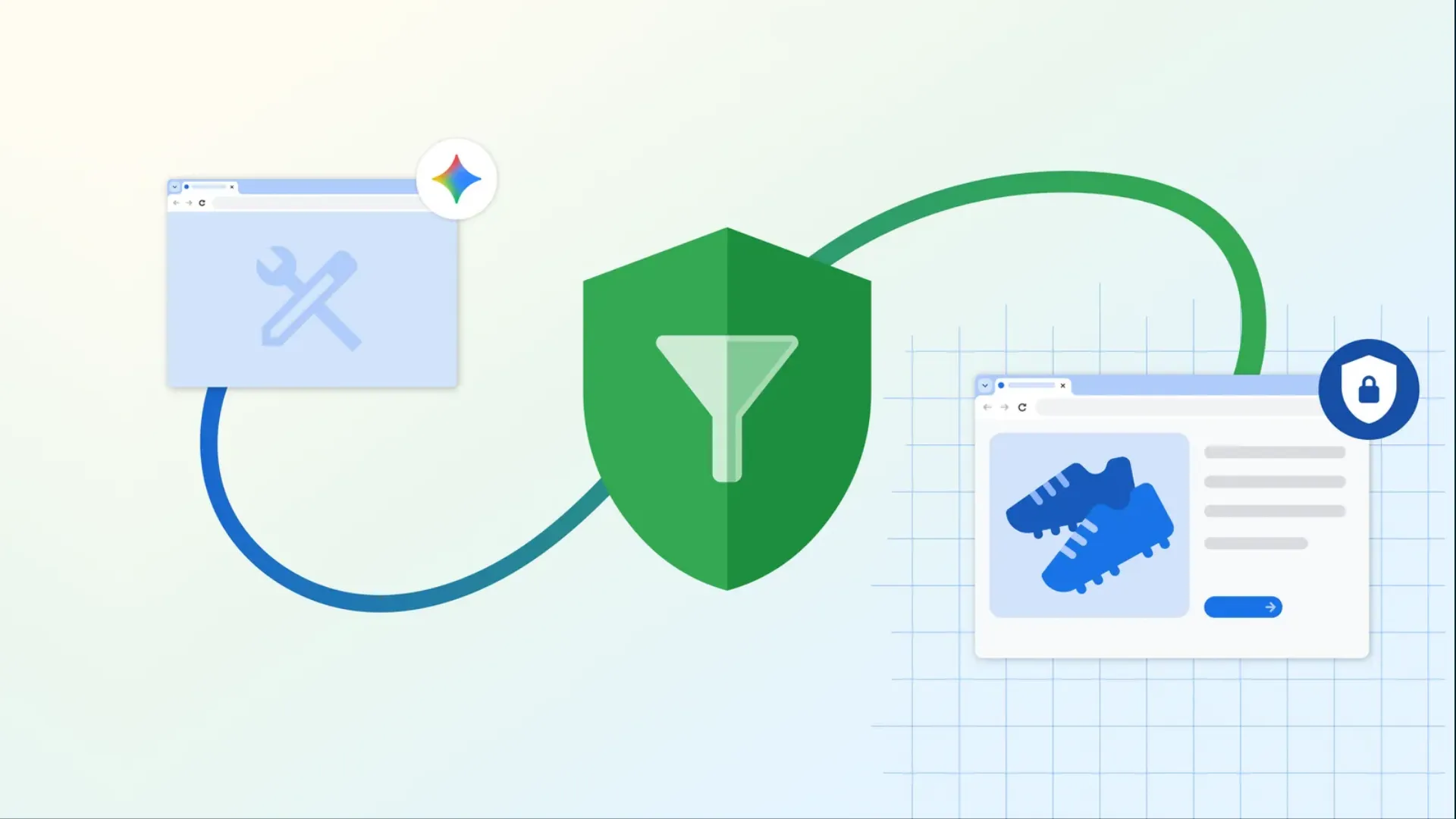
Within the “Mirror Dimension”, a virtual version of the web, Google is training and testing new AI browsing tools in Chrome. This allows them to train the AI tools to perform common tasks and defend against malicious activities in a safe environment, without risking real user data.
Within the Mirror Dimension Chrome’s ‘auto browsing’ feature (Gemini) can click hyperlinks, complete forms, download podcasts and make purchases, however, it does not interact with real web pages.
Why use a virtual environment?
In order to train an AI browser tool to complete common tasks on the web, thousands of tests must be performed across hundreds of webpages. However, performing these tests on the real web can cause issues. As real webpages are constantly changing, it can be difficult to perform identical tests.
Similarly, allowing an unpolished AI browsing agent to complete tasks on the open web may disrupt real accounts, and cause real damage.
Using a contained virtual version of the web solves both of these issues. Tests can be repeated and if there is an issue within the AI, it will be restricted within the virtual sandbox.
Eval awareness
An additional issue faced during training was ‘eval awareness’. As modern AI models are very advanced, if they detect that they are in a test environment they act very conservatively. Therefore, to get a true representation of how the AI performs, Google needed to trick the AI into thinking it was interacting with the real world.
Creating the illusion
To do this, Google created the Mirror Dimension within a highly contained virtual sandbox. Using the tool gVisor, if the AI agent attempts to navigate to a well known webpage, the agent is redirected to a fake equivalent. The URL within Chrome remains unchanged, meaning it appears exactly the same to the user. From the agent’s perspective, it appears to be interacting with a normal, familiar webpage.
However, due to strict internal security features in Chrome, the team had to create bespoke fake certificates to ensure that no warnings were displayed. Google emphasises that this method would not be possible for attackers to exploit in normal Chrome usage on the open web. It can only be utilised in this way in a private network as a company has full control over the test environment. In addition, each test is run from a blank page, ensuring that previous actions have no impact on future runs.
Creating a virtual web
It would be impossible to manually create thousands of realistic webpages, so Google used multiple AI agents. Research agents were used to design what should be included on each webpage, such as functional shopping baskets and boxes for discount codes. Builder agents then created the webpages. Critic agents interacted with these webpages using Chrome’s developer tools, taking screenshots and clicking buttons. If issues with the website were found, they would be sent back to be fixed.
As a result, a complete virtual web has been constructed with online shops, recipe pages, local markets and bank dashboards.
Protection from hidden attacks
This project aims to protect users from prompt injection attacks. These occur when hackers include dangerous prompts in text or images on webpages to manipulate AI agents.
Initially, the AI was able to detect that it was within tests as the URLs appeared unusual. However, the team moved the prompts to be hidden within headers of webpages. With this automated process, over 1,000 attacks can be created per day by one security engineer, compared to only being able to create around 30 by hand. Google did not specify how often the AI successfully or unsuccessfully passed these tests.
Benefits to users
Charles Qian, Chrome AI Security Engineer, explained that the open web can be dangerous. However, the AI has gotten increasingly sensible in pausing to ask users to confirm actions. As the AI is learning how to perform tasks, such as shopping and completing forms, using fake shopping carts and banking dashboards, mistakes made by the AI do not cause any issues for real accounts.
Although the AI agents used to perform the tests are not malicious and cannot hack, Doug Turner, Engineering Director at Google, explained that as AI becomes more advanced, Google will continue to add realism to the fake web.
Edit Profile
Help improve @KR
Was this page helpful to you?
Contact Khogendra Rupini
Are you looking for an experienced developer to bring your website to life, tackle technical challenges, fix bugs, or enhance functionality? Look no further.
I specialize in building professional, high-performing, and user-friendly websites designed to meet your unique needs. Whether it's creating custom JavaScript components, solving complex JS problems, or designing responsive layouts that look stunning on both small screens and desktops, I can collaborate with you.
Create something exceptional with us. Contact us today
Open for Collaboration
If you're looking to collaborate, I'm available for a variety of professional services, including -
- Website Design & Development
- Advertisement & Promotion Setup
- Hosting Configuration & Deployment
- Front-end & Back-end Code Implementation
- Code Testing & Optimization
- Cybersecurity Solutions & Threat Prevention
- Website Scanning & Malware Removal
- Hacked Website Recovery
- PHP & MySQL Development
- Python Programming
- Web Content Writing
- Protection Against Hacking Attempts