Amorim Era Ends in Disappointment at Manchester United
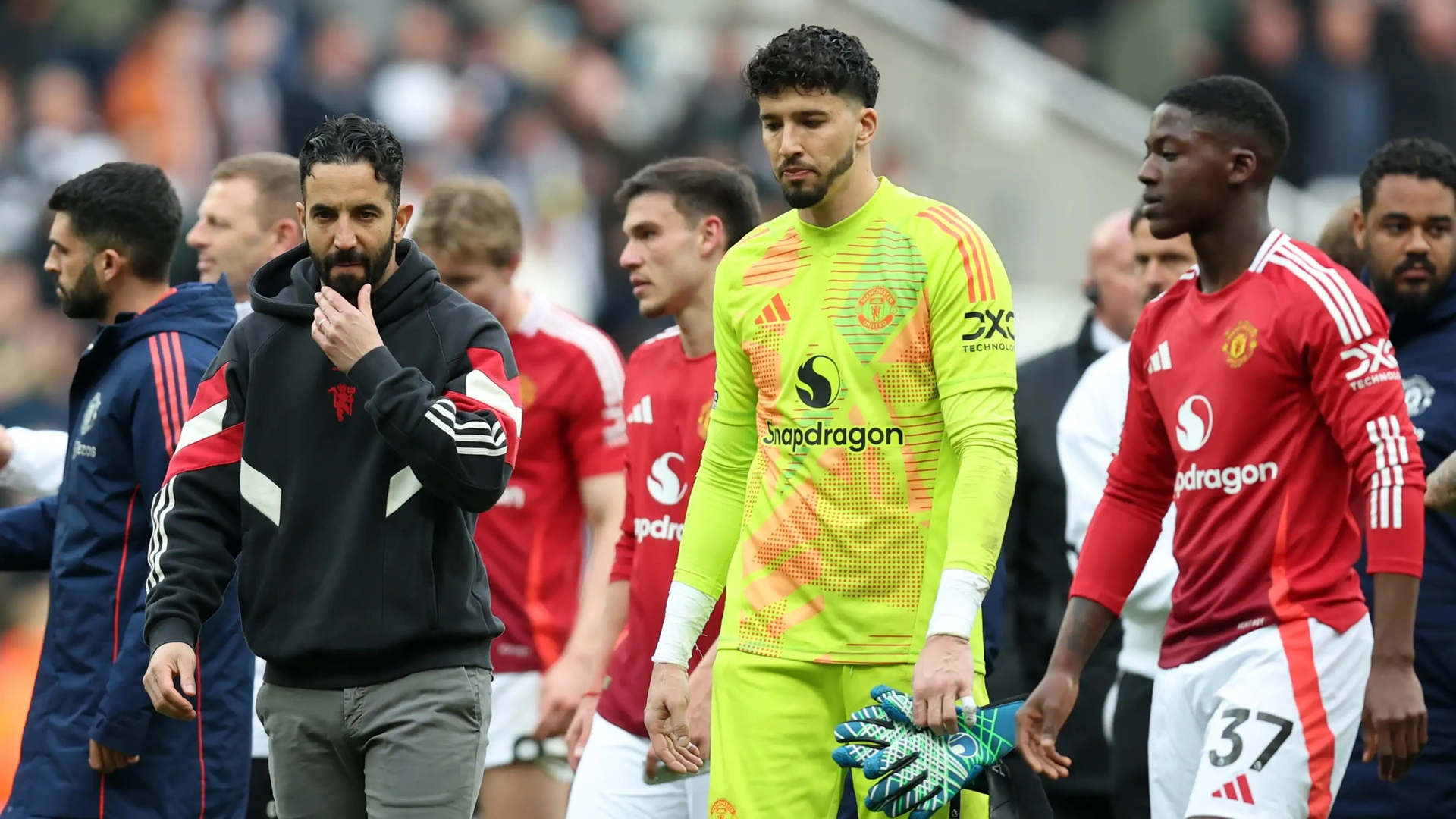
The turbulent chapter of Ruben Amorim at Manchester United has come to an unceremonious close, bringing an end to one of the most frustrating managerial spells in the club’s modern history. On Monday morning, the 20 time English champions confirmed that Amorim had departed his role as head coach, a decision described by the club as reluctant but necessary to give the team the best possible chance of securing a higher finish in the Premier League.
On paper, United’s league position offered some mitigation. Sitting sixth and within touching distance of the top four, the Red Devils were undeniably better placed than they had been a season earlier, when they finished an alarming fifteenth. Yet results alone masked deeper issues. Performances remained erratic, confidence fragile, and belief in the project steadily eroded as Amorim struggled to impose clarity on a squad that appeared confused by constant tactical experimentation.
His exit followed a 1 1 draw away to Leeds, after which the Portuguese coach publicly voiced his frustration with the club’s structure and environment. That moment proved decisive. Amorim leaves Old Trafford with the lowest win percentage of any United manager in the Premier League era, his tenure defined by missed opportunities, damaging defeats, and a growing disconnect between vision and reality.
A reign marked by instability
From the outset, Amorim’s spell was characterised by uncertainty. His preference for a three at the back system was never fully embraced, largely because of frequent changes in personnel and roles. Defensive partnerships shifted almost weekly, midfield balance fluctuated, and attacking cohesion remained elusive.
Early warning signs emerged during the Manchester derby in September. United entered the contest ahead of Manchester City in the table, prompting Amorim to downplay comparisons with Pep Guardiola. The response was sobering. A comprehensive 3 0 defeat exposed structural flaws, with United offering little resistance and even less attacking threat. The loss reinforced concerns that the system was not suited to the squad at his disposal.
Those doubts intensified as the season progressed. Defensive collapses became routine, most notably in a 4 1 defeat at Newcastle United. Despite rotating personnel and even dropping first choice goalkeeper Andre Onana, United continued to gift opponents chances through poor positioning and hesitation. Amorim’s post match admission that he could not pinpoint the cause of the errors only deepened anxieties around his authority and tactical control.
Cup exits deepen the gloom
If league form was inconsistent, cup competitions offered fleeting hope before ultimately delivering fresh disappointment. The FA Cup briefly appeared a realistic target after impressive wins over Arsenal and Leicester City. That optimism evaporated at Old Trafford, where United were eliminated by Fulham on penalties. The defeat marked Amorim’s tenth loss in just 24 matches, a statistic that stood in stark contrast to the record of his predecessor.
Despite the setback, Amorim spoke of long term ambition, reiterating his aim of restoring United to domestic dominance. The rhetoric, however, increasingly rang hollow as results failed to improve and performances stagnated.
The Carabao Cup proved even more damaging. A second round exit to Grimsby Town, a League Two side, represented the nadir of Amorim’s reign. United required senior internationals to rescue a match they had approached without urgency, only to fall short in a penalty shootout. The image of Amorim rearranging magnets on a tactics board while United floundered became an enduring symbol of a manager searching for solutions that never arrived.
Tactical confusion and public doubt
Perhaps the most corrosive aspect of Amorim’s tenure was the growing sense of confusion among players. Pundits repeatedly highlighted a lack of understanding within the team, particularly in defensive transitions. Errors were not isolated incidents but recurring themes, suggesting systemic problems rather than individual lapses.
At Brentford, United’s defensive disorganisation was ruthlessly exposed in a 3 1 defeat, with analysts pointing to positional uncertainty caused by the system. Similar issues resurfaced during a run of three consecutive league defeats without scoring, a sequence that left United hovering dangerously close to the bottom half of the table.
The situation reached a surreal point when Amorim openly acknowledged that relegation was a possibility. For a club of United’s stature, such an admission was unprecedented and deeply unsettling. While intended as a wake up call, it instead underscored the erosion of confidence surrounding the project.
Europa League heartbreak
If there was one campaign that offered genuine promise, it was the UEFA Europa League. United’s dramatic semi final triumph over Lyon, featuring a remarkable second leg at Old Trafford, rekindled memories of the club’s European pedigree. For a moment, Amorim appeared on the brink of redemption.
That hope was extinguished in Bilbao. Facing Tottenham Hotspur in the final, United dominated possession and territory but were undone by a single lapse, conceding from Tottenham’s only shot on target. The 1 0 defeat was cruel in its simplicity, a microcosm of Amorim’s time in charge. Control without conviction, dominance without decisiveness.
Despite the loss, Amorim insisted he remained the right man to lead the club forward. By then, patience had worn thin. The final had represented a golden route back to the Champions League, and its failure proved too costly to ignore.
The legacy of a troubled tenure
Amorim’s dismissal closes a chapter defined less by catastrophe than by persistent underachievement. United were rarely humiliated in isolation, but the accumulation of setbacks painted a bleak picture. Draws against struggling sides, home defeats to teams with ten men, and an inability to build momentum all contributed to an atmosphere of stagnation.
Statistically, his reign will be remembered for its stark numbers. A win rate of just 32 percent in the Premier League, the lowest in the club’s history. A sequence of early cup exits. And a growing sense that progress, while visible in league position, was superficial rather than structural.
For Manchester United, the challenge now is to restore clarity and confidence. The squad remains talented, the expectations unchanged. What is required is stability, tactical coherence, and leadership capable of uniting players and supporters behind a clear identity.
For Ruben Amorim, the Old Trafford experience will serve as a harsh lesson in the unique pressures of managing one of world football’s most scrutinised institutions. His reputation, built on innovation and success elsewhere, has been bruised but not irreparably damaged. Yet at Manchester United, the verdict is unavoidable. This was a reign that promised transformation but delivered frustration, leaving behind a catalogue of moments that will be remembered as some of the most difficult in the club’s modern era.

Edit Profile
Help improve @KR

Was this page helpful to you?
Contact Khogendra Rupini
Are you looking for an experienced developer to bring your website to life, tackle technical challenges, fix bugs, or enhance functionality? Look no further.
I specialize in building professional, high-performing, and user-friendly websites designed to meet your unique needs. Whether it’s creating custom JavaScript components, solving complex JS problems, or designing responsive layouts that look stunning on both small screens and desktops, I can collaborate with you.
Create something exceptional with us. Contact us today
Open for Collaboration
If you're looking to collaborate, I’m available for a variety of professional services, including -
- Website Design & Development
- Advertisement & Promotion Setup
- Hosting Configuration & Deployment
- Front-end & Back-end Code Implementation
- Code Testing & Optimization
- Cybersecurity Solutions & Threat Prevention
- Website Scanning & Malware Removal
- Hacked Website Recovery
- PHP & MySQL Development
- Python Programming
- Web Content Writing
- Protection Against Hacking Attempts