Amorim Exit Exposes Deep Fault Lines at Manchester United
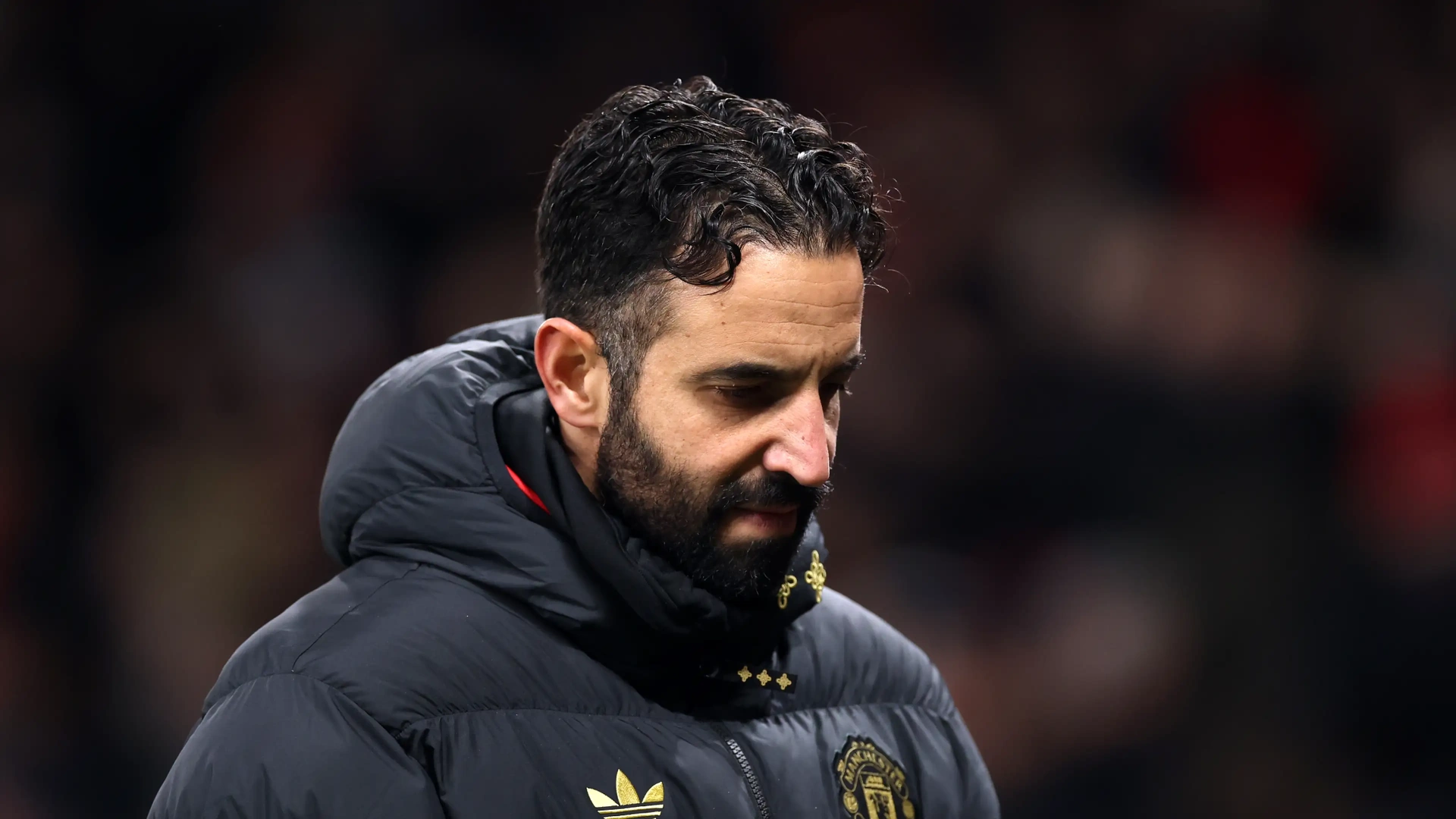
Manchester United’s decision to dismiss Ruben Amorim on Monday brought a turbulent and increasingly fractured chapter at Old Trafford to an abrupt end. What was once framed as a bold long term project collapsed under the weight of internal tensions, strategic disagreements and deteriorating trust between the head coach and the club’s leadership.
Amorim was informed of his dismissal at the Carrington training ground by chief executive Omar Berrada and director of football Jason Wilcox. Within minutes, he gathered his belongings, said brief farewells and left the facility as players were arriving for training. The scene underlined the speed and finality of a decision that followed a chaotic seventy two hours behind the scenes.
The forty year old departs after just fourteen months in charge, leaving United to turn once again to an interim solution. Former midfielder Darren Fletcher has been appointed to oversee the next fixtures while the club considers longer term options. Amorim and his staff are due compensation in the region of ten million pounds, reflecting the strength of the contract negotiated when United moved early to prise him away from Sporting CP.
From long term vision to internal rupture
When Amorim arrived in Manchester, he was presented as a modern coach capable of delivering structural reform and tactical identity. His appointment was backed strongly by minority owner Sir Jim Ratcliffe and the INEOS sporting leadership, with expectations that patience would be shown as a demanding system took hold.
Instead, the project unravelled amid growing friction at senior level. According to multiple sources familiar with the situation, the breaking point came during a heated meeting on Friday between Amorim and Wilcox. The discussion centred on tactics, squad direction and recruitment strategy, areas where trust had eroded steadily over recent months.
Wilcox raised concerns that players were struggling to fully understand Amorim’s preferred 3 4 2 1 system and felt confused by mixed messaging. Training sessions often featured a back four, only for a back three to reappear on matchdays. Amorim, in turn, argued that the squad required deeper changes and indicated that he was prepared to walk away, telling colleagues he would contact his agent.
The fallout was immediate. A planned squad meeting was cancelled and senior figures began reassessing the sustainability of the head coach’s position. What made the rupture more striking was that Wilcox had previously been viewed as one of Amorim’s closest allies inside the club, holding daily discussions and offering consistent support.
Pressure from ownership and the back four debate
Underlying the clash was a broader strategic divide. Ratcliffe had made clear his preference for United to evolve toward a back four, a view shared by Wilcox. While Amorim initially indicated he would begin with a back three before adding layers, his reluctance to commit fully to that transition increasingly frustrated those above him.
Ratcliffe’s involvement has been a delicate balancing act for United’s football leadership. He leans heavily on Wilcox for technical insight but is also unafraid to voice his own opinions. During the draw against Wolverhampton Wanderers, Ratcliffe was visibly angered by the manner of United’s defending, reinforcing the sense that patience was wearing thin.
Amorim did show some flexibility, deploying a 4 4 2 against Bournemouth and a 4 2 3 1 against Newcastle. However, his return to the 3 4 2 1 for the Wolves match, combined with the early substitution of Joshua Zirkzee, raised further doubts among senior executives. Lengthy post match discussions at Old Trafford that evening set the stage for the decisive confrontation days later.
Recruitment tensions and authority concerns
Transfers were another source of strain. Amorim believed United failed to fully commit to signing Antoine Semenyo, despite extensive courting, only to later watch him move toward Manchester City. He also felt constrained by the decision to defer major reinforcements until the summer, interpreting it as uncertainty about his long term backing.
There was additional friction with recruitment director Christopher Vivell over player profiles and tactical suitability. Amorim favoured experience in key positions, including Aston Villa goalkeeper Emiliano Martinez, while the club opted for younger and more cost effective options such as Senne Lammens. To United’s hierarchy, this reflected long term planning. To Amorim, it signalled diminishing authority.
That sense of erosion was sharpened by public criticism and internal scrutiny. Former chief executive David Gill questioned the logic of sidelining high value players at a football board meeting, noting the financial impact of alienating assets such as Marcus Rashford and Alejandro Garnacho. The Glazer family, United’s majority shareholders, had also begun expressing concern about results as early as August.
Dressing room strain and communication gaps
On the training ground, relationships were not always smooth. Amorim was involved in an intense confrontation with defender Lisandro Martinez in December, after the player felt overlooked despite believing he was fit to start. While the dispute was eventually resolved and Martinez captained the side in Amorim’s final games, it illustrated the emotional edge of the environment.
Some players felt communication could have been clearer, particularly around selection and tactical shifts. Others noted that Amorim’s coaching staff, largely brought from Sporting, tended to reinforce his ideas rather than challenge them. Senior figures inside United believe a greater diversity of voices might have helped adapt systems more pragmatically during difficult periods.
There were also questions about his engagement with the academy. Decisions around youth debuts and substitutions puzzled staff, and it was noted that Amorim rarely attended academy fixtures, a departure from expectations at a club that prides itself on youth integration.
The decisive weekend and final words
Amorim’s media comments in the days before his dismissal proved pivotal. After Friday’s press conference and Sunday’s remarks suggesting he would not resign and would continue until replaced, senior leaders interpreted his stance as an invitation to act. Discussions between Ratcliffe and the Glazer family followed swiftly.
On Monday morning, Berrada and Wilcox delivered the decision. Wilcox later addressed the squad, describing shock at the events of the previous forty eight hours and stating that Amorim himself had indicated a desire to leave. Darren Fletcher then led training alongside under twenty one coach Travis Binnion, with the atmosphere described as positive.
Amorim was later seen walking near his home in Cheshire with his wife, appearing relaxed despite the circumstances. United will honour his contract in full, a costly conclusion that adds to an already challenging INEOS ledger following recent managerial upheaval.
What comes next for United
Fletcher will oversee upcoming fixtures against Burnley and Brighton while the club evaluates options. Ole Gunnar Solskjaer is among those under consideration for a caretaker role, alongside potential returns for Michael Carrick and Jonny Evans in coaching capacities. For a permanent appointment, United may wait until summer, when candidates such as Oliver Glasner, Andoni Iraola and Marco Silva become available.
The episode leaves searching questions for United’s leadership. Amorim was appointed as a symbol of renewal, yet structural misalignment, mixed authority and strategic disagreement undermined his tenure. With the club sitting sixth and still within reach of Champions League qualification, executives believe change was necessary to spark an upturn.
For Amorim, the experience serves as a reminder of football’s volatility. As he once remarked privately after a run of victories, reputations shift quickly in the modern game. At Manchester United, the promise of a long term project gave way to turmoil, leaving the club once again in transition and searching for stability.

Edit Profile
Help improve @KR

Was this page helpful to you?
Contact Khogendra Rupini
Are you looking for an experienced developer to bring your website to life, tackle technical challenges, fix bugs, or enhance functionality? Look no further.
I specialize in building professional, high-performing, and user-friendly websites designed to meet your unique needs. Whether it’s creating custom JavaScript components, solving complex JS problems, or designing responsive layouts that look stunning on both small screens and desktops, I can collaborate with you.
Create something exceptional with us. Contact us today
Open for Collaboration
If you're looking to collaborate, I’m available for a variety of professional services, including -
- Website Design & Development
- Advertisement & Promotion Setup
- Hosting Configuration & Deployment
- Front-end & Back-end Code Implementation
- Code Testing & Optimization
- Cybersecurity Solutions & Threat Prevention
- Website Scanning & Malware Removal
- Hacked Website Recovery
- PHP & MySQL Development
- Python Programming
- Web Content Writing
- Protection Against Hacking Attempts