Arsenal Hold Liverpool at the Emirates as Tension Undercuts Title Season Momentum
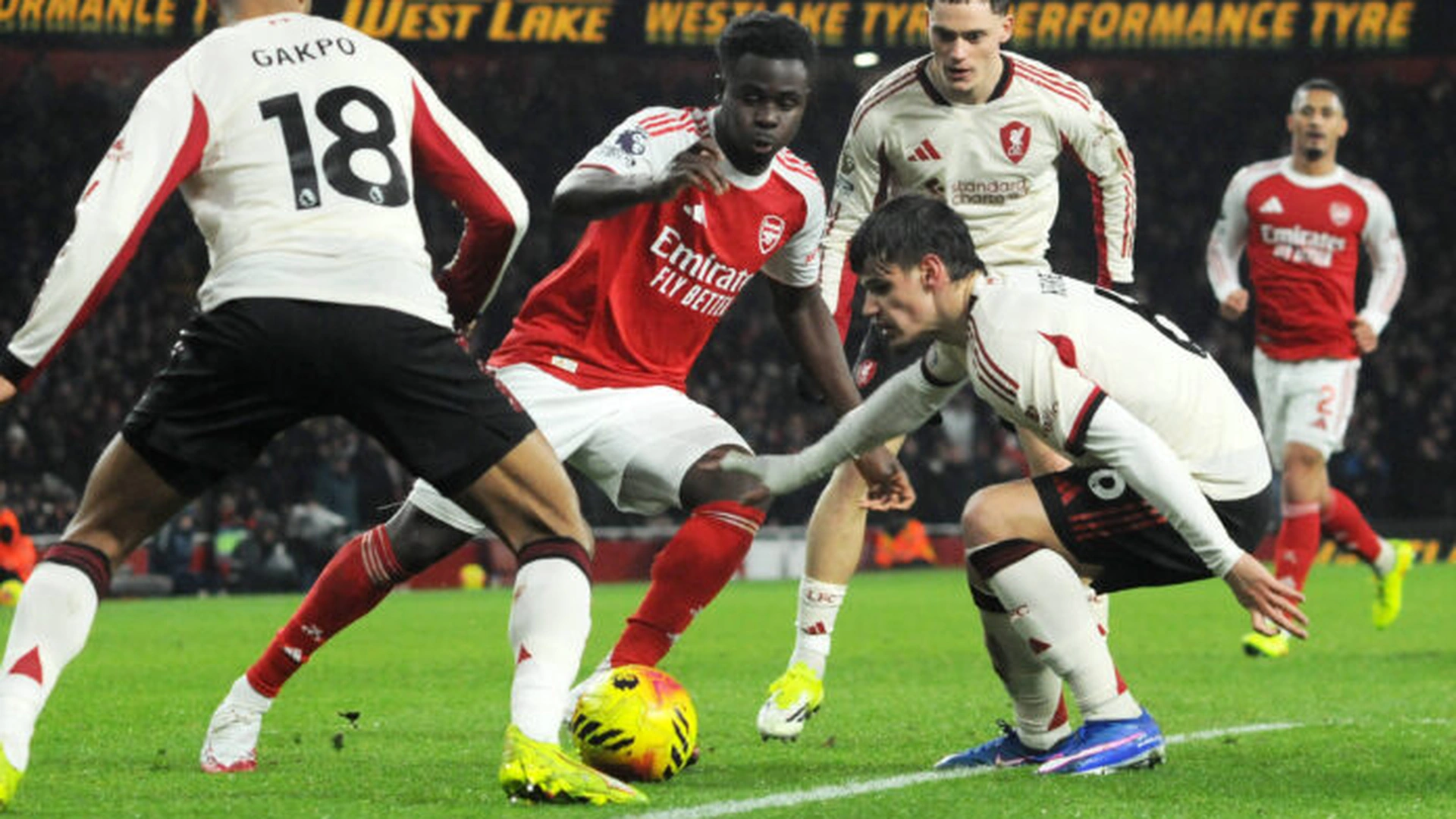
Arsenal remain firmly on course in the Premier League title race, yet their goalless draw with Liverpool at the Emirates Stadium revealed a deeper and more complex challenge than points alone. Despite extending their lead at the top of the table, the evening exposed a growing disconnect between performance and emotion, between control on the pitch and unrest in the stands. For a club seeking its first league title in more than two decades, the match offered a revealing snapshot of how history, expectation, and anxiety can shape the present.
This was not a night defined by drama or decisive moments. Instead, it was marked by restraint, caution, and an atmosphere that felt heavy despite Arsenal’s commanding league position. The result suited Liverpool’s circumstances and strategy, but for Arsenal, the evening raised questions about belief, patience, and whether success built on control can flourish amid audible doubt.
A stalemate that changes little on the table but much in tone
From a purely statistical perspective, the draw altered little. Arsenal extended their lead at the summit from five points to six, maintaining their status as the Premier League’s most consistent side. They remain top of the Champions League standings and boast one of the strongest home records in English football, with fourteen wins from sixteen matches at the Emirates across all competitions.
Yet football rarely exists only on spreadsheets. The emotional texture of this match told a more complicated story. The final whistle was met not with applause or encouragement, but with a strange stillness. Music drifted over the public address system, but it struggled to mask the sense of anticlimax. The crowd did not turn hostile, yet nor did it celebrate a team still firmly in control of the title race.
For Arsenal supporters, the match confirmation of progress came wrapped in frustration. The absence of urgency, the long stretches of low tempo possession, and the lack of attacking incision in the second half fed into a broader unease that has lingered throughout the season.
Liverpool’s calculated approach and disciplined restraint
Liverpool arrived in north London with a depleted squad and a clear plan. Under Arne Slot, they prioritised control, risk management, and the deliberate slowing of the game. This was not an attempt to overwhelm Arsenal, but to neutralise them.
Long phases of sterile possession dominated the second half, with Liverpool recording sixty seven percent of the ball after the interval. That possession translated into five shots, all taken by Dominik Szoboszlai from distance, all off target. The aim was not to chase goals, but to remove momentum and deny Arsenal the emotional lift that often accompanies sustained pressure at home.
Virgil van Dijk repeatedly delayed on the ball, inviting a press that never fully arrived. Liverpool’s passing sequences became a form of white noise, methodical and repetitive, designed to sap energy from both the opposition and the crowd. It was effective. Arsenal failed to register a single shot between the forty third minute and full time.
Given the context, Liverpool will see this as a success. With limited options on the bench and an eye on preserving their season, they left with a point and minimal damage.
Arsenal’s control without release
Arsenal’s performance was neither poor nor passive. In the first half, there were moments of genuine quality. Bukayo Saka carried a constant threat down the right, twisting past defenders and forcing Liverpool to retreat. Conor Bradley attempted an ambitious lob that briefly lifted the tempo. Declan Rice anchored midfield with authority, while William Saliba and Jurrien Timber circulated possession with calm assurance.
Yet the longer the match wore on, the more the game settled into a predictable rhythm. Arsenal were patient, almost to a fault. They moved the ball with precision, but rarely with acceleration. Their structure remained intact, their spacing disciplined, but the willingness to disrupt Liverpool’s shape diminished as the evening progressed.
This approach reflects Mikel Arteta’s broader philosophy. Arsenal are built on control, repetition, and calculated pressure. They trust that sustained positioning in dangerous areas will eventually create openings. It is a system that has delivered consistency and points, but on this night it also produced a sense of emotional distance between the team and its supporters.
The sound of unease inside the Emirates
As the second half unfolded, a different contest began to take shape in the stands. Groans rippled through the Emirates at moments that would once have passed unnoticed. A throw in taken too slowly. A slightly misplaced pass. A promising dribble followed by an overhit final ball.
These reactions were not expressions of anger, but of impatience and fatigue. The Emirates groan has become a recognisable phenomenon, a low rumble of dissatisfaction that reflects more than the events of a single match. It is the accumulated weight of expectation, shaped by twenty two years without a league title and repeated near misses that have left supporters wary of optimism.
Even moments of individual brilliance were met with audible frustration if they did not end in a clear chance. When Gabriel Martinelli escaped two Liverpool players only to see his through ball run out of play, the reaction was immediate. The message was unspoken but clear. Good was no longer enough.
The psychological burden of history
For the players, this environment presents a subtle challenge. Arsenal are statistically the strongest team in the country at present. They have depth, resilience, and players capable of decisive moments. Yet they are performing under the weight of a fan base that has learned to guard itself against disappointment.
What must it feel like to deliver sustained excellence and still sense doubt in the air. To win fourteen of sixteen home matches and yet hear groans when control replaces urgency. The question is not whether supporters are entitled to feel anxious, but whether that anxiety risks influencing performances at critical moments.
Arteta has repeatedly spoken about alignment between players and fans. He has encouraged supporters to create intensity, to turn patience into belief. Structural changes at the Emirates reflect this aim. The opening of the tunnel roof allows fans to see players emerge. The decision to stop broadcasting the second half on concourse screens encourages punctual returns to seats.
Yet these measures address symptoms rather than causes. The deeper issue is emotional. A fan base shaped by long years of frustration does not easily surrender its scepticism, even when evidence suggests progress is real.
A contrast between home and away support
The difference in atmosphere becomes clearer when comparing home and away matches. At Bournemouth last weekend, Arsenal conceded after a mistake by Gabriel Magalhaes. The response from travelling supporters was immediate and supportive. They sang his name, reinforcing belief rather than doubt. Minutes later, Gabriel surged forward and scored.
The sequence offered a clear illustration of how support can influence momentum. Away from home, Arsenal fans often display a more unified and unconditional backing. At the Emirates, expectation sharpens reactions. The stakes feel heavier. Every misstep carries echoes of seasons gone wrong.
This contrast does not imply blame, but it highlights the emotional complexity surrounding a club so close to ending a long wait for domestic supremacy.
Why this season still represents progress
Despite the tension, the broader picture remains positive. Arsenal are six points clear at the top of the Premier League. Manchester City have drawn three consecutive matches. Other challengers have failed to apply sustained pressure. Arsenal have key players returning from injury and a squad that has shown resilience across competitions.
Their style may appear calculated, even cold, but it has been effective. The refusal to chase moments or abandon structure reflects a maturity that has often been absent in previous title challenges. This is a team designed to accumulate points steadily rather than thrill impulsively.
In that sense, the draw with Liverpool can be seen as part of a longer process. Not every match will provide release. Some will test patience. The challenge for Arsenal is to ensure that control does not slide into caution, and that belief remains intact on both sides of the touchline.
Control as an act of faith
Arteta’s project asks supporters to trust a method that prioritises repetition over spontaneity. The promise is simple but demanding. If Arsenal continue to occupy dangerous areas, if they continue to move the ball with purpose and discipline, goals and victories will follow.
Up close, this approach can feel bloodless. It lacks the chaos that often fuels emotional connection. Yet it is also a statement of belief in process over impulse. For a club scarred by collapses and false dawns, that belief requires courage.
The draw against Liverpool did not weaken Arsenal’s position, but it did underline the psychological dimension of a title race. Success will depend not only on tactics and fitness, but on whether the club and its supporters can align belief with performance.
As the season enters its decisive phase, Arsenal remain in control of their destiny. The question is whether they can carry that control with confidence, and whether the sound inside the Emirates can shift from anxious restraint to collective trust.

Edit Profile
Help improve @KR

Was this page helpful to you?
Contact Khogendra Rupini
Are you looking for an experienced developer to bring your website to life, tackle technical challenges, fix bugs, or enhance functionality? Look no further.
I specialize in building professional, high-performing, and user-friendly websites designed to meet your unique needs. Whether it’s creating custom JavaScript components, solving complex JS problems, or designing responsive layouts that look stunning on both small screens and desktops, I can collaborate with you.
Create something exceptional with us. Contact us today
Open for Collaboration
If you're looking to collaborate, I’m available for a variety of professional services, including -
- Website Design & Development
- Advertisement & Promotion Setup
- Hosting Configuration & Deployment
- Front-end & Back-end Code Implementation
- Code Testing & Optimization
- Cybersecurity Solutions & Threat Prevention
- Website Scanning & Malware Removal
- Hacked Website Recovery
- PHP & MySQL Development
- Python Programming
- Web Content Writing
- Protection Against Hacking Attempts