Intel Shares Surge After CEO White House Meeting Signals Rising Federal Backing
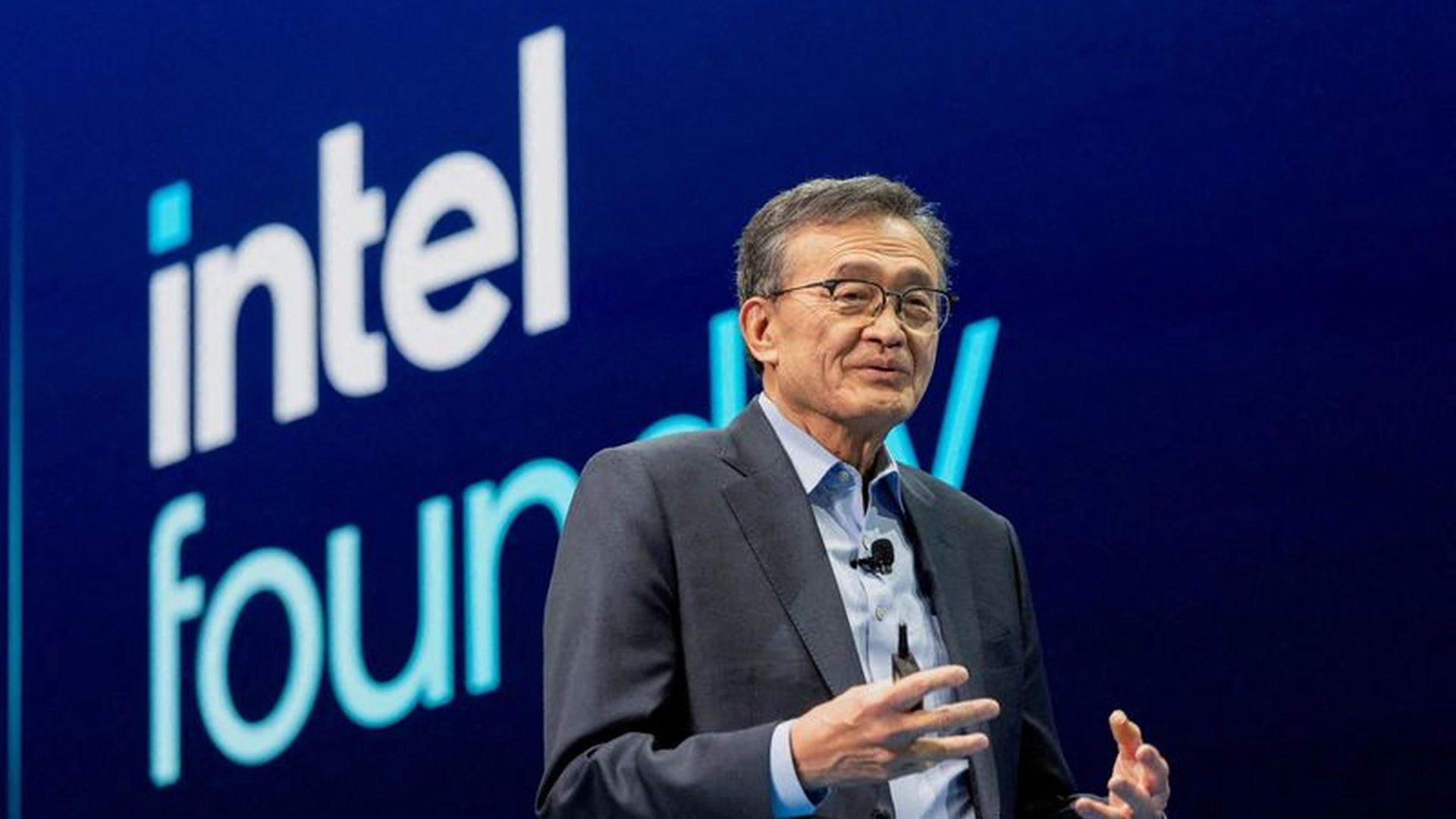
Intel shares posted a sharp rally after the company confirmed a high level meeting between its chief executive and President Donald Trump, underscoring the growing strategic importance of the US chipmaker at a time when semiconductor manufacturing has become a national economic priority. The stock climbed 6 percent on Friday, extending a months long recovery that has seen Intel’s market value more than double since the United States government became a shareholder last year. For investors and the broader technology industry, the move highlights how public policy, industrial strategy and corporate performance are increasingly intertwined in the global race for advanced chips.
Market reaction reflects confidence boost
Intel stock rose strongly following news of the meeting, closing the session with a gain of more than 6 percent. The rally continued a broader upswing that has been underway since August, when the White House negotiated a major equity investment in the company. Since that deal, Intel shares have more than doubled, reflecting renewed confidence among investors that the chipmaker has secured long term political and financial backing as it works to rebuild its manufacturing leadership.
The immediate market response suggests that investors viewed the meeting as a positive signal rather than a symbolic gesture. Public praise from the president and explicit acknowledgment of the government’s shareholder status reinforced the perception that Intel now occupies a central role in US industrial strategy. For a company that has struggled in recent years with delays and competitive pressure, the endorsement offered a clear vote of confidence.
White House backing becomes explicit
President Trump publicly addressed the meeting in a post on Truth Social, emphasizing the federal government’s stake in the company. He wrote that the United States government was proud to be a shareholder of Intel, a statement that marked a rare and unusually direct acknowledgment of government ownership in a publicly traded technology firm.
The president also praised Intel chief executive Lip Bu Tan, describing him as very successful and highlighting the company’s recent product achievements. Trump specifically pointed to a newly launched Intel chip that was designed built and packaged entirely in the United States, reinforcing the administration’s emphasis on domestic manufacturing and supply chain security.
Such public messaging carries weight beyond the immediate market reaction. It signals that Intel’s progress is being closely monitored at the highest levels of government and that continued execution could translate into sustained political support. For a sector facing intense global competition, that backing may prove strategically significant.
CEO response highlights alignment with policy goals
Following the meeting, Tan responded in a post on X, stating that he was honored by the recognition and delighted to have the full support and encouragement of President Trump and US Secretary of Commerce Howard Lutnick. His remarks underscored a clear alignment between Intel’s corporate strategy and the administration’s industrial objectives.
Tan also used the opportunity to highlight a concrete milestone. He confirmed that Intel’s latest Core Ultra Series 3 CPU processors are now shipping. These processors represent the company’s first major product built on its advanced Intel 18A manufacturing process, a node that has been closely watched by analysts and policymakers alike.
By linking the White House meeting to a specific product achievement, Tan reinforced the message that Intel’s turnaround is not solely based on financial support or political goodwill but also on tangible progress in technology and manufacturing execution.
A landmark federal investment
The backdrop to the current rally is the White House agreement reached in August, when the US government negotiated an 8.9 billion dollar investment in Intel. As part of the deal, the government acquired approximately 433.3 million shares at a price of 20.47 dollars per share.
At the time, the investment was framed as both a financial commitment and a strategic move aimed at strengthening domestic semiconductor production. The deal positioned the government as a significant shareholder, aligning public interests with Intel’s long term performance.
Since then, the value of that stake has risen dramatically. Based on current share prices, the government’s holdings are now worth roughly 19 billion dollars. The sharp increase underscores the scale of the stock’s recovery and highlights how closely Intel’s fortunes are now tied to broader policy initiatives.
Stock performance reflects shifting narrative
Intel shares are up nearly 20 percent since the start of the year, adding to gains recorded in the final months of the previous year. The rebound marks a notable shift in narrative for a company that had faced persistent skepticism from investors over its ability to compete with rivals in advanced chip manufacturing.
For much of the past decade, Intel struggled with production delays and lost market share in key segments. Those challenges weighed heavily on its stock and eroded confidence in its long term prospects. The recent rally suggests that investors are reassessing those assumptions in light of new leadership, government backing and early signs of manufacturing progress.
While the stock remains below historical highs, the pace of the recovery reflects growing optimism that Intel’s strategy is beginning to gain traction.
Manufacturing focus at the center of strategy
A central theme emerging from the White House meeting and subsequent statements is the emphasis on domestic manufacturing. Trump’s praise for a chip designed built and packaged in the United States aligns with the administration’s broader goal of reducing reliance on overseas supply chains.
Intel’s Intel 18A process is a key pillar of that effort. The technology is intended to restore the company’s competitiveness at the leading edge of semiconductor manufacturing. The Core Ultra Series 3 processors built on this process serve as a proof point that the company can deliver advanced products using its own fabs.
For policymakers, such progress supports the argument that federal investment and policy support can accelerate the revival of domestic chip production. For Intel, it provides an opportunity to reassert itself as both a commercial and strategic asset.
The political dimension of a corporate recovery
The relationship between Intel and the US government now extends beyond regulation and incentives to include direct ownership and public endorsement. This dynamic introduces a political dimension to Intel’s recovery that is unusual for a major technology company.
Trump’s statement that the government is proud to be a shareholder sends a strong signal about the administration’s priorities. It suggests that Intel is viewed not just as a private enterprise but as a critical component of national economic and security interests.
At the same time, such visibility also brings heightened scrutiny. As a government backed company, Intel’s performance and strategic decisions are likely to attract closer attention from both policymakers and the public. Maintaining credibility will depend on consistent execution and transparent communication.
Implications for investors
For investors, the developments raise important questions about valuation and risk. The government’s growing stake has clearly boosted confidence and helped stabilize the stock. However, it also means that Intel’s future performance may be influenced by policy shifts and political considerations.
The sharp rise in the value of the federal stake highlights the potential upside of aligning with national priorities. Yet it also underscores the importance of monitoring how that relationship evolves over time. Investors will be watching closely to see whether government support translates into sustained operational improvements and competitive gains.
The near term rally suggests optimism, but long term performance will depend on Intel’s ability to deliver on its manufacturing roadmap and compete effectively in a fast moving industry.
Broader significance for the US tech sector
Intel’s resurgence has implications beyond the company itself. It reflects a broader trend of increased government involvement in the technology sector, particularly in areas deemed strategically vital. Semiconductors sit at the heart of modern economies, powering everything from consumer electronics to defense systems.
By taking an equity stake and publicly endorsing Intel’s progress, the US government has signaled its willingness to play an active role in shaping the future of the industry. This approach may influence how other companies and investors think about partnerships between the public and private sectors.
For the US tech ecosystem, the message is clear. Companies that align with national priorities around manufacturing and innovation may find new sources of support, while those that rely heavily on overseas production could face growing pressure.
Leadership and execution under the spotlight
The role of Lip Bu Tan has emerged as a focal point in Intel’s evolving story. Trump’s praise of the chief executive underscores the importance of leadership in restoring confidence. Tan took the helm amid significant challenges, including cost cutting measures and workforce reductions, as Intel sought to streamline operations.
The company’s decision to lay off nearly 4000 employees as part of a broader restructuring effort reflected the difficult choices required to stabilize the business. While such measures can be disruptive, they were positioned as necessary steps to refocus resources on core priorities like manufacturing and product development.
As Intel moves forward, Tan’s ability to balance financial discipline with technological ambition will be critical. The White House meeting has elevated his profile and placed additional expectations on his leadership.
Looking ahead
The surge in Intel shares following the White House meeting highlights a moment of renewed momentum for a company at the center of US technology policy. The combination of federal investment, public endorsement and early manufacturing progress has reshaped perceptions of Intel’s prospects.
Yet the path ahead remains complex. The semiconductor industry is highly competitive, and success will depend on sustained innovation and flawless execution. Government support can provide a foundation, but it cannot substitute for technological leadership.
For now, the market reaction suggests that investors believe Intel is moving in the right direction. The dramatic increase in the value of the US government’s stake serves as a tangible measure of that confidence. Whether this momentum can be maintained will depend on how effectively Intel translates political backing into lasting competitive advantage.
As the intersection of technology and policy continues to deepen, Intel’s experience may offer a case study in how national strategy and corporate recovery can converge. For readers tracking the future of American manufacturing and the evolving role of government in the tech sector, the developments around Intel represent a significant chapter in that story.

Edit Profile
Help improve @KR

Was this page helpful to you?
Contact Khogendra Rupini
Are you looking for an experienced developer to bring your website to life, tackle technical challenges, fix bugs, or enhance functionality? Look no further.
I specialize in building professional, high-performing, and user-friendly websites designed to meet your unique needs. Whether it’s creating custom JavaScript components, solving complex JS problems, or designing responsive layouts that look stunning on both small screens and desktops, I can collaborate with you.
Create something exceptional with us. Contact us today
Open for Collaboration
If you're looking to collaborate, I’m available for a variety of professional services, including -
- Website Design & Development
- Advertisement & Promotion Setup
- Hosting Configuration & Deployment
- Front-end & Back-end Code Implementation
- Code Testing & Optimization
- Cybersecurity Solutions & Threat Prevention
- Website Scanning & Malware Removal
- Hacked Website Recovery
- PHP & MySQL Development
- Python Programming
- Web Content Writing
- Protection Against Hacking Attempts