De Klerk Defines Opening Night as WPL Returns With Drama and Redemption
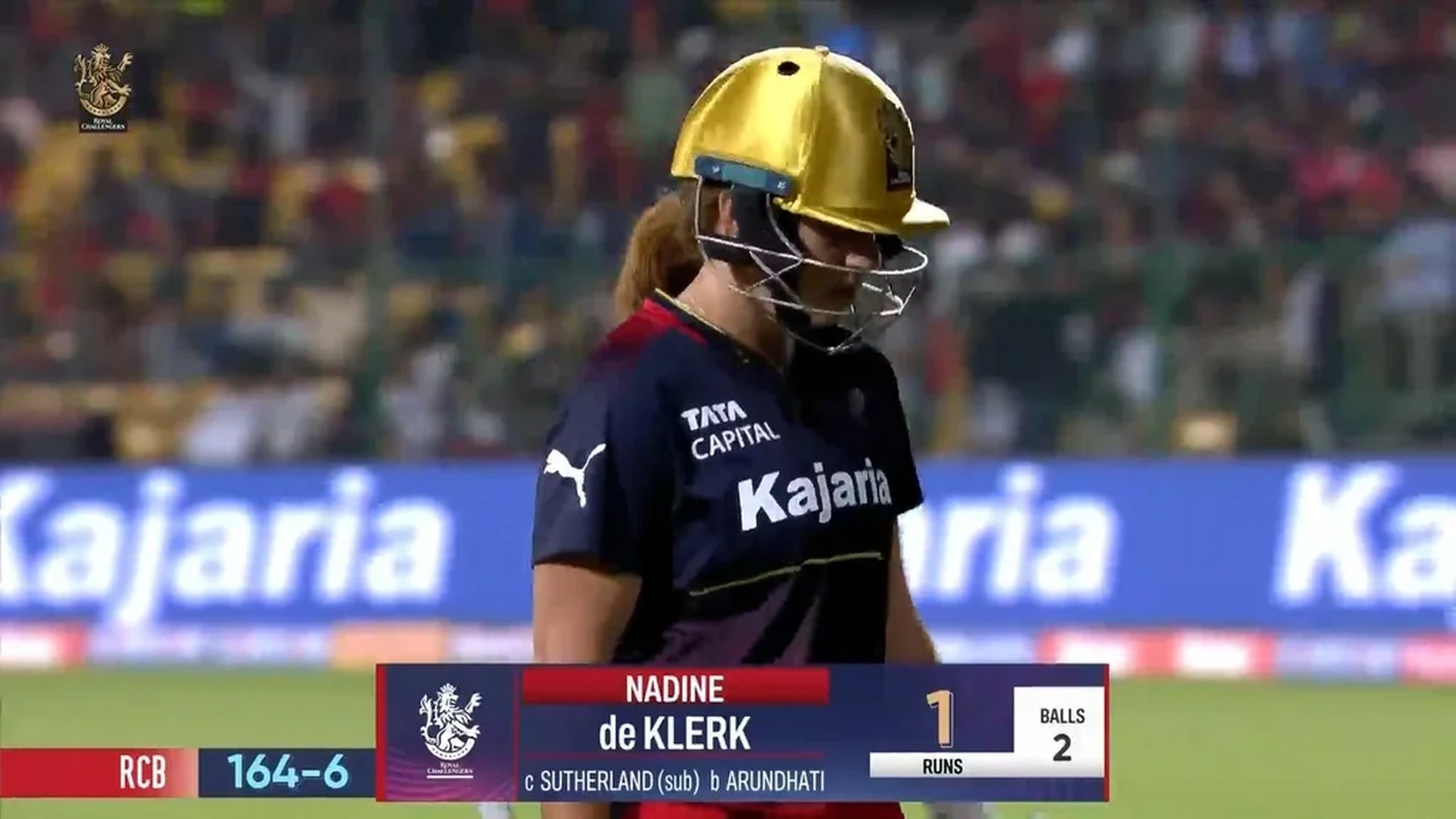
The Women’s Premier League began its 2026 season with a match that underlined why the tournament has become one of the most compelling events in the global cricket calendar. At the DY Patil Stadium in Navi Mumbai, Royal Challengers Bengaluru edged defending champions Mumbai Indians by three wickets in a finish that blended pressure, skill and narrative symmetry. At the centre of it all was Nadine de Klerk, whose all round performance transformed the opening night into a statement about resilience, adaptability and elite temperament.
This was not simply an early season victory. It was a reminder of how quickly elite sport can reshape personal history. At the same venue where she had endured heartbreak only months earlier, de Klerk delivered a performance that influenced both the result and the tone of the season ahead. For viewers and followers of the league, the match mattered because it showcased the depth, competitiveness and emotional weight that now define the WPL.
A Return to a Ground Marked by Memory
For de Klerk, DY Patil Stadium carried a personal backstory that added quiet significance to the night. Just months earlier, she had been the final South African wicket to fall during the ODI World Cup final, watching India celebrate a title win on the same ground. On Friday, she returned to that setting wearing Royal Challengers Bengaluru colours and left with the Player of the Match award, having guided her team through a demanding chase in front of a packed and partisan crowd.
That the opposition was led by Harmanpreet Kaur only sharpened the symmetry. Harmanpreet had captained India during that World Cup triumph and now stood on the opposite side as de Klerk played a decisive role in undoing Mumbai Indians. Yet the significance of the performance extended beyond the narrative parallels. What defined the innings was the context of the match and the clarity with which de Klerk responded to pressure.
Early Collapse Sets the Challenge
Mumbai Indians had set Royal Challengers Bengaluru a target of 155, a total that reflected a competitive but chaseable score at a venue known for high scoring encounters. The challenge intensified early when RCB stumbled to 65 for 5 within eight overs. The chase appeared to be slipping away, with wickets falling regularly and the required rate climbing beyond comfortable limits.
At that stage, de Klerk was already central to the contest. Earlier in the evening, she had delivered a decisive spell with the ball, removing Mumbai Indians batters at numbers three, four, five and six. Among them was Harmanpreet, a dismissal that disrupted the middle order and prevented Mumbai from fully capitalising on their start.
Despite that impact, the chase demanded a different skill set. During the strategic timeout in the ninth over, de Klerk spoke directly with head coach Malolan Rangarajan, outlining a calculated approach. She expressed confidence in chasing at a rate of just over eight runs per over in the final phase, a plan that acknowledged the scoreboard pressure without panic.
An Uncharacteristic Start at the Crease
When de Klerk settled in, her approach initially surprised those familiar with her power hitting. Her first 15 deliveries produced only ten runs and no boundaries. There was no visible struggle, but the timing was not quite there and the fluency she is known for seemed momentarily absent. The required rate hovered above nine, keeping the pressure firmly on RCB.
This phase was notable because it demonstrated restraint. Rather than forcing shots early, de Klerk absorbed the situation, allowing herself time to adjust. That composure would later prove critical. The breakthrough came when Nat Sciver Brunt missed her yorker, giving de Klerk the width she needed to carve her first boundary of the innings. Shortly after, she stepped down the track to Saika Ishaque and sent the ball over the bowler’s head, a trademark stroke that signalled a shift in intent.
Momentum Swings Back and Forth
Despite those moments, the contest remained finely balanced. Mumbai Indians regained control through disciplined bowling. Nicola Carey delivered a double wicket over that cost just four runs, while Amanjot Kaur followed with another economical spell. Suddenly, the asking rate climbed past eleven, stretching the original plan that de Klerk had outlined during the timeout.
The atmosphere inside the stadium mirrored the tension on the field. Chants for Mumbai Indians were met by equally loud support for RCB, creating a split crowd that amplified every moment. With each delivery, the pressure intensified, culminating in a dramatic nineteenth over that would reshape the match.
A Frenetic Nineteenth Over
Shabnim Ismail, one of the fastest bowlers in the game and a former South Africa teammate of de Klerk, was entrusted with the penultimate over. Almost immediately, she created an opportunity. De Klerk mistimed a delivery straight to long off, where Sciver Brunt spilled a straightforward catch. The reaction was instant, a collective gasp followed by a roar of disbelief.
De Klerk capitalised without hesitation. The very next ball was sent back over Ismail’s head for a boundary, punishing the missed chance. The drama escalated further when another mistimed shot went to deep midwicket. Amelia Kerr, who had just taken a sharp catch moments earlier, dropped a sitter. Alert to a second run, Kerr fired the ball toward the striker’s end, only for wicketkeeper G Kamalini to fumble, allowing the ball to slip free.
Three lives in four balls, involving two of the world’s finest fielders, shifted the momentum decisively. Eighteen runs were required from the final over, and the contest stood on a knife edge.
A Calculated Final Over Under Pressure
Despite Amanjot Kaur conceding just 18 runs from her three overs, Harmanpreet handed the ball to the experienced Sciver Brunt for the final over. De Klerk briefly conferred with her partner Prema Rawat, scanned the field and prepared for the decisive moments.
The first two deliveries yielded no runs. A shot toward deep square leg was not placed well enough, and de Klerk denied the single, visibly frustrated. The second ball was sliced to extra cover, adding to the tension. Then the shift came with unmistakable force.
A slot delivery was launched over long off for six. A slower ball on a back of a length was pulled to backward square leg for four. Another similar delivery disappeared over deep midwicket. With each strike, de Klerk’s intent sharpened, and the pressure transferred firmly to the bowler.
With two runs required from the final ball, Mumbai Indians adjusted the field, adding a short fine leg. Harmanpreet wiped the damp ball and returned it to Sciver Brunt. The yorker missed its mark. De Klerk drilled the ball straight down the ground, raising her arms in celebration before it reached the boundary. The crowd erupted as RCB completed a remarkable chase.
More Than a Finisher’s Role
The innings stood out not just for its conclusion but for its structure. De Klerk played from the seventh over through to the final ball, managing the tempo and adapting her approach as the situation evolved. In an era where batting roles are increasingly specialised, her performance blurred conventional labels.
Head coach Malolan Rangarajan was quick to emphasise this distinction. He noted that the performance should not be reduced to a finisher’s role, highlighting that de Klerk had effectively handled the entire batting responsibility across the latter half of the innings. Her ability to construct an innings under pressure added depth to her reputation as a power hitter.
All Round Impact Shapes the Result
De Klerk’s contribution with the bat would have been enough to define the night, but her influence extended across both disciplines. Her four key wickets earlier in the match disrupted Mumbai Indians’ middle order and ensured the target remained within reach. Removing batters at crucial positions, including the captain, tilted the balance before the chase had even begun.
This combination of impact underscored why she is valued as a genuine all rounder. She did not simply respond to the match situation; she actively shaped it, influencing momentum at multiple stages.
A Statement for the Season Ahead
As the WPL enters its fourth season, matches like this reinforce the league’s growing stature. The opening night delivered elite competition, individual excellence and emotional resonance, elements that resonate strongly with a global audience. For Royal Challengers Bengaluru, the victory provided early confidence and belief. For Mumbai Indians, it was a reminder of the fine margins that define the league.
For de Klerk, the night represented something more personal. Whether or not it rewrote memories of past heartbreak, it demonstrated her ability to meet pressure with clarity and control. In doing so, she set a benchmark for performances to come and ensured that the 2026 season began with a moment that will be remembered long after the opening night.
The Women’s Premier League has built its reputation on matches that combine quality with narrative depth. On this opening night in Navi Mumbai, Nadine de Klerk ensured that the season began in exactly that spirit, with a performance that was as composed as it was commanding.

Edit Profile
Help improve @KR

Was this page helpful to you?
Contact Khogendra Rupini
Are you looking for an experienced developer to bring your website to life, tackle technical challenges, fix bugs, or enhance functionality? Look no further.
I specialize in building professional, high-performing, and user-friendly websites designed to meet your unique needs. Whether it’s creating custom JavaScript components, solving complex JS problems, or designing responsive layouts that look stunning on both small screens and desktops, I can collaborate with you.
Create something exceptional with us. Contact us today
Open for Collaboration
If you're looking to collaborate, I’m available for a variety of professional services, including -
- Website Design & Development
- Advertisement & Promotion Setup
- Hosting Configuration & Deployment
- Front-end & Back-end Code Implementation
- Code Testing & Optimization
- Cybersecurity Solutions & Threat Prevention
- Website Scanning & Malware Removal
- Hacked Website Recovery
- PHP & MySQL Development
- Python Programming
- Web Content Writing
- Protection Against Hacking Attempts