Dow Jones Slides Nearly 700 Points as Tariff Threats and Geopolitical Tensions Shake Wall Street
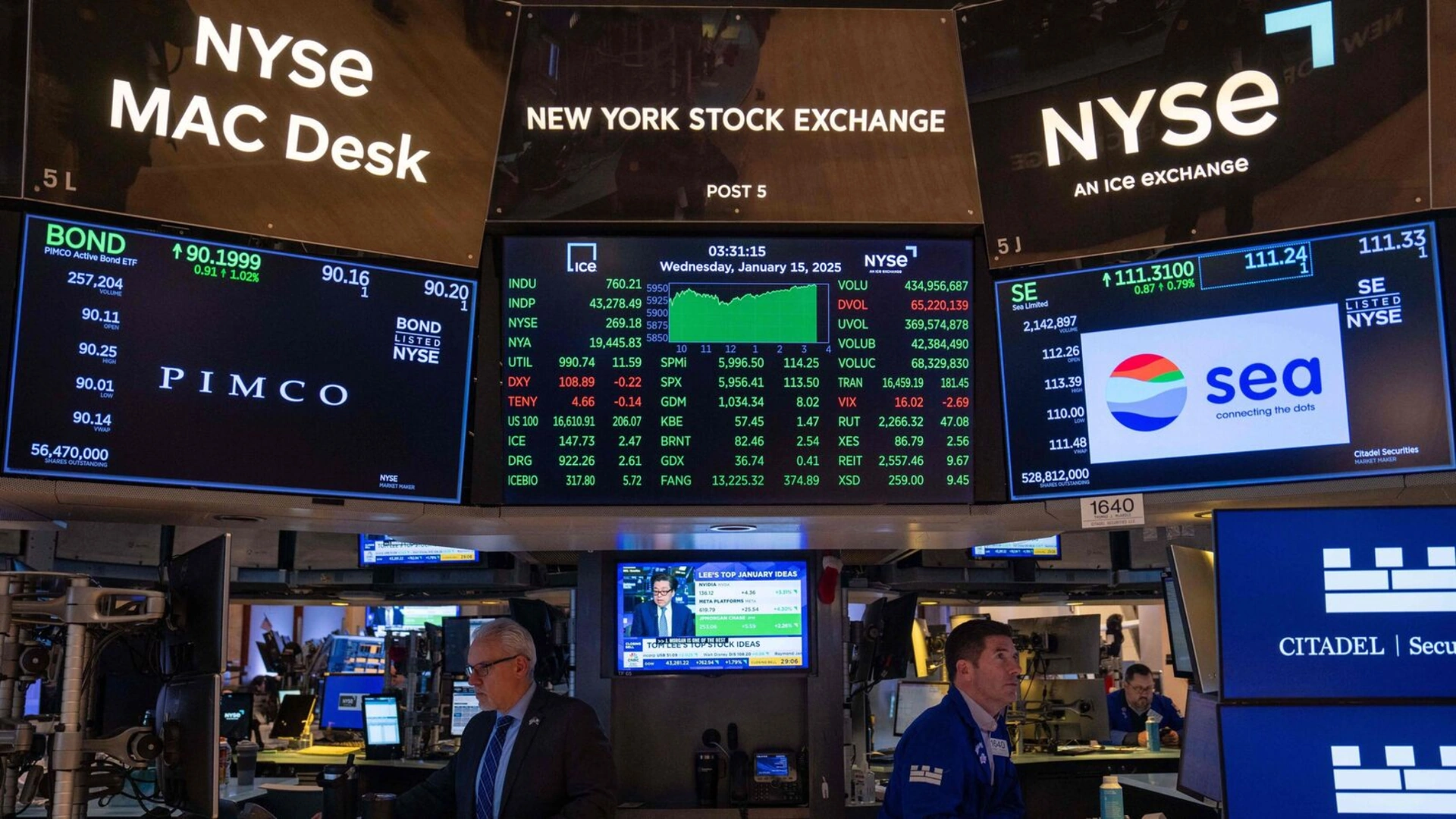
The United States stock market suffered a sharp sell off on Tuesday, with the Dow Jones Industrial Average tumbling close to 700 points, as renewed tariff threats from President Donald Trump and escalating geopolitical risks unsettled investors.
The steep decline underscored growing anxiety about global trade stability, rising bond yields and mounting international tensions, all of which combined to trigger a broad retreat from risk assets.
The market reaction matters because it reflects how quickly geopolitical decisions and policy signals can ripple through global financial systems, affecting household investments, retirement portfolios and broader economic confidence.
Wall Street Retreats as Risk Appetite Weakens
U.S. equities opened sharply lower and remained under pressure throughout the session. The Dow Jones Industrial Average fell roughly one point five percent, while the S and P five hundred declined about one point four percent.
The Nasdaq Composite dropped close to one point seven percent, with technology stocks bearing the brunt of the sell off.
The decline marked one of the most significant single day losses in recent weeks and followed a market closure for the Martin Luther King Jr. Day holiday, which left investors reacting to several developments at once.
Market Volatility Surges as Sentiment Turns Fragile
The sudden repricing highlighted fragile sentiment and the market’s sensitivity to policy uncertainty.
The Cboe Volatility Index, often referred to as Wall Street’s fear gauge, climbed above twenty for the first time since late November.
The rise signaled heightened concern among traders and a shift toward defensive positioning across asset classes.
Tariff Threats Linked to Greenland Spark Market Shock
The immediate catalyst for the sell off was President Trump’s announcement of sweeping tariff measures tied to his push for United States control over Greenland.
Over the weekend, Trump stated that the U.S. would impose escalating tariffs on imports from eight NATO countries unless negotiations resulted in what he described as the complete and total purchase of Greenland.
According to the plan, tariffs would begin at ten percent on February one and rise to twenty five percent by June one if no agreement is reached.
U.S. Allies Targeted Under Proposed Tariff Plan
The affected countries include Denmark, Norway, Sweden, France, Germany, the United Kingdom, the Netherlands and Finland, all of which are key U.S. allies and major trading partners.
Trump also warned of potential two hundred percent tariffs on French wines and champagne following diplomatic disputes with French President Emmanuel Macron.
Additional criticism was directed at the United Kingdom over its decision to transfer control of the Chagos Islands to Mauritius, which Trump linked to broader national security concerns tied to Greenland.
Investor Fears Grow Over Renewed Trade Retaliation
Investors reacted swiftly to the announcement, fearing a renewed cycle of trade retaliation that could disrupt global supply chains, raise costs for businesses and weigh on economic growth.
Policy analysts noted that markets are particularly sensitive to trade tensions involving allies, as such disputes can escalate quickly and undermine long standing economic relationships.
European Response Raises Risk of Retaliation
European leaders responded forcefully to the tariff threats, describing them as unacceptable and inconsistent with principles of cooperation among allies.
Officials across the European Union signaled that countermeasures are under consideration, including the possible use of the bloc’s anti coercion instrument.
This tool is designed to deter and respond to punitive economic actions by third countries.
European Markets Slide Ahead of U.S. Session
The prospect of retaliation added another layer of uncertainty for investors.
European equity markets fell ahead of the U.S. session, with benchmarks such as France’s CAC forty, Germany’s DAX and the United Kingdom’s FTSE one hundred all posting losses.
In some cases, declines approached nearly two percent, reflecting concerns that renewed trade friction could slow growth across the region.
Technology Stocks Lead Market Declines
Technology shares were among the hardest hit sectors during Tuesday’s session.
Major names such as Nvidia, Advanced Micro Devices and Alphabet fell more than two percent, contributing significantly to losses on the Nasdaq Composite.
Rising Yields Pressure Growth Oriented Stocks
Rising Treasury yields played a key role in pressuring growth oriented stocks.
Higher yields increase borrowing costs and reduce the present value of future earnings, making high valuation technology companies less attractive to investors.
As yields climbed, traders reduced exposure to these stocks in favor of more defensive assets.
Bond Market Signals Broad Repricing
Treasury markets reflected similar unease, as investors sold U.S. government bonds, pushing yields higher.
The rise in yields indicated a broad repricing of risk rather than a simple flight to safety.
At the same time, the U.S. dollar weakened against other major currencies, suggesting shifting confidence in U.S. assets amid policy uncertainty.
Gold and Silver Attract Safe Haven Demand
In contrast to equities and bonds, precious metals rallied sharply.
Gold traded near record highs as investors sought protection against volatility and geopolitical risk.
Silver also posted strong gains, benefiting from the same safe haven flows.
Earnings Season Adds Another Layer of Complexity
The market turbulence unfolded as the U.S. earnings season began to gather pace.
Several major companies are set to report results in the coming days, including Netflix, Charles Schwab, Johnson and Johnson and Intel.
Geopolitical Tensions in the Middle East Weigh on Sentiment
Beyond trade concerns, investors are also grappling with rising geopolitical stress in the Middle East.
Iran has experienced widespread protests driven by economic hardship and political conditions, with reports of nationwide internet blackouts and heavy government crackdowns.
Such internal instability raises concerns about potential spillover effects across the region.
Energy Market Risks and Inflation Concerns
Geopolitical tensions involving Iran carry particular significance for global energy markets.
Iran has previously threatened to disrupt shipping through the Strait of Hormuz, a critical transit route that handles nearly one fifth of global crude oil exports.
Any disruption in this region could push oil prices higher, potentially reigniting inflationary pressures.
Market Outlook Remains Volatile and Uncertain
Tuesday’s sharp decline highlighted the fragile balance underpinning global financial markets.
The combination of aggressive trade rhetoric, rising bond yields and geopolitical uncertainty has increased volatility and reduced investor confidence.
For now, Wall Street appears firmly in risk off mode, with investors prioritizing capital preservation and liquidity.


Edit Profile
Help improve @KR
Was this page helpful to you?
Contact Khogendra Rupini
Are you looking for an experienced developer to bring your website to life, tackle technical challenges, fix bugs, or enhance functionality? Look no further.
I specialize in building professional, high-performing, and user-friendly websites designed to meet your unique needs. Whether it’s creating custom JavaScript components, solving complex JS problems, or designing responsive layouts that look stunning on both small screens and desktops, I can collaborate with you.
Create something exceptional with us. Contact us today
Open for Collaboration
If you're looking to collaborate, I’m available for a variety of professional services, including -
- Website Design & Development
- Advertisement & Promotion Setup
- Hosting Configuration & Deployment
- Front-end & Back-end Code Implementation
- Code Testing & Optimization
- Cybersecurity Solutions & Threat Prevention
- Website Scanning & Malware Removal
- Hacked Website Recovery
- PHP & MySQL Development
- Python Programming
- Web Content Writing
- Protection Against Hacking Attempts