India and European Union Near Landmark Trade Pact Covering Nearly a Quarter of Global Economy
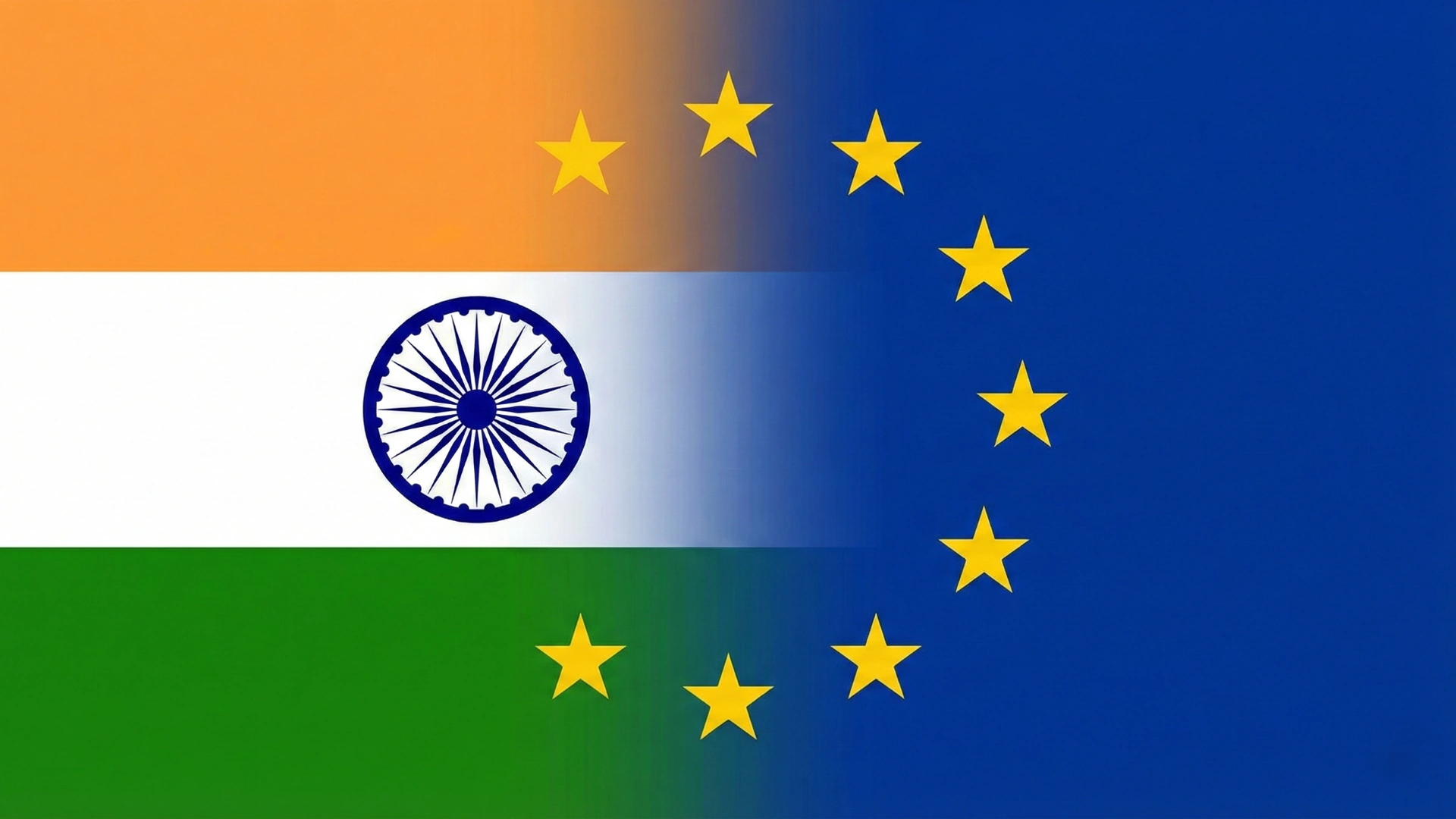
India and the European Union are approaching what leaders on both sides describe as a historic moment in their economic relationship, with negotiations for a long awaited free trade agreement expected to conclude later this month. If finalised, the pact would link two of the world’s largest economic blocs into a combined market of around two billion people, representing almost a quarter of global gross domestic product.
The announcement, anticipated during the India European Union summit in New Delhi on January twenty seven, comes at a time of shifting global trade dynamics and growing uncertainty in international commerce, underscoring why the deal carries significance far beyond bilateral ties.
A Defining Moment for India and Europe
The proposed free trade agreement is being framed by European leaders as one of the most ambitious trade accords ever attempted by the European Union. Speaking at the World Economic Forum in Davos, European Commission President Ursula von der Leyen said that negotiations had reached a decisive stage, describing the pact as a potential first mover opportunity for Europe in one of the world’s fastest growing regions.
Her remarks highlighted the strategic importance Europe places on strengthening economic engagement with India as global growth increasingly shifts toward Asia. For India, the agreement promises deeper access to European markets and stronger integration with advanced industrial economies at a time when global supply chains are being reconfigured.
The talks also signal New Delhi’s intent to expand trade partnerships amid disruptions caused by evolving tariff policies in the United States and broader geopolitical uncertainties affecting global commerce.
Summit Diplomacy and Republic Day Context
The timing of the expected announcement adds diplomatic weight to the moment. Ursula von der Leyen and European Council President Antonio Costa are scheduled to visit India from January twenty five to twenty seven, attending Republic Day celebrations in New Delhi as chief guests.
The summit with Prime Minister Narendra Modi is expected to serve as the platform for unveiling not only the conclusion of free trade negotiations but also a broader strategic agenda for India European Union relations.
Republic Day visits by foreign leaders are traditionally reserved for partners of high strategic importance to India. The presence of the top leadership of the European Union underscores the growing priority both sides attach to their partnership and reflects a shared desire to elevate ties beyond trade into a more comprehensive strategic framework.
Scale and Scope of the Proposed Trade Agreement
According to the European Commission President, the free trade agreement would create a combined market accounting for nearly one quarter of the global economy. This scale alone places the deal among the most consequential trade initiatives globally.
Some officials have referred to it as the mother of all trade deals, reflecting both its size and complexity. While specific provisions of the agreement have not been detailed publicly, it is expected to significantly enhance bilateral trade flows, reduce barriers to goods and services, and improve market access for businesses on both sides.
The European Union is already India’s largest trading partner, with bilateral trade in goods reaching one hundred thirty five billion United States dollars in the financial year twenty twenty three to twenty twenty four. The agreement is expected to build on this foundation by creating a more predictable and integrated trade environment.
A Long Road to Renewed Negotiations
The current moment marks the culmination of nearly two decades of intermittent negotiations. India and the European Union first launched talks on a free trade agreement in two thousand seven. However, differences over ambition and scope led to the suspension of negotiations in two thousand thirteen.
The talks remained stalled for almost a decade before being formally relaunched in June two thousand twenty two. The renewed effort reflected changing economic realities and strategic priorities on both sides.
For Europe, diversifying trade partnerships has become increasingly important amid geopolitical tensions and economic shifts. For India, engaging with major economic blocs aligns with its broader goal of boosting exports, attracting investment, and integrating more deeply into global value chains.
Strategic Partnership Beyond Trade
The free trade agreement is only one pillar of a broader agenda set to be unveiled at the summit. India and the European Union, strategic partners since two thousand four, are also expected to announce a defence framework pact and a joint comprehensive strategic vision covering the period from twenty twenty six to twenty thirty.
This wider agenda reflects an understanding that economic cooperation cannot be separated from security and geopolitical considerations. As global power balances evolve, both India and Europe are seeking partners that share an interest in stability, open trade, and rules based international order.
Defence and Security Cooperation Takes Shape
One of the key outcomes anticipated at the summit is the proposed Security and Defence Partnership. This initiative aims to facilitate deeper cooperation in defence and security, including greater interoperability between Indian and European defence systems.
The partnership is expected to open new avenues for Indian firms to participate in the European Union’s Security Action for Europe programme. Known as SAFE, this initiative is a one hundred fifty billion euro financial instrument designed to support member states in accelerating defence readiness.
Access to such programmes could provide Indian defence companies with new opportunities for collaboration, technology exchange, and participation in European supply chains.
Information Security and Industrial Collaboration
In addition to the defence partnership, India and the European Union are set to launch negotiations for a Security of Information Agreement. This agreement is intended to strengthen the framework for sharing sensitive information and is expected to play a crucial role in boosting industrial defence cooperation.
By establishing common standards and protections for information security, the agreement could help unlock more advanced collaboration in areas such as defence manufacturing, research, and development. It also signals a growing level of trust between the two partners, which is essential for deeper strategic engagement.
Responding to Global Trade Disruptions
The push to finalise the free trade agreement comes against the backdrop of global trade disruptions, particularly those linked to tariff policies in Washington. Both India and the European Union have been affected by shifts in United States trade policy, which have introduced new uncertainties into global markets.
By strengthening bilateral trade ties, India and Europe aim to mitigate some of these risks and create more resilient economic links. The agreement is expected to bring qualitative changes in several sectors, supporting diversification of trade and reducing dependence on any single market.
Europe’s Outreach to Growth Centres
In her address at Davos, Ursula von der Leyen emphasised that Europe wants to do business with the growth centres of today and the economic powerhouses of this century. Her remarks underscored a broader European strategy of engaging more deeply with emerging economies and regions experiencing rapid growth.
India, with its large domestic market and expanding manufacturing and services sectors, fits squarely into this vision. The free trade agreement is seen as a way for Europe to secure early access and establish a strong presence in a market that is expected to play an increasingly central role in the global economy.
India’s Expanding Global Trade Strategy
For India, the prospective agreement with the European Union aligns with a broader strategy of expanding trade partnerships beyond traditional markets. In recent years, India has pursued multiple trade agreements and negotiations aimed at enhancing exports, attracting foreign investment, and supporting domestic industries.
The scale of the proposed India European Union agreement sets it apart from many other trade initiatives. By linking India with a bloc of twenty seven European nations, the deal has the potential to influence trade patterns, standards, and investment flows across multiple sectors.
Economic and Strategic Implications
If concluded as expected, the free trade agreement would mark a significant shift in India European Union relations, elevating them from a strong partnership to one of the most comprehensive economic alliances globally.
The combined market size and economic weight of the two partners would give the agreement global significance, potentially influencing trade norms and standards beyond their borders.
The broader package of agreements on defence, security, and strategic cooperation further suggests that both sides view the partnership as a long term investment in shared stability and prosperity. The joint comprehensive strategic vision for twenty twenty six to twenty thirty is expected to provide a roadmap for cooperation across economic, political, and security domains.
Looking Ahead to the January Summit
As leaders prepare to meet in New Delhi later this month, expectations are high that the summit will deliver tangible outcomes. While Ursula von der Leyen acknowledged that work remains to be done, her confidence that the parties are on the cusp of a historic agreement has raised anticipation in both business and policy circles.
The January twenty seven summit is poised to be a defining moment in India European Union relations, reflecting years of negotiation and a shared recognition of the changing global landscape.
Whether through expanded trade, deeper defence ties, or a renewed strategic vision, the outcomes are expected to shape the trajectory of the partnership for years to come.
Conclusion
In a world marked by economic uncertainty and geopolitical shifts, the nearing conclusion of the India European Union free trade agreement stands as a signal of renewed commitment to cooperation, openness, and strategic alignment between two major global players.


Edit Profile
Help improve @KR
Was this page helpful to you?
Contact Khogendra Rupini
Are you looking for an experienced developer to bring your website to life, tackle technical challenges, fix bugs, or enhance functionality? Look no further.
I specialize in building professional, high-performing, and user-friendly websites designed to meet your unique needs. Whether it’s creating custom JavaScript components, solving complex JS problems, or designing responsive layouts that look stunning on both small screens and desktops, I can collaborate with you.
Create something exceptional with us. Contact us today
Open for Collaboration
If you're looking to collaborate, I’m available for a variety of professional services, including -
- Website Design & Development
- Advertisement & Promotion Setup
- Hosting Configuration & Deployment
- Front-end & Back-end Code Implementation
- Code Testing & Optimization
- Cybersecurity Solutions & Threat Prevention
- Website Scanning & Malware Removal
- Hacked Website Recovery
- PHP & MySQL Development
- Python Programming
- Web Content Writing
- Protection Against Hacking Attempts