Bangladesh Unrest Raises Global Alarm
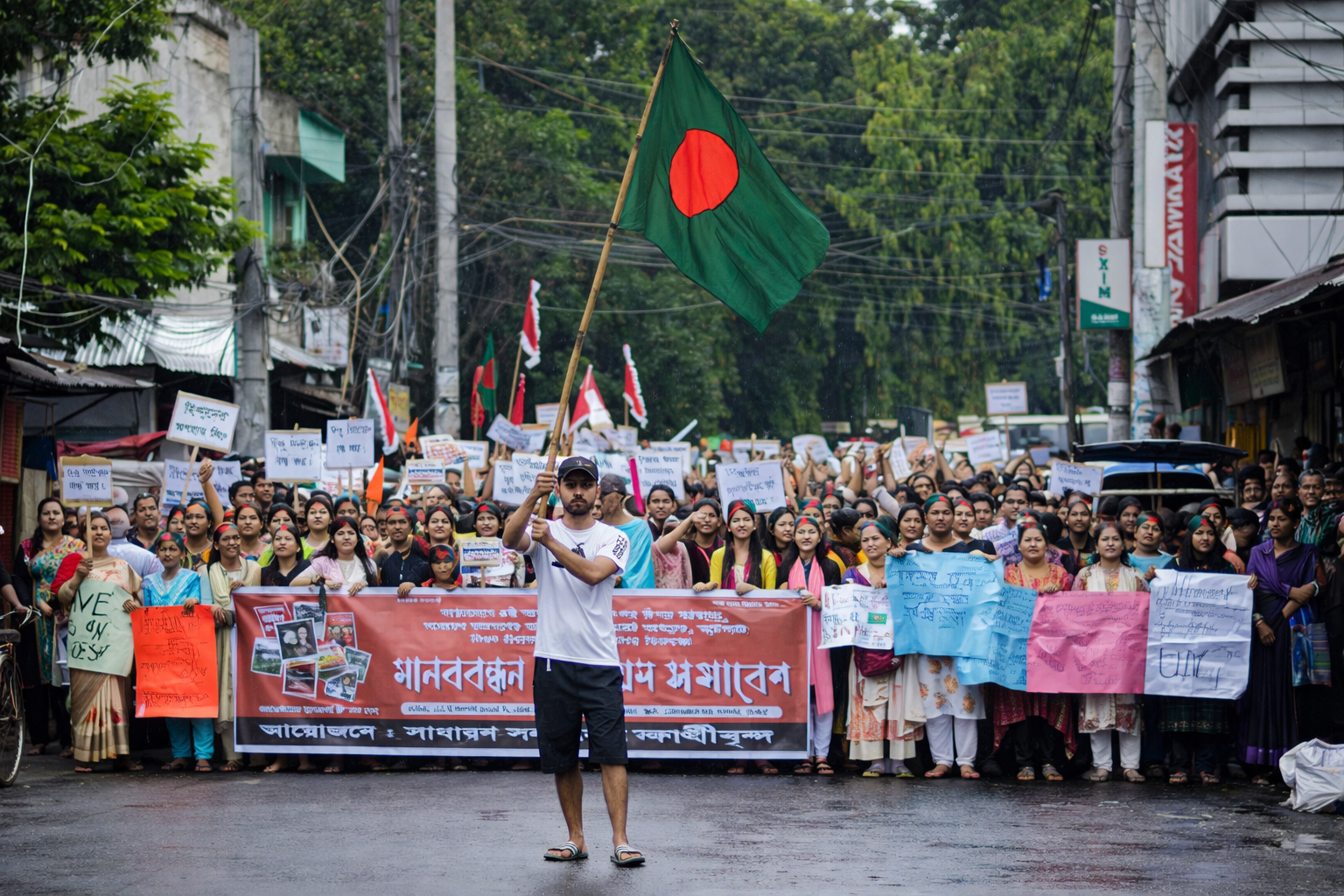
Bangladesh is facing one of its most sensitive moments in recent years as political unrest, targeted violence, and deepening insecurity continue to grip the country. What began as protests following the killing of political activist Sharif Osman Hadi has now evolved into a wider crisis drawing concern from the United Nations, foreign governments, and civil society across South Asia and beyond.
The situation has also triggered diplomatic repercussions between India and Bangladesh, while raising urgent questions about minority safety, press freedom, and the country’s democratic future.
Violence Sparks International Concern
United Nations Secretary General Antonio Guterres has expressed serious concern over the violence unfolding in Bangladesh, including reports of lynching and attacks on religious minorities. Speaking through his spokesperson at a daily press briefing on December 23, Mr. Guterres stressed that all citizens, regardless of their religious or social identity, must feel safe.
The statement came amid widespread outrage over the lynching of Dipu Chandra Das, a Hindu community member, an incident that has become a symbol of growing fear among minorities. The United Nations underlined its expectation that the Bangladeshi authorities would act decisively to protect every citizen and restore law and order during this volatile period.
Trigger Point The Killing of Sharif Osman Hadi
The current unrest was triggered by the killing of Sharif Osman Hadi, a prominent youth leader associated with the July uprising movement that challenged the previous government. Hadi was shot dead on December 12 by unidentified gunmen, an incident that ignited protests across the country.
His death has resonated deeply with supporters and activist groups, many of whom view the killing as politically motivated. Demonstrations quickly spread, and what began as calls for justice soon escalated into violent clashes, vandalism, and mob action in several cities.
Bangladesh authorities have announced that Hadi’s murder case will be tried under a Speedy Trial Tribunal. Law Adviser Asif Nazrul confirmed that the decision was taken to ensure swift justice. The Home Adviser has also stated that investigators are making progress and are working to arrest the main suspect, Faisal Karim Masud. Officials have reiterated that the case is being treated as a top priority.
Attacks on Minorities Deepen Anxiety
As unrest spread, reports of targeted violence against Hindus began to emerge, intensifying domestic and international concern. The lynching of Dipu Chandra Das sparked strong reactions not only within Bangladesh but also across India and among lawmakers in the United States.
Several US legislators condemned the killing and called on Bangladeshi authorities to protect religious minorities. Congressman Raja Krishnamoorthi described the incident as a targeted mob killing and urged accountability and restoration of the rule of law. New York State Assemblywoman Jenifer Rajkumar said she was deeply disturbed by what she described as a troubling pattern of violence against Hindu minorities.
Within India, Union Minister Giriraj Singh described the alleged attacks as a stain on humanity, expressing anguish over what he termed continued persecution of Hindus in the region.
Protests in Kolkata and Diplomatic Tensions
The unrest has also spilled over into India’s political sphere. In Kolkata, West Bengal Leader of the Opposition Suvendu Adhikari, along with Congress leaders and Hindu monks, staged protests outside the Bangladesh Deputy High Commission. The demonstrations were aimed at condemning attacks on Hindus in Bangladesh and demanding justice.
The protest march was stopped by Kolkata Police citing safety concerns, leading to scuffles and heightened tension. Effigies of Bangladesh interim Chief Adviser Muhammad Yunus were burnt during the demonstrations, reflecting the intensity of public anger.
On the diplomatic front, the Bangladesh High Commission in New Delhi has temporarily stopped issuing visas, citing the prevailing security situation. This move followed India’s decision to shut visa application centres in Bangladesh after several of them were targeted by mobs in the wake of Hadi’s death. The suspension underscores how internal unrest is now affecting bilateral relations.
Media Under Threat
Another alarming aspect of the crisis has been the growing threat to press freedom. Leading Bangladeshi journalists have warned that the situation has deteriorated to the point where the right to life has overshadowed freedom of expression.
Offices of prominent newspapers Prothom Alo and The Daily Star were vandalised and set ablaze in Dhaka, with journalists and staff trapped inside for hours as mobs blocked emergency services. Editors have said that journalists now fear for their physical safety while attempting to report on unfolding events.
Daily Star editor Mahfuz Anam stated that the crisis has reached a point where survival has become the primary concern for media professionals. The attacks have drawn condemnation from across Bangladesh’s civil society and raised fears about the silencing of independent voices at a critical time.
Indian Medical Students Seek Help
The deteriorating security environment has also affected Indian nationals in Bangladesh. The All India Medical Students Association has written to Prime Minister Narendra Modi seeking urgent intervention to ensure the safety of Indian medical students studying in the country.
According to the association, students and their families are experiencing fear, anxiety, and uncertainty due to rising anti India sentiment and general instability. The letter stressed that students studying abroad depend on the Indian government for protection during crises and urged swift diplomatic action.
Political Crossroads and Election Commitments
Amid the turmoil, Bangladesh’s interim leadership has attempted to reassure both domestic and international observers about the country’s democratic trajectory. Chief Adviser Muhammad Yunus has reiterated his commitment to holding general elections on February 12.
In a conversation with a senior US envoy, Mr. Yunus stated that the nation is eager to exercise its voting rights after years of political turbulence. He framed the upcoming election as a crucial step toward restoring democratic normalcy and legitimacy.
Former Indian diplomat Anil Trigunayat, however, described the current situation as extremely delicate and dangerous. While expressing hope for free and transparent elections, he emphasised that protecting minorities and restoring law and order must be immediate priorities.
Rising Fears of Wider Instability
Adding to concerns, another leader associated with the July uprising movement was shot in Khulna just days after Hadi’s killing. The incident has heightened fears of a widening cycle of political violence and raised questions about the state’s ability to maintain control.
Meanwhile, activist platform Inqilab Moncho has threatened mass agitation against the interim government if justice is not delivered swiftly in Hadi’s murder case. The group has accused authorities of failing to act decisively despite issuing ultimatums.
A Nation at a Defining Moment
Bangladesh now stands at a critical juncture. Born out of a violent struggle for independence, the country has repeatedly grappled with political instability, social divisions, and contested power transitions. The current unrest reflects long standing tensions but also presents a decisive test for institutions tasked with safeguarding democracy and social harmony.
Restoring calm will require more than arrests and trials. It will demand credible political dialogue, firm protection of minorities, respect for press freedom, and transparent electoral processes. The eyes of the international community remain firmly fixed on Dhaka, not out of interference, but out of concern for a nation whose stability matters far beyond its borders.
As Bangladesh navigates this turbulent phase, the coming weeks will be crucial in determining whether it can step back from the brink and move toward reconciliation, justice, and democratic renewal.
Edit Profile
Help improve @KR

Was this page helpful to you?
Contact Khogendra Rupini
Are you looking for an experienced developer to bring your website to life, tackle technical challenges, fix bugs, or enhance functionality? Look no further.
I specialize in building professional, high-performing, and user-friendly websites designed to meet your unique needs. Whether it’s creating custom JavaScript components, solving complex JS problems, or designing responsive layouts that look stunning on both small screens and desktops, I can collaborate with you.
Create something exceptional with us. Contact us today
Open for Collaboration
If you're looking to collaborate, I’m available for a variety of professional services, including -
- Website Design & Development
- Advertisement & Promotion Setup
- Hosting Configuration & Deployment
- Front-end & Back-end Code Implementation
- Code Testing & Optimization
- Cybersecurity Solutions & Threat Prevention
- Website Scanning & Malware Removal
- Hacked Website Recovery
- PHP & MySQL Development
- Python Programming
- Web Content Writing
- Protection Against Hacking Attempts