
India US Trade Reset and Delhi Declaration Signal Strategic Recalibration in a Fragmented World
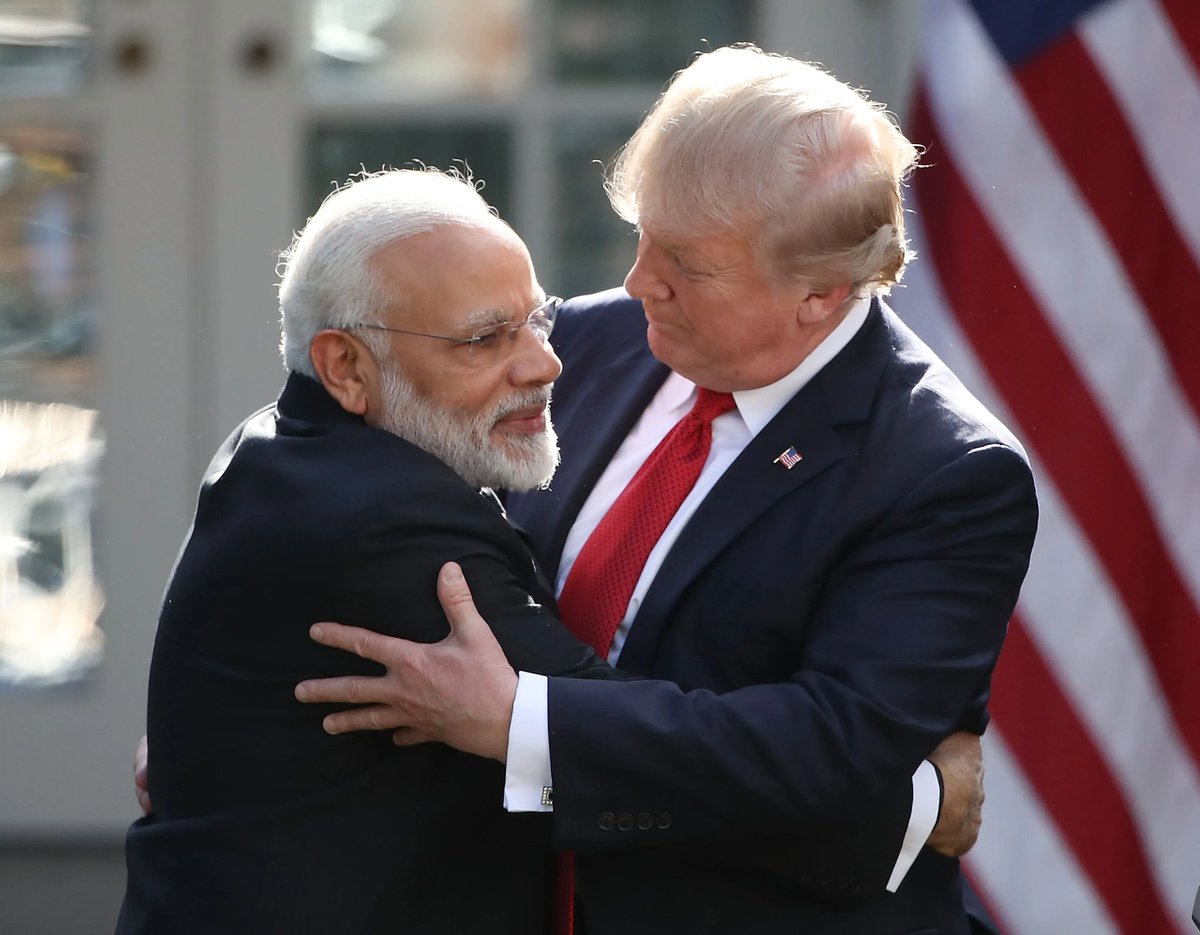
India’s external economic and diplomatic strategy entered a decisive phase this week as New Delhi secured a major reset in trade relations with the United States while simultaneously articulating a clearer Middle East posture through the Delhi Declaration 2026.
Together, the two developments underline how India is navigating global uncertainty by blending economic pragmatism with calibrated geopolitical positioning.
A thaw in India US trade relations
After months of tariff driven tensions, India and the United States have agreed to sharply reduce American reciprocal tariffs on Indian goods from an effective 50 percent to 18 percent. The breakthrough followed a telephonic conversation between the Indian Prime Minister and US President Donald Trump and comes at a time of global supply chain realignment and slowing trade growth.
The tariff rollback includes the withdrawal of the 25 percent Liberation Day tariffs and an additional 25 percent penalty imposed in 2025 over India’s imports of Russian oil. For Indian exporters, especially in labour intensive sectors, the reduction restores competitiveness in one of India’s most important overseas markets.
The Indian government has described the move as a boost to Make in India, with improved market access expected to support manufacturing output and employment.
Claims of a broader trade bargain
President Trump announced that the tariff cut is part of a wider trade understanding under which India would reduce tariff and non tariff barriers on US goods and increase purchases of American products.
According to Trump, these purchases could exceed 500 billion dollars and include energy resources such as natural gas and coal, technology goods, agricultural products and nuclear equipment.
For context, India’s total goods imports in FY25 stood at 720.24 billion dollars, highlighting the scale of the claims. Indian authorities have not yet confirmed the details, underscoring that the real economic impact will depend on the fine print of any formal agreement.
Energy trade and geopolitical linkages
Energy has emerged as a central pillar of the evolving India US trade relationship. Over the past year, India has increased crude oil imports from the US, with the American share rising to 7.48 percent between April and October, up from 4.43 percent a year earlier.
During the same period, Russia’s share declined from 37.88 percent to 32.18 percent, partly due to US sanctions on Russian oil majors.
Indian public sector refiners have also signed a one year agreement to import around 2.2 million tonnes of American LPG annually, close to 10 percent of India’s total LPG imports. The US is now the fifth largest supplier of crude oil to India, accounts for nearly 10 percent of crude imports and is the second largest supplier of LNG.
The Trump administration has linked trade concessions to broader strategic objectives, including reduced reliance on Russian energy. While Washington has claimed India may halt Russian oil purchases, New Delhi has not officially endorsed such a commitment, reflecting concerns over energy security and strategic autonomy.
Market and macroeconomic implications
The trade reset comes amid concerns over capital outflows and pressure on the rupee following prolonged uncertainty in India US relations.
The 50 percent tariffs imposed in August 2025 had led to a decline in Indian exports to the US, from 6.86 billion dollars in August to 6.30 billion dollars in October, hitting sectors such as garments, footwear and sports goods.
With tariffs eased, investor sentiment is expected to improve, supporting financial markets and potentially stabilising the currency. Electronics exports, which remained outside the tariff net, had already shown resilience, rebounding by 22 percent in November.
Policy adjustments at home
To cushion the trade shock during negotiations, the Indian government rolled back several quality control orders that were affecting MSME competitiveness and removed the 11 percent duty on cotton to support the textile sector.
At the same time, India accelerated trade talks with other partners, concluding negotiations with New Zealand, signing a deal with Oman and advancing discussions with the European Union, GCC and the Eurasian Economic Union.
This diversification strategy aims to reduce over dependence on any single market while positioning India as a reliable alternative in global value chains increasingly wary of excessive exposure to China.
Delhi Declaration and Middle East diplomacy
Parallel to the trade reset, India hosted the second India Arab Foreign Ministers’ Meeting in New Delhi, culminating in the Delhi Declaration 2026.
The declaration reaffirms respect for sovereignty and territorial integrity in conflict affected states such as Sudan, Libya and Somalia, explicitly rejecting external interference.
India aligned with the Arab League in supporting internationally recognised governments and condemning violence against civilians, marking a firm stance amid regional rivalries.
A notable shift was seen on Yemen, where India joined Arab states in condemning Houthi attacks on Red Sea shipping, a departure from its earlier cautious language.
On Israel and Palestine, the declaration backed the Arab Peace Initiative of 2002 and reiterated support for Palestinian sovereignty, while avoiding endorsement of newer US led frameworks.
The text also carefully avoided reference to escalating US Iran tensions, reflecting India’s effort to keep diplomatic channels open with all sides.
Strategic significance for India
Taken together, the trade reset and the Delhi Declaration highlight India’s attempt to balance economic opportunity with geopolitical restraint.
The US tariff cut reinforces India’s role as a strategic counterweight to China at a time when Western economies are restricting Chinese imports.
Simultaneously, India’s Middle East engagement shows a preference for stability, norm based diplomacy and transactional partnerships without formal alignment.
Conclusion
The reduction of US tariffs on Indian goods to 18 percent marks a pivotal moment in India US economic relations, opening avenues for export growth and deeper strategic cooperation.
At the same time, the Delhi Declaration clarifies India’s diplomatic approach in a volatile Middle East, rooted in sovereignty, balance and regional stability.
The long term value of these moves will depend on the details of trade commitments, India’s ability to safeguard strategic autonomy in energy and foreign policy, and how effectively improved market access is converted into sustained, export led growth in a rapidly fragmenting global order.

Edit Profile
Help improve @KR

Was this page helpful to you?
Contact Khogendra Rupini
Are you looking for an experienced developer to bring your website to life, tackle technical challenges, fix bugs, or enhance functionality? Look no further.
I specialize in building professional, high-performing, and user-friendly websites designed to meet your unique needs. Whether it’s creating custom JavaScript components, solving complex JS problems, or designing responsive layouts that look stunning on both small screens and desktops, I can collaborate with you.
Create something exceptional with us. Contact us today
Open for Collaboration
If you're looking to collaborate, I’m available for a variety of professional services, including -
- Website Design & Development
- Advertisement & Promotion Setup
- Hosting Configuration & Deployment
- Front-end & Back-end Code Implementation
- Code Testing & Optimization
- Cybersecurity Solutions & Threat Prevention
- Website Scanning & Malware Removal
- Hacked Website Recovery
- PHP & MySQL Development
- Python Programming
- Web Content Writing
- Protection Against Hacking Attempts