Elon Musk Pushes Back on Andrej Karpathy Remarks Comparing Tesla FSD and Google Waymo
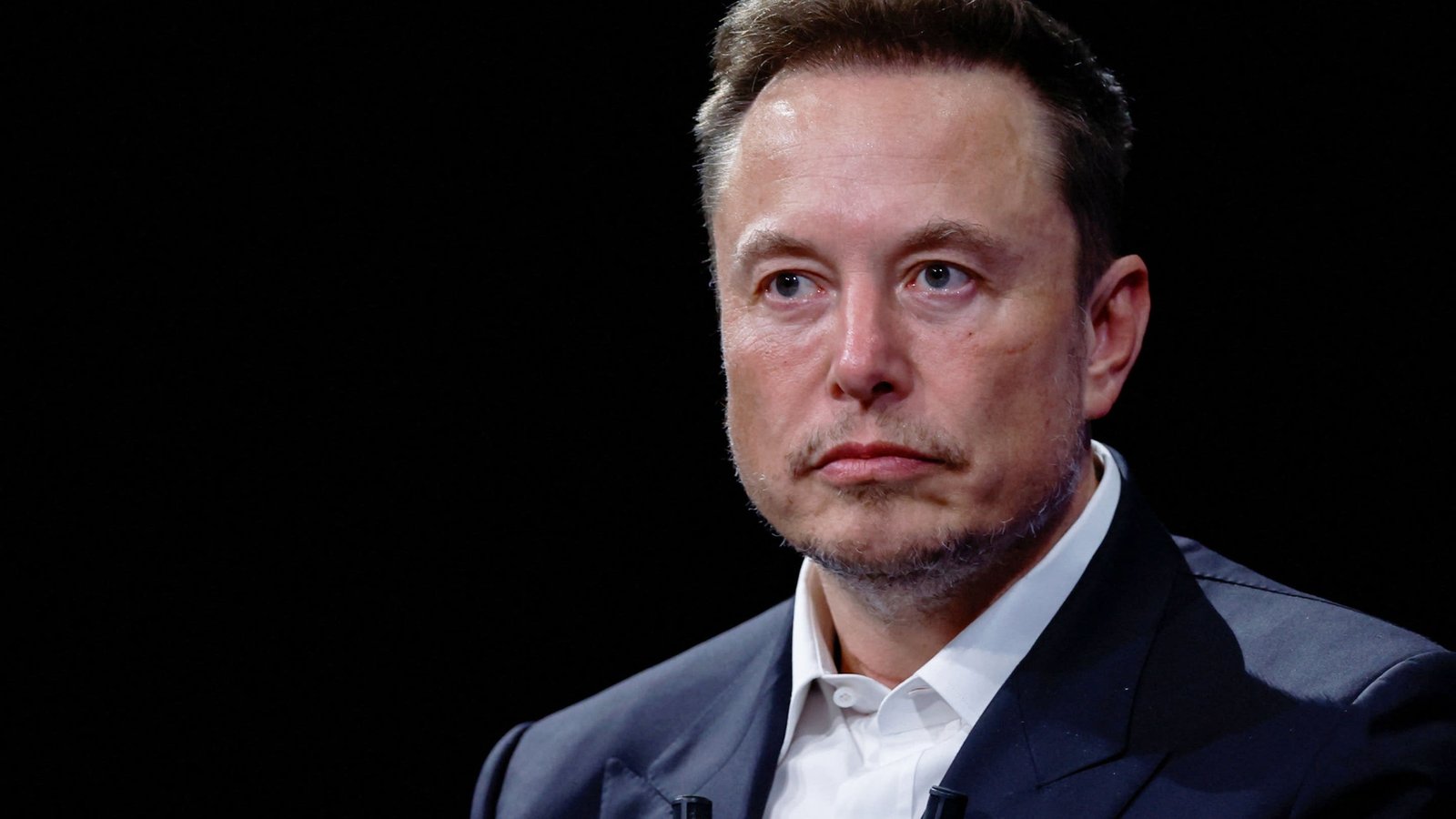
Tesla CEO Elon Musk has publicly disagreed with recent comments made by the company’s former head of artificial intelligence, Andrej Karpathy, after Karpathy offered a measured comparison between Tesla’s Full Self Driving system and Alphabet owned Waymo’s autonomous driving software.
The exchange has reignited a long running debate within the technology and automotive industries over which approach to self driving will ultimately prove superior as autonomous systems scale globally.
Karpathy’s comments resurface in online discussion
The discussion began after an X user, Yunchen Jin, shared details of a conversation with Karpathy, who left Tesla in 2022 after playing a central role in shaping its AI and Autopilot strategy.
Karpathy, now a well known figure in the global AI research community, spoke positively about both Tesla and Waymo, saying that each offers what feels like a near perfect driving experience in its current form.
According to Jin, Karpathy suggested that the differences between the two systems would become clearer only with time and scale.
He noted that subtle distinctions may emerge when performance is observed across many vehicles and diverse real world conditions, rather than from isolated experiences.
Karpathy had earlier drawn attention for an analogy comparing Tesla’s Full Self Driving experience to riding a magnetic levitation train, a metaphor often interpreted as praise for its smoothness and confidence.
However, he has also been associated with a past assessment that framed the rivalry between Tesla and Waymo in terms of contrasting challenges.
Modular versus end to end autonomy debate
Jin referenced a remark attributed to Karpathy from about a year ago, stating that Waymo had a hardware problem while Tesla faced a software problem.
In his post, Jin expanded on this idea by contrasting Waymo’s modular approach with Tesla’s end to end neural network strategy.
Waymo’s system relies on a combination of high definition maps, LiDAR, multiple sensors, network connectivity, and several specialized neural networks.
Jin argued that while this structure can perform extremely well under normal conditions, it is vulnerable when any single component fails.
He cited a recent power outage in San Francisco, during which some Waymo vehicles reportedly stopped operating because traffic signals were down and connectivity to remote operators was disrupted.
By contrast, Tesla’s approach is centered on a single large neural network trained on vast amounts of real world driving data.
This model processes camera input directly into steering, braking, and acceleration decisions.
Jin described this as a practical implementation of Karpathy’s own Software 2.0 philosophy, where learned model weights replace hand written logic.
According to Jin, this makes Tesla’s system more resilient and more human like in its driving behavior.
Jin went on to claim that Waymo now faces a significant software scaling problem, arguing that its dependency heavy architecture could limit long term expansion.
He concluded that Tesla’s Full Self Driving strategy is better positioned to win over time.
Karpathy responds with balanced assessment
When asked directly whether he still believed Waymo’s software was better than Tesla’s, Karpathy offered a notably neutral answer.
He said that both systems now deliver what intuitively feels like a smooth, confident drive that simply works.
While acknowledging that differences likely still exist, he emphasized that such distinctions may only become apparent when evaluated over large fleets and extended periods.
Karpathy’s response avoided declaring a clear winner, instead highlighting how far autonomous driving technology has progressed across the industry.
His remarks reflected the perspective of a researcher who has worked at the highest levels of the field and understands the trade offs involved in different system designs.
Elon Musk calls Karpathy’s view outdated
Elon Musk was quick to respond to the post on X, making it clear that he disagreed with Karpathy’s assessment.
Musk described Karpathy’s understanding as dated, arguing that Tesla’s AI software has advanced dramatically since Karpathy left the company.
According to Musk, the intelligence density per gigabyte of Tesla’s AI system is now at least an order of magnitude better than anything else available.
He suggested that recent internal breakthroughs have significantly widened the gap between Tesla and its competitors, particularly in terms of efficiency and capability.
Musk’s response underscores Tesla’s long standing confidence in its vision only approach, which relies primarily on cameras rather than LiDAR.
It also reflects his tendency to defend Tesla’s technological leadership publicly, especially when comparisons are drawn with rivals such as Waymo.
Recent progress in Tesla Full Self Driving
Tesla has continued to iterate rapidly on its Full Self Driving software.
The company recently rolled out version 14, which has been praised by users and analysts for smoother navigation, improved lane selection, and better handling of complex urban scenarios.
Tesla claims that each new version benefits from the exponential growth of its training data, collected from millions of vehicles on the road worldwide.
In parallel, Tesla is preparing for expanded driverless testing of its planned Robotaxi fleet.
Musk has repeatedly stated that autonomy will be central to Tesla’s future business model, potentially transforming the company from a car manufacturer into a mobility and AI services provider.
Waymo’s strong position in robotaxi services
Despite Musk’s criticism, Waymo remains the most established autonomous ride hailing operator in the United States.
In 2025, the company reported approximately 14 million paid rides, a milestone that highlights its operational maturity and consumer acceptance.
Waymo currently operates driverless services in several US cities and continues to refine its technology through real world deployment.
Alphabet has also signaled ambitions to expand Waymo’s footprint internationally, including potential moves into Europe.
Meanwhile, competition in the autonomous mobility space is intensifying globally.
Baidu backed Apollo Go has announced plans to enter the United Kingdom in partnership with Uber and Lyft, adding further pressure on both Tesla and Waymo to maintain technological leadership.
A broader industry perspective
The exchange between Musk and Karpathy reflects a deeper philosophical divide in autonomous driving development.
Tesla’s end to end neural network approach prioritizes scalability and learning from human behavior, while Waymo’s modular system emphasizes redundancy, precision mapping, and controlled operational domains.
Both strategies have strengths and limitations.
Tesla’s vision based system benefits from massive data volumes and lower hardware costs, but faces scrutiny over safety and regulatory approval.
Waymo’s technology, while more constrained geographically, has achieved fully driverless commercial operations, a milestone Tesla has yet to reach at scale.
As autonomous vehicles move closer to mainstream adoption, the debate is likely to continue.
What is clear is that the field is advancing rapidly, with multiple players pushing the boundaries of what machines can achieve on public roads.
Looking ahead
For now, Musk’s public pushback against Karpathy’s comments serves as a reminder of how fiercely competitive and personal the race for self driving dominance has become.
It also highlights how quickly the state of the art can evolve in artificial intelligence, making even recent assessments feel outdated.
Whether Tesla’s Full Self Driving system or Waymo’s robotaxi platform ultimately sets the global standard remains an open question.
What is certain is that both companies are shaping the future of transportation, and their rivalry will continue to influence how autonomous technology develops, deploys, and integrates into everyday life.
Edit Profile
Help improve @KR
Was this page helpful to you?
Contact Khogendra Rupini
Are you looking for an experienced developer to bring your website to life, tackle technical challenges, fix bugs, or enhance functionality? Look no further.
I specialize in building professional, high-performing, and user-friendly websites designed to meet your unique needs. Whether it’s creating custom JavaScript components, solving complex JS problems, or designing responsive layouts that look stunning on both small screens and desktops, I can collaborate with you.
Create something exceptional with us. Contact us today
Open for Collaboration
If you're looking to collaborate, I’m available for a variety of professional services, including -
- Website Design & Development
- Advertisement & Promotion Setup
- Hosting Configuration & Deployment
- Front-end & Back-end Code Implementation
- Code Testing & Optimization
- Cybersecurity Solutions & Threat Prevention
- Website Scanning & Malware Removal
- Hacked Website Recovery
- PHP & MySQL Development
- Python Programming
- Web Content Writing
- Protection Against Hacking Attempts