
Ahead of April 27 trial, Elon Musk drops fraud claims against Sam Altman and Greg Brockman as OpenAI legal fight enters decisive stage
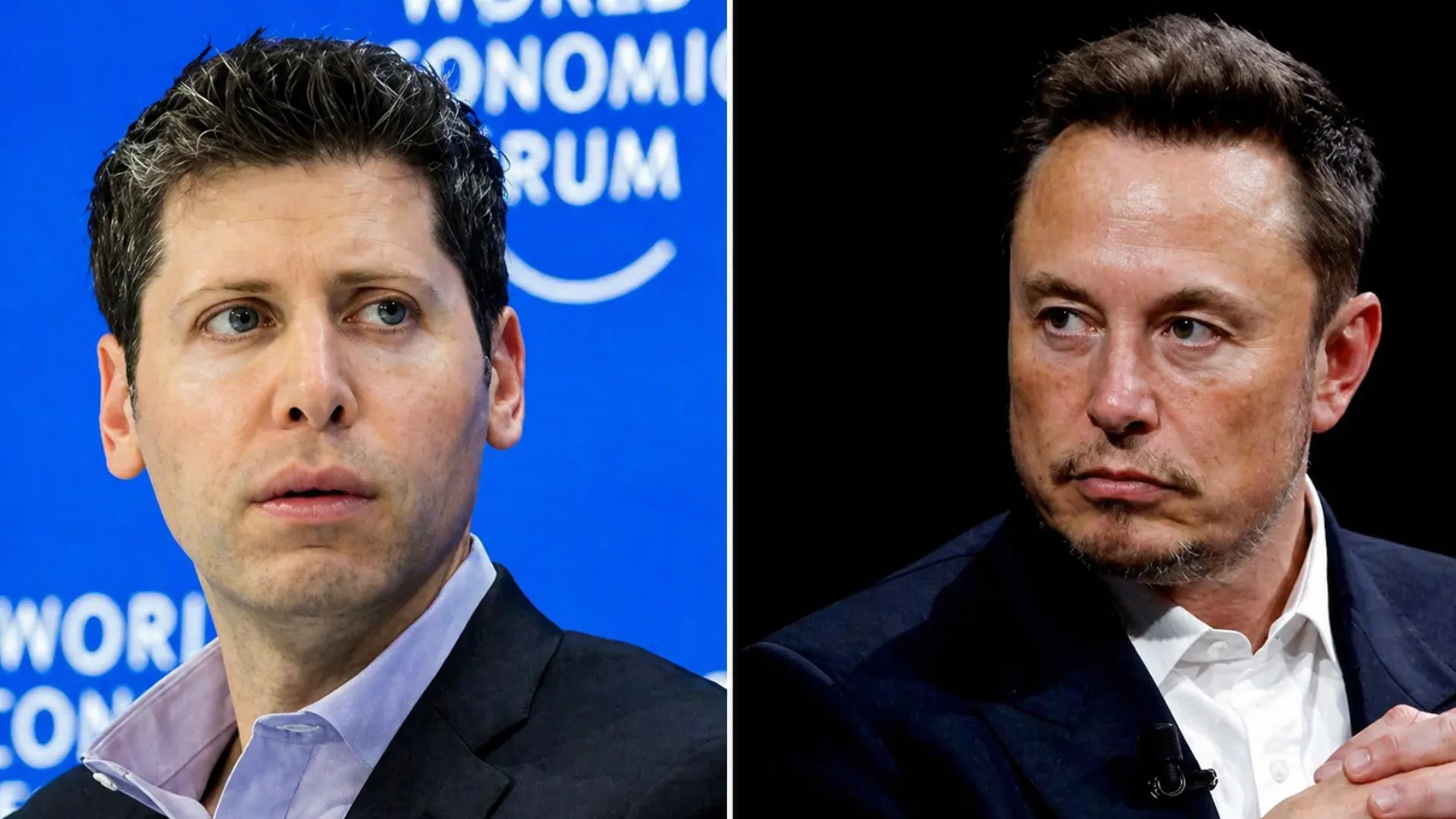
A major legal confrontation in the technology world is entering a critical phase after Elon Musk withdrew fraud related claims against OpenAI chief executive Sam Altman and co founder Greg Brockman just before the scheduled April 27 trial. The move narrows the case but keeps alive Musk’s broader challenge over OpenAI’s structure, mission, and financial direction.
The lawsuit has drawn global attention because it places two of the most influential figures in modern technology on opposing sides of a courtroom battle. On one side is Elon Musk, the billionaire behind Tesla, SpaceX, and X. On the other is Sam Altman, the public face of OpenAI, the company that helped ignite the global artificial intelligence boom through ChatGPT.
Musk narrows lawsuit before trial begins
According to reports, a United States judge dismissed Musk’s fraud claims after he requested their withdrawal. The ruling came from US District Judge Yvonne Gonzalez Rogers in Oakland, California.
Musk’s legal team reportedly argued that removing the fraud and constructive fraud claims would simplify the case and help jurors focus on what Musk says is the core issue. His stated goal is to ensure that OpenAI serves humanity rather than operating primarily as a profit driven enterprise.
This strategic legal shift does not end the lawsuit. Instead, it changes the focus of the upcoming trial toward other claims, including alleged breach of charitable trust and unjust enrichment.
That means the courtroom battle is still expected to be intense, even with some claims removed.
The heart of Musk’s complaint against OpenAI
Musk’s case centers on OpenAI’s original identity and purpose. He has argued that OpenAI was founded as a nonprofit organization dedicated to building advanced artificial intelligence for the benefit of all humanity.
His position is that the company has moved away from those founding principles and evolved into a commercial operation more focused on revenue, scale, and corporate advantage.
This argument has become one of the most closely watched disputes in the AI era because it raises larger questions beyond one company. It asks whether organizations created for public benefit can preserve their mission after attracting massive investment and competing in global markets.
For many observers, the case is about governance, trust, and the future direction of powerful AI systems.
Trial expected to spotlight OpenAI’s transformation
The April 27 proceedings are likely to examine how OpenAI changed from a nonprofit research lab into a company with major commercial ambitions and partnerships.
OpenAI’s rapid rise came after the release of ChatGPT, which introduced millions of users to generative AI tools. Since then, the company has expanded products, business partnerships, enterprise services, and research efforts at extraordinary speed.
That growth also brought pressure to secure funding, computing power, and talent. Critics have argued that such expansion can create tension between public interest goals and business realities.
Supporters, however, say large scale resources are necessary to build advanced AI safely and competitively.
The trial may place many of those issues under public scrutiny.
Musk seeks massive damages in the case
Reports indicate Musk is seeking $150 billion in damages, with any proceeds intended for OpenAI’s charitable arm.
The size of that figure has intensified interest in the lawsuit. While the case is not described as a traditional money dispute, the requested damages reflect the scale of the stakes surrounding one of the most valuable and influential AI organizations in the world.
Legal experts note that large damage claims can also serve as a signal of how seriously a plaintiff views alleged misconduct.
Whether such claims succeed is another matter entirely and would depend on the court’s findings.
OpenAI pushes back strongly
OpenAI has rejected Musk’s allegations and portrayed the lawsuit as an attempt to interfere with a competitor.
The company has pointed to Musk’s own AI venture, xAI, which operates in the same broader market and competes for talent, infrastructure, attention, and enterprise opportunities.
From OpenAI’s perspective, the lawsuit is not about protecting humanity but about competitive dynamics in a fast moving industry.
That defense is likely to become central during the trial, especially as both sides seek to shape public understanding of their motives.
Why this legal battle matters far beyond Silicon Valley
This case is larger than a disagreement between prominent executives. It could influence how courts view nonprofit origins, corporate restructuring, founder expectations, and fiduciary responsibilities in the AI era.
Technology companies often begin with idealistic missions before evolving into large commercial enterprises. The Musk versus OpenAI case may test where the legal boundaries stand when that transformation happens.
It may also affect investor confidence, future governance models, and how new AI labs choose their organizational structures.
For regulators and policymakers worldwide, the case offers a rare window into internal tensions surrounding the development of frontier AI systems.
A defining moment in the race for artificial intelligence leadership
The timing is especially significant because competition in artificial intelligence has become more intense than ever. OpenAI, Google, Meta, Anthropic, xAI, and others are racing to develop increasingly capable systems.
Billions of dollars are being invested in chips, data centers, talent, and products. Governments are also paying closer attention to safety, market concentration, and national competitiveness.
Against that backdrop, a courtroom fight involving OpenAI and Musk is not just legal drama. It is part of the wider struggle over who leads the next computing era and under what principles.
What comes next
With fraud claims removed, the upcoming trial now becomes more focused rather than less important. Jurors and observers are expected to hear arguments about promises, mission drift, governance, and the responsibilities of one of the world’s most powerful AI organizations.
For Musk, the case is framed as a fight to restore OpenAI’s founding purpose.
For OpenAI, it is a challenge from a rival seeking to slow its momentum.
Either way, the April 27 trial is set to become one of the defining technology courtroom battles of the decade, with consequences that may reach far beyond the parties involved.
Edit Profile
Help improve @KR

Was this page helpful to you?
Contact Khogendra Rupini
Are you looking for an experienced developer to bring your website to life, tackle technical challenges, fix bugs, or enhance functionality? Look no further.
I specialize in building professional, high-performing, and user-friendly websites designed to meet your unique needs. Whether it's creating custom JavaScript components, solving complex JS problems, or designing responsive layouts that look stunning on both small screens and desktops, I can collaborate with you.
Create something exceptional with us. Contact us today
Open for Collaboration
If you're looking to collaborate, I'm available for a variety of professional services, including -
- Website Design & Development
- Advertisement & Promotion Setup
- Hosting Configuration & Deployment
- Front-end & Back-end Code Implementation
- Code Testing & Optimization
- Cybersecurity Solutions & Threat Prevention
- Website Scanning & Malware Removal
- Hacked Website Recovery
- PHP & MySQL Development
- Python Programming
- Web Content Writing
- Protection Against Hacking Attempts