
Xiaomi Targets Europe EV Market as China Smartphone Giant Challenges Tesla and Premium German Brands After Explosive Car Success
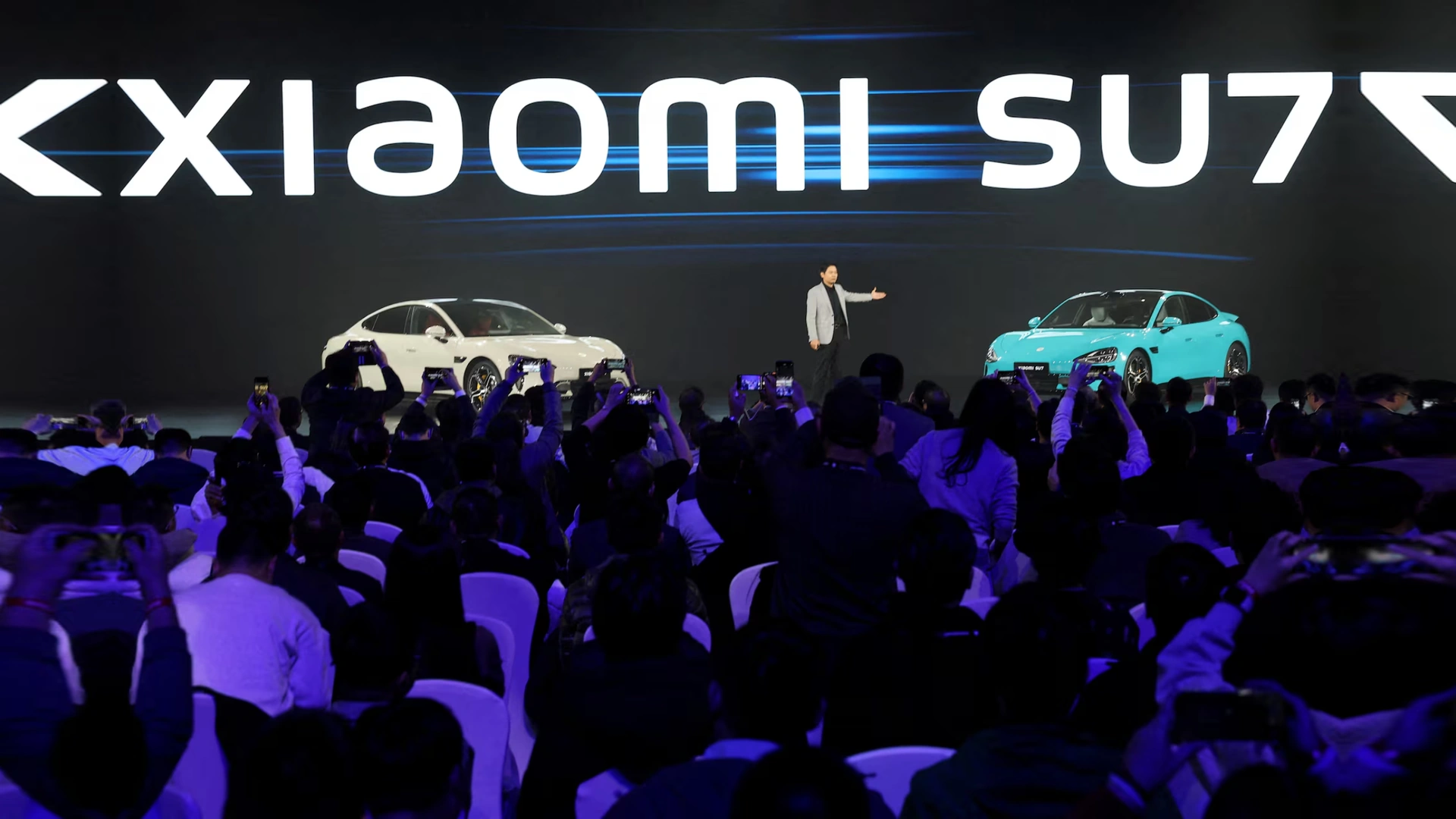
Xiaomi, the Chinese technology company best known worldwide for smartphones and connected devices, is now making one of its boldest moves yet. After rapidly building a strong electric vehicle business in China, the company is preparing to expand into Europe, where it will face some of the world’s most established automotive names including Tesla, Inc., BMW, Mercedes-Benz Group and Porsche AG.
The development signals a major shift in the global EV race. Xiaomi is no longer only a smartphone brand. It now wants to become a premium carmaker with global influence.
Xiaomi Builds EV Momentum at Unusual Speed
Only a few years ago, Xiaomi had no history in the car business. Founder Lei Jun announced plans to enter the automotive industry in 2021. Since then, the company has moved at a pace that surprised many in the global market.
Its first model, the SU7 sports sedan, became an instant success in China. Orders surged immediately after launch, demonstrating that Xiaomi’s consumer brand power could translate into automobiles. The vehicle quickly became one of China’s best selling electric cars.
The company followed that momentum with the YU7, a sport utility model positioned against Tesla’s popular Model Y. Reports of massive pre orders showed that Xiaomi’s automotive push was more than a one time success.
Within just two years of producing its first car, Xiaomi has reportedly delivered hundreds of thousands of EVs in China. That pace has placed it among the most watched new entrants in the industry.
Europe Becomes Xiaomi’s Next Major Battlefield
Now Xiaomi is looking toward Europe, one of the most competitive car markets in the world. Europe matters strategically because it combines strong EV demand, advanced charging infrastructure, and high consumer purchasing power.
Xiaomi already has a powerful presence in Europe through smartphones. It has become one of the region’s leading smartphone brands, giving it name recognition many newer Chinese automakers do not have.
That consumer familiarity could help Xiaomi gain trust faster than unknown start ups. Buyers who already use Xiaomi phones, tablets, smart home products, and wearables may be more willing to consider a Xiaomi vehicle.
Company executives have indicated that Europe is a priority market, and Xiaomi has already built research and development capabilities in Munich, one of Europe’s leading automotive engineering hubs.
Premium Strategy Signals Big Ambition
Xiaomi is not entering Europe as a budget carmaker alone. The company is positioning itself in premium segments with high performance vehicles, advanced software systems, and upscale features.
That creates direct competition with Tesla and premium German brands. Xiaomi believes its strength lies not only in hardware design but also in digital integration.
Unlike many traditional carmakers, Xiaomi can connect vehicles with a wider ecosystem of products. A Xiaomi owner could potentially manage home appliances, smartphones, entertainment systems, and mobility features inside one connected environment.
This strategy mirrors how technology companies think rather than how legacy automakers have traditionally operated.
Strong Manufacturing Gives Xiaomi an Edge
One of Xiaomi’s biggest advantages is manufacturing efficiency. Its Beijing EV facility reportedly uses high automation levels, robotic assembly systems, and rapid production cycles.
That allows Xiaomi to scale faster while controlling costs. Lower costs can be especially important in Europe, where buyers are highly price conscious even in premium segments.
Chinese EV brands have already shown they can offer advanced technology at prices that challenge established competitors. Xiaomi may attempt the same formula with stronger branding than many rivals.
Obstacles Remain Serious in Europe
Despite the optimism, Europe will not be easy territory.
Brand loyalty remains strong, especially in countries such as Germany and France, where domestic manufacturers enjoy decades of trust. Premium buyers often choose brands with long heritage, engineering reputation, and resale confidence.
That means Xiaomi must prove itself not just as a technology company, but as a true carmaker capable of long term service, safety, reliability, and driving quality.
There are also regulatory challenges, import pressures, and political sensitivities around Chinese vehicle expansion in Europe.
Safety and Technology Scrutiny Could Grow
As Xiaomi promotes smart driving systems and advanced software, European regulators are likely to apply close scrutiny.
Modern EV buyers increasingly care about autonomous features, connected systems, battery quality, and cybersecurity. Xiaomi’s software experience could help, but the automotive sector demands higher standards because safety risks are greater than in consumer electronics.
Winning trust in Europe may depend as much on reliability and regulation as on speed or screens.
Why This Move Matters Globally
Xiaomi’s expansion shows how the line between tech companies and carmakers is fading.
Smartphone brands once competed through cameras, processors, and operating systems. Now some are competing through batteries, motors, AI systems, and mobility platforms.
If Xiaomi succeeds in Europe, it could become one of the first global technology brands to seriously challenge legacy automakers in their home region.
That would also increase pressure on Tesla, which already faces rising competition from Chinese manufacturers in multiple markets.
A Defining Test for Xiaomi
Xiaomi has already proven it can generate demand in China. The bigger challenge now is whether that success can travel overseas.
Europe will test the company’s pricing strategy, engineering credibility, after sales support, and brand strength. Success would transform Xiaomi into a true global automotive force. Failure would show how difficult it remains to break into one of the world’s toughest car markets.
For now, one thing is clear: Xiaomi is no longer just competing for smartphone buyers. It is competing for the future of mobility.
Edit Profile
Help improve @KR

Was this page helpful to you?
Contact Khogendra Rupini
Are you looking for an experienced developer to bring your website to life, tackle technical challenges, fix bugs, or enhance functionality? Look no further.
I specialize in building professional, high-performing, and user-friendly websites designed to meet your unique needs. Whether it's creating custom JavaScript components, solving complex JS problems, or designing responsive layouts that look stunning on both small screens and desktops, I can collaborate with you.
Create something exceptional with us. Contact us today
Open for Collaboration
If you're looking to collaborate, I'm available for a variety of professional services, including -
- Website Design & Development
- Advertisement & Promotion Setup
- Hosting Configuration & Deployment
- Front-end & Back-end Code Implementation
- Code Testing & Optimization
- Cybersecurity Solutions & Threat Prevention
- Website Scanning & Malware Removal
- Hacked Website Recovery
- PHP & MySQL Development
- Python Programming
- Web Content Writing
- Protection Against Hacking Attempts