
OpenAI CEO Sam Altman says AGI could collapse the economy as mass unemployment fears grow, then reveals he is losing sleep over GPT 5.5
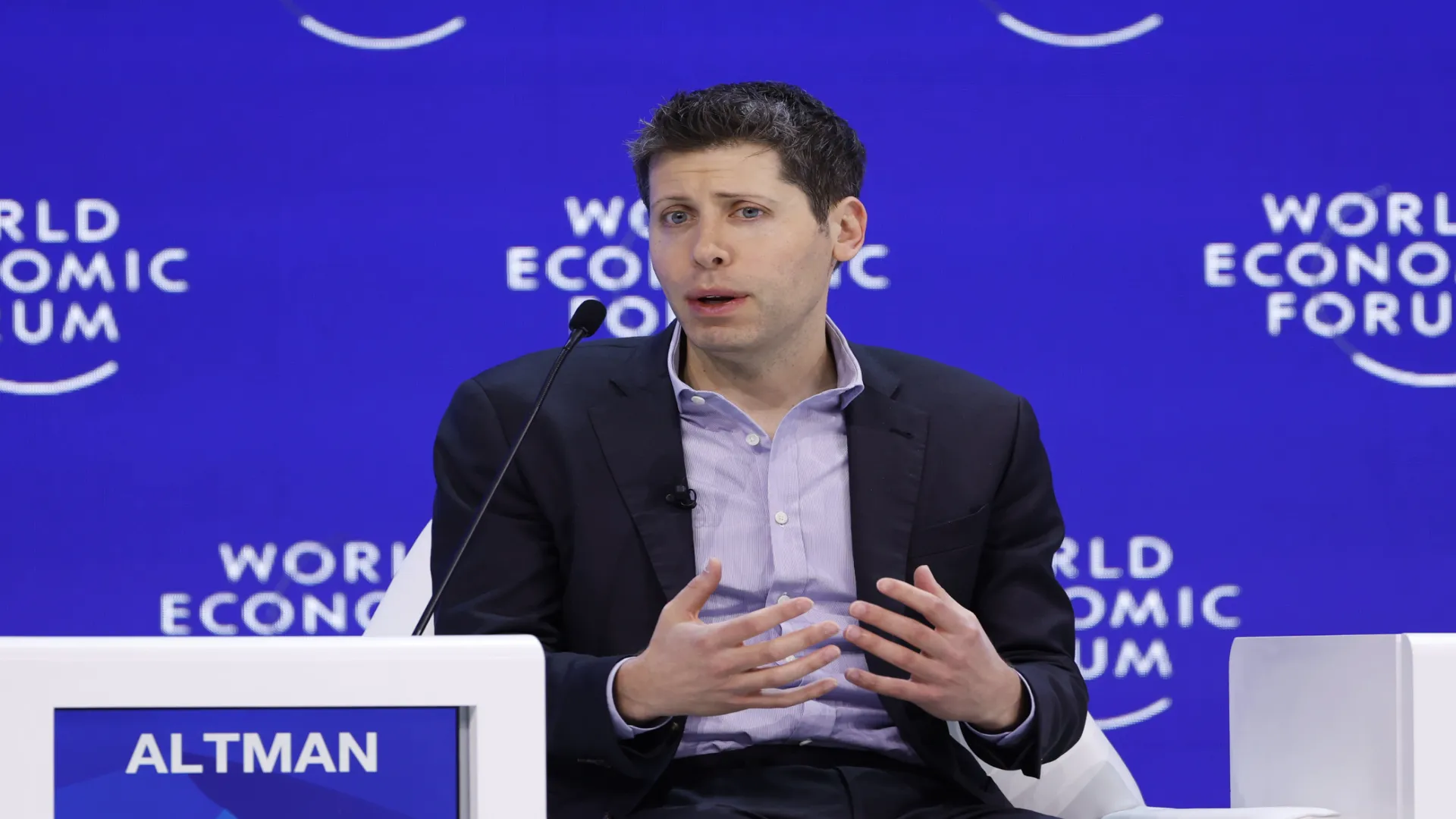
OpenAI CEO Sam Altman has sparked a fresh debate about the future of artificial intelligence after posting two sharply contrasting views about the technology’s impact on society. In one statement, Altman warned that a post AGI world could see widespread job losses and economic collapse. In another, he said the latest OpenAI model is so powerful that he is changing his sleep habits to spend more time using it.
The remarks have triggered intense discussion across the technology sector, where excitement over rapid AI progress now sits alongside growing concern about employment, productivity, and the long term shape of the global economy.
Sam Altman warns of economic collapse in a post AGI era
Altman wrote that once AGI arrives, people may stop working and the economy could collapse. AGI, or artificial general intelligence, is the idea of an advanced AI system capable of matching or exceeding human level reasoning across many fields, including learning, planning, problem solving, and decision making.
The statement reflects one of the biggest fears surrounding advanced AI. If machines become capable of performing a wide range of knowledge work faster and cheaper than humans, traditional labor markets could face severe disruption.
Economists and policy makers have increasingly debated how governments and businesses should respond if AI systems begin replacing large categories of jobs at scale. While some experts believe new industries would emerge, others warn the transition could be painful and unequal.
At the same time, Altman says GPT 5.5 is too good to ignore
In a separate post, Altman said he is switching to polyphasic sleep because OpenAI’s GPT 5.5 in Codex is so good that he does not want to spend long periods asleep while missing time to work.
Polyphasic sleep refers to sleeping in multiple shorter periods over a 24 hour cycle rather than one long overnight rest.
The comment was widely interpreted as a sign of how quickly AI tools are improving in practical tasks such as coding, reasoning, and workflow automation. It also highlighted the contradiction at the center of the AI conversation. Even while warning that advanced systems could reduce the need for human labor, Altman described the same technology as something that makes him want to work more.
Why the contradiction matters
The contrast between the two statements captures the broader tension in the AI industry.
On one side, executives and researchers promote AI as a force multiplier that can help people become more productive, creative, and efficient. On the other side, the same tools raise questions about whether millions of roles could eventually be automated.
That contradiction is not unique to OpenAI. Across the sector, companies are racing to build systems that save time, lower costs, and increase output. Yet those same gains may reduce demand for some forms of human work.
For businesses, AI can represent growth. For workers, it can also represent uncertainty.
OpenAI launches GPT 5.5 with stronger coding and reasoning performance
Altman’s comments came shortly after OpenAI introduced GPT 5.5, its latest major model update. According to the company, the model delivers improvements in reasoning, software development, scientific research tasks, and tool use.
OpenAI said GPT 5.5 can better manage complex multi step assignments through stronger planning and self correction. The company also described the model as faster, more efficient, and safer than earlier versions.
One of the headline performance claims is an 82.7 percent score on Terminal Bench 2.0, a benchmark used to evaluate coding and terminal based tasks. OpenAI said the result places GPT 5.5 ahead of competing models such as Anthropic Claude Opus 4.7 and Google Gemini 3.1 Pro.
If those gains hold up in real world usage, the model could accelerate adoption among enterprises, developers, and research teams seeking higher productivity with lower operating costs.
AGI remains highly contested across the industry
Despite Altman’s optimism about progress, not everyone agrees that AGI is near.
Some industry figures argue that the term itself is outdated or poorly defined. Reports cited in the discussion note that Moltbot creator Peter Steinberger has favored specialized intelligence over generalized systems, saying real world success often comes through focused tools rather than one universal intelligence.
Meanwhile, Anthropic president Daniela Amodei has reportedly questioned the AGI concept, while Google DeepMind leadership has argued that richer world models may be necessary before machines can achieve broad humanlike understanding.
These disagreements show that while AI capabilities are advancing quickly, there is still no industry consensus on when or whether AGI will truly arrive.
What this means for jobs and the economy
The most immediate issue is not distant AGI, but current AI systems already reshaping work.
Software development, customer support, design assistance, data analysis, translation, and administrative tasks are increasingly being supported by generative AI. In many offices, workers are using AI to complete tasks faster rather than being fully replaced.
That suggests the first phase of AI disruption may be augmentation instead of elimination. Workers who learn to use AI tools effectively could become more valuable, while roles built on repetitive digital tasks may face greater pressure.
Longer term, if systems continue improving at the pace seen over the past two years, labor markets may need major adaptation through retraining, new business models, and stronger social safety frameworks.
Why Altman’s comments are drawing so much attention
As the head of OpenAI, Altman occupies one of the most influential positions in the AI economy. His statements can move markets, shape public debate, and influence how governments think about regulation.
When he warns of economic collapse, people listen because OpenAI is helping build the very systems at the center of that prediction. When he praises GPT 5.5 as transformative enough to change his daily routine, it reinforces the sense that AI progress is accelerating faster than many expected.
The road ahead for AI in 2026
Artificial intelligence is no longer a future concept. It is already embedded in coding tools, enterprise software, search, research workflows, and consumer products.
The central question now is not whether AI will change the economy, but how quickly and how fairly that change will happen.
Altman’s latest remarks may sound contradictory, but they reflect the moment the industry is living through: deep optimism about what AI can do, and deep uncertainty about what it may undo.
Edit Profile
Help improve @KR
Was this page helpful to you?
Contact Khogendra Rupini
Are you looking for an experienced developer to bring your website to life, tackle technical challenges, fix bugs, or enhance functionality? Look no further.
I specialize in building professional, high-performing, and user-friendly websites designed to meet your unique needs. Whether it's creating custom JavaScript components, solving complex JS problems, or designing responsive layouts that look stunning on both small screens and desktops, I can collaborate with you.
Create something exceptional with us. Contact us today
Open for Collaboration
If you're looking to collaborate, I'm available for a variety of professional services, including -
- Website Design & Development
- Advertisement & Promotion Setup
- Hosting Configuration & Deployment
- Front-end & Back-end Code Implementation
- Code Testing & Optimization
- Cybersecurity Solutions & Threat Prevention
- Website Scanning & Malware Removal
- Hacked Website Recovery
- PHP & MySQL Development
- Python Programming
- Web Content Writing
- Protection Against Hacking Attempts