
Elon Musk vs Sam Altman led OpenAI: High stakes courtroom clash begins over mission, money and the future of AI
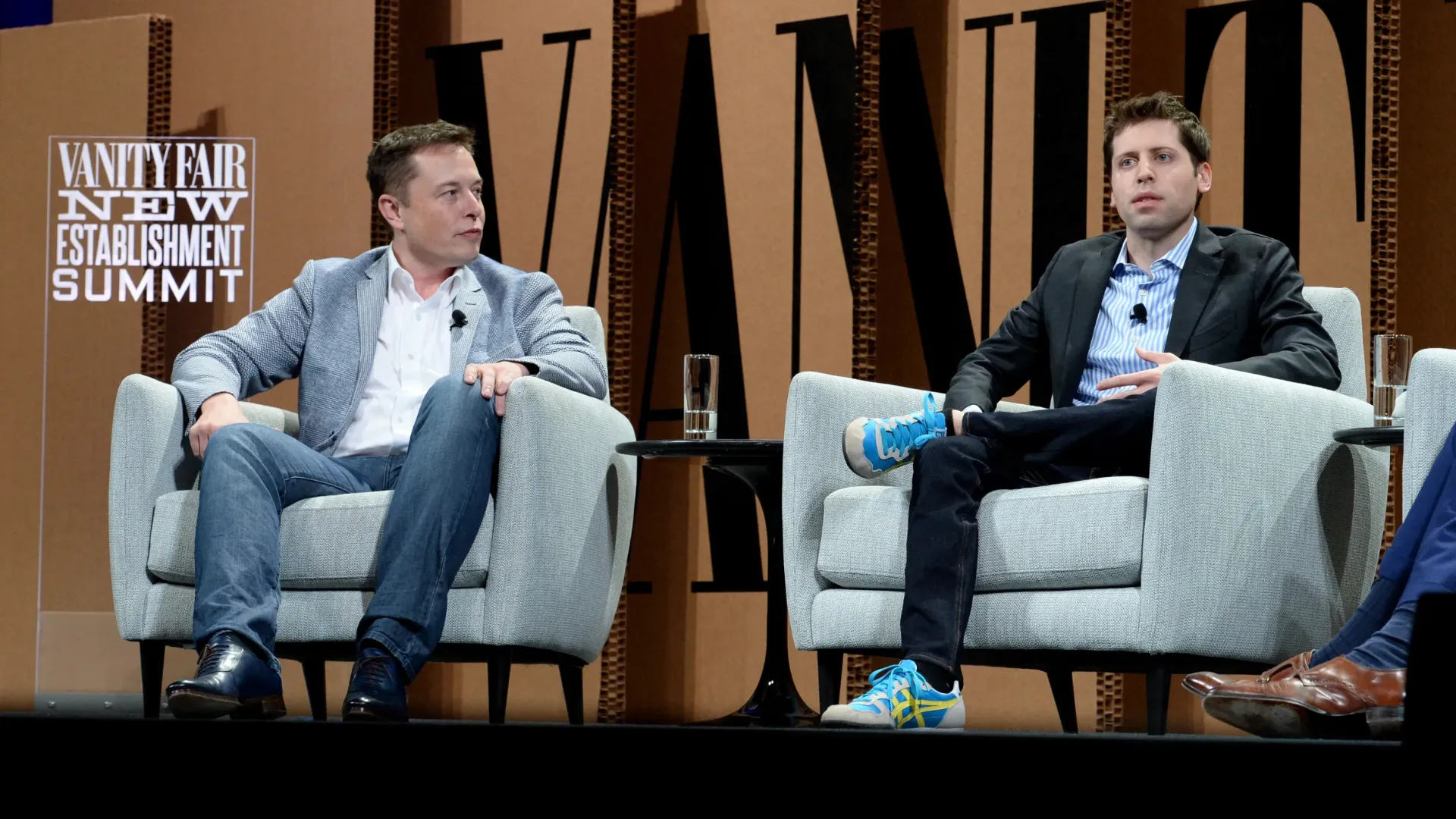
One of Silicon Valley’s most closely watched legal fights has formally entered the courtroom, placing Elon Musk against Sam Altman and the company they once helped build. The case centers on a question with implications far beyond the parties involved: did OpenAI abandon the founding principles on which it was created?
Jury selection began in federal court in Oakland, where Judge Yvonne Gonzalez Rogers is presiding over proceedings. The lawsuit has drawn intense attention because it combines corporate governance, billionaire rivalry, nonprofit ethics and the race to dominate artificial intelligence.
Why the lawsuit matters far beyond Silicon Valley
This is not just a personal dispute between two prominent technology figures. The outcome could influence how AI companies are structured, how investors engage with research labs and how courts interpret promises made during the early formation of emerging technology organizations.
At a time when governments, businesses and consumers are debating the power of AI, the case also raises a broader issue: should companies developing transformative technology prioritize public benefit or shareholder returns?
Musk’s central claim: OpenAI changed its original purpose
According to the lawsuit, Musk argues that OpenAI was founded in 2015 as a nonprofit organization with a clear mission to develop artificial intelligence safely and for the benefit of humanity.
Musk says he contributed roughly $38 million during OpenAI’s early years based on the understanding that advanced AI technology would remain open and broadly beneficial rather than controlled for private commercial gain.
His legal argument claims that the organization later shifted away from that mission after internal disagreements and his departure. Musk contends that OpenAI’s later commercial structure and strategic partnerships represent a betrayal of the promises made at the beginning.
The case frames the dispute as one of principle, asking whether a mission driven institution can later transform into a profit focused powerhouse while still claiming continuity with its founding ideals.
Microsoft partnership becomes a key flashpoint
A major point of contention in the lawsuit is OpenAI’s deep relationship with Microsoft.
Musk’s side argues that Microsoft’s multibillion dollar backing fundamentally changed the direction of OpenAI. Publicly reported investments tied to the partnership have been estimated at around $13 billion, helping OpenAI scale computing infrastructure, product development and enterprise deployment.
Microsoft has integrated OpenAI technology into products across cloud services, workplace software and consumer tools. Musk argues this level of commercial alignment moved OpenAI away from a public interest research model and into a highly monetized corporate structure.
That accusation goes to the heart of the case because it challenges whether OpenAI’s current model is compatible with the ideals it originally promoted.
What Musk is seeking in court
The lawsuit reportedly seeks approximately $134 billion in compensation and also asks for leadership changes, including the removal of Altman as chief executive.
Musk has said he does not want any awarded funds for personal enrichment and would prefer that money be directed to OpenAI’s nonprofit arm rather than to himself.
Whether the court views those requests as legally grounded will become one of the defining issues during trial.
OpenAI rejects every allegation
OpenAI has strongly denied Musk’s claims and says the company remains committed to its founding mission of ensuring advanced AI benefits humanity.
The company argues that building frontier AI systems requires enormous investment in talent, computing infrastructure, safety research and global deployment. In OpenAI’s view, commercial partnerships are not evidence of betrayal but a practical necessity to fund progress responsibly.
OpenAI maintains that the scale and cost of modern AI development make purely idealistic structures difficult to sustain without major sources of capital.
OpenAI’s counterargument: Musk wanted control
OpenAI has also challenged Musk’s narrative of why he left the organization.
According to statements previously made by the company, Musk sought greater control over OpenAI in 2018. OpenAI says that when co founders including Altman, Greg Brockman and Ilya Sutskever did not agree to those terms, Musk stepped away.
The company has further claimed that Musk once explored the idea of combining OpenAI with Tesla.
Those assertions are central to OpenAI’s defense because they attempt to reframe the conflict not as a broken promise, but as a disagreement over governance and influence.
A battle of narratives in the AI era
The courtroom clash presents two sharply different narratives.
Musk portrays himself as an early supporter who backed OpenAI to protect humanity from concentrated AI power, only to see the organization become exactly what it was meant to avoid.
OpenAI portrays Musk as a former insider unhappy with losing influence, who is now attacking a company that succeeded after he predicted it would fail.
Both arguments are likely to be tested through internal communications, founding documents, funding records and witness testimony.
Why the verdict could reshape AI governance
Whatever the final judgment, the case could leave a lasting mark on the technology industry.
If Musk succeeds on core claims, other mission driven AI labs may face stricter scrutiny over governance changes, commercial partnerships and fiduciary responsibilities.
If OpenAI prevails, the ruling may reinforce the idea that hybrid structures combining public mission and private capital are a legitimate path for developing advanced AI.
The case may also influence how future founders write charters, fundraising agreements and control provisions from the very beginning.
Growing pressure on leaders in the AI race
The lawsuit arrives during an intense global contest involving OpenAI, Microsoft, Google, Meta, xAI and others racing to lead the next wave of AI systems.
That context makes the trial especially significant. It is unfolding while AI tools are reshaping education, coding, search, media and enterprise operations. Questions about who controls these systems and whose interests they serve are no longer theoretical.
What happens next
With jury selection underway, the legal process now moves into a phase where arguments will be tested under oath rather than through public statements and blog posts.
The proceedings are expected to attract sustained attention from investors, regulators, developers and policymakers worldwide.
For now, the courtroom has become the latest arena in the battle over artificial intelligence. What began as a partnership among technologists has evolved into one of the most consequential disputes of the AI age.
Edit Profile
Help improve @KR

Was this page helpful to you?
Contact Khogendra Rupini
Are you looking for an experienced developer to bring your website to life, tackle technical challenges, fix bugs, or enhance functionality? Look no further.
I specialize in building professional, high-performing, and user-friendly websites designed to meet your unique needs. Whether it's creating custom JavaScript components, solving complex JS problems, or designing responsive layouts that look stunning on both small screens and desktops, I can collaborate with you.
Create something exceptional with us. Contact us today
Open for Collaboration
If you're looking to collaborate, I'm available for a variety of professional services, including -
- Website Design & Development
- Advertisement & Promotion Setup
- Hosting Configuration & Deployment
- Front-end & Back-end Code Implementation
- Code Testing & Optimization
- Cybersecurity Solutions & Threat Prevention
- Website Scanning & Malware Removal
- Hacked Website Recovery
- PHP & MySQL Development
- Python Programming
- Web Content Writing
- Protection Against Hacking Attempts