
Microsoft and OpenAI reset alliance as rivalry grows, easing cloud limits and reshaping multibillion dollar partnership
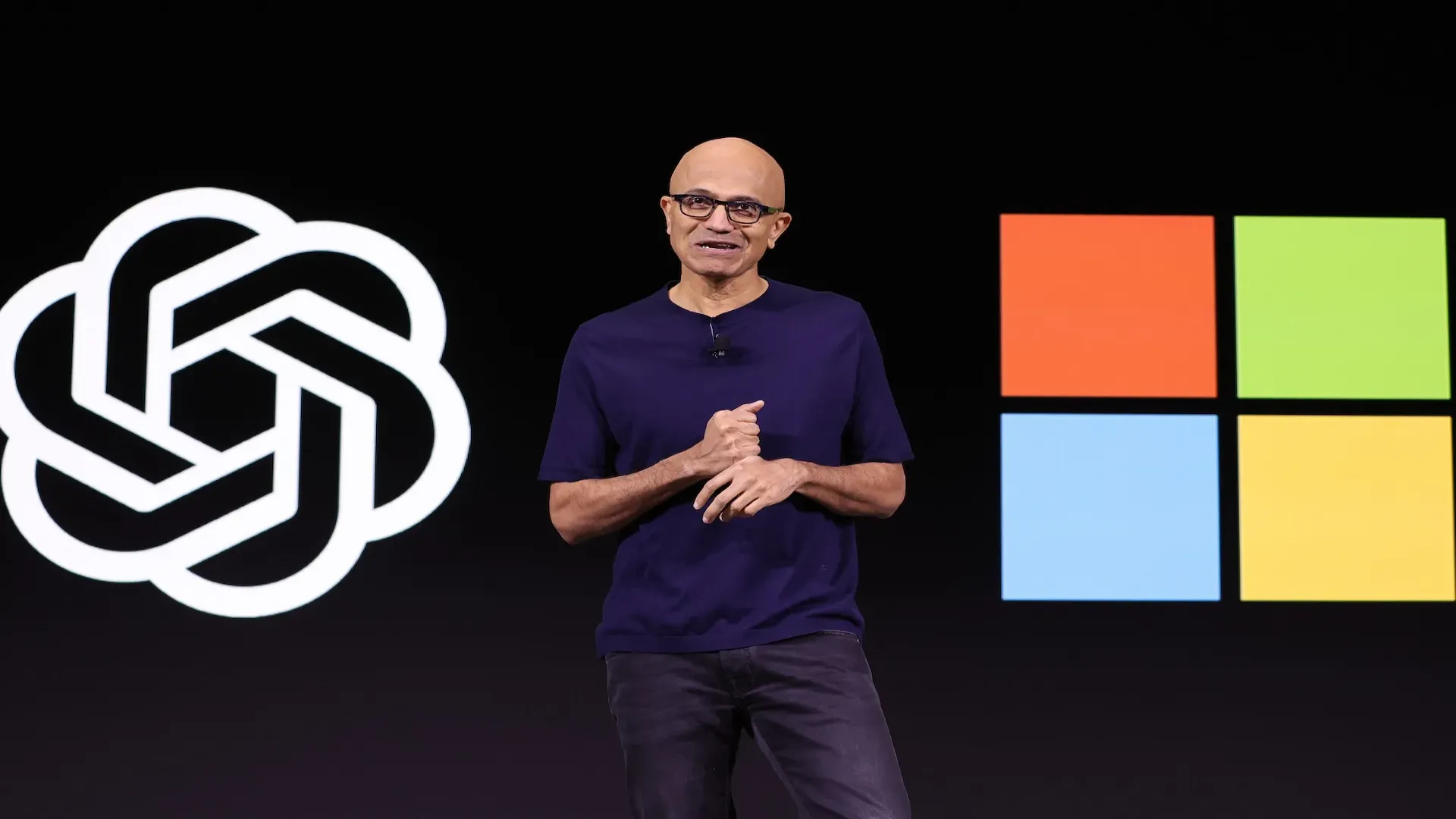
Microsoft and OpenAI have announced a sweeping revision to one of the most influential partnerships in the artificial intelligence industry, signaling a new phase in their relationship as both companies increasingly compete in overlapping markets.
The updated agreement loosens several earlier restrictions that tied OpenAI closely to Microsoft’s cloud ecosystem, while preserving core commercial links between the two firms. The move comes at a critical moment for OpenAI as it reportedly prepares for a future public listing and seeks clearer long term financial terms for investors.
The announcement highlights how a partnership that helped define the modern AI race is now evolving under the pressure of rapid growth, shifting ambitions, and rising competition.
A landmark AI partnership enters a new chapter
Since first joining forces in 2019, Microsoft has invested more than $13 billion into OpenAI, becoming the startup’s largest financial backer, primary cloud provider, and a major shareholder with an estimated 27 percent stake.
That relationship helped power Microsoft’s aggressive AI expansion across products such as Windows, Azure, GitHub, and Microsoft 365. It also gave OpenAI access to enormous computing infrastructure needed to train and deploy advanced models including ChatGPT.
Now, both companies are recalibrating the arrangement.
Under the revised terms, Microsoft Azure will remain OpenAI’s primary cloud platform. OpenAI products are also expected to continue launching first on Azure, unless Microsoft cannot or chooses not to provide the capabilities OpenAI requires.
While those provisions preserve Microsoft’s central role, the most significant change is that OpenAI is now free to sell all of its products through any cloud provider.
That marks a major break from earlier exclusivity expectations and gives OpenAI much wider commercial flexibility as demand for enterprise AI services expands globally.
OpenAI gains freedom to expand across rival clouds
The ability to distribute products beyond Azure could significantly strengthen OpenAI’s position in the enterprise market.
Large companies often prefer multi cloud strategies rather than relying on a single provider. By opening access to additional platforms, OpenAI can now pursue customers using rival infrastructure providers such as Amazon Web Services, Google Cloud, and others.
This change may help OpenAI grow faster in sectors where clients require broader deployment choices, geographic flexibility, or integration with existing cloud contracts.
For Microsoft, the shift reflects a more balanced approach. Rather than enforcing strict exclusivity, the company appears to be prioritizing continued access to OpenAI technology, revenue participation, and long term strategic ties.
Revenue sharing terms reportedly capped through 2030
According to U.S. media reports cited alongside the announcement, OpenAI will continue paying Microsoft a 20 percent share of revenue through 2030.
However, those payments will now be subject to an overall cap.
That detail is especially notable because it places limits on how much Microsoft can earn from OpenAI’s future growth. If OpenAI’s revenue expands sharply in coming years, capped payments could preserve more upside for the AI company and improve its financial profile ahead of any eventual stock market debut.
For potential investors, clearer obligations and reduced uncertainty can be a major advantage when assessing long term value.
Intellectual property access becomes non exclusive
Another important change involves Microsoft’s rights to OpenAI intellectual property.
Microsoft’s license is set to continue through 2032, but it will transition from exclusive to non exclusive status.
That means OpenAI could potentially offer similar rights or technology arrangements to other partners in the future. It also reduces the perception that one company controls privileged access to OpenAI innovations.
The adjustment reflects the broader maturation of OpenAI from a startup heavily dependent on a single strategic sponsor into a global AI platform seeking greater independence.
Competition between allies has intensified
Although Microsoft and OpenAI remain close partners, signs of competitive tension have grown over the past year.
Microsoft has accelerated development of its own in house AI systems, integrating proprietary tools across enterprise software and cloud services. At the same time, OpenAI has expanded direct business offerings that increasingly overlap with Microsoft’s corporate customer base.
In practical terms, both companies now serve many of the same customers while also relying on one another.
That unusual dynamic has made a revised framework increasingly necessary.
The new agreement appears designed to preserve cooperation where both sides benefit, while reducing friction in areas where their commercial interests now diverge.
OpenAI broadens ties with Amazon
The announcement also comes after OpenAI deepened relationships with other technology giants.
In February, Amazon and OpenAI unveiled a major strategic partnership, with Amazon agreeing to invest up to $50 billion in the company.
OpenAI also said it would expand an existing $38 billion agreement with Amazon Web Services by an additional $100 billion over eight years.
Those deals underscore OpenAI’s desire to diversify infrastructure and strategic support beyond Microsoft alone.
For Microsoft, this trend likely reinforced the need to formalize a more realistic partnership model rather than maintain structures created when OpenAI was a far smaller company.
Why this matters for the AI industry
The Microsoft OpenAI alliance has been one of the defining forces behind the commercial AI boom. Any change in that relationship carries implications across cloud computing, enterprise software, chip demand, and startup competition.
The revised deal suggests that the next stage of AI growth may be less about exclusive lockups and more about flexible ecosystems where leading model developers work across multiple platforms.
That could increase competition among cloud providers, lower barriers for enterprise adoption, and give customers more deployment options.
It may also encourage other AI startups to seek diversified infrastructure partnerships instead of tying themselves too closely to one sponsor.
A strategic reset, not a breakup
Despite headlines around rivalry, this is not a separation. Microsoft remains OpenAI’s key partner, primary cloud platform, and major shareholder. OpenAI still benefits from Microsoft’s scale, enterprise reach, and infrastructure depth.
What has changed is the structure.
The revised agreement acknowledges that both companies are now far larger, more ambitious, and more independent than when the partnership began in 2019.
Rather than forcing an outdated model, they have chosen to reset terms for a market that has moved at extraordinary speed.
Outlook for investors and customers
For customers, the clearest takeaway is likely broader access to OpenAI products across more cloud environments.
For investors, the update may be interpreted as a sign that OpenAI is preparing itself for future capital market scrutiny by simplifying obligations and sharpening governance clarity.
For Microsoft, it preserves valuable economic participation while allowing the company to continue building its own AI future.
Final word
The Microsoft OpenAI partnership helped ignite the generative AI era. This latest restructuring shows that even the industry’s most powerful alliances must evolve when success changes the balance of power.
What began as a startup backing arrangement has become a negotiation between two giants.
And in the rapidly changing AI race, flexibility may now be more valuable than exclusivity.
Edit Profile
Help improve @KR

Was this page helpful to you?
Contact Khogendra Rupini
Are you looking for an experienced developer to bring your website to life, tackle technical challenges, fix bugs, or enhance functionality? Look no further.
I specialize in building professional, high-performing, and user-friendly websites designed to meet your unique needs. Whether it's creating custom JavaScript components, solving complex JS problems, or designing responsive layouts that look stunning on both small screens and desktops, I can collaborate with you.
Create something exceptional with us. Contact us today
Open for Collaboration
If you're looking to collaborate, I'm available for a variety of professional services, including -
- Website Design & Development
- Advertisement & Promotion Setup
- Hosting Configuration & Deployment
- Front-end & Back-end Code Implementation
- Code Testing & Optimization
- Cybersecurity Solutions & Threat Prevention
- Website Scanning & Malware Removal
- Hacked Website Recovery
- PHP & MySQL Development
- Python Programming
- Web Content Writing
- Protection Against Hacking Attempts