
Apple App Store brings flexible annual subscriptions with monthly payments: What the new plan means for users and developers
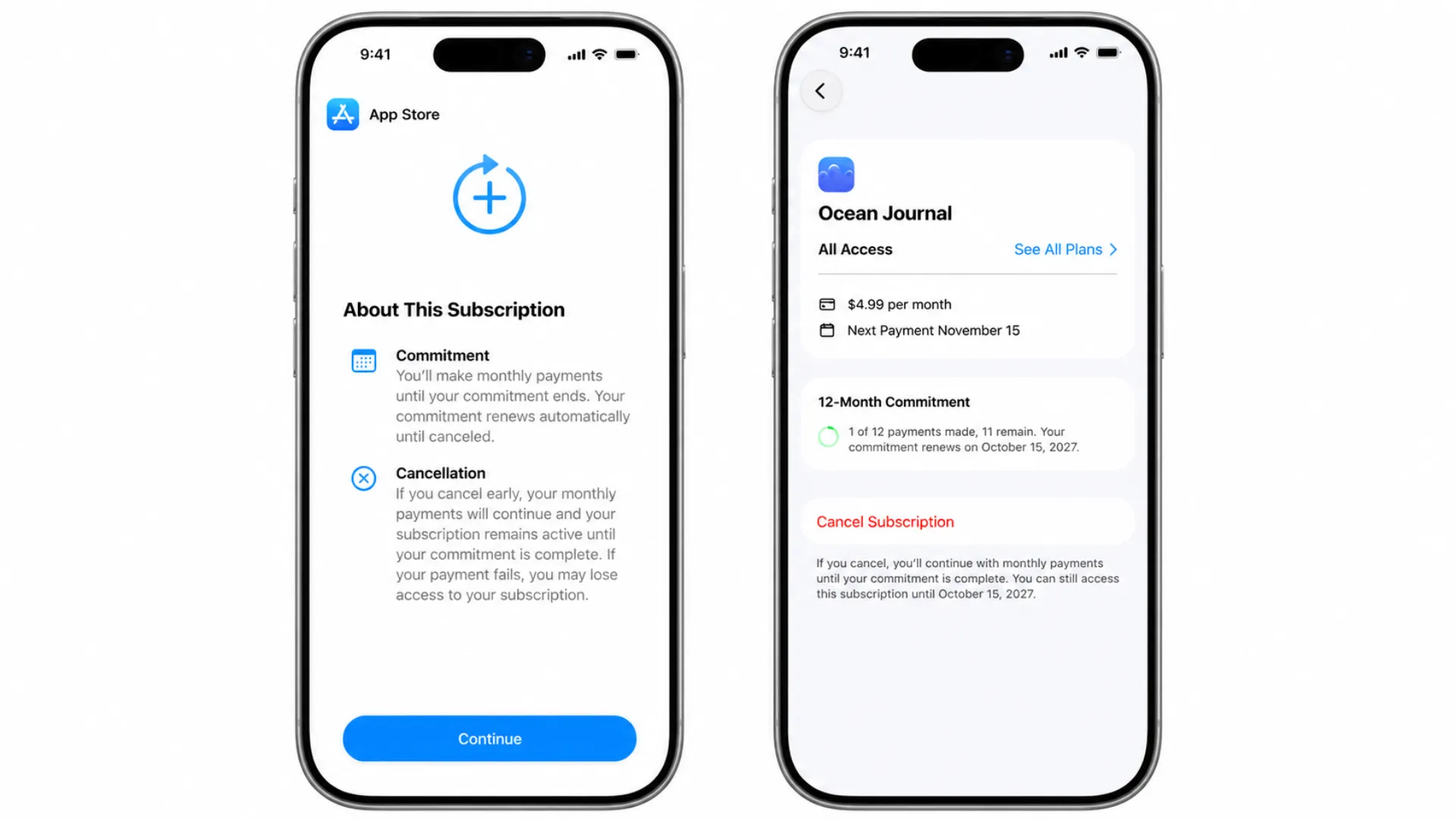
Apple is preparing a major change to the way subscriptions work on the App Store, introducing a new payment option that allows users to commit to an annual plan while paying in smaller monthly instalments. The update is designed to make long term subscriptions easier to afford without requiring a large one time payment upfront.
The new model gives developers another way to price digital services and could reshape how users subscribe to apps, streaming platforms, productivity tools, education services and other recurring offerings sold through the App Store.
Apple introduces a middle path between monthly and yearly plans
Until now, most App Store subscriptions have followed two familiar formats. Users could either choose a month to month plan with the freedom to cancel anytime, or pay for a full year in advance, often at a discounted rate.
Apple’s latest subscription structure creates a new option between those two choices.
Under the new system, users will be able to pay monthly instalments while agreeing to a 12 month subscription commitment. This lowers the initial payment burden while preserving the long term value of an annual plan.
For many users, the biggest advantage is simple. They can access yearly pricing models without paying the full amount in one transaction.
How the new App Store annual instalment plan works
Apple says the new feature lets developers offer subscriptions that run for one year but are billed in monthly payments. That means customers can spread the cost across the year rather than paying the total amount at once.
Users may cancel during the subscription period, but the plan will only stop renewing after the required payments under the original commitment are completed.
This structure makes it different from a standard monthly plan, where cancellation typically ends future billing quickly. In the new format, the user commits to the annual term while benefiting from smaller recurring charges.
That distinction is likely to be clearly explained during sign up so users understand both the payment schedule and the commitment period.
Why Apple is making this move now
The subscription economy has grown rapidly across mobile apps. Consumers today subscribe to fitness apps, music services, language learning tools, cloud storage, note taking platforms, meditation apps and premium productivity tools.
But many annual plans come with a barrier: upfront cost.
Even when annual pricing offers better value than monthly billing, some users avoid it because paying a large amount at once feels expensive. Apple’s new instalment model appears aimed at solving that problem.
By reducing the immediate cost while keeping the longer commitment, Apple may help developers improve annual plan adoption and reduce churn compared with standard monthly subscriptions.
What users will see inside their Apple Account
Apple is also adding more billing visibility with the new subscription format.
According to the company, users will be able to track how many payments have already been made and how many remain through their Apple Account settings. This gives subscribers a clearer picture of their commitment status.
Apple will also send email reminders and optional push notifications before renewals, helping users stay informed about upcoming charges.
That added transparency could become an important feature, especially for users managing multiple subscriptions across apps.
Rollout timeline and supported devices
The feature has already been made available to developers through App Store Connect, allowing them to configure and test the new payment model. Apple says testing support is also available through Xcode.
For consumers, the public rollout is expected to begin next month alongside iOS 26.5 and related software platform updates.
Apple says the feature will be available globally on devices running iOS 26.4 or later. However, the United States and Singapore will not be included in the initial launch phase.
Apple has not yet provided a detailed explanation for the delayed rollout in those two markets.
Why this matters for developers
For app makers, the new billing structure could become a valuable growth tool.
Many developers prefer annual subscribers because longer commitments often provide steadier revenue and stronger retention than monthly plans. But persuading users to pay for a full year upfront can be difficult.
This new option may improve conversion rates by combining the psychological comfort of smaller monthly charges with the revenue stability of annual commitments.
It could be especially useful for developers offering premium software such as:
AI tools and assistants
Learning and exam preparation apps
Health and wellness platforms
Creative software
Professional productivity suites
Cloud storage services
Business collaboration apps
If adoption is strong, more developers may redesign their subscription strategies around this new model.
A consumer friendly change with one important caution
For users, the update looks positive because it expands payment flexibility. Instead of choosing between expensive annual billing and potentially costlier monthly plans, customers gain a third route.
However, there is one important detail: commitment still matters.
Because the plan is tied to a 12 month term, customers should read the payment terms carefully before subscribing. Smaller monthly charges may feel easier, but the total obligation remains linked to the annual cycle.
This means users should compare:
Total yearly cost
Monthly instalment amount
Cancellation terms
Renewal date
Value of included features
Understanding these points will help avoid confusion later.
Apple continues refining the App Store subscription business
Services revenue remains a major focus for Apple Inc., and subscriptions play an increasingly central role in that ecosystem. From streaming and storage to third party app memberships, recurring billing has become one of the most important digital business models on mobile devices.
This latest update signals that Apple wants to make subscriptions more flexible while keeping billing systems inside the App Store ecosystem attractive to both users and developers.
As competition grows across digital platforms, convenience and pricing design often matter as much as product quality. Apple’s instalment based annual plan reflects that shift.
Final takeaway
Apple’s new App Store subscription model could prove to be one of the most practical billing changes in recent years. It lowers the barrier to annual plans, gives developers another pricing tool and offers users more choice.
If widely adopted, it may encourage a new generation of subscriptions where affordability, transparency and long term value are combined in a single plan.
For millions of iPhone users, the days of paying one large yearly fee upfront may soon be replaced by a more manageable monthly path.
Edit Profile
Help improve @KR
Was this page helpful to you?
Contact Khogendra Rupini
Are you looking for an experienced developer to bring your website to life, tackle technical challenges, fix bugs, or enhance functionality? Look no further.
I specialize in building professional, high-performing, and user-friendly websites designed to meet your unique needs. Whether it's creating custom JavaScript components, solving complex JS problems, or designing responsive layouts that look stunning on both small screens and desktops, I can collaborate with you.
Create something exceptional with us. Contact us today
Open for Collaboration
If you're looking to collaborate, I'm available for a variety of professional services, including -
- Website Design & Development
- Advertisement & Promotion Setup
- Hosting Configuration & Deployment
- Front-end & Back-end Code Implementation
- Code Testing & Optimization
- Cybersecurity Solutions & Threat Prevention
- Website Scanning & Malware Removal
- Hacked Website Recovery
- PHP & MySQL Development
- Python Programming
- Web Content Writing
- Protection Against Hacking Attempts