
Google withdraws from $100 million Pentagon AI drone challenge after ethics review, exposing fresh divide over military use of AI
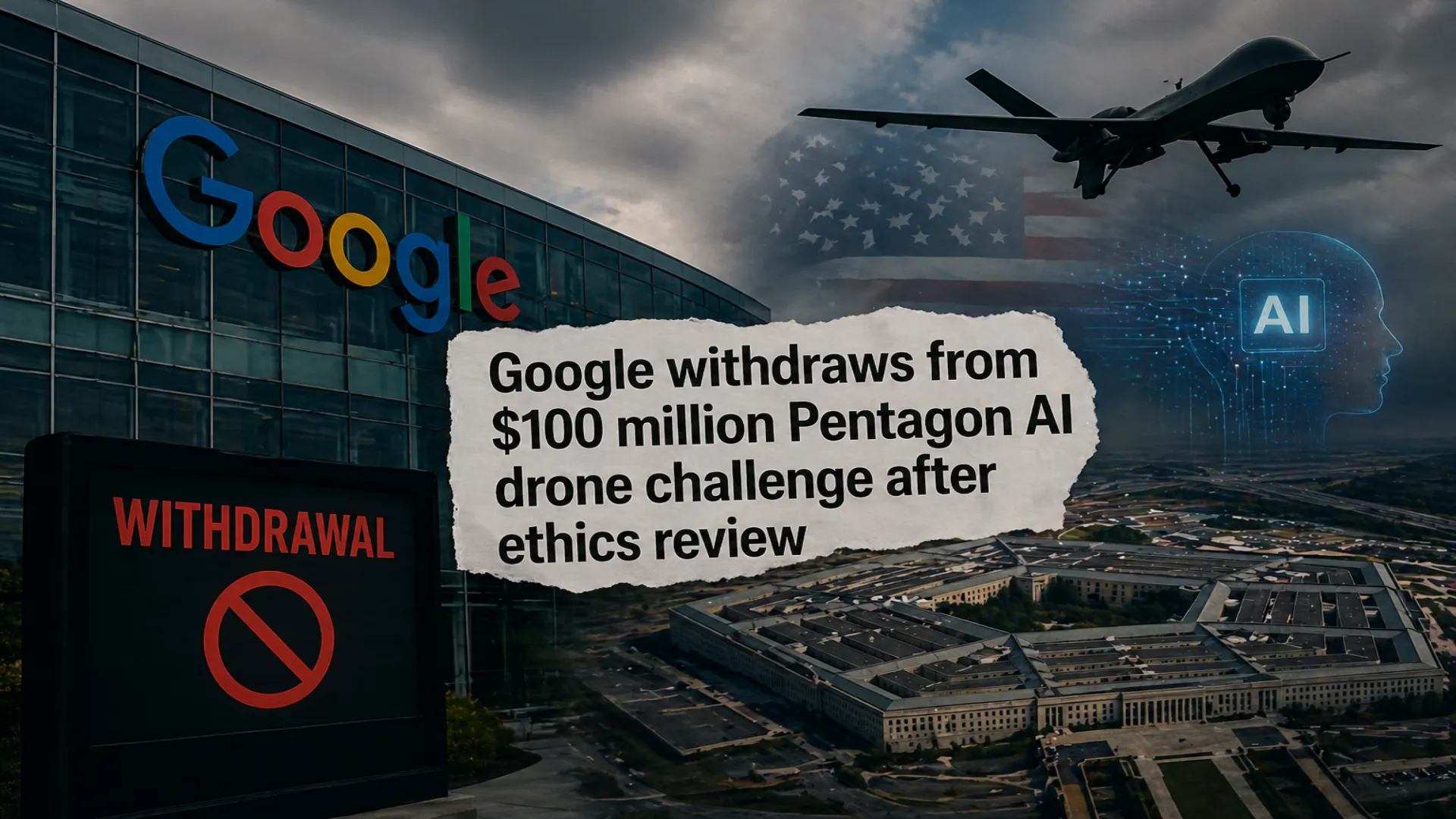
Google has withdrawn from a $100 million United States Pentagon competition focused on developing autonomous drone swarm technology, according to reports, reviving long running tensions inside the company over the use of artificial intelligence in military programs.
The challenge was launched by the U.S. Department of Defense as global conflicts continue to demonstrate the growing battlefield role of drones, especially coordinated drone swarms that can operate at scale. The Pentagon initiative seeks advanced systems capable of allowing commanders to direct multiple drones through simple voice instructions, turning spoken commands into coordinated digital actions.
Google had reportedly shown interest in participating in the contest, but later stepped back after an internal review raised concerns linked to ethics and company policy. While reports said ethics discussions played a role, official records cited a lack of internal resourcing as the reason for the withdrawal.
Pentagon pushes next generation drone warfare tools
The competition reflects how modern defense agencies are rapidly investing in autonomous systems. Drone swarms are seen as a major strategic tool because they can overwhelm defenses, gather intelligence, track targets, and operate in contested environments at lower cost than traditional military hardware.
Under the challenge, commanders would be able to issue basic voice commands such as directing a swarm left or right, with software translating those instructions into synchronized drone movement.
Later stages of the program are also expected to focus on advanced capabilities including target tracking, data sharing between systems, and managing the full operational cycle from launch to mission completion.
Several major technology and defense aligned firms were selected for the competition. Reports said participants include OpenAI, Palantir, and xAI. The contest is expected to run in stages over six months.
Google employees split over withdrawal
The decision has reportedly created internal divisions at Google.
Some employees connected to the project were disappointed that the company chose not to continue, particularly at a time when rivals are expanding their relationships with governments and defense agencies.
At the same time, many AI researchers inside Google have continued to voice broader concerns about using advanced company technology for classified military work. Their objections center on how AI could be deployed in weapons systems, surveillance operations, or lethal decision making without adequate safeguards.
This internal debate highlights a larger question facing the technology sector: how companies should balance national security partnerships with ethical boundaries around powerful AI systems.
Echoes of the Project Maven controversy
This is not the first time Google has faced backlash over Pentagon related work.
In 2018, the company became the center of a major employee protest after taking part in Project Maven, a Pentagon program that used AI to analyze drone footage and support military operations. Thousands of workers objected, arguing that Google should not be involved in warfare technology.
That controversy led Google to publish AI principles and pledge that it would not design AI for weapons or other harmful uses.
Project Maven became one of the most significant moments in the global debate over responsible AI, showing that internal employee pressure could influence the strategic direction of one of the world’s largest technology companies.
Google’s defense policy has evolved
Since then, Google’s relationship with defense work appears to have changed.
Reports have indicated that Google and the Pentagon later signed a broader AI agreement allowing the company’s technology to be used for lawful government purposes. According to those reports, the arrangement did not give Google veto power over how government agencies make operational decisions, including classified uses.
A spokesperson reportedly said Google is currently focused on providing access to AI models rather than building custom military systems. The company described that approach as a responsible way to support national security needs while maintaining guardrails.
Google has also said it does not support the use of AI for mass surveillance or autonomous weapons without meaningful human oversight.
That distinction is increasingly important as governments seek AI tools for defense while public scrutiny grows over the risks of handing critical battlefield decisions to machines.
Why the decision matters now
Google’s exit from the challenge comes at a pivotal moment for the global AI race.
Major companies are competing not only for consumer and enterprise markets, but also for strategic government contracts tied to defense, cybersecurity, intelligence, and infrastructure. Winning such deals can bring revenue, influence, and long term partnerships.
At the same time, these projects carry reputational and ethical risks. Employees, researchers, policymakers, and the public are asking whether private companies should help build technologies that could be used in conflict zones or lethal missions.
Google’s withdrawal suggests that even after years of policy changes, internal resistance to certain military AI projects remains strong.
Wider pressure on Silicon Valley
The broader technology industry is also confronting similar questions.
Anthropic reportedly participated in the Pentagon contest process but was not selected. The company has previously discussed limits around autonomous weapons systems. Other firms, however, are moving more aggressively into defense opportunities.
This split across the industry shows there is no single model for how AI companies engage with military institutions. Some see national security collaboration as necessary and inevitable. Others argue stronger safeguards are needed before advanced AI enters combat systems.
What comes next
The Pentagon is unlikely to slow its push toward AI enabled defense systems. Drone swarms, autonomous coordination, rapid battlefield analysis, and voice controlled operations are expected to remain priority areas.
For Google, the decision may reduce immediate controversy but it does not end the debate. As governments worldwide seek access to frontier AI models, the company will continue to face questions over where it draws the line.
The challenge now is not simply technological. It is about trust, accountability, and deciding who controls the future of intelligent weapons systems.
Google’s withdrawal from this $100 million competition is more than a contract decision. It is another sign that the collision between innovation, ethics, and national security is only becoming more intense.
Edit Profile
Help improve @KR

Was this page helpful to you?
Contact Khogendra Rupini
Are you looking for an experienced developer to bring your website to life, tackle technical challenges, fix bugs, or enhance functionality? Look no further.
I specialize in building professional, high-performing, and user-friendly websites designed to meet your unique needs. Whether it's creating custom JavaScript components, solving complex JS problems, or designing responsive layouts that look stunning on both small screens and desktops, I can collaborate with you.
Create something exceptional with us. Contact us today
Open for Collaboration
If you're looking to collaborate, I'm available for a variety of professional services, including -
- Website Design & Development
- Advertisement & Promotion Setup
- Hosting Configuration & Deployment
- Front-end & Back-end Code Implementation
- Code Testing & Optimization
- Cybersecurity Solutions & Threat Prevention
- Website Scanning & Malware Removal
- Hacked Website Recovery
- PHP & MySQL Development
- Python Programming
- Web Content Writing
- Protection Against Hacking Attempts