
King Charles to Bezos, Tim Cook, Jensen Huang: What is holding British startups back? Tech giants join high level talks in US
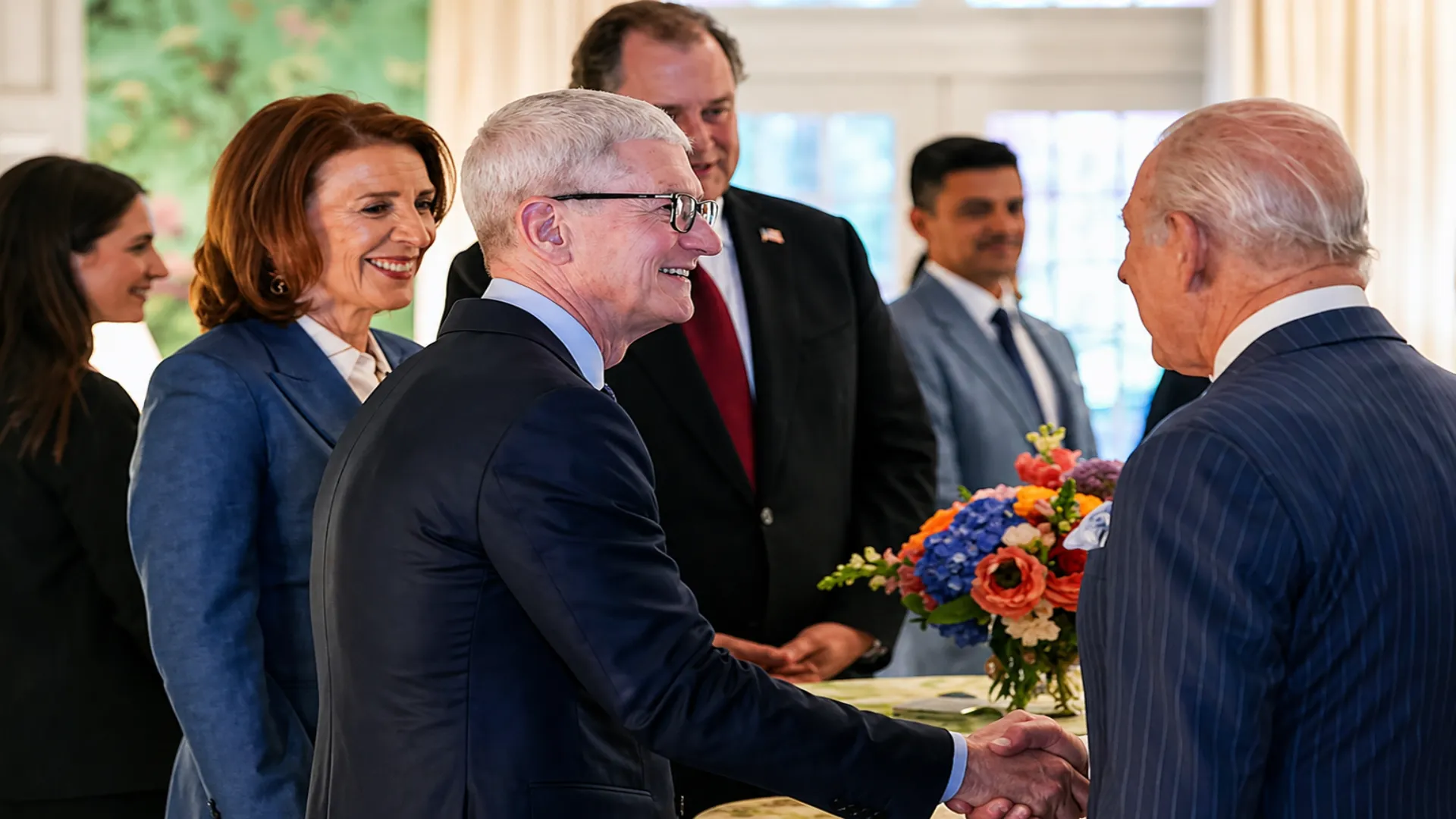
During his four day state visit to the United States, King Charles III convened a private gathering of some of America’s most influential technology leaders to discuss one pressing question: why do so many promising British startups struggle to scale into global success stories?
According to reports, the meeting brought together a powerful group of executives that included Jeff Bezos, Tim Cook, Jensen Huang, Lisa Su, Marc Benioff and Ruth Porat. The conversation focused on one of the most persistent challenges in the United Kingdom’s innovation economy: converting breakthrough ideas into funded, high growth companies.
King Charles highlights Britain’s startup funding gap
Speaking during the gathering, King Charles drew attention to the financial barrier often faced by companies emerging from universities and research institutions. He referred to the challenge as the “valley of death,” a term widely used in venture capital circles to describe the dangerous stage where startups have promising technology but lack enough funding to commercialize it.
The monarch reportedly said these founders often face the greatest difficulty in getting off the ground. The comment reflects a longstanding issue in Britain’s startup landscape, where strong academic research frequently struggles to attract the same scale of early stage investment commonly available in the United States.
Britain is home to globally respected universities, scientific institutions, and engineering talent. Yet many founders still look overseas for funding once their businesses reach growth stage. Industry analysts have often pointed to a shortage of deep risk capital compared with Silicon Valley and other American innovation hubs.
Jensen Huang says Britain has world class potential
Jensen Huang used the meeting to underline Britain’s strengths in emerging technologies. He reportedly praised the country’s potential in artificial intelligence, quantum computing, and robotics.
However, Huang also stressed that talent and ideas alone are not enough. He said the country needs a more vibrant venture capital ecosystem and a stronger startup culture if it wants to fully unlock its innovation potential.
His remarks are significant because Nvidia has become one of the most important companies in the global AI race. As the maker of chips powering much of the modern artificial intelligence boom, Nvidia’s view on national innovation ecosystems carries growing influence.
For Britain, Huang’s comments reinforce a common industry belief: the country has the intellectual foundation to lead in next generation technologies, but requires larger pools of private capital and faster commercialization pathways.
A lighter moment in a room full of rivals
The meeting also produced a rare humorous exchange between the King and executives whose companies compete intensely across cloud computing, semiconductors, software, and consumer technology.
King Charles reportedly joked to the group, “You’re all deadly competitors.”
Jensen Huang responded with a smile: “No one has to die.”
The exchange offered a lighter moment in an otherwise serious conversation about economic growth, innovation policy, and the future of technology investment.
Jeff Bezos recalls being rejected by 40 investors
Jeff Bezos reflected on his own early startup struggles, recalling how difficult it was to raise just $1 million in 1995 during the early days of Amazon.
According to Bezos, around 40 investors declined to back the company before he secured support.
King Charles reportedly replied that all 40 of those investors must now be regretting the decision.
The anecdote served as a reminder that even some of the world’s most successful technology companies once faced skepticism. It also highlighted a central theme of the meeting: many breakthrough businesses can be missed if investors fail to act early.
Lisa Su praises discussions on innovation and partnerships
Lisa Su later shared a photograph from the event on X and described the meeting as an honor.
She said she appreciated the opportunity to discuss artificial intelligence, advanced technology, and the global partnerships that help drive innovation.
Her comments suggest the gathering extended beyond startup finance and touched broader themes such as cross border collaboration, strategic industries, and the race for technological leadership.
Big Tech’s $42 billion commitment to Britain
The talks come after a major investment wave announced last September during the United Kingdom visit of Donald Trump. At that time, major technology companies including Microsoft, Nvidia, Google and OpenAI pledged a combined $42 billion, or roughly £31 billion, toward British investments.
Those commitments reportedly targeted sectors such as artificial intelligence, quantum computing, and civil nuclear energy.
The scale of the pledge signaled growing confidence in Britain’s scientific base and strategic industries. It also showed that despite funding concerns, the country remains an attractive destination for long term technology capital.
Why this meeting matters for Britain’s economy
The United Kingdom has produced many successful startups and several billion dollar technology firms. But policymakers have long worried that too many young companies are acquired early, relocate abroad, or fail to secure enough growth funding to become global champions.
Meetings like this matter because they place Britain’s startup ecosystem directly in front of executives who control enormous capital networks, strategic partnerships, and global influence.
If the country can combine elite research talent with stronger venture financing, it could strengthen its position in AI, semiconductors, health technology, clean energy, and advanced manufacturing.
The bigger message from King Charles
King Charles’ decision to personally raise startup barriers with global business leaders sends a broader signal: innovation is no longer just an economic issue. It is a national competitiveness issue.
Countries that successfully fund new ideas, scale local companies, and retain talent are likely to shape the next era of wealth creation and strategic power.
Britain already has the universities, engineers, and scientific reputation. The challenge now is building the investment environment that allows those strengths to become world leading companies.
For founders across the country, the message from the meeting was clear: the opportunity exists. The next step is ensuring capital follows innovation.
Edit Profile
Help improve @KR

Was this page helpful to you?
Contact Khogendra Rupini
Are you looking for an experienced developer to bring your website to life, tackle technical challenges, fix bugs, or enhance functionality? Look no further.
I specialize in building professional, high-performing, and user-friendly websites designed to meet your unique needs. Whether it's creating custom JavaScript components, solving complex JS problems, or designing responsive layouts that look stunning on both small screens and desktops, I can collaborate with you.
Create something exceptional with us. Contact us today
Open for Collaboration
If you're looking to collaborate, I'm available for a variety of professional services, including -
- Website Design & Development
- Advertisement & Promotion Setup
- Hosting Configuration & Deployment
- Front-end & Back-end Code Implementation
- Code Testing & Optimization
- Cybersecurity Solutions & Threat Prevention
- Website Scanning & Malware Removal
- Hacked Website Recovery
- PHP & MySQL Development
- Python Programming
- Web Content Writing
- Protection Against Hacking Attempts