
Elon Musk Says He Was a Fool to Fund OpenAI as Landmark Trial Intensifies
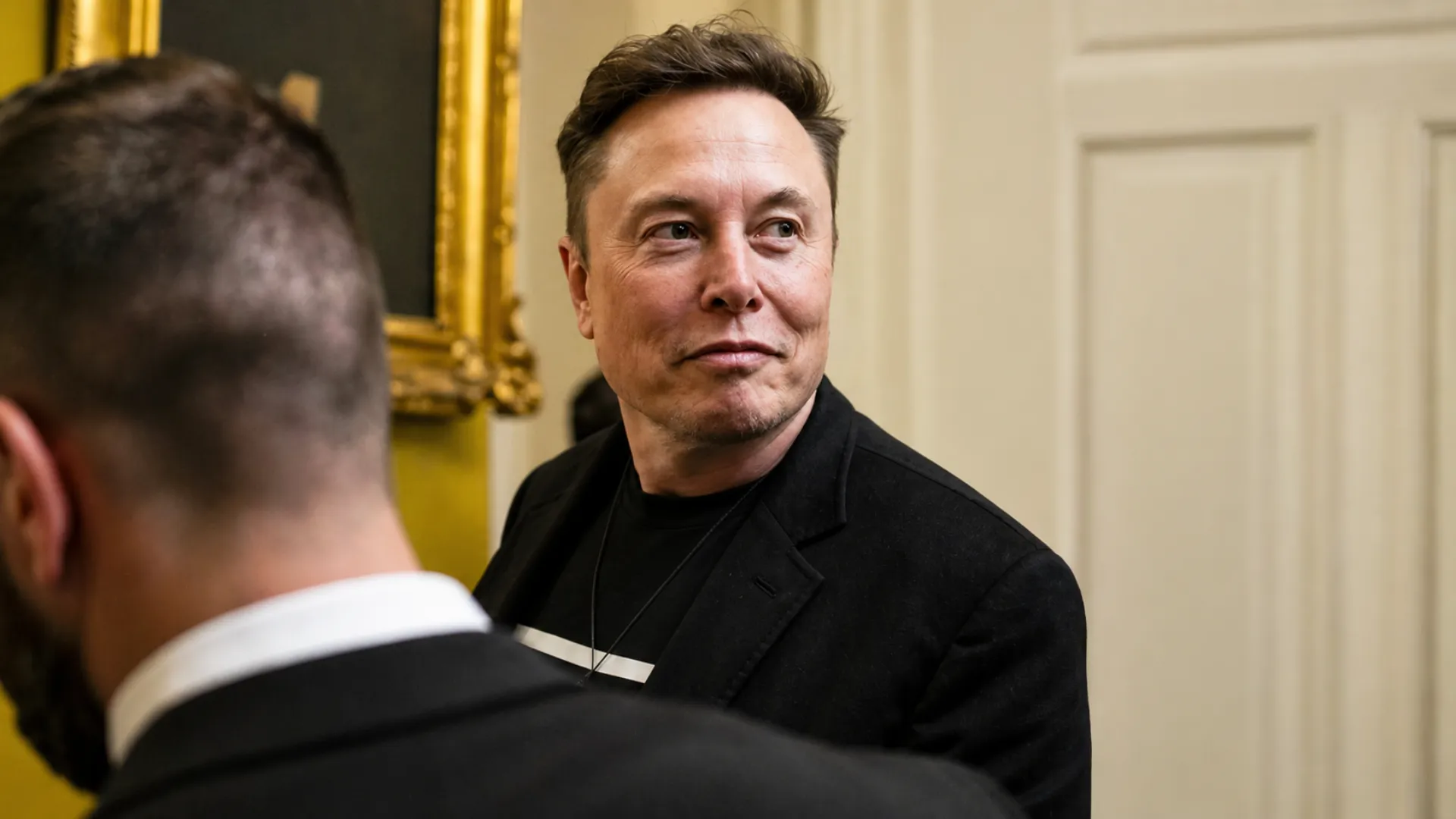
A high stakes courtroom battle between two of the most recognizable figures in technology deepened Wednesday as Elon Musk told jurors he was “a fool” for helping fund OpenAI, arguing that the artificial intelligence company abandoned the nonprofit mission on which it was founded.
Musk, who co-founded OpenAI in 2015 alongside Sam Altman and other researchers, is seeking more than $150 billion in damages from OpenAI and Microsoft, the company’s largest strategic partner. He also wants Altman removed from OpenAI’s board and is asking the court to halt the company’s shift toward a more commercial corporate structure.
The case, unfolding in federal court in Oakland, California, has quickly become one of the most consequential legal disputes in the AI era. At its center is a question that reaches far beyond the two men involved: Can a company created to serve the public interest evolve into one of the world’s most valuable private businesses without violating its founding purpose?
Musk Says He Was Misled by OpenAI Founders
During his second day on the witness stand, Musk said he believed OpenAI would remain guided by nonprofit principles when he committed early funding.
“I was a fool who provided them free funding to create a start-up,” Musk testified, according to live courtroom reporting. He said he contributed $38 million in what he described as essentially free funding to help launch what later became a company worth hundreds of billions of dollars.
Musk’s argument is that OpenAI’s original founders presented the organization as a nonprofit research lab focused on building artificial intelligence for the benefit of humanity, not for private enrichment.
He contends that OpenAI’s later transformation into a powerful commercial enterprise breached that understanding and diverted a charitable mission into a profit-driven one.
The comments marked some of Musk’s strongest language yet in a dispute that has escalated from public criticism into a courtroom confrontation with enormous financial and strategic implications.
The Core Legal Fight Over OpenAI’s Identity
Musk’s lawsuit focuses heavily on OpenAI’s corporate evolution.
OpenAI began as a nonprofit research organization. After Musk left in 2018 following internal disagreements and a power struggle, the company later created a for-profit arm that helped it raise capital, attract talent, and expand computing resources.
That restructuring became especially significant after the 2022 public launch of ChatGPT, which turned OpenAI into a global consumer technology brand and accelerated an industrywide race in generative AI.
Musk argues that the move toward commercial operations represented a betrayal of the organization’s original purpose. He has framed the dispute in moral terms, previously saying no one should be allowed to “steal a charity.”
On Wednesday, he repeated that theme when explaining why he did not sue sooner, saying he would have filed earlier had he realized sooner that the charitable mission had been taken.
OpenAI Pushes Back Hard
OpenAI has strongly rejected Musk’s claims.
Its legal team argued in opening statements that Musk’s lawsuit is driven less by principle than by frustration that the company succeeded after he left. OpenAI’s lead counsel said Musk sued because he “didn’t get his way.”
The company also maintains that its original nonprofit still controls the broader organization and continues work intended to serve the public good. Lawyers for OpenAI said the structure has not abandoned its mission and that proceeds from commercial success can still support socially beneficial initiatives.
That defense is likely to be central as the trial continues. If jurors accept OpenAI’s view, Musk’s case could be significantly weakened.
The dispute may ultimately hinge on internal communications, founding documents, board decisions, and whether jurors believe OpenAI’s later changes were consistent with its early commitments.
Microsoft’s Role Under the Microscope
Microsoft is not the headline figure in the courtroom, but it is deeply tied to the outcome.
The software giant became OpenAI’s most important commercial partner through a multibillion-dollar relationship that integrated OpenAI technology into products and cloud services.
Musk testified that Microsoft’s growing involvement increased his concern about OpenAI’s direction. He questioned whether a company of Microsoft’s scale should have influence over what he described as digital superintelligence.
At one point, Musk referred to a major Microsoft investment as a “bait and switch,” saying OpenAI had effectively turned the nonprofit into a company with a massive valuation.
Microsoft’s partnership with OpenAI helped reshape the global AI market, forcing competitors to accelerate their own strategies. That means the legal risks in this case extend far beyond damages.
Any ruling that disrupts OpenAI’s structure or partnerships could send shockwaves across the technology industry.
Why This Trial Matters to the AI Industry
This is more than a personal feud between billionaires. It is a test case for how artificial intelligence organizations can be built, financed, and governed.
AI development now requires vast sums of capital, access to advanced chips, elite engineering talent, and massive computing infrastructure. Nonprofit models may struggle to compete at that scale without commercial mechanisms.
At the same time, many critics argue that the world’s most powerful AI systems should not be controlled solely by profit-maximizing corporations.
That tension sits at the center of Musk’s lawsuit.
If Musk wins, it could create legal and strategic pressure on AI labs that began with public-interest missions before moving into commercial markets.
If OpenAI wins, it may validate hybrid structures that combine nonprofit oversight with aggressive private expansion.
Either outcome could shape how future AI companies organize themselves.
High Profile Witnesses Still to Come
The courtroom drama is far from over.
Several major technology figures are expected to testify later in the trial, including Sam Altman, Microsoft chief executive Satya Nadella, and former OpenAI chief technology officer Mira Murati.
Their testimony could prove pivotal.
Altman is expected to defend OpenAI’s evolution and leadership decisions. Nadella may be asked about Microsoft’s strategic relationship with OpenAI and how that partnership was structured. Murati could offer insight into internal governance and the company’s technical priorities during a transformative period.
The case is expected to run for roughly four weeks before a nine-person jury.
If the jury rules in Musk’s favor, Judge Yvonne Gonzalez Rogers will determine monetary damages and possible remedies.
Musk Balances Courtroom Fight With Expanding Empire
The timing of the trial is notable for Musk personally.
He is simultaneously overseeing electric vehicle maker Tesla, rocket company SpaceX, social platform X, and his own AI startup xAI.
OpenAI has argued that xAI’s emergence undermines Musk’s claims, suggesting the lawsuit may also serve competitive interests by slowing a rival.
Musk acknowledged xAI is now technically a competitor to OpenAI, though he described it as much smaller.
That creates a complicated backdrop: a founder challenging the company he helped create while simultaneously running a direct competitor.
Jurors may weigh whether Musk is motivated by governance concerns, competitive dynamics, or both.
Social Media Tensions Spill Into Court
The judge has also addressed the role of public commentary outside the courtroom.
Musk and Altman have both criticized each other publicly in the past, especially on social media. Judge Gonzalez Rogers reportedly urged both sides to minimize public commentary during the trial and begin with what she called a clean slate.
That reflects the unusual reality of modern corporate litigation involving public figures with enormous online followings. Statements made outside court can influence public perception, media coverage, and potentially the legal process itself.
For now, the focus remains on testimony, documents, and the arguments presented to the jury.
What Comes Next
As the trial continues, jurors will hear competing narratives about ambition, trust, money, and the future of artificial intelligence.
Musk says he backed a mission-driven nonprofit that later became something fundamentally different. OpenAI says it adapted responsibly to the realities of building advanced AI and continued serving the public through a revised structure.
The stakes are extraordinary.
OpenAI stands near the center of the current AI boom. Its products have changed how consumers, businesses, schools, and governments think about artificial intelligence. A legal blow to the company could reverberate across investment markets, product road maps, and global competition.
For Musk, the case is also about legacy. He wants jurors to believe he helped launch OpenAI to protect humanity, not to build another corporate giant.
Whether the jury accepts that argument may help determine the next chapter of the AI industry.
Edit Profile
Help improve @KR

Was this page helpful to you?
Contact Khogendra Rupini
Are you looking for an experienced developer to bring your website to life, tackle technical challenges, fix bugs, or enhance functionality? Look no further.
I specialize in building professional, high-performing, and user-friendly websites designed to meet your unique needs. Whether it's creating custom JavaScript components, solving complex JS problems, or designing responsive layouts that look stunning on both small screens and desktops, I can collaborate with you.
Create something exceptional with us. Contact us today
Open for Collaboration
If you're looking to collaborate, I'm available for a variety of professional services, including -
- Website Design & Development
- Advertisement & Promotion Setup
- Hosting Configuration & Deployment
- Front-end & Back-end Code Implementation
- Code Testing & Optimization
- Cybersecurity Solutions & Threat Prevention
- Website Scanning & Malware Removal
- Hacked Website Recovery
- PHP & MySQL Development
- Python Programming
- Web Content Writing
- Protection Against Hacking Attempts