India Trade Diplomacy Sends a Clear Message to Washington
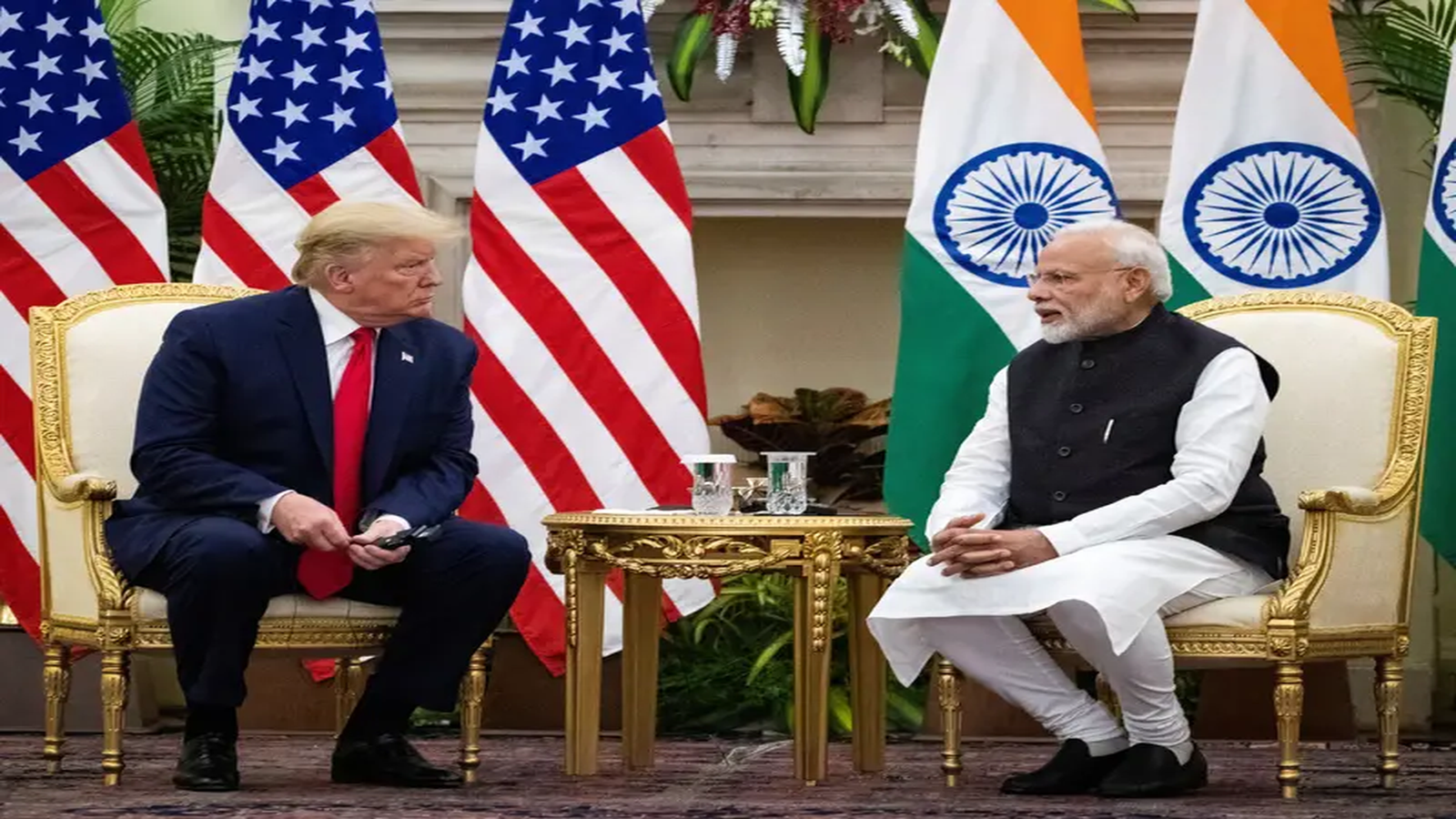
India’s recent surge in free trade agreements is not a coincidence, nor is it merely an exercise in expanding export destinations. It reflects a calculated shift in strategy where economics and geopolitics are moving in tandem. As global trade tensions rise and protectionist instincts reemerge in major economies, New Delhi is signaling that it is prepared to defend its interests while remaining open to balanced and mutually respectful partnerships.
In recent months, India has accelerated trade negotiations at a pace rarely seen in its modern economic history. Prime Minister Narendra Modi has personally overseen or endorsed a string of agreements and negotiations with partners across continents. From Europe to the Pacific and from the Middle East to Eurasia, India is methodically broadening its commercial footprint.
This renewed momentum marks a significant departure from the past. For decades, India was often viewed as a cautious and sometimes hesitant participant in free trade talks, wary of exposing domestic sectors to global competition. Today, that caution remains, but it is paired with confidence and strategic clarity.
A Rapid Expansion of Trade Partnerships
The list of India’s recent trade initiatives is extensive. New Delhi has concluded a free trade agreement with the United Kingdom after years of negotiation, a deal finalized and celebrated during a high profile visit by the Indian prime minister to London. Around the same time, India moved swiftly to finalize agreements with Oman and New Zealand, reinforcing its presence in the Gulf region and the Asia Pacific.
Beyond bilateral deals, India has also strengthened its engagement with broader economic groupings. A free trade agreement with the European Free Trade Association, which includes Switzerland, Norway, Iceland and Liechtenstein, has already come into force. Talks with the European Union, which began nearly two decades ago, have regained urgency, with senior officials preparing for renewed rounds of negotiation in Brussels.
India is also deepening economic cooperation with countries aligned closely with Russia. Agreements signed during the visit of Russian President Vladimir Putin aim to ease employment opportunities for Indian workers. New Delhi is simultaneously pushing forward discussions with the Eurasian Economic Union, a bloc that includes Russia, Belarus, Kazakhstan, Kyrgyzstan and Armenia.
While some of these markets are relatively small in size, their collective importance lies elsewhere. They diversify India’s trade exposure and demonstrate that the country is not dependent on any single economic power.
The Shadow of Trade Tensions with the United States
The timing of this diplomatic and commercial push is closely linked to India’s increasingly strained trade relationship with the United States. Under President Donald Trump, Washington has adopted a confrontational stance on trade, frequently accusing India of maintaining unfair tariff barriers and protectionist policies.
During the early months of Trump’s second term, Indian exports were hit with tariffs as high as fifty percent on certain goods. These measures were intended to pressure New Delhi into making concessions in a proposed bilateral trade agreement. The United States has long been India’s largest export destination, giving Washington significant leverage in negotiations.
India has sought to defuse tensions and keep dialogue open. Both sides had initially aimed to conclude a trade agreement by the end of the year. However, progress has been slow, and key disagreements remain unresolved. Chief among them is agriculture, where India has refused to dilute protections for its farmers, citing concerns over livelihoods and food security.
Recent remarks from Washington suggest that friction may intensify. Complaints about Indian rice exports entering the American market indicate that trade issues are far from settled. New tariffs or renewed threats remain a real possibility.
Strength Through Diversification
Against this backdrop, India’s expanding network of trade agreements serves a strategic purpose. By showcasing its willingness and ability to strike balanced deals with a wide range of partners, India is reshaping the narrative around its trade posture.
The message is subtle but firm. If negotiations with the United States stall, it is not due to Indian intransigence but because New Delhi is unwilling to compromise on core national interests. Deals with countries that possess strong agricultural sectors of their own, such as the United Kingdom and New Zealand, further reinforce this point. They demonstrate that India can open markets while safeguarding sensitive sectors through carefully crafted provisions.
Equally important is the geopolitical signal. By engaging both Western economies and nations aligned with Russia, India is underscoring its strategic autonomy. It is making clear that it has friends and partners across political divides, reducing the impact of pressure from any single power.
Export Performance Defies Expectations
Economic data adds weight to India’s diplomatic stance. Despite the imposition of tariffs, Indian exports to the United States have continued to grow. Figures from November indicate that demand for Indian goods remains robust, driven by competitive pricing and the need for supply chain diversification among global buyers.
At the same time, Indian exporters are increasingly looking beyond the American market. New trade agreements are opening doors in Europe, the Middle East and the Pacific, encouraging industries to reduce overreliance on one destination. This diversification not only cushions the impact of tariffs but also strengthens India’s negotiating position.
Industries ranging from pharmaceuticals and textiles to engineering goods and information technology services are benefiting from expanded market access. As global companies seek alternatives to established manufacturing hubs, India’s scale and cost advantages are becoming more attractive.
Speaking a Language Washington Understands
India’s approach reflects a clear understanding of the political realities in Washington. The Trump administration has shown that it is sensitive to domestic economic pressures, particularly those affecting American consumers. In recent months, tariffs on several Brazilian products were reduced after it became evident that they were raising prices at home without significantly harming Brazilian exporters.
By demonstrating resilience in the face of tariffs and by building alternative trade channels, India is effectively shifting the calculus. It is signaling that punitive measures may not deliver the intended results and could instead impose costs on American businesses and consumers.
This does not mean India believes it can afford to lose access to the United States market. Such an assumption would indeed be unrealistic. The United States remains a vital destination for Indian exports and a key source of investment and technology. However, India is making it clear that engagement must be based on mutual respect rather than pressure.
A Calculated Balance Between Openness and Protection
At the heart of India’s trade strategy lies a careful balance. New Delhi is willing to open sectors, reduce tariffs and integrate more deeply with the global economy. At the same time, it remains firm on protecting areas that are politically and socially sensitive, particularly agriculture.
This balance reflects lessons learned over decades. Past trade liberalization efforts delivered growth but also exposed vulnerabilities. Today’s agreements are being structured with greater attention to safeguards, transition periods and domestic capacity building.
The result is a more confident India, one that sees trade not as a zero sum game but as a tool for strategic influence. By moving swiftly on multiple fronts, India is reshaping its global economic identity.
The Road Ahead
As negotiations with the United States continue, uncertainty remains. Fresh tariffs or renewed rhetoric could test India’s resolve. Yet the groundwork laid through recent trade agreements provides a measure of insulation.
More importantly, it gives India options. In international trade, options translate into leverage. By expanding its circle of partners and proving its ability to adapt, India is ensuring that no single country can dictate terms.
In the end, the message to Washington is clear and carefully crafted. India is open for business, ready to deal and prepared to compromise where interests align. But it is equally prepared to stand firm, diversify and move forward on its own terms. In doing so, New Delhi is speaking in a language that resonates strongly with the current occupant of the White House, one where strength, resilience and choice matter above all else.
Edit Profile
Help improve @KR

Was this page helpful to you?
Contact Khogendra Rupini
Are you looking for an experienced developer to bring your website to life, tackle technical challenges, fix bugs, or enhance functionality? Look no further.
I specialize in building professional, high-performing, and user-friendly websites designed to meet your unique needs. Whether it’s creating custom JavaScript components, solving complex JS problems, or designing responsive layouts that look stunning on both small screens and desktops, I can collaborate with you.
Create something exceptional with us. Contact us today
Open for Collaboration
If you're looking to collaborate, I’m available for a variety of professional services, including -
- Website Design & Development
- Advertisement & Promotion Setup
- Hosting Configuration & Deployment
- Front-end & Back-end Code Implementation
- Code Testing & Optimization
- Cybersecurity Solutions & Threat Prevention
- Website Scanning & Malware Removal
- Hacked Website Recovery
- PHP & MySQL Development
- Python Programming
- Web Content Writing
- Protection Against Hacking Attempts