
ChatGPT conversations emerge as critical evidence in criminal investigations, raising urgent questions about privacy, law and the future of AI accountability
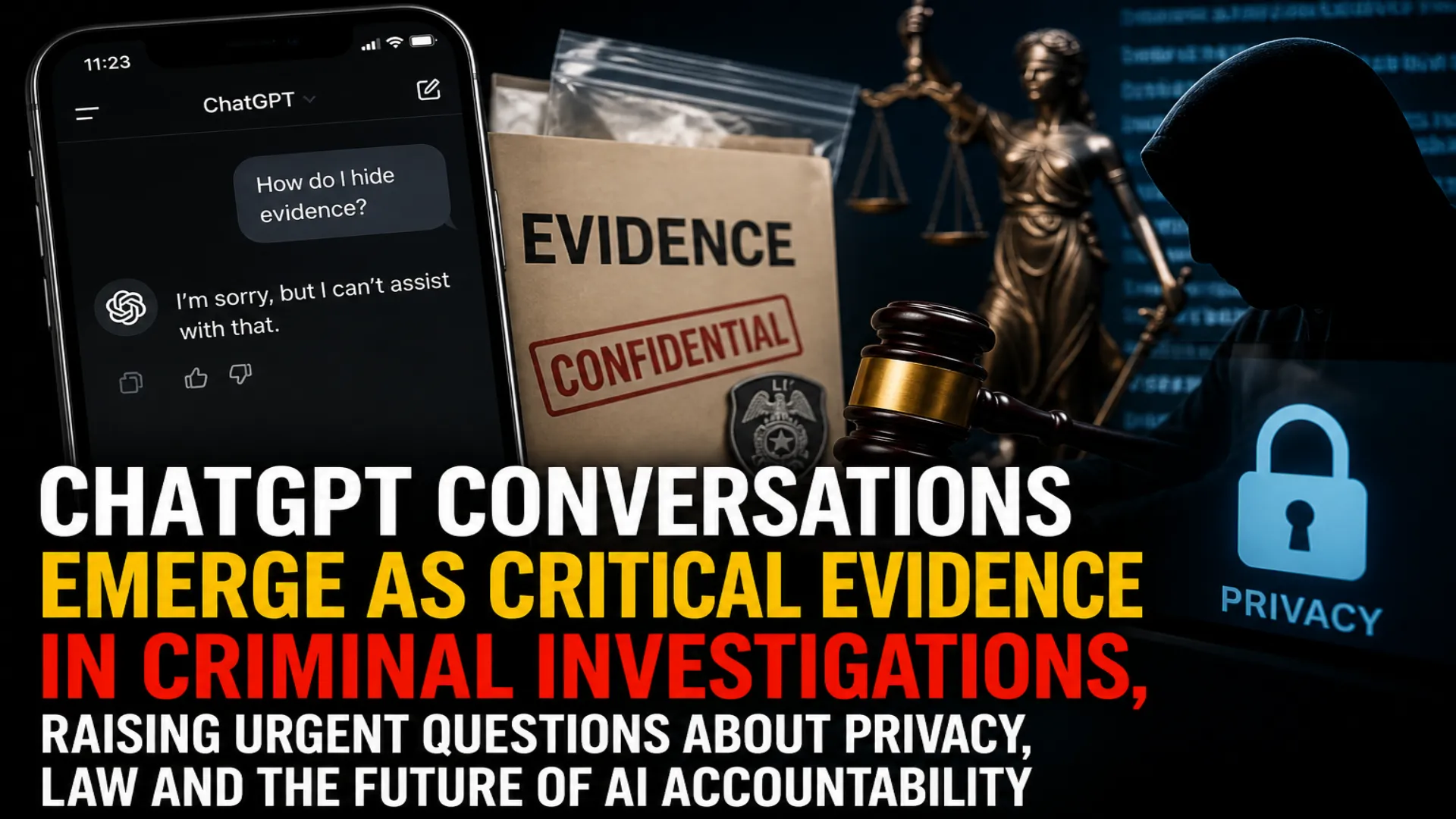
In a development that reflects the growing intersection between artificial intelligence and the justice system, conversations with AI chatbots such as are increasingly being used as evidence in criminal investigations. Legal experts and prosecutors now view these digital exchanges as highly revealing records that can shed light on a suspect’s intent, mindset and actions, effectively turning private prompts into courtroom material.
The shift comes as AI tools become deeply embedded in everyday life. People now rely on chatbots for advice ranging from routine queries to highly personal and sensitive issues. However, recent cases show that these interactions may not be as private as users assume.
Florida case highlights how AI queries can reveal intent before crimes
A recent case in Florida has brought this issue into sharp focus. Prosecutors allege that Hisham Abugharbieh, accused of killing two graduate students from the University of South Florida, asked ChatGPT a series of disturbing questions days before the victims went missing.
According to court documents, he reportedly queried the chatbot about scenarios involving placing a human body in a garbage bag and disposing of it in a dumpster. When the chatbot responded with concern, he followed up with questions about how such actions might be discovered.
Investigators say these exchanges form part of a broader pattern of suspicious activity. Additional queries allegedly included questions about firearm legality, altering a vehicle identification number and whether neighbors could hear gunshots. After the victims disappeared, further questions reportedly focused on survival from gunshot wounds and the meaning of “missing endangered adult.”
Authorities later discovered one victim’s body in a garbage bag, while another set of remains is yet to be formally identified. The suspect has been charged with two counts of first degree premeditated murder and remains in custody without bond.
This case illustrates how AI conversations can provide a timeline of thought processes leading up to a crime, offering prosecutors insight into premeditation.
Law enforcement sees AI chat logs as a ‘treasure trove’ of evidence
Cybersecurity expert and attorney described AI chat histories as a “treasure trove” for law enforcement agencies. Unlike conversations with lawyers or doctors, chatbot interactions lack legal confidentiality protections.
Users often assume their interactions with AI systems are private or anonymous. This perception, experts say, leads many to ask direct and unfiltered questions, sometimes revealing intentions they would not express elsewhere.
Legal professionals increasingly treat chatbot inputs as discoverable evidence, similar to emails, text messages or search histories. noted that her firm operates under the assumption that anything typed into ChatGPT could eventually be accessed in legal proceedings.
Similar cases show growing reliance on AI and digital footprints
The Florida case is not isolated. Prosecutors have already begun using AI interactions in multiple investigations across the United States.
In California, authorities charged an individual in connection with a wildfire case after examining his ChatGPT usage. Investigators cited prompts requesting images of people fleeing fires and questions about liability related to accidental fires. Prosecutors argued these interactions reflected attempts to construct an alternative narrative for the incident.
In another instance, AI chat conversations were used as evidence in a murder trial in Virginia, while a separate arson case linked chatbot activity to suspect behavior patterns.
These developments mirror earlier legal reliance on digital evidence such as search engine queries. Courts have previously admitted Google search histories to demonstrate intent, including in high profile murder cases where suspects searched for ways to dispose of bodies or evade detection.
What makes AI conversations different from traditional evidence
While AI chat logs share similarities with search histories, they also present new complexities. Unlike a search engine, AI systems generate interactive responses, creating a dynamic exchange rather than a one way query.
Legal analyst explained that such exchanges can reveal not only what a suspect was thinking but also how their thoughts evolved through interaction with the chatbot.
However, defense attorneys argue that interpreting these conversations is not straightforward. In some cases, they contend that prosecutors risk overreaching by attempting to infer criminal intent from digital queries alone.
In one wildfire related case, defense counsel argued that chatbot logs should not be treated as a confession or direct evidence of wrongdoing. The argument underscores a broader legal debate about how much weight such digital interactions should carry in court.
Privacy concerns intensify as AI becomes part of daily life
The growing use of AI chat logs in legal proceedings has raised serious privacy concerns. Unlike conversations with licensed professionals, chatbot interactions are not protected by established legal privileges.
has publicly acknowledged this gap, warning that users often share deeply personal information with AI systems without understanding the potential consequences.
He noted that conversations with therapists, doctors or lawyers are shielded by confidentiality laws, but similar protections do not currently exist for AI interactions. As a result, companies like may be required to disclose user data in response to legal requests.
This lack of protection means that sensitive discussions about mental health, relationships or legal concerns could potentially be exposed in court if deemed relevant to a case.
Investigations now examine both user inputs and AI responses
Authorities are not only analyzing what users ask AI systems but also what responses they receive. This dual examination adds another layer of complexity to legal proceedings.
In Florida, the state attorney general has launched an investigation into OpenAI, alleging that ChatGPT may have provided significant guidance to a mass shooting suspect. Meanwhile, in Canada, families of victims in a school shooting have filed a lawsuit against OpenAI and its leadership, claiming the technology played a role in enabling the attack.
In response, OpenAI has emphasized its commitment to safety, stating that it aims to balance privacy with broader public protection and risk mitigation.
Legal system struggles to keep pace with rapid technological change
The use of AI generated conversations as evidence highlights a broader challenge: the law is struggling to keep up with the rapid evolution of technology.
Experts say existing legal frameworks were not designed with AI in mind. While courts have long dealt with digital evidence, the interactive nature of AI introduces new questions about interpretation, intent and responsibility.
For instance, if someone seeks advice from an AI chatbot while representing themselves in court, should those interactions be treated like communications with a legal professional? What happens if a lawyer uses AI tools while working on a case?
These questions remain largely unresolved, reflecting the early stage of legal adaptation to AI technologies.
Debate grows over whether AI conversations should have legal protection
Some policymakers and scholars argue that AI interactions should be granted a form of legal privilege similar to doctor patient or attorney client confidentiality.
has suggested that as people increasingly use AI systems for guidance and decision making, the social benefits of candid communication may justify stronger privacy protections.
Supporters of this view believe that without such safeguards, individuals may hesitate to seek help or information from AI tools, limiting their usefulness.
However, others caution that granting such protections could hinder law enforcement efforts and allow critical evidence to remain hidden.
A turning point in how digital behavior is viewed in court
The rise of AI chat logs as evidence marks a significant shift in how digital behavior is interpreted within the justice system. What was once considered private exploration is now potentially part of a permanent and accessible record.
Legal experts emphasize that AI tools should not be viewed as confidential confidants. Unlike human professionals bound by ethical and legal obligations, chatbots operate within systems that may store, process and disclose user data under certain conditions.
As Joey Jackson noted, entering information into an application does not inherently grant it legal protection. In many ways, AI conversations are treated like any other digital footprint, comparable to phone records or online activity logs.
A future shaped by accountability, privacy and technological trust
The increasing role of AI in criminal investigations underscores a broader societal challenge: balancing innovation with accountability and privacy.
On one hand, AI tools offer unprecedented convenience and accessibility, becoming trusted companions for millions of users. On the other, their integration into legal processes raises concerns about surveillance, data use and individual rights.
For now, experts advise caution. As AI continues to evolve, so too will its implications for law enforcement, privacy and public trust.
The message emerging from courtrooms is clear. Conversations with AI are not just fleeting exchanges. They can become lasting records with significant consequences, shaping legal outcomes and redefining the boundaries between technology and personal privacy.
Frequently Asked Questions
Why are ChatGPT conversations being used as evidence in criminal investigations?
Investigators use ChatGPT conversations because they can reveal a suspect’s intent, mindset, and actions. These chat logs often contain direct and unfiltered questions that help establish timelines, motives, and possible premeditation in criminal cases.
What role did ChatGPT conversations play in the Florida murder case?
In the Florida case, prosecutors allege the suspect asked ChatGPT questions about disposing of a body, firearm use, and avoiding detection. These conversations were included in court documents to support claims of planning and intent before the alleged crime.
Are ChatGPT conversations legally protected like doctor or lawyer communications?
No, ChatGPT conversations are not protected by legal confidentiality like doctor patient or attorney client communications. This means they can be accessed and used as evidence in legal proceedings if deemed relevant.
How do courts treat AI chat logs compared to Google searches?
Courts generally treat AI chat logs similarly to Google search histories. Both are considered digital evidence that can demonstrate a person’s thoughts, intentions, or behavior leading up to a crime.
Can AI chatbot responses also be examined in investigations?
Yes, investigators may analyze both what users ask and how the AI responds. This interaction can help authorities understand how ideas developed and whether the chatbot influenced or reinforced certain actions.
What privacy concerns are raised by the use of AI chat logs in court?
The main concern is that users often share sensitive personal information with AI chatbots, assuming privacy. However, these conversations can be stored and later disclosed in legal cases, raising serious questions about data protection and user awareness.
What have experts said about the evidentiary value of AI conversations?
Experts describe AI chat logs as highly valuable evidence because users tend to ask direct and honest questions. However, some legal professionals argue that interpreting intent solely from these logs can be unreliable and open to misinterpretation.
Are there other cases where AI conversations have been used as evidence?
Yes, AI chat logs have been used in arson investigations, murder trials, and other criminal cases in the United States. These cases show a growing trend of law enforcement relying on digital interactions as part of their evidence.
Is there a debate about giving AI conversations legal privacy protection?
Yes, some experts argue that AI conversations should have protections similar to those with therapists or lawyers to encourage honest communication. Others believe such protections could limit law enforcement’s ability to investigate crimes effectively.
What should users understand about using AI chatbots like ChatGPT?
Users should understand that conversations with AI chatbots are not private in a legal sense. Anything shared may potentially be stored and used as evidence, so caution is advised when discussing sensitive or personal matters.
Edit Profile
Help improve @KR

Was this page helpful to you?
Contact Khogendra Rupini
Are you looking for an experienced developer to bring your website to life, tackle technical challenges, fix bugs, or enhance functionality? Look no further.
I specialize in building professional, high-performing, and user-friendly websites designed to meet your unique needs. Whether it's creating custom JavaScript components, solving complex JS problems, or designing responsive layouts that look stunning on both small screens and desktops, I can collaborate with you.
Create something exceptional with us. Contact us today
Open for Collaboration
If you're looking to collaborate, I'm available for a variety of professional services, including -
- Website Design & Development
- Advertisement & Promotion Setup
- Hosting Configuration & Deployment
- Front-end & Back-end Code Implementation
- Code Testing & Optimization
- Cybersecurity Solutions & Threat Prevention
- Website Scanning & Malware Removal
- Hacked Website Recovery
- PHP & MySQL Development
- Python Programming
- Web Content Writing
- Protection Against Hacking Attempts