
Sam Altman says many jobs will disappear in AI era but insists future could bring more meaningful work and prosperity
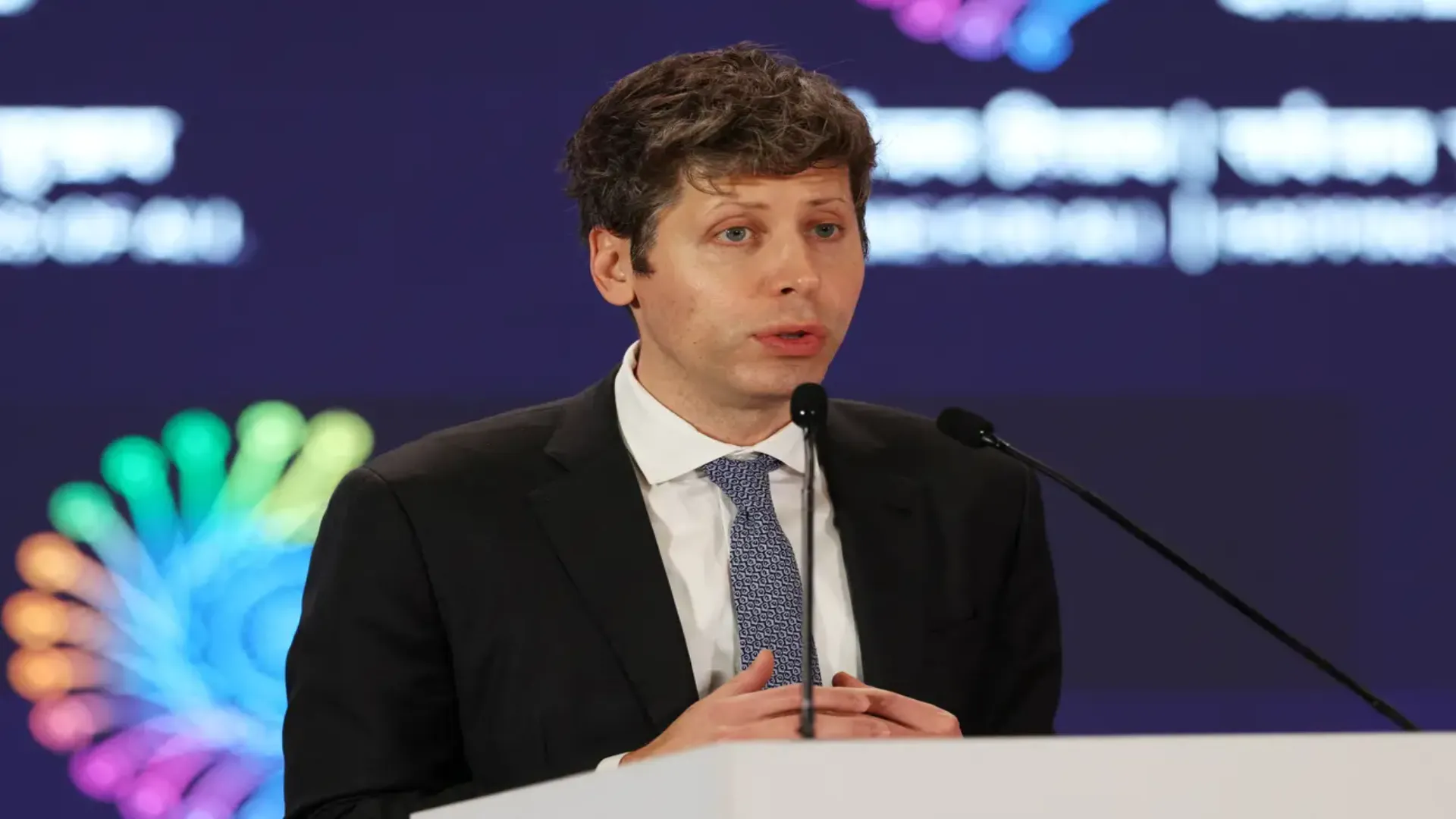
The global conversation around artificial intelligence and employment has entered a new phase after publicly acknowledged that a significant number of current jobs are likely to disappear. At the same time, the chief executive offered a more optimistic long term outlook, arguing that people may ultimately experience more fulfilling lives as new forms of work emerge.
Altman’s remarks came in response to growing public concern about the speed at which AI systems are reshaping workplaces. In a widely circulated discussion on X, he addressed fears that automation is rapidly replacing human workers across industries.
He clarified that OpenAI’s mission is not to replace humans, but to build tools that enhance human capabilities. According to Altman, the intent is to “augment and elevate people,” rather than create systems that make human effort obsolete.
A direct acknowledgment of job disruption in the AI transition
What sets Altman’s latest comments apart is the clarity with which he addressed job displacement. When confronted with his earlier warning that jobs would disappear, he did not walk back the statement. Instead, he reinforced it.
Altman stated plainly that many current roles will go away, describing this outcome as inevitable in the face of rapid technological advancement. However, he paired this admission with a broader economic perspective, suggesting that entirely new categories of jobs will arise, even if they look very different from today’s roles.
This dual narrative reflects a long standing pattern in technological revolutions. From the industrial age to the rise of the internet, automation has consistently displaced certain types of work while creating new opportunities elsewhere. Altman appears to be positioning AI within that same historical trajectory, though with a scale and speed that remain unprecedented.
A future where work may change rather than disappear
Beyond the immediate concern of job loss, Altman outlined a more transformative vision of the future of work. He suggested that people may not necessarily become unemployed in large numbers, but instead could find themselves busier and more engaged in different kinds of work.
He argued that the widespread belief that AI will permanently destroy employment may be overstated in the long term. According to his view, the nature of work will evolve, but human activity and productivity will continue to play a central role in society.
Altman also introduced a more radical idea that has been gaining traction in discussions around advanced AI economies. He spoke of a future where individuals who wish to work intensively can pursue deeply meaningful projects, while others may still enjoy financial stability and a high quality of life without traditional work structures.
Although he did not provide specific policy frameworks, this perspective aligns with broader debates around concepts such as universal basic income and post scarcity economies, where technological productivity reduces the necessity for traditional employment.
Evidence from industry research on jobs at risk and jobs protected
While Altman did not identify specific professions that are most vulnerable or most secure, research from provides valuable context.
Anthropic’s findings indicate that jobs involving physical presence, manual skill, and human interaction remain significantly less exposed to AI automation. Professions in agriculture, construction, repair services, transportation, personal care, and food services continue to rely heavily on real world activity and situational judgment that current AI systems struggle to replicate.
For instance, tasks such as operating agricultural machinery or managing complex physical environments require adaptability and sensory input that go beyond the capabilities of today’s language models and digital systems. Similarly, roles like courtroom representation involve nuanced human reasoning, emotional intelligence, and real time decision making that AI cannot yet fully emulate.
On the other hand, the study highlights that several digital and office based roles are already experiencing higher levels of AI integration. Computer programming, often seen as a high skill profession, is among the most exposed, with AI tools increasingly capable of generating and reviewing code. Customer service and data entry roles are also being rapidly automated, as conversational AI and data processing systems become more advanced.
However, Anthropic’s research stops short of confirming widespread unemployment directly caused by AI. Instead, it points to more gradual shifts, including reduced hiring, fewer entry level opportunities, and the steady automation of repetitive tasks.
A gradual transformation rather than a sudden collapse
One of the key insights emerging from both Altman’s comments and industry data is that the transformation of the labor market may not happen overnight. Rather than a sudden collapse of employment, the changes are likely to unfold over time.
Companies may adopt AI tools incrementally, using them to improve efficiency and reduce costs. This could lead to fewer new hires in certain sectors, even if existing employees remain in place. Over time, as AI capabilities expand, entire categories of work may be redefined or replaced.
This gradual transition presents both challenges and opportunities. Workers may need to adapt by acquiring new skills and shifting into emerging fields. At the same time, businesses and governments will face pressure to manage the social and economic impacts of these changes.
The human role in an AI driven economy
Despite the rapid progress of artificial intelligence, Altman’s comments reinforce the idea that humans will continue to play a central role in shaping the future. Rather than being sidelined, people may find themselves working alongside increasingly capable AI systems.
This collaboration could unlock new levels of creativity and productivity. Tasks that once required extensive time and effort may be completed more efficiently, allowing individuals to focus on higher value activities.
At the same time, the shift raises important questions about the distribution of wealth and opportunity. If AI driven productivity leads to greater economic output, how those gains are shared will become a critical issue.
Altman’s vision of a prosperous future for both highly active workers and those who choose not to work intensively suggests a need for new economic models. However, the path to achieving such a system remains uncertain.
A defining moment in the debate on AI and work
The significance of Altman’s remarks lies not only in what he said, but in who is saying it. As the leader of one of the world’s most influential AI organizations, his acknowledgment of job displacement carries considerable weight.
At the same time, his optimism reflects a broader belief within the technology sector that innovation ultimately leads to progress, even if the transition is difficult.
The reality is likely to be complex. While some jobs will disappear, others will emerge, and many will evolve. The challenge for societies around the world will be to navigate this transition in a way that maximizes benefits while minimizing disruption.
The road ahead for workers and industries
For workers, the message is clear. Adaptability will be essential. Skills that combine technical understanding with human judgment, creativity, and interpersonal ability are likely to remain valuable.
For industries, the focus will be on integrating AI in ways that enhance productivity without undermining long term stability. Businesses that strike this balance may be better positioned to thrive in the evolving landscape.
For policymakers, the task will be to create frameworks that support both innovation and social protection. This includes investing in education, reskilling programs, and potentially rethinking traditional approaches to employment and income.
A future still being written
Sam Altman’s comments highlight a fundamental truth about the AI revolution. While the technology is advancing rapidly, its ultimate impact on society is still being shaped.
The disappearance of certain jobs appears increasingly likely. But whether this leads to widespread hardship or a more prosperous and fulfilling future will depend on how individuals, businesses, and governments respond.
As the debate continues, one thing remains certain. The relationship between humans and work is entering a period of profound change, and the choices made today will help determine what that future looks like.
Frequently Asked Questions
What did Sam Altman say about jobs in the age of artificial intelligence?
Sam Altman acknowledged that many current jobs will go away as AI advances, but he believes new types of jobs will emerge in the future.
Does OpenAI aim to replace human workers with AI systems?
No. Altman stated that OpenAI’s goal is to build tools that augment and elevate human capabilities rather than replace people.
Will people become unemployed due to AI according to Altman?
Altman suggested that while some jobs will disappear, many people may remain busy with new forms of work and could even feel more fulfilled.
How does Sam Altman describe the future of work?
He believes future work will look very different, with new roles emerging and potentially allowing people to pursue more meaningful activities.
What kind of economic future did Altman اشاره?
Altman hinted at a future where people who want to work intensively can do meaningful work, while others may still enjoy a prosperous life without traditional work patterns.
Which types of jobs are currently less exposed to AI according to Anthropic?
Jobs requiring physical presence, manual skills, and human interaction such as agriculture, construction, repair, transport, personal care, and food services are less exposed to AI.
Which jobs are more vulnerable to AI automation?
Office based and digital roles such as computer programming, customer service, and data entry are seeing higher levels of AI use and automation.
Has AI already caused large scale unemployment?
According to Anthropic’s research, there is no clear evidence of large scale unemployment yet, but changes are occurring through reduced hiring and automation of repetitive tasks.
Why are some jobs harder for AI to replace?
Jobs that require real world judgment, physical activity, and human interaction are harder for current AI systems to perform effectively.
What is the overall outlook for society in an AI driven world?
Altman believes that despite disruptions, the long term outlook could include greater productivity, new opportunities, and a more fulfilling and prosperous life for many people.
Edit Profile
Help improve @KR

Was this page helpful to you?
Contact Khogendra Rupini
Are you looking for an experienced developer to bring your website to life, tackle technical challenges, fix bugs, or enhance functionality? Look no further.
I specialize in building professional, high-performing, and user-friendly websites designed to meet your unique needs. Whether it's creating custom JavaScript components, solving complex JS problems, or designing responsive layouts that look stunning on both small screens and desktops, I can collaborate with you.
Create something exceptional with us. Contact us today
Open for Collaboration
If you're looking to collaborate, I'm available for a variety of professional services, including -
- Website Design & Development
- Advertisement & Promotion Setup
- Hosting Configuration & Deployment
- Front-end & Back-end Code Implementation
- Code Testing & Optimization
- Cybersecurity Solutions & Threat Prevention
- Website Scanning & Malware Removal
- Hacked Website Recovery
- PHP & MySQL Development
- Python Programming
- Web Content Writing
- Protection Against Hacking Attempts