New Mexico pushes sweeping child safety reforms on Meta platforms as landmark trial enters decisive phase
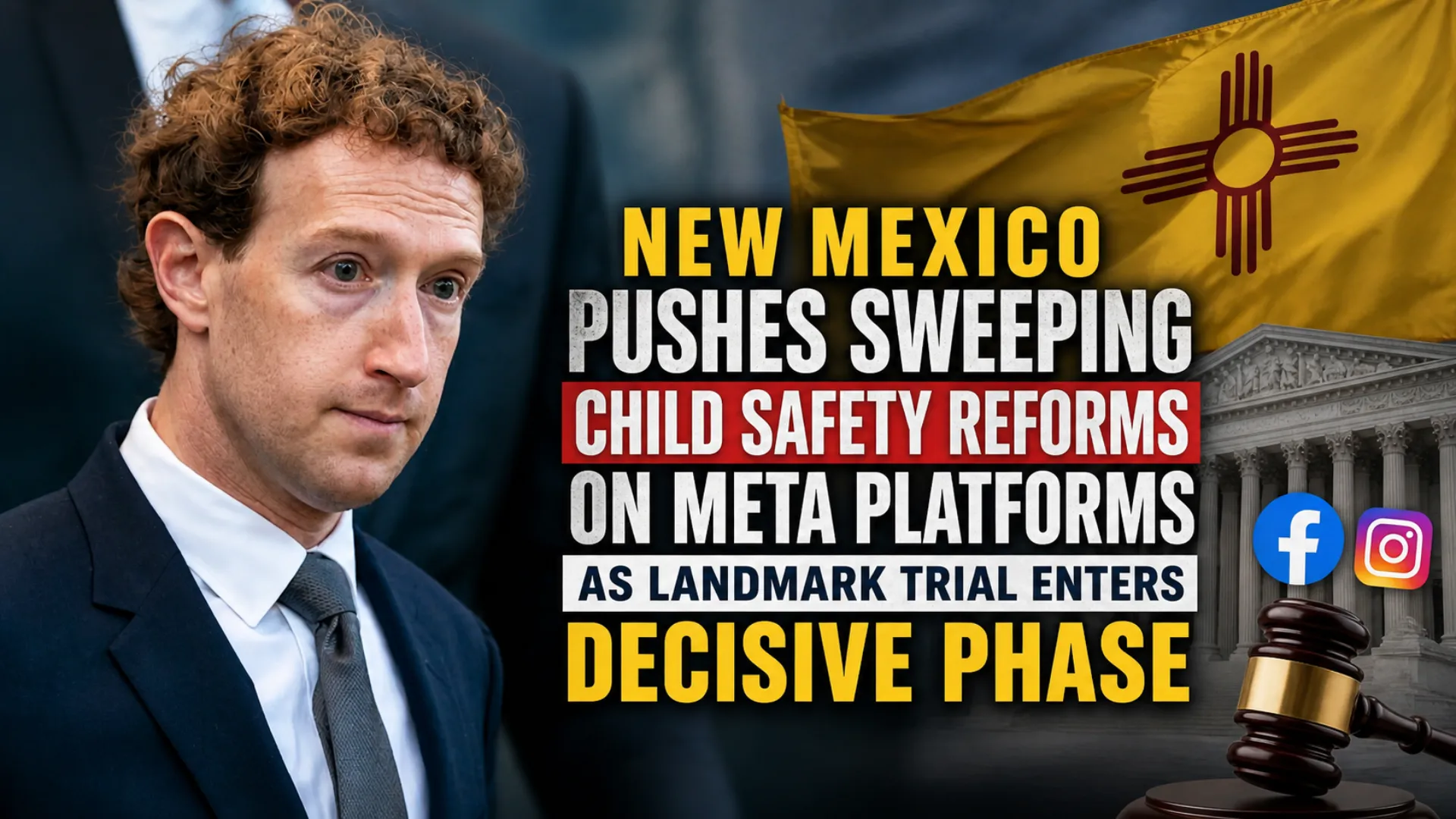
In a closely watched legal battle that could reshape how social media platforms operate across the United States, the state of has entered the second phase of its landmark trial against , seeking sweeping reforms aimed at protecting children from online harm. The proceedings, which began this week in Santa Fe, signal a potentially transformative moment in the long running debate over the responsibilities of Big Tech toward younger users.
At the heart of the case is a fundamental question: can social media platforms be held legally accountable as a public nuisance under state law for the psychological and safety risks they pose to children?
Courtroom battle intensifies after massive penalty verdict
The second phase follows a dramatic outcome in the trial’s first stage, where jurors imposed $375 million in civil penalties on Meta. The jury concluded that the company knowingly contributed to harm affecting children’s mental health and failed to adequately disclose concerns related to child sexual exploitation on its platforms.
That verdict set the stage for a broader legal confrontation, one that now shifts from liability to remedy. Prosecutors are urging the court to mandate structural changes to Meta’s ecosystem, including its widely used platforms , and .
Opening statements in the current phase began Monday, marking the start of a three week bench trial where a judge, rather than a jury, will determine whether these platforms constitute a public nuisance and what corrective actions should follow.
State seeks deep changes to algorithms and platform design
Leading the charge is New Mexico Attorney General , who argues that meaningful reform must go beyond surface level safety measures. Prosecutors are calling for a redesign of core recommendation algorithms, which currently prioritize user engagement and time spent on platforms.
According to the state, these algorithms contribute to compulsive usage patterns among children, exacerbating mental health challenges. The proposed remedies include:
- Eliminating or limiting features such as infinite scroll that continuously feed content without natural stopping points
- Reducing or rethinking push notifications that encourage repeated app engagement
- Removing visible metrics such as like counts and share tallies that can influence behavior and self perception
- Strengthening age verification systems to ensure minors are accurately identified
- Implementing stricter default privacy settings to safeguard younger users
Additionally, prosecutors want child accounts to be linked with a parent or guardian and propose the appointment of a court supervised monitor to ensure long term compliance and transparency.
These demands reflect growing concerns nationwide about the role of digital platforms in shaping adolescent behavior and mental well being.
Legal theory tests limits of internet regulation
The case stands out not only for its scale but also for its legal approach. By framing social media platforms as a public nuisance, New Mexico is venturing into relatively uncharted territory.
Legal experts note that this theory has rarely been applied to the internet. , co director of the High Tech Law Institute at , described the proceedings as unusual and potentially precedent setting.
“The fact that we’re having a trial on nuisance is itself a remarkable outcome,” Goldman said, pointing out that the concept traditionally applies to physical or environmental harms rather than digital platforms.
If upheld, the case could open the door for similar lawsuits across the country, fundamentally altering how courts interpret liability in the digital age.
Section 230 protections face renewed scrutiny
A central issue in the trial is the long standing legal shield provided by Section 230 of the . Often described as the backbone of the modern internet, Section 230 protects platforms from liability for user generated content.
Attorney General Torrez argues that the jury’s earlier verdict has weakened the perception that tech companies are untouchable under this provision.
The implications extend far beyond Meta. Courts across the United States have traditionally relied on Section 230 to dismiss cases against platforms, but growing bipartisan criticism suggests that its scope may be narrowing.
Recent legal developments reinforce this trend. A separate jury in found both Meta and liable for harms affecting children, further validating concerns about social media’s impact.
Meta pushes back citing free speech and practicality concerns
Meta has strongly contested the state’s claims and proposed remedies. The company has vowed to appeal the initial verdict and warned that compliance with certain mandates could lead to drastic consequences, including the potential withdrawal of Instagram and Facebook services from New Mexico.
In its defense, Meta argues that:
- Its platforms already incorporate extensive safety tools for younger users
- The proposed changes are technically impractical or redundant
- Singling out Meta ignores risks present on hundreds of other apps used by teenagers
- Mandated changes could infringe on free speech rights and parental authority
The company is expected to call a range of technical experts to testify, aiming to demonstrate the complexity of algorithm design and the broader ecosystem in which social media operates.
Meta has also emphasized that overregulation could unintentionally drive users toward less regulated platforms, potentially increasing risks rather than reducing them.
Judicial caution highlights constitutional complexity
Presiding over the case, State District Court Judge Bryan Biedscheid acknowledged the delicate balance required in crafting any remedy. He expressed concern about overstepping judicial authority, noting that courts are not designed to function as lawmakers or regulators.
This caution reflects the broader constitutional challenges at play. Any court ordered changes must navigate First Amendment protections and avoid setting precedents that could conflict with federal law or the authority of the .
Legal analysts suggest that even if the state succeeds, the case is likely to move through higher courts, potentially reaching the Supreme Court for a definitive ruling on the limits of platform regulation.
National implications as states watch closely
The New Mexico case is part of a broader wave of legal action against social media companies. More than 40 state attorneys general have filed lawsuits alleging that Meta’s platforms contribute to a youth mental health crisis.
However, most of those cases are being pursued in federal court and have yet to reach trial. This makes New Mexico’s case uniquely significant as a potential test case for future litigation.
Torrez has emphasized the broader stakes, stating that the trial could redefine expectations for how Big Tech operates, not only in New Mexico but across the country.
If the court mandates substantial changes, it could force platforms to rethink core design principles that have driven user growth and engagement for more than a decade.
A defining moment for the future of social media
As the trial unfolds over the coming weeks, its outcome could mark a turning point in the relationship between technology companies, regulators and users.
At its core, the case reflects a deeper societal debate about responsibility in the digital age. Should platforms be held accountable for the effects of their design choices, particularly on vulnerable populations such as children? Or would such accountability risk undermining innovation and free expression?
The answers may not emerge immediately. But what is clear is that this trial has already shifted the conversation, bringing unprecedented scrutiny to the inner workings of social media platforms.
For millions of families, policymakers and industry leaders, the stakes extend far beyond one courtroom in Santa Fe. The verdict could shape how the next generation experiences the internet itself.
Frequently Asked Questions
What is the core issue in the New Mexico trial against Meta?
The case focuses on whether Meta’s social media platforms can be legally treated as a public nuisance under state law for allegedly harming children’s mental health and failing to prevent risks such as compulsive use and child exploitation.
What happened in the first phase of the trial?
In the first phase, a jury ordered Meta to pay 375 million dollars in civil penalties after concluding that the company knowingly contributed to harm affecting children and did not adequately address concerns about child safety on its platforms.
What changes is New Mexico demanding from Meta in the second phase?
Prosecutors are seeking major reforms, including redesigning algorithms that promote engagement, limiting features like infinite scroll and push notifications, improving age verification, strengthening privacy settings, and linking child accounts to parental oversight.
Why are Meta’s algorithms a central concern in the case?
The state argues that Meta’s algorithms prioritize user engagement, which can lead to addictive usage patterns among children and contribute to mental health challenges by continuously recommending content designed to keep users active.
How is Section 230 of the Communications Decency Act relevant to this case?
Section 230 has traditionally protected social media platforms from liability for user generated content, but New Mexico argues that the jury verdict challenges this protection and opens the door for holding platforms accountable for broader harms.
What is Meta’s defense against the allegations?
Meta argues that it already provides safety tools, that the proposed changes are impractical or unnecessary, and that enforcing them could violate free speech rights and unfairly target its platforms compared to other apps used by teenagers.
Could Meta actually stop services like Instagram or Facebook in New Mexico?
Meta has warned that it might withdraw services in the state if forced to comply with mandates it considers unworkable, although such a move would be a significant and unprecedented step.
What role does the judge play in the second phase of the trial?
In this phase, a judge will decide whether Meta’s platforms constitute a public nuisance and determine what corrective actions or restrictions, if any, should be imposed on the company.
Why is this case considered legally significant?
It is one of the first cases to test the idea of applying public nuisance law to internet platforms, which could set a new legal precedent and influence future lawsuits against technology companies.
How could this trial impact social media users across the United States?
If the court orders major changes, it could reshape how social media platforms design algorithms, manage child safety, and regulate user engagement, potentially affecting millions of users nationwide.
Are other states taking similar action against Meta?
Yes, more than 40 state attorneys general have filed lawsuits raising similar concerns about the impact of social media on children, although most of those cases are still being handled in federal courts.
What broader issues does this trial highlight?
The case raises important questions about the balance between protecting children, preserving free speech, regulating technology companies, and defining responsibility in the digital age.
Edit Profile
Help improve @KR

Was this page helpful to you?
Contact Khogendra Rupini
Are you looking for an experienced developer to bring your website to life, tackle technical challenges, fix bugs, or enhance functionality? Look no further.
I specialize in building professional, high-performing, and user-friendly websites designed to meet your unique needs. Whether it's creating custom JavaScript components, solving complex JS problems, or designing responsive layouts that look stunning on both small screens and desktops, I can collaborate with you.
Create something exceptional with us. Contact us today
Open for Collaboration
If you're looking to collaborate, I'm available for a variety of professional services, including -
- Website Design & Development
- Advertisement & Promotion Setup
- Hosting Configuration & Deployment
- Front-end & Back-end Code Implementation
- Code Testing & Optimization
- Cybersecurity Solutions & Threat Prevention
- Website Scanning & Malware Removal
- Hacked Website Recovery
- PHP & MySQL Development
- Python Programming
- Web Content Writing
- Protection Against Hacking Attempts