Microsoft Google and xAI agree to give early access of advanced AI models to US government for national security testing
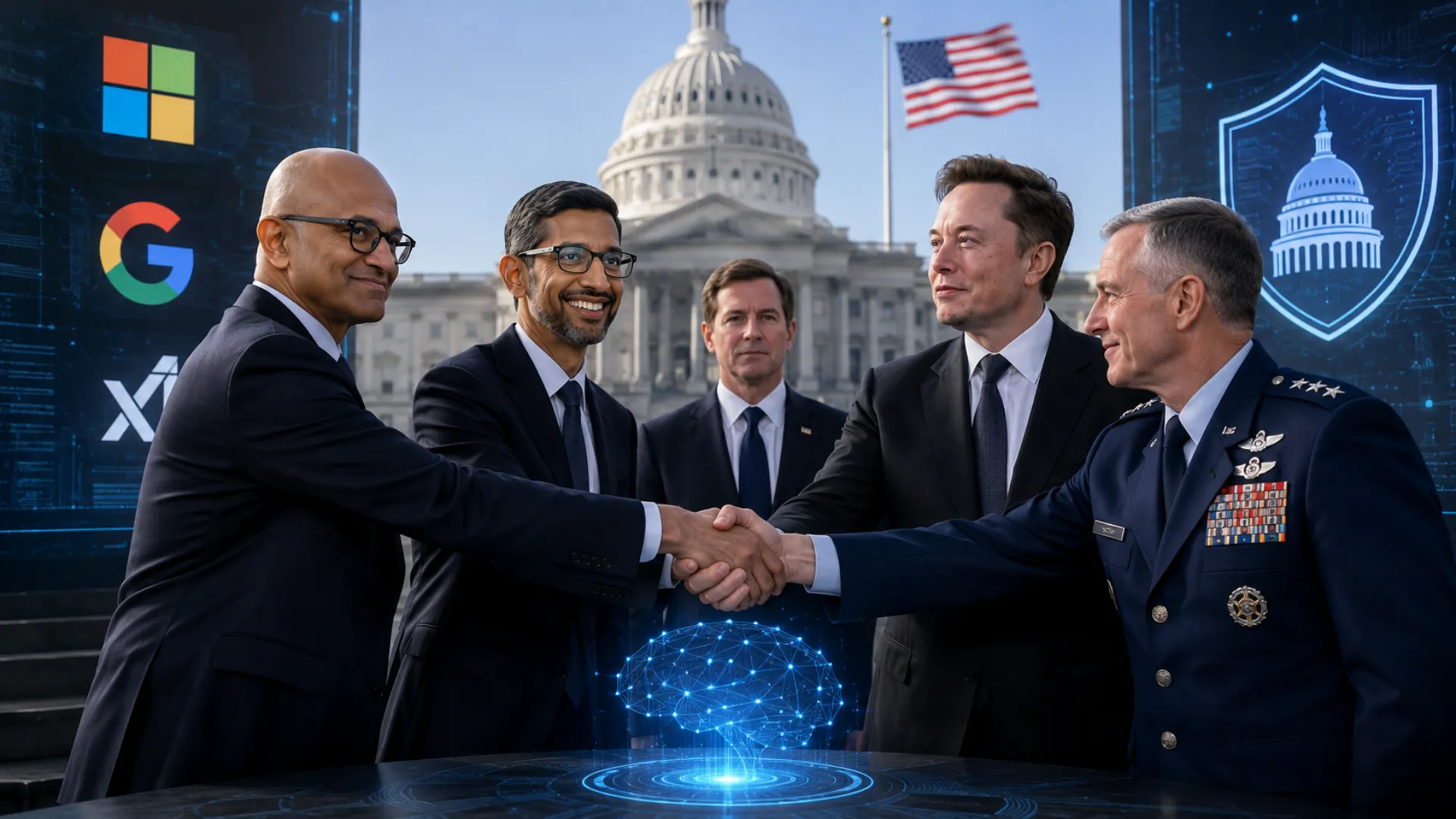
The United States government is moving closer to establishing a formal oversight framework for advanced artificial intelligence systems as major technology companies including Microsoft,Google DeepMind and xAI have agreed to provide early access to their next generation AI models for national security evaluations before public release.
The development marks one of the strongest collaborations yet between the American government and leading AI firms at a time when concerns over powerful frontier AI systems continue to rise globally. The agreement is expected to strengthen government oversight capabilities while also creating a structured process for evaluating security risks, misuse potential, and public safety implications linked to increasingly capable AI models.
According to details shared by the National Institute of Standards and Technology, the newly expanded collaboration gives the government authority to conduct pre deployment testing and targeted research on advanced AI systems before they are rolled out to public users.
The initiative will be led through the government backed Centre for AI Standards and Innovation, also known as CAISI, which has entered into agreements with participating technology companies to assess frontier AI capabilities and improve AI security standards.
US government expands oversight role in advanced artificial intelligence systems
The latest move signals a major shift in how governments may engage with artificial intelligence developers in the years ahead. Instead of relying only on post release regulation, the US administration is increasingly focusing on evaluating high capability AI systems before they become widely accessible.
The agreements reportedly allow CAISI researchers to examine advanced models during development stages and conduct safety evaluations designed to measure national security risks, cybersecurity vulnerabilities, and potential misuse scenarios.
Officials involved in the initiative believe early access testing could help identify dangerous behaviours or unintended capabilities before systems are released publicly. The approach is also intended to improve transparency between AI developers and government agencies responsible for national security and technology standards.
The agreement comes during a period of accelerating global competition in artificial intelligence, where companies are rapidly building more capable systems that can perform complex reasoning, software generation, autonomous task execution, and advanced content creation.
Governments across several countries have been debating how to regulate frontier AI technologies without slowing innovation. The US administration appears to be pursuing a strategy that combines industry collaboration with safety oversight rather than immediate restrictive regulation.
Growing concern over frontier AI risks shapes policy discussions
The decision to deepen cooperation with leading AI companies follows growing international concern over the risks associated with highly advanced generative AI systems.
Recent debates around powerful AI models, including Anthropic’s Claude Mythos system, have intensified conversations about the possibility of misuse, cybersecurity threats, misinformation risks, and unintended autonomous behaviour from future AI systems.
As frontier AI models become more powerful, experts have warned that governments may require stronger safeguards to ensure these technologies are deployed responsibly. Concerns are no longer limited to consumer misinformation or academic misuse. Increasingly, policymakers are discussing risks linked to national infrastructure, cyber warfare, financial systems, and public security.
The expanding capabilities of AI models have also pushed governments to seek independent evaluation mechanisms that do not rely entirely on company self reporting. The latest agreements are expected to provide federal researchers with deeper technical insight into how advanced AI systems behave under controlled testing environments.
Officials believe this could help establish scientific benchmarks for future AI safety standards while improving preparedness against emerging risks tied to rapidly evolving AI technologies.
CAISI says independent testing is critical for public interest
CAISI Director Chris Fall stressed the importance of independent scientific evaluation in understanding the broader implications of frontier AI systems.
According to Fall, rigorous measurement science remains essential for evaluating advanced AI capabilities and their possible national security impact. He also noted that stronger collaboration between government institutions and private technology companies would help scale public interest research during a critical stage in AI development.
The institute is expected to conduct both pre deployment evaluations and post deployment research. This means government experts may continue monitoring AI systems even after they become publicly available, particularly if new risks or vulnerabilities emerge over time.
The broader objective is not only to assess existing models but also to build long term frameworks that can support future AI governance and safety testing standards.
Industry experts say such partnerships may eventually become standard practice as governments attempt to keep pace with increasingly capable AI technologies.
Trump administration reportedly exploring formal AI review mechanisms
The agreement also comes amid reports that the administration of President is considering the creation of a specialised team of experts to advise the government on how advanced AI systems should be reviewed before release.
The proposed initiative could involve technical specialists, cybersecurity experts, policy advisors, and AI researchers working together to shape future oversight mechanisms for frontier AI models.
Reports suggest that discussions are already taking place between government officials and executives from major AI companies including OpenAI and Google regarding AI safety assessments, security standards, and regulatory frameworks.
While no final policy has been officially announced, the ongoing discussions indicate that Washington is increasingly treating advanced artificial intelligence as both a technological opportunity and a strategic national security issue.
The White House is expected to focus on balancing innovation with safety concerns, particularly as AI systems become deeply integrated into critical industries, defense technologies, and public infrastructure.
Big technology firms face rising pressure to improve transparency
The participation of companies such as Microsoft, Google DeepMind, and xAI highlights how pressure is mounting on AI developers to demonstrate stronger accountability and transparency practices.
Large language models and multimodal AI systems are advancing at an unprecedented pace, creating both commercial opportunities and regulatory challenges. Governments worldwide are seeking clearer visibility into how these systems are trained, tested, and deployed.
For technology companies, collaboration with government agencies may also help strengthen public trust at a time when scrutiny over AI development practices continues to grow.
Several AI firms have already introduced voluntary commitments related to safety testing, watermarking, and responsible deployment. However, critics have argued that voluntary standards alone may not be sufficient as AI capabilities continue to expand.
The latest agreements may therefore represent an early model for future public private cooperation in AI governance.
Industry observers note that companies participating in government evaluations could gain strategic advantages by demonstrating compliance readiness and safety leadership in an increasingly regulated global market.
AI regulation debate intensifies worldwide
The United States is not alone in rethinking its AI governance approach. Countries across Europe and Asia are also introducing frameworks aimed at regulating high risk AI applications.
The European Union has already advanced major AI legislation focused on transparency, accountability, and risk classification for advanced AI systems. Other governments are exploring their own models for oversight, certification, and deployment restrictions.
India has also increased its focus on AI policy discussions as public institutions, financial systems, and digital services become more dependent on artificial intelligence technologies.
Global regulators are now confronting a difficult challenge. On one side, governments want to encourage AI innovation and maintain economic competitiveness. On the other, there is growing pressure to prevent misuse, cyber threats, and unintended societal consequences linked to powerful AI systems.
The agreements announced by the US government may therefore influence how other countries approach cooperation with private AI developers in the future.
Frontier AI testing could shape the next phase of AI governance
Experts believe the emerging partnership between governments and AI companies could become a defining feature of the next phase of artificial intelligence governance.
Rather than waiting for incidents or misuse cases to occur after public deployment, authorities are increasingly attempting to build proactive testing systems that evaluate advanced models earlier in the development process.
Supporters of the initiative argue that early testing can improve preparedness against high impact risks while also helping policymakers understand the real world capabilities of advanced AI technologies.
At the same time, civil liberties groups and technology analysts are likely to closely monitor how such government access programs operate, particularly regarding privacy protections, transparency requirements, and competitive fairness.
The long term impact of these agreements will depend on how effectively governments and technology companies balance innovation, security, and public trust.
For now, the partnership between Microsoft, Google DeepMind, xAI, and the US government represents another major sign that artificial intelligence is rapidly becoming one of the most strategically important technologies shaping global policy, cybersecurity, and the future digital economy.
Frequently Asked Questions
Why are Microsoft, Google DeepMind, and xAI giving early access of AI models to the US government?
The companies have agreed to provide early access so the US government can conduct national security evaluations, safety testing, and targeted research on advanced AI systems before public release.
What is the role of the Centre for AI Standards and Innovation in this agreement?
The Centre for AI Standards and Innovation, also known as CAISI, will carry out pre deployment evaluations and research to assess frontier AI capabilities, cybersecurity risks, and public safety concerns.
Which major technology companies are part of the AI testing agreement?
The agreement includes Microsoft, Google DeepMind, and Elon Musk’s xAI. The US government is also reportedly in discussions with other AI companies including OpenAI.
Why is the US government increasing oversight of advanced AI models?
The government is responding to growing concerns about cybersecurity threats, misuse risks, misinformation, and the national security implications of highly capable AI systems.
What are pre deployment evaluations for AI models?
Pre deployment evaluations are safety and security assessments conducted before an AI model becomes publicly available. These tests are designed to identify risks, vulnerabilities, and potentially harmful capabilities.
How could this agreement affect future AI regulation in the United States?
The agreement may help shape future AI governance frameworks by creating structured safety testing standards and closer collaboration between government agencies and private AI developers.
What concerns have emerged around frontier AI systems recently?
Experts and policymakers have raised concerns about advanced AI systems potentially being used for cyberattacks, misinformation campaigns, autonomous misuse, and other national security related threats.
What did CAISI Director Chris Fall say about the initiative?
Chris Fall said independent and rigorous measurement science is essential for understanding frontier AI capabilities and their national security implications, especially during a critical stage of AI development.
Will the US government only test AI systems before launch?
No. The agreement also allows for research and evaluations after deployment so officials can continue monitoring AI systems if new risks or vulnerabilities emerge.
How does this development reflect the global AI race?
The agreement highlights how governments worldwide are increasingly treating advanced artificial intelligence as a strategic technology linked to economic competition, cybersecurity, and national security.
Why are governments around the world focusing more on AI safety?
Governments are focusing on AI safety because modern AI systems are becoming more powerful and integrated into critical sectors such as finance, infrastructure, cybersecurity, and defense.
Could this partnership influence global AI policy discussions?
Yes. The collaboration between major AI companies and the US government could influence how other countries design their own AI oversight, testing, and regulatory frameworks.
Edit Profile
Help improve @KR

Was this page helpful to you?
Contact Khogendra Rupini
Are you looking for an experienced developer to bring your website to life, tackle technical challenges, fix bugs, or enhance functionality? Look no further.
I specialize in building professional, high-performing, and user-friendly websites designed to meet your unique needs. Whether it's creating custom JavaScript components, solving complex JS problems, or designing responsive layouts that look stunning on both small screens and desktops, I can collaborate with you.
Create something exceptional with us. Contact us today
Open for Collaboration
If you're looking to collaborate, I'm available for a variety of professional services, including -
- Website Design & Development
- Advertisement & Promotion Setup
- Hosting Configuration & Deployment
- Front-end & Back-end Code Implementation
- Code Testing & Optimization
- Cybersecurity Solutions & Threat Prevention
- Website Scanning & Malware Removal
- Hacked Website Recovery
- PHP & MySQL Development
- Python Programming
- Web Content Writing
- Protection Against Hacking Attempts