After ChatGPT, Google eyes AI agents with new Gemini project Remy as competition with OpenClaw intensifies
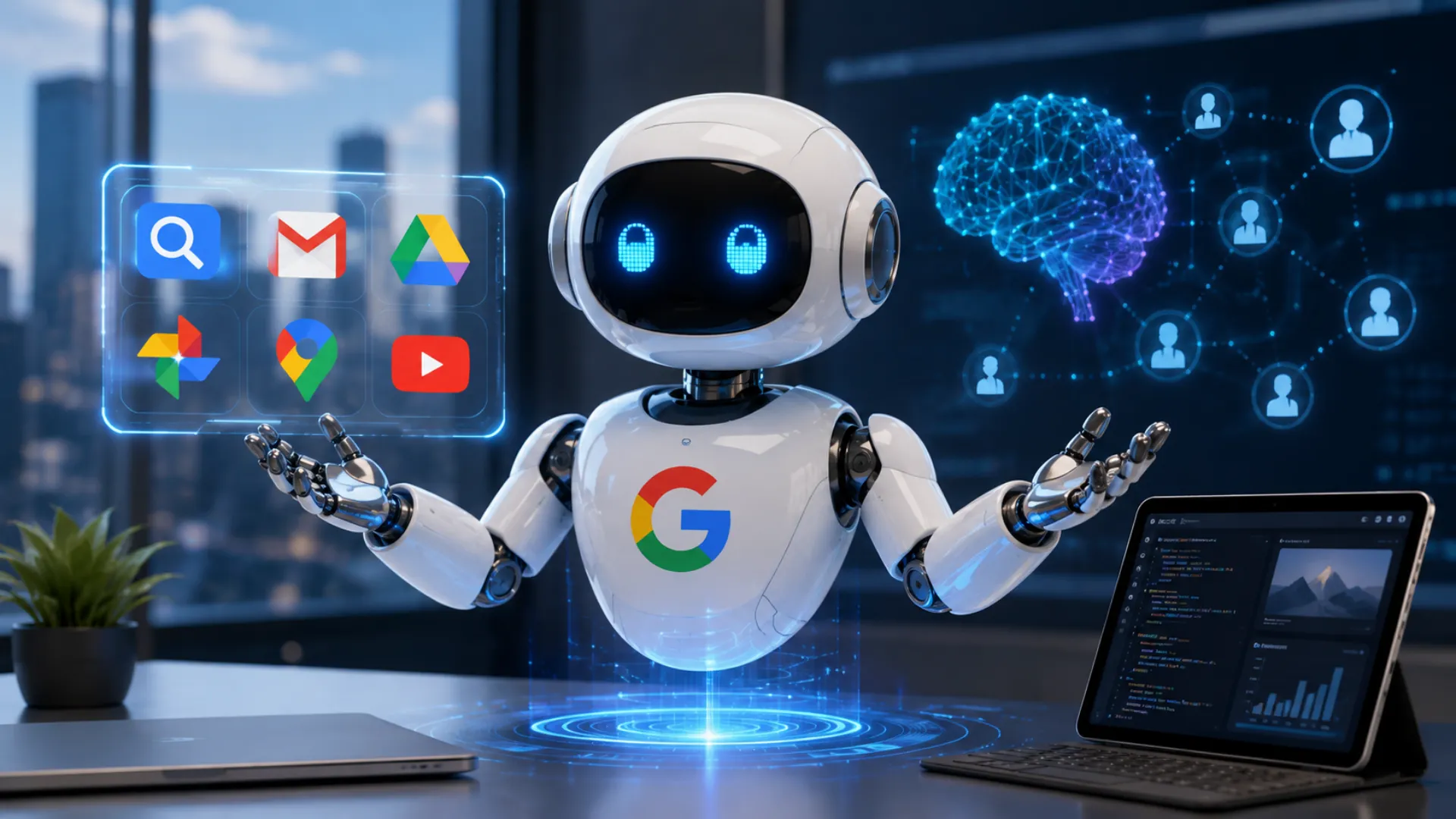
Google is quietly expanding its ambitions in artificial intelligence beyond chatbots and search tools, this time with a project that aims to redefine how digital assistants work in everyday life. According to a report by Business Insider, the company is internally testing a new AI powered personal agent called Remy, a system designed to act proactively for users instead of simply responding to commands.
The development reflects the rapidly growing competition in the AI agent space, where companies are racing to create assistants capable of completing tasks, managing workflows and making decisions across work and personal environments. The report suggests that Remy is being developed as part of Google’s broader Gemini ecosystem and could become one of the company’s most ambitious AI products yet.
The move also places Google in more direct competition with OpenAI, especially after the growing popularity of OpenClaw, the independent AI agent project that drew major industry attention earlier this year and later led OpenAI CEO to hire its creator.
Google’s Remy project aims to turn Gemini into a true personal assistant
According to the internal description cited in the report, Remy is envisioned as a “24/7 personal agent” capable of assisting users across work, school and daily life. Unlike traditional AI chatbots that mainly generate answers or content, Remy is reportedly being designed to take actions on behalf of users.
The internal description reportedly states:
“Remy is your 24/7 personal agent for work, school, and daily life, powered by Gemini. It elevates the Gemini app into a true assistant that can take actions on your behalf — not just answer questions or generate content.”
This distinction is important because the AI industry is increasingly shifting from conversational tools toward autonomous systems known as AI agents. These systems are designed not only to answer prompts but also to perform tasks independently, monitor information continuously and coordinate activities across multiple services.
Reports indicate that Remy is deeply integrated into Google’s ecosystem, allowing it to potentially interact with services such as Gmail, Google Docs, Calendar and Drive. Such integration could give Google a significant advantage because billions of users already rely on these platforms daily.
If the project moves beyond internal testing, users may eventually be able to ask the assistant to organize schedules, respond to messages, track deadlines, summarize documents, coordinate workflows and automate recurring digital tasks with minimal manual input.
AI agents become the next major battleground in Silicon Valley
The emergence of AI agents represents the next major stage in the evolution of generative AI. Over the past two years, companies largely focused on building conversational systems capable of generating text, images and code. However, the latest trend is centered on AI systems that can act more independently.
Google has already introduced features such as Agent Mode within Gemini, but reports suggest Remy is intended to be a more advanced and proactive experience. Instead of waiting for user instructions, the assistant could reportedly monitor ongoing tasks and make suggestions or complete actions automatically.
The competitive pressure in this space has intensified dramatically in recent months. OpenClaw, an independent AI agent project, gained widespread attention online because of its ability to conduct research, respond to messages and operate with a level of autonomy that many users had not previously experienced from consumer AI tools.
The popularity of OpenClaw quickly attracted the attention of major AI companies. OpenAI later hired the project’s creator, a move that highlighted how seriously leading firms are taking the future of AI agents.
Google’s Remy initiative now appears to be part of the same race. Industry analysts believe the company’s greatest strength could be its existing ecosystem. While standalone AI companies may build powerful models, Google controls some of the world’s most widely used productivity and communication platforms. That integration could make agent based AI more practical and accessible for mainstream users.
Why Google’s ecosystem could give Remy a major advantage
One of the biggest challenges for AI agents is access to user workflows and real world context. Many AI systems remain limited because they operate separately from the apps and services people use every day.
Google, however, already manages a deeply interconnected digital environment that includes email, cloud storage, calendars, meetings, productivity software and search. If Remy gains permission based access across these services, it could theoretically build a much more complete understanding of a user’s routines and priorities.
That capability may allow the assistant to perform more sophisticated actions. For example, it could identify an upcoming meeting from Calendar, locate related files in Drive, summarize previous email conversations and prepare relevant documents automatically before the event begins.
This kind of proactive functionality represents a major shift from current chatbot interactions, where users still need to provide most instructions manually.
At the same time, the development of such systems raises important questions around privacy, security and data access. AI agents capable of monitoring personal workflows would require deep integration with sensitive user information. As a result, transparency and user control are likely to become central concerns as these technologies evolve.
Google has not publicly confirmed a launch timeline for Remy, and the project is reportedly still in an internal “dogfooding” stage, meaning employees are testing the product privately before any wider release.
Google I O 2026 expected to showcase next phase of AI strategy
The timing of the report has drawn attention because Google recently announced details for its annual developer conference, , where artificial intelligence is expected to dominate discussions once again.
The company confirmed that the event will take place from May 19 to May 29 at the in California. The conference will be available both online and in person.
Google CEO announced the event on X, inviting developers and users to participate in the company’s next major AI showcase.
According to Google, the event will include keynote sessions, product demonstrations, fireside discussions and presentations focused on the company’s latest technological developments.
The company has already stated that this year’s conference will focus heavily on “AI breakthroughs” across Gemini, Android and other Google products. Industry observers now expect AI agents to become one of the headline themes of the event.
Although Google has not officially confirmed whether Remy will appear during the conference, the timing of the internal testing report has fueled speculation that the company may preview more advanced agent features during I O 2026.
AI dominated last year’s Google I O event
Artificial intelligence was already the central focus of last year’s conference. In 2025, Google introduced several major AI announcements, including Gemini 2.5 Pro and Gemini 2.5 Flash.
The company also unveiled generative AI models such as Imagen 4 and Veo 3, while integrating AI powered features into products including Search, Gmail, Chrome and Shopping.
Even Google’s hardware demonstrations carried a strong AI focus. The company showcased Android XR headsets and Gemini powered smart glasses as part of its broader effort to embed artificial intelligence across devices and services.
This growing AI first strategy reflects the wider transformation occurring across the technology industry. Companies are increasingly treating AI not as a standalone product but as a foundational layer that powers nearly every digital experience.
The larger race to build the most capable AI assistant
The competition between Google and OpenAI has intensified significantly since the explosive growth of ChatGPT. What initially began as a battle over conversational AI has rapidly evolved into a broader race to build intelligent digital agents capable of performing real world tasks.
For Google, the challenge is especially important because AI threatens to reshape how people interact with information online. Traditional search engines may eventually become less central if users begin relying on AI assistants that can retrieve, summarize and act on information directly.
At the same time, OpenAI continues investing heavily in autonomous AI systems and productivity focused tools. The company’s interest in OpenClaw and other agent technologies signals that the next phase of competition may revolve around who can create the most useful and trusted AI assistant ecosystem.
The industry’s direction also suggests that future AI products may become increasingly personalized. Instead of generic chatbot interactions, users could soon rely on AI systems that understand their habits, schedules, communication styles and professional responsibilities over time.
That shift could fundamentally change how people manage digital work and daily routines.
Google’s Remy project highlights the future direction of AI
Although Remy remains an internal project for now, the reported details provide a clearer picture of where the AI industry is heading. The focus is no longer only on generating content faster or answering questions more accurately. The next generation of AI systems is being designed to act, organize, monitor and assist continuously in the background.
For Google, integrating such capabilities into the Gemini ecosystem could strengthen its position in the rapidly changing AI market. The company’s enormous network of connected services may ultimately become one of its biggest advantages in the race toward practical AI assistants.
Whether Remy launches publicly or evolves into a different product entirely, the project demonstrates how aggressively major technology companies are investing in autonomous AI experiences.
As AI agents become more capable and more deeply integrated into everyday digital life, the competition between Google, OpenAI and other leading firms is expected to intensify even further in the months ahead.
Edit Profile
Help improve @KR

Was this page helpful to you?
Contact Khogendra Rupini
Are you looking for an experienced developer to bring your website to life, tackle technical challenges, fix bugs, or enhance functionality? Look no further.
I specialize in building professional, high-performing, and user-friendly websites designed to meet your unique needs. Whether it's creating custom JavaScript components, solving complex JS problems, or designing responsive layouts that look stunning on both small screens and desktops, I can collaborate with you.
Create something exceptional with us. Contact us today
Open for Collaboration
If you're looking to collaborate, I'm available for a variety of professional services, including -
- Website Design & Development
- Advertisement & Promotion Setup
- Hosting Configuration & Deployment
- Front-end & Back-end Code Implementation
- Code Testing & Optimization
- Cybersecurity Solutions & Threat Prevention
- Website Scanning & Malware Removal
- Hacked Website Recovery
- PHP & MySQL Development
- Python Programming
- Web Content Writing
- Protection Against Hacking Attempts