ChatGPT 5.5 Instant arrives with smarter and faster AI responses as OpenAI shifts focus from longer answers to better accuracy
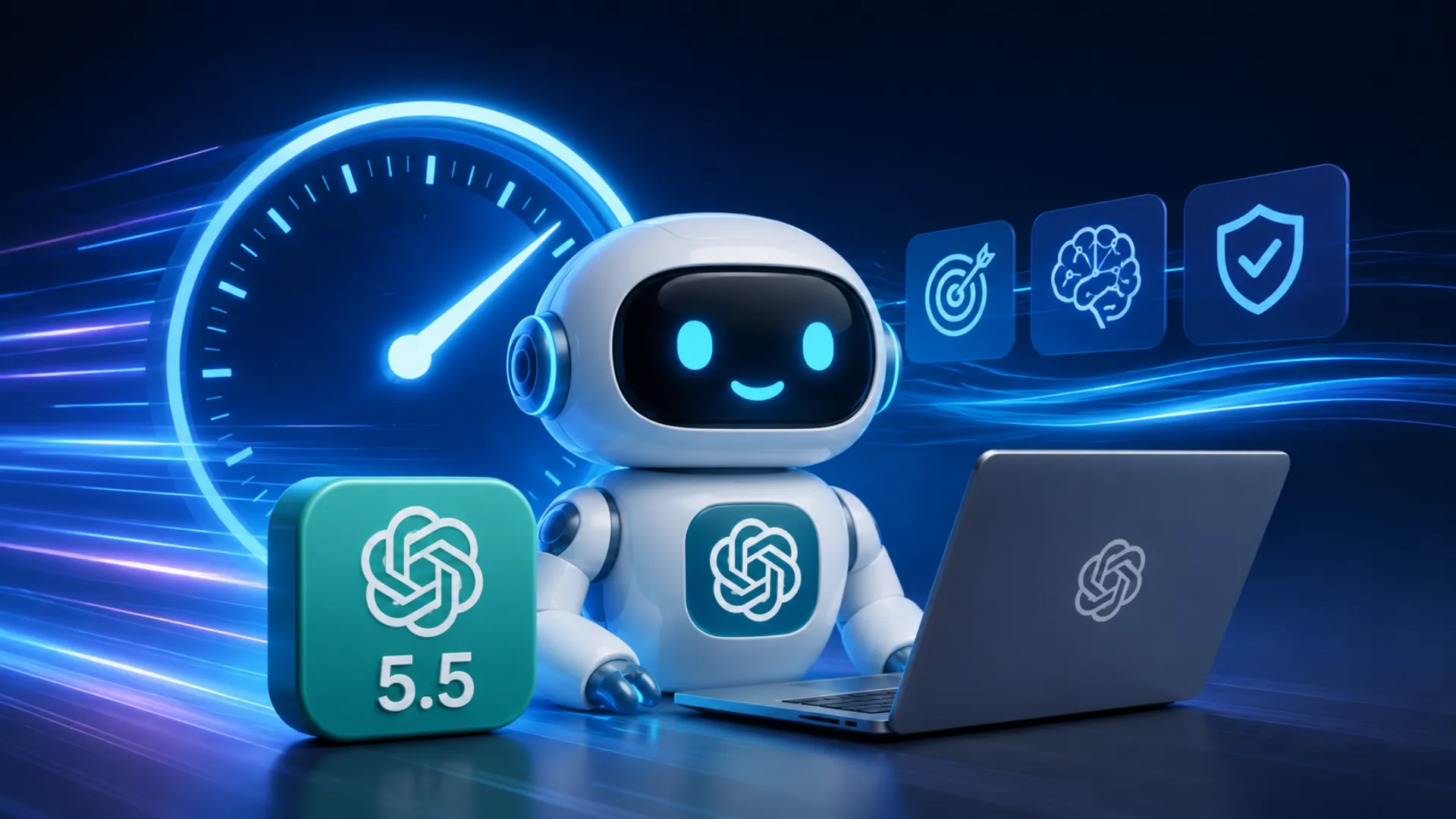
The race to build smarter artificial intelligence models has often been driven by one idea: bigger responses, more features, and longer explanations. But OpenAI’s latest rollout takes a noticeably different direction. With the launch of OpenAI GPT 5.5 Instant, the company is now emphasizing something many users have quietly wanted for years - faster answers, fewer hallucinations, less repetition, and responses that feel genuinely useful without unnecessary padding.
The newly released model is now becoming the default experience inside OpenAI ChatGPT for users, and early reactions suggest this may be one of the most practical upgrades the company has delivered so far. Instead of chasing dramatic sounding capabilities, GPT 5.5 Instant appears designed around everyday productivity and reliability. That shift could prove far more important than another leap in raw model size.
According to details highlighted in recent testing, OpenAI says the model significantly reduces hallucinations in high stakes scenarios while also improving response quality and speed. The company’s approach reflects a broader industry trend where users increasingly care less about flashy demonstrations and more about whether AI tools can consistently deliver accurate information in real world tasks.
OpenAI focuses on precision instead of longer AI conversations
For years, one of the biggest criticisms of advanced AI chatbots has been over explanation. Many users appreciated the intelligence of modern AI systems but often found themselves scrolling through paragraphs of repetitive text to locate a simple answer.
GPT 5.5 Instant directly addresses that problem.
The model has been optimized to provide concise and tightly focused answers while still preserving clarity and usefulness. Instead of expanding every response into a lengthy essay, the AI now appears better at understanding the scale of a question and responding proportionally.
That may sound like a small change, but for professionals, students, developers, researchers, and everyday users, it can dramatically improve workflow efficiency. Faster and more direct responses reduce friction and allow users to complete tasks without constantly refining prompts or correcting AI generated filler content.
This marks a meaningful philosophical shift for AI development. Rather than encouraging users to engage in endless prompting loops, OpenAI is attempting to make interactions feel more natural and efficient from the very first response.
Hallucination reduction becomes one of the biggest upgrades
One of the most important details surrounding GPT 5.5 Instant is the company’s claim about hallucination reduction.
Hallucinations occur when AI systems confidently generate inaccurate or fabricated information. In recent years, this issue has become one of the biggest challenges facing generative AI companies because even highly advanced systems can sometimes produce convincing but incorrect outputs.
OpenAI says GPT 5.5 Instant reduces hallucinations by more than 50 percent in high stakes situations compared with previous behavior patterns. If those improvements consistently hold up in real world usage, the impact could be substantial.
Accuracy matters far beyond casual conversations. AI models are increasingly being used for coding assistance, business research, writing support, technical explanations, educational content, and productivity tasks. In these areas, reliability often matters more than creativity.
The company’s effort to reduce factual errors may help strengthen trust among users who previously hesitated to rely heavily on AI systems for professional work.
Why this release may matter more than flashy AI announcements
The artificial intelligence industry has spent much of the past few years competing through spectacle. Companies frequently introduced larger models, more complex features, and increasingly ambitious demonstrations.
However, many everyday users experienced a different reality. Some AI tools became slower, overly verbose, or inconsistent in practical usage.
GPT 5.5 Instant appears designed to solve those frustrations instead of simply adding more complexity.
The emphasis on responsiveness and concise communication aligns with how most people actually use AI tools daily. Users often want quick summaries, efficient rewrites, coding help, accurate explanations, or focused productivity assistance rather than extremely long generated essays.
That practicality could make GPT 5.5 Instant one of OpenAI’s most widely appreciated upgrades despite lacking the dramatic marketing spectacle associated with earlier AI launches.
Seven prompts highlight the strengths of GPT 5.5 Instant
To demonstrate the model’s improvements, technology writer Amanda Caswell tested several practical prompts designed around precision and concise reasoning.
One of the most notable examples involved asking the model to explain how AI agents work in exactly three sentences. The prompt tested whether the AI could compress useful information into a strict format without becoming repetitive or losing clarity.
Another prompt focused on rewriting text to become 40 percent shorter while preserving meaning and tone. This directly targeted one of the largest complaints surrounding older AI systems: unnecessary verbosity.
A third example explored constrained summarization by asking the AI to explain major technology news stories using short bullet points with strict word limits.
These examples may appear simple, but they reflect a major change in how AI quality is increasingly evaluated. Instead of measuring intelligence through massive outputs alone, users are now valuing precision, discipline, structure, and clarity.
The productivity advantage could reshape everyday AI usage
The improvements in GPT 5.5 Instant may especially benefit users who rely on AI repeatedly throughout the day.
Developers often need quick debugging help instead of lengthy explanations. Writers may want concise editing suggestions rather than full rewrites. Students may prefer direct concept clarification instead of extended lectures. Professionals handling reports or presentations often need fast summarization and clean restructuring.
By reducing unnecessary wording and improving contextual understanding, OpenAI appears to be targeting these real workflow needs more aggressively.
This also has implications for mobile usage. Shorter and more focused responses are easier to consume on smartphones, where long generated text can quickly become frustrating.
The update therefore reflects not only technical optimization but also a stronger understanding of how mainstream audiences interact with conversational AI.
OpenAI’s competitive strategy becomes clearer
The launch of GPT 5.5 Instant also arrives during an increasingly aggressive AI competition cycle.
Major technology companies including Google,Meta, Microsoft and several startup challengers are racing to improve AI assistants and productivity tools. In such an environment, raw capability alone may no longer guarantee user loyalty.
Reliability, speed, and user experience are becoming equally important.
By focusing on practical performance improvements rather than purely experimental features, OpenAI may be positioning ChatGPT as the most dependable mainstream AI assistant rather than simply the most powerful one on paper.
That strategy could prove highly effective as AI adoption continues expanding into education, offices, software development, and everyday consumer usage.
AI users increasingly demand quality over quantity
The broader significance of GPT 5.5 Instant may reflect a growing maturity in the AI market itself.
Early excitement around generative AI focused heavily on novelty. Users were amazed simply by the ability of AI systems to generate essays, code, and conversational replies. But as these tools become part of daily routines, expectations naturally evolve.
People now expect AI systems to behave more like efficient assistants and less like experimental demonstrations.
That means answers should feel proportionate, accurate, context aware, and trustworthy. Overly long responses can reduce productivity rather than improve it. Similarly, hallucinations quickly damage user confidence.
GPT 5.5 Instant seems built around these evolving expectations. The release suggests OpenAI recognizes that future AI leadership may depend less on generating the largest responses and more on delivering the most useful ones.
The future of AI may become quieter but smarter
One of the most interesting aspects of this release is that its biggest strengths are subtle rather than theatrical.
GPT 5.5 Instant does not rely on dramatic visual announcements or futuristic promises. Instead, it improves the small details that shape daily user experience: response quality, brevity, reliability, and clarity.
Those improvements may ultimately matter more than headline grabbing experimental features.
As artificial intelligence becomes increasingly integrated into work, communication, education, and productivity, users are likely to prioritize systems that save time and reduce friction. OpenAI’s latest model reflects that changing reality.
The era of AI may now be entering a phase where “less is more” is not just a design philosophy but a competitive advantage. And if GPT 5.5 Instant consistently delivers on its promises, this quieter approach to AI improvement could become the new industry standard.
Frequently Asked Questions
What is ChatGPT 5.5 Instant?
ChatGPT 5.5 Instant is OpenAI’s latest AI model update focused on faster responses, improved accuracy, and shorter, more useful answers for everyday users.
What makes ChatGPT 5.5 Instant different from earlier versions?
The new model reduces repetitive responses, delivers more concise answers, and improves reliability by lowering hallucinations in high stakes scenarios.
What are AI hallucinations in ChatGPT?
AI hallucinations happen when a chatbot generates inaccurate or fabricated information while sounding confident, which can reduce trust in AI generated answers.
How much has OpenAI reduced hallucinations in GPT 5.5 Instant?
According to OpenAI’s internal testing mentioned in the report, GPT 5.5 Instant reduces hallucinations by more than 50 percent in high stakes use cases.
Why are shorter AI responses becoming important?
Users increasingly prefer direct and efficient answers that save time, especially for productivity tasks like writing, coding, research, and summarization.
How does GPT 5.5 Instant improve productivity?
The model helps users work faster by providing concise answers, reducing unnecessary explanations, and improving the quality of first response accuracy.
What types of prompts were used to test GPT 5.5 Instant?
The tests included concise explanations, shorter rewrites, and structured summaries with strict word limits to evaluate precision and clarity.
Who may benefit most from ChatGPT 5.5 Instant?
Students, developers, writers, professionals, and everyday users may benefit from the model’s faster responses and more reliable information.
Why is OpenAI focusing on concise AI answers?
OpenAI appears to be responding to user demand for practical AI tools that prioritize usefulness, clarity, and efficiency over lengthy responses.
What does the launch of GPT 5.5 Instant mean for the AI industry?
The release highlights a broader shift in artificial intelligence toward accuracy, reliability, and better user experience instead of simply generating longer outputs.
Edit Profile
Help improve @KR

Was this page helpful to you?
Contact Khogendra Rupini
Are you looking for an experienced developer to bring your website to life, tackle technical challenges, fix bugs, or enhance functionality? Look no further.
I specialize in building professional, high-performing, and user-friendly websites designed to meet your unique needs. Whether it's creating custom JavaScript components, solving complex JS problems, or designing responsive layouts that look stunning on both small screens and desktops, I can collaborate with you.
Create something exceptional with us. Contact us today
Open for Collaboration
If you're looking to collaborate, I'm available for a variety of professional services, including -
- Website Design & Development
- Advertisement & Promotion Setup
- Hosting Configuration & Deployment
- Front-end & Back-end Code Implementation
- Code Testing & Optimization
- Cybersecurity Solutions & Threat Prevention
- Website Scanning & Malware Removal
- Hacked Website Recovery
- PHP & MySQL Development
- Python Programming
- Web Content Writing
- Protection Against Hacking Attempts