Meta Clarifies WhatsApp Encryption Rumour as Instagram Removes Optional Private DM Feature
A wave of viral social media posts has triggered confusion across the internet after claims surfaced alleging that Meta was removing end to end encryption from WhatsApp. The claim spread rapidly on Facebook, X, and online discussion forums, raising fresh concerns about privacy, surveillance, and the future of secure messaging on Meta owned platforms.
However, official statements from Meta, WhatsApp documentation, and reports from multiple international technology and cybersecurity publications confirm that the viral narrative is misleading. WhatsApp continues to provide end to end encryption by default for personal messages, calls, photos, videos, and shared documents.
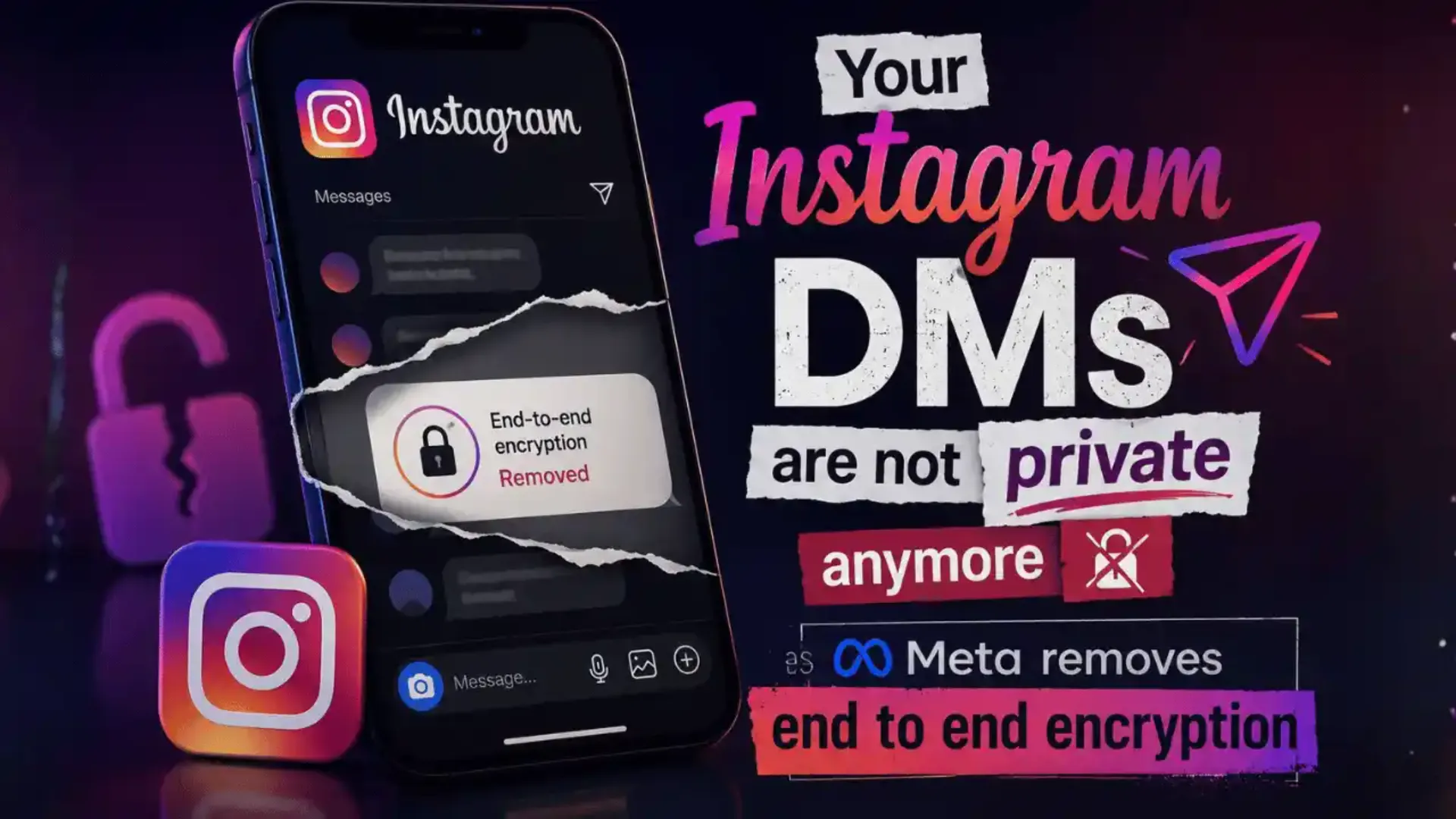
The confusion began after Meta announced that Instagram would discontinue its optional encrypted direct messaging feature from May 8, 2026. While the change affected Instagram DMs, many users mistakenly interpreted the announcement as a broader policy shift impacting all Meta messaging platforms, including WhatsApp.
The development has reignited public debate over online privacy, digital trust, and how different Meta owned applications handle encrypted communication.
WhatsApp Encryption Remains Active Across Messages Calls And Media
WhatsApp has used default end to end encryption since April 2016. The platform protects personal chats, voice calls, video calls, images, documents, and shared media through the Signal Protocol, one of the most widely respected open source encryption systems in the world.
Under this system, only the sender and intended recipient can access message content. Even WhatsApp itself cannot directly read or listen to encrypted communications.
Meta has not announced any plans to remove this protection from WhatsApp. In fact, the company continues positioning WhatsApp as its primary encrypted messaging platform globally.
The platform serves more than two billion users worldwide and remains one of the largest encrypted communication services in operation today.
Recent security updates also contradict claims that Meta is stepping away from encrypted messaging on WhatsApp. Earlier in 2026, the company introduced a new Strict Account Settings security mode aimed at protecting journalists, activists, and public figures from sophisticated cyber threats and targeted attacks.
Cybersecurity analysts viewed the rollout as a sign that Meta continues investing in WhatsApp privacy protections rather than weakening them.
Instagram Direct Messages Lose Optional Encryption Feature
The actual policy change involved Instagram Direct Messages.
Instagram introduced optional encrypted chats in 2021. Unlike WhatsApp, encryption on Instagram was never enabled by default. Users had to manually activate the feature for specific conversations.
Meta stated that adoption remained extremely low. According to the company, only a small percentage of Instagram users enabled encrypted chats, leading to the decision to discontinue the feature entirely.
Beginning May 8, 2026, Instagram users lost access to optional encrypted messaging. Users with existing encrypted conversations were notified in advance and advised to download any important media or chat history before the feature shut down.
Meta also directed users who preferred encrypted communication to use WhatsApp instead.
This distinction became central to the controversy. Headlines referencing “Meta removing encryption” circulated online without clearly specifying that the change applied only to Instagram DMs. As those headlines spread across social media, many readers assumed WhatsApp encryption was also ending.
Privacy researchers say the misunderstanding reflects a broader public tendency to treat Meta’s ecosystem as one unified messaging service, even though each platform operates under separate technical frameworks and privacy policies.
Messenger And WhatsApp Continue Expanding Encrypted Messaging
The wider context surrounding Meta’s messaging ecosystem presents a more complicated picture than the viral claims suggested.
Facebook Messenger actually moved toward stronger privacy protections in recent years.
Messenger first introduced encrypted “Secret Conversations” in 2016 as an optional feature. For several years, regular Messenger chats were not protected by default encryption.
That changed in December 2023 when Meta rolled out default end to end encryption for all Messenger conversations globally. At the time, Meta described the rollout as one of the most technically challenging engineering projects in the company’s messaging history.
This means Messenger evolved in the opposite direction from Instagram.
While Instagram moved from optional encryption to none, Messenger moved from optional encryption to full default protection.
Today, both WhatsApp and Messenger provide default end to end encryption for billions of users worldwide.
Threads, Meta’s text based social platform launched in 2023, remains different. The platform has never supported end to end encrypted messaging, and Meta has not publicly announced plans to introduce the feature.
As a result, Meta currently operates a mixed ecosystem where privacy protections vary significantly between platforms.
Why The Rumour Spread So Quickly Online
Digital misinformation experts say the rumour gained traction because of how online audiences interpret Meta related privacy headlines.
Meta owns WhatsApp, Instagram, Facebook Messenger, and Threads. News reports discussing one platform are frequently generalized by users as affecting the company’s entire ecosystem.
The wording of several viral posts intensified the confusion by stating that “Meta is removing encryption” without clarifying which service was affected.
Technology researchers also note that public trust around digital privacy remains fragile following years of controversy involving data collection, targeted advertising, and social media surveillance concerns.
As a result, claims involving privacy changes often spread rapidly because users already carry skepticism toward major technology companies.
The Instagram announcement arrived during a period of growing international concern over online data protection, AI driven advertising systems, and government pressure on messaging platforms to provide lawful access mechanisms.
Against that backdrop, many users reacted emotionally before verifying whether WhatsApp itself was changing.
Encryption Does Not Mean Complete Privacy Experts Warn
Although WhatsApp continues using end to end encryption, privacy researchers caution that encryption alone does not guarantee complete anonymity or total privacy.
End to end encryption protects message content, preventing unauthorized parties from directly reading conversations. However, messaging services may still collect metadata connected to user activity.
Metadata can include phone numbers, contact relationships, timestamps, IP addresses, device information, and communication patterns.
Security experts say such data can still reveal behavioral insights even when actual message text remains encrypted.
Researchers have long warned that metadata analysis can expose social relationships, movement patterns, and communication frequency without accessing conversation content itself.
Privacy advocates also point to cloud backups as another important issue. If users enable cloud backups without activating encrypted backup protection, some information may remain accessible through third party storage systems.
WhatsApp offers encrypted backup functionality, but users must manually enable it.
This distinction has become increasingly important as governments and regulators around the world debate how encrypted services should balance privacy, security, and lawful investigations.
Meta Continues Positioning WhatsApp As Its Secure Messaging Platform
Despite criticism surrounding Instagram’s decision, Meta continues publicly promoting WhatsApp as its flagship secure communication service.
The company’s official documentation still describes privacy and encryption as foundational features of the platform.
App store descriptions, help center pages, and security documentation continue emphasizing that private messages remain protected through default end to end encryption.
Technology analysts say Meta’s broader messaging strategy appears focused on consolidating encrypted communication primarily through WhatsApp and Messenger, while Instagram and Threads continue prioritizing social networking engagement rather than privacy centric communication.
The move may also reflect user behavior trends. Instagram primarily functions as a visual social platform, where most communication occurs casually and publicly rather than through highly sensitive private conversations.
WhatsApp, by contrast, is widely used for family communication, business coordination, journalism, activism, and cross border messaging where encryption carries greater importance.
Public Debate Over Digital Privacy Intensifies
The controversy surrounding the viral WhatsApp claim highlights how deeply privacy concerns now shape public discussion around technology platforms.
Encrypted communication has become one of the defining issues in modern digital policy debates. Governments argue that stronger encryption can complicate criminal investigations, while privacy advocates insist secure messaging remains essential for civil liberties, journalism, political dissent, and personal safety.
Major technology companies increasingly face pressure from both sides.
Some lawmakers push for systems allowing lawful access to encrypted communications under specific circumstances. Privacy groups warn that creating such access points could weaken overall security for all users.
Meta’s decision to remove Instagram’s optional encrypted messaging feature has therefore triggered wider philosophical debate beyond the platform itself.
For many users, the episode serves as a reminder that privacy protections differ significantly across apps, even when owned by the same company.
Viral Claim About WhatsApp Encryption Proven Misleading
After reviewing Meta’s official statements, platform documentation, and multiple independent reports, there is no evidence that Meta has removed or plans to remove end to end encryption from WhatsApp.
The viral narrative originated from confusion surrounding Instagram’s discontinued optional encrypted DM feature.
WhatsApp continues operating with default end to end encryption across messages, calls, media, and documents. Messenger also retains default encrypted communication following its global rollout in 2023.
Instagram, meanwhile, no longer supports optional encrypted chats, while Threads has never implemented encrypted messaging functionality.
The situation ultimately reflects a platform specific policy change rather than a company wide abandonment of encrypted communication.
For billions of WhatsApp users globally, encrypted messaging remains fully active.
Frequently Asked Questions
Did Meta remove end to end encryption from WhatsApp?
No. WhatsApp continues to use end to end encryption by default for messages, calls, photos, videos, and documents. Meta has not announced any plan to remove this protection.
Why did people believe WhatsApp encryption was being removed?
The confusion started after Meta announced that Instagram would discontinue its optional encrypted direct messaging feature. Some social media posts incorrectly presented the change as affecting all Meta messaging platforms.
What exactly changed on Instagram in May 2026?
Meta removed Instagram's optional end to end encrypted direct messaging feature on May 8, 2026. Users who previously used encrypted chats were advised to download important messages and media.
Does WhatsApp still provide encrypted messaging by default?
Yes. WhatsApp still provides default end to end encryption for personal conversations and media sharing using the Signal Protocol.
What encryption system does WhatsApp use?
WhatsApp uses the Signal Protocol, an open source encryption framework widely respected by cybersecurity researchers and privacy experts.
Is Facebook Messenger still encrypted?
Yes. Facebook Messenger rolled out default end to end encryption globally in December 2023, expanding privacy protection for users.
Does Threads support end to end encrypted messaging?
No. Threads has never offered end to end encrypted direct messaging, and Meta has not announced plans to introduce the feature.
Why did Meta remove encrypted chats from Instagram?
Meta stated that very few Instagram users enabled the optional encrypted messaging feature, leading the company to discontinue it.
Can WhatsApp read users' private messages?
According to WhatsApp, end to end encryption prevents the company from reading the content of personal messages and calls exchanged between users.
Does end to end encryption guarantee complete privacy?
No. While encryption protects message content, some metadata such as phone numbers, timestamps, and communication patterns may still be collected.
What are encrypted backups on WhatsApp?
Encrypted backups are an optional security feature that protects chat backups stored in cloud services. Users must manually enable this protection.
Did Meta recommend another app for encrypted messaging after the Instagram change?
Yes. Meta directed users who want encrypted messaging to use WhatsApp, which continues offering default end to end encryption.
How many people use WhatsApp globally?
WhatsApp serves more than two billion users worldwide, making it one of the largest encrypted messaging platforms globally.
What security updates has WhatsApp introduced recently?
In 2026, WhatsApp introduced a Strict Account Settings security mode designed to provide additional protection against advanced cyberattacks.
Why is this issue important for digital privacy discussions?
The debate highlights growing public concern about online privacy, encrypted communication, data collection, and how major technology platforms manage user security.
Edit Profile
Help improve @KR

Was this page helpful to you?
Contact Khogendra Rupini
Are you looking for an experienced developer to bring your website to life, tackle technical challenges, fix bugs, or enhance functionality? Look no further.
I specialize in building professional, high-performing, and user-friendly websites designed to meet your unique needs. Whether it's creating custom JavaScript components, solving complex JS problems, or designing responsive layouts that look stunning on both small screens and desktops, I can collaborate with you.
Create something exceptional with us. Contact us today
Open for Collaboration
If you're looking to collaborate, I'm available for a variety of professional services, including -
- Website Design & Development
- Advertisement & Promotion Setup
- Hosting Configuration & Deployment
- Front-end & Back-end Code Implementation
- Code Testing & Optimization
- Cybersecurity Solutions & Threat Prevention
- Website Scanning & Malware Removal
- Hacked Website Recovery
- PHP & MySQL Development
- Python Programming
- Web Content Writing
- Protection Against Hacking Attempts