Microsoft CEO Satya Nadella Takes the Witness Stand in Explosive Elon Musk OpenAI Trial as Billion Dollar AI Alliance Faces Intense Legal and Ethical Scrutiny
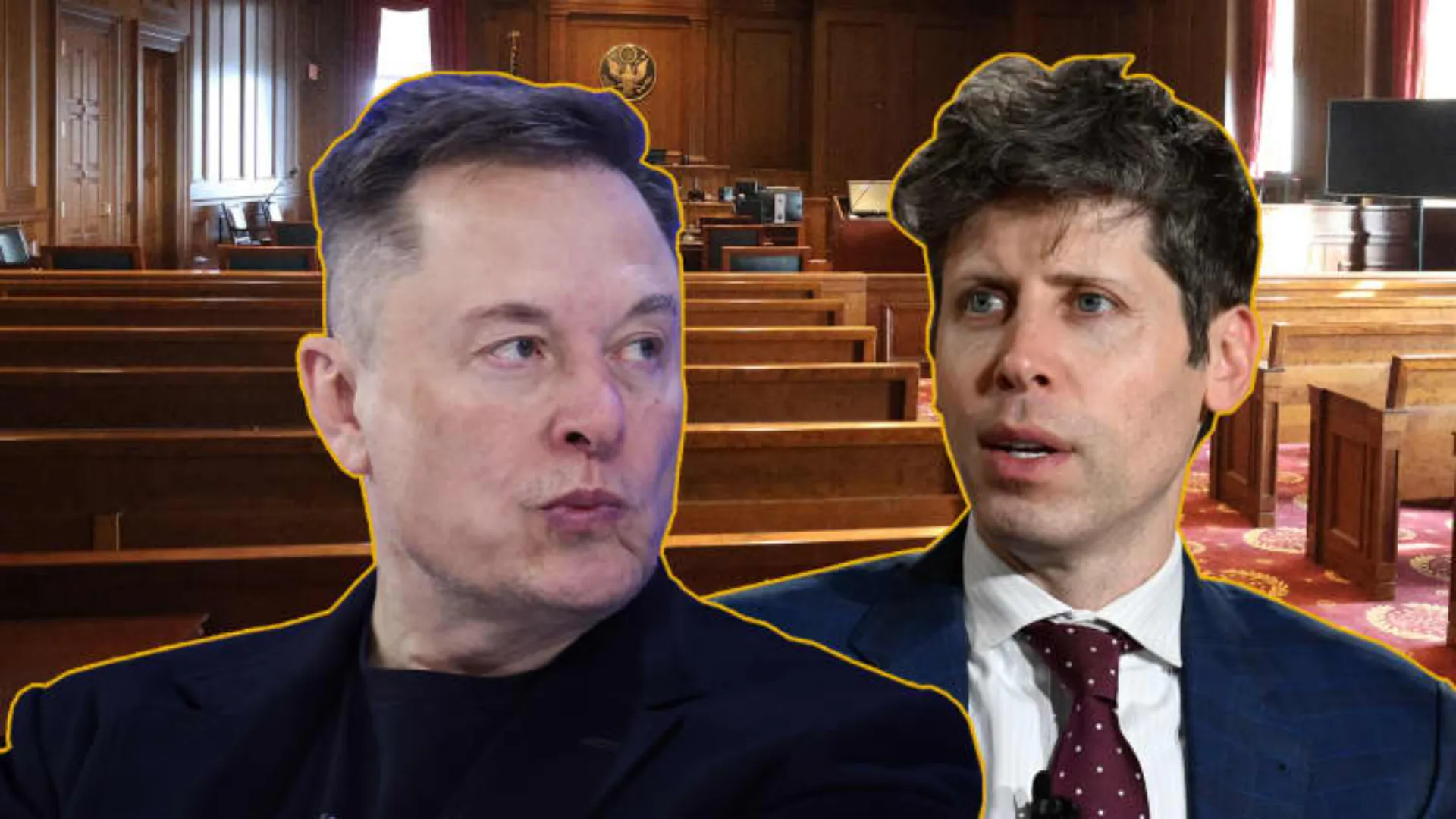
Satya Nadella’s Courtroom Appearance Places Microsoft at the Center of the Global Artificial Intelligence Power Battle The courtroom showdown between Elon Musk and OpenAI entered a dramatic new phase on Monday after Microsoft CEO Satya Nadella testified in federal court during the high profile Musk v. Altman trial in Oakland, California. The case has rapidly become one of the most closely watched legal confrontations in modern technology history, bringing together some of the most influential figures in artificial intelligence and corporate innovation.
Nadella’s appearance marked a major turning point because Microsoft has become deeply connected to OpenAI’s rise from a nonprofit research organization into one of the world’s most powerful and valuable artificial intelligence companies. Elon Musk argues that this transformation violated OpenAI’s founding mission and shifted the company away from the charitable principles upon which it was originally created.
Dressed in a navy suit with a blue tie, Nadella answered detailed questions regarding Microsoft’s relationship with OpenAI, the origins of their strategic partnership, and the massive financial investments that helped accelerate OpenAI’s rapid global expansion.
The testimony arrives at a time when the trial is exposing deeper tensions surrounding corporate influence, nonprofit governance, AI ethics, and the future control of advanced artificial intelligence systems.
Microsoft’s Multi Billion Dollar Investments in OpenAI Become Central Focus of the Trial
During his testimony, Nadella discussed Microsoft’s early involvement with OpenAI and explained how the partnership evolved into one of the most significant alliances in the technology industry.
Microsoft first invested one billion dollars into OpenAI in 2019. The company later expanded its financial commitment with additional investments in 2021 and 2023, eventually pushing Microsoft’s total backing beyond thirteen billion dollars. These investments allowed OpenAI to scale its research capabilities while relying heavily on Microsoft Azure cloud infrastructure.
The partnership transformed the global AI race after OpenAI launched ChatGPT in late 2022. The chatbot quickly became one of the fastest growing consumer technologies in history and triggered a wave of AI competition across Silicon Valley and the global tech industry.
Inside the courtroom, attorneys repeatedly highlighted Microsoft’s investments because Musk claims the scale of corporate involvement changed OpenAI from a mission driven nonprofit research organization into a commercially focused enterprise.
Nadella emphasized that Microsoft viewed the partnership as a strategic collaboration designed to accelerate responsible AI innovation while expanding technological capabilities for businesses and consumers worldwide.
Elon Musk Says OpenAI Abandoned Its Original Nonprofit Mission
Elon Musk, who co founded OpenAI in 2015 alongside Sam Altman, Greg Brockman, and several prominent AI researchers, has argued throughout the trial that the organization moved away from the ideals it originally promised to uphold.
According to Musk, OpenAI was created as a nonprofit initiative intended to ensure artificial intelligence would benefit humanity broadly rather than concentrate power inside a few major corporations. The organization was positioned as an alternative to traditional profit driven technology companies.
However, disagreements over leadership, commercialization, and organizational strategy eventually created divisions between Musk and OpenAI executives. Musk left the OpenAI board in 2018 after conflicts over the company’s direction.
During earlier testimony, Musk stated that Microsoft’s reported ten billion dollar investment in 2023 became the defining moment that convinced him OpenAI had abandoned its nonprofit identity.
He told the court that he believed OpenAI was allowing commercial priorities to dominate what had originally been presented as a charitable organization focused on public benefit.
Musk argued that Microsoft’s enormous financial influence fundamentally changed the motivations driving OpenAI’s decision making process.
The lawsuit accuses OpenAI executives and Microsoft of breaching charitable trust obligations and misleading stakeholders about the organization’s original mission.
Microsoft Faces Legal Pressure as Musk Expands Challenge Beyond OpenAI Leadership
Microsoft’s inclusion as a defendant has significantly increased the importance of the case because it directly places one of the world’s largest technology companies under legal scrutiny in the rapidly expanding artificial intelligence sector.
Musk alleges Microsoft played a key role in helping OpenAI transition away from its nonprofit principles. Legal analysts following the case say the outcome could establish important precedents regarding how nonprofit organizations operate when commercial interests become deeply involved.
After Musk departed from OpenAI’s board, the company established a for profit subsidiary structure that allowed it to attract large scale outside investment more easily. That decision became critical for funding the enormous computing infrastructure required for advanced AI development.
Since then, OpenAI’s valuation has surged to more than 850 billion dollars, making it one of the most valuable private technology companies in the world.
Court discussions also revealed that Microsoft currently holds approximately 27 percent of OpenAI’s for profit division, with that stake reportedly valued at around 135 billion dollars following OpenAI’s recapitalization efforts last year.
Those numbers have become central to Musk’s argument that financial incentives and corporate influence have overtaken the organization’s original humanitarian goals.
Artificial Intelligence Governance and Corporate Control Become Major Themes in the Trial
The legal battle now represents a much broader debate over the future governance of artificial intelligence and who should control technologies capable of reshaping economies, governments, and societies.
Musk repeatedly warned during testimony that advanced AI systems could become dangerous if concentrated within a small group of corporations driven primarily by commercial incentives.
He questioned whether companies such as Microsoft should hold significant influence over what he described as “digital superintelligence,” particularly when the technology may eventually impact nearly every aspect of human life.
At the same time, Microsoft and OpenAI continue to publicly defend their partnership and insist it accelerated AI innovation responsibly.
However, signs of tension between the two companies have emerged in recent months.
On the same day jury selection began in the Musk v. Altman trial, Microsoft and OpenAI announced a revised partnership agreement that grants OpenAI greater operational flexibility. The updated arrangement reportedly allows OpenAI to cap revenue sharing obligations and expand services beyond Microsoft’s cloud ecosystem.
Industry analysts viewed the timing of that announcement as highly significant because it coincided directly with the start of one of the most important legal battles in artificial intelligence history.
Former OpenAI Board Member Reveals Details About Sam Altman Leadership Crisis
Additional testimony during the trial also revisited the dramatic 2023 leadership crisis that temporarily removed Sam Altman as OpenAI CEO before he was reinstated only days later.
Former OpenAI board member Tasha McCauley testified through a videotaped deposition shown in court last week. She described conversations involving Nadella and OpenAI board members following Altman’s sudden dismissal.
According to McCauley, Nadella appeared interested in restoring stability and returning the organization to its earlier operational structure.
The testimony provided rare insight into Microsoft’s role during one of the most chaotic moments in OpenAI’s history.
The 2023 crisis sent shockwaves across Silicon Valley because it exposed internal governance tensions at one of the world’s most influential AI companies. Microsoft reportedly became heavily involved behind the scenes as pressure mounted to bring Altman back to leadership.
Ultimately, Altman returned as CEO within days, and OpenAI emerged with a stronger commercial structure and renewed momentum in the global AI race.
Why the Musk v. Altman Trial Could Reshape the Future of Artificial Intelligence
Technology experts increasingly view the Musk v. Altman trial as a defining moment for the future of artificial intelligence governance worldwide.
Beyond the courtroom allegations, the case raises major questions regarding how advanced AI systems should be funded, regulated, and controlled as their influence over society continues to expand rapidly.
Developing cutting edge artificial intelligence requires enormous financial resources, advanced computing infrastructure, and specialized engineering talent. Critics argue these realities inevitably push nonprofit research organizations toward partnerships with large corporations capable of supplying billions of dollars in funding.
Supporters of OpenAI maintain that the company’s current structure was necessary to remain competitive in the increasingly intense AI race against global rivals.
Musk and his legal team argue the opposite. They claim OpenAI used nonprofit credibility and public trust to build support before ultimately prioritizing corporate growth and investor interests.
Policy experts say the outcome of the case could influence future regulations governing artificial intelligence companies around the world.
The trial may also shape broader public debate over whether advanced AI systems should remain concentrated within a handful of powerful corporations or become more transparent and independently governed.
Microsoft and OpenAI Continue Defending Their Strategic Partnership Despite Growing Scrutiny
Despite mounting criticism and legal pressure, Microsoft and OpenAI continue defending their alliance as essential for advancing artificial intelligence safely and effectively.
Microsoft has integrated OpenAI technology across several major products and services, including Windows, Microsoft Office, GitHub, Azure, and enterprise AI solutions. The partnership has also strengthened Microsoft’s position in the global cloud computing market against rivals including Google and Amazon.
For OpenAI, Microsoft’s infrastructure and financial backing became critical for training increasingly advanced AI models that require extraordinary levels of computational power.
Legal observers note that Nadella’s testimony may carry substantial weight because he is widely viewed as one of the technology industry’s most influential and respected leaders.
As the courtroom proceedings continue, the trial is expected to attract even greater global attention from governments, investors, technology companies, and AI researchers.
What began as a dispute over OpenAI’s organizational structure has now evolved into a defining global debate over corporate power, nonprofit responsibility, and the future direction of artificial intelligence itself.
The final outcome could reshape not only OpenAI and Microsoft, but also the broader relationship between ethics, innovation, and corporate influence in the rapidly advancing AI era.
Frequently Asked Questions
Why did Microsoft CEO Satya Nadella testify in the Musk v. Altman trial?
Satya Nadella testified because Microsoft is a defendant in Elon Musk’s lawsuit against OpenAI. The case examines Microsoft’s investments and its role in OpenAI’s transition from a nonprofit research organization into a major commercial AI company.
What is Elon Musk accusing OpenAI and Microsoft of in the lawsuit?
Elon Musk alleges that OpenAI abandoned its original nonprofit mission and allowed commercial interests to dominate the organization. He also accuses Microsoft of aiding and abetting OpenAI’s alleged breach of charitable trust.
Why is Microsoft’s investment in OpenAI important in the case?
Microsoft’s multibillion dollar investments are central to the trial because Musk argues the financial partnership transformed OpenAI into a commercially driven business rather than a nonprofit focused on benefiting humanity.
How much has Microsoft invested in OpenAI?
Microsoft has invested more than 13 billion dollars into OpenAI through multiple funding rounds since 2019, including a major 10 billion dollar investment in 2023.
What role did Elon Musk play in OpenAI’s creation?
Elon Musk co founded OpenAI in 2015 alongside Sam Altman, Greg Brockman, and other researchers. He later left the organization’s board in 2018 after disagreements over the company’s direction.
Why did Elon Musk become concerned about OpenAI’s direction?
Musk said he became concerned after OpenAI accepted large scale corporate investment from Microsoft. He believed the organization was moving away from its original nonprofit goals and becoming too commercially focused.
What is the current relationship between Microsoft and OpenAI?
Microsoft and OpenAI remain strategic partners. Microsoft provides cloud infrastructure and financial support, while OpenAI’s AI technologies are integrated into several Microsoft products and services.
How valuable is OpenAI today according to the trial discussions?
Court discussions revealed that OpenAI’s valuation has risen to more than 850 billion dollars, making it one of the world’s most valuable private technology companies.
What concerns did Musk raise about artificial intelligence control?
Musk warned that advanced artificial intelligence systems could become dangerous if controlled by a small number of powerful corporations driven primarily by financial interests.
How does the trial affect the broader artificial intelligence industry?
The trial could influence future AI governance, nonprofit oversight, corporate partnerships, and regulations surrounding advanced artificial intelligence development worldwide.
What happened during OpenAI’s 2023 leadership crisis?
In 2023, OpenAI CEO Sam Altman was briefly removed from his position before being reinstated days later. The event exposed internal governance tensions within the company.
Why is the Musk v. Altman case receiving global attention?
The case involves some of the world’s most influential technology leaders and raises major questions about AI ethics, corporate power, nonprofit responsibility, and the future control of advanced artificial intelligence.
Edit Profile
Help improve @KR

Was this page helpful to you?
Contact Khogendra Rupini
Are you looking for an experienced developer to bring your website to life, tackle technical challenges, fix bugs, or enhance functionality? Look no further.
I specialize in building professional, high-performing, and user-friendly websites designed to meet your unique needs. Whether it's creating custom JavaScript components, solving complex JS problems, or designing responsive layouts that look stunning on both small screens and desktops, I can collaborate with you.
Create something exceptional with us. Contact us today
Open for Collaboration
If you're looking to collaborate, I'm available for a variety of professional services, including -
- Website Design & Development
- Advertisement & Promotion Setup
- Hosting Configuration & Deployment
- Front-end & Back-end Code Implementation
- Code Testing & Optimization
- Cybersecurity Solutions & Threat Prevention
- Website Scanning & Malware Removal
- Hacked Website Recovery
- PHP & MySQL Development
- Python Programming
- Web Content Writing
- Protection Against Hacking Attempts