Berkshire Hathaway Bets Big on Google, Delta and Macy's as New CEO Greg Abel Rewrites the Investment Playbook Warren Buffett Built Over Decades
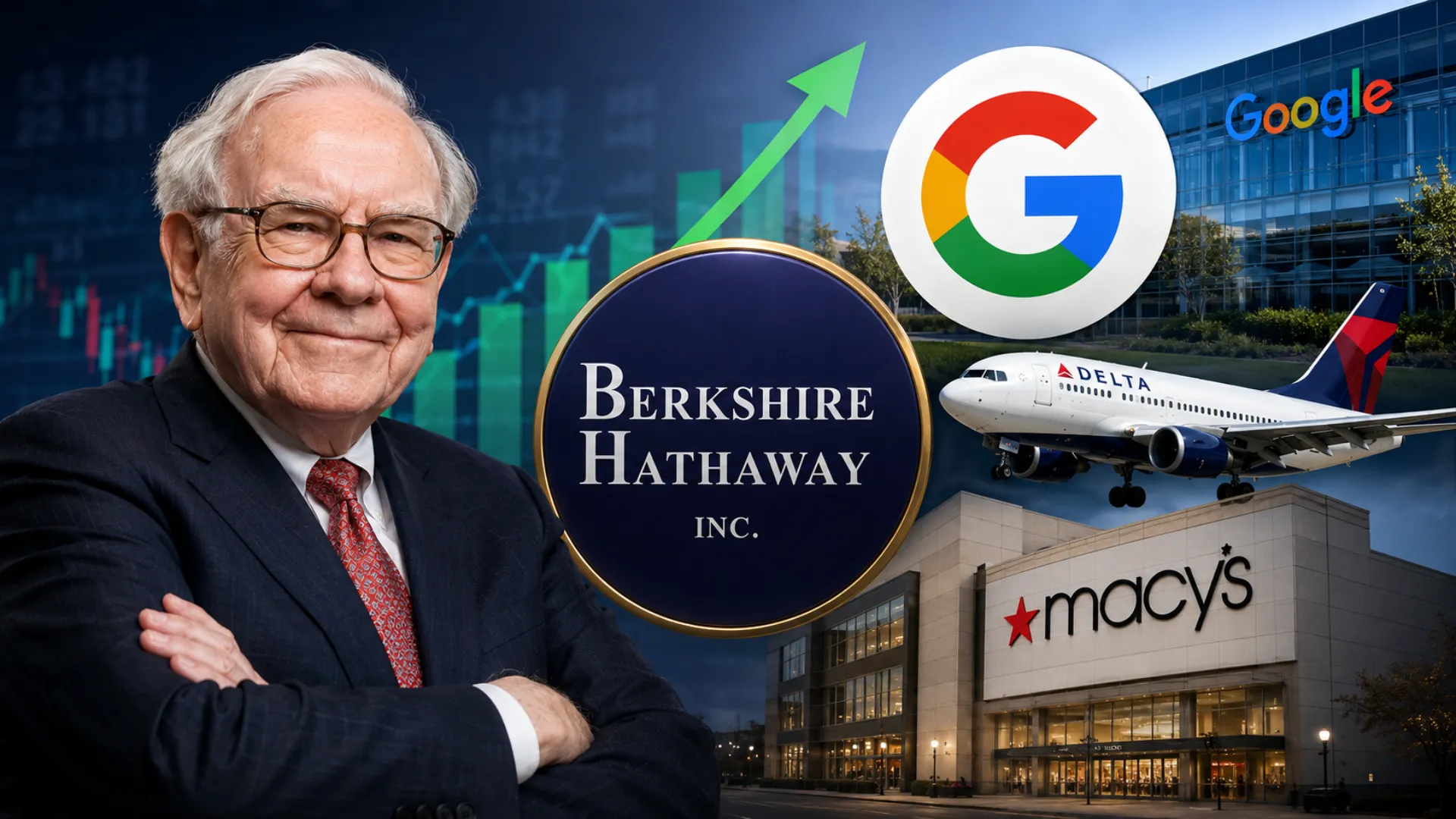
For the first time in the company's modern history, Berkshire Hathaway is stepping firmly into territory its legendary founder once famously avoided. Under the leadership of newly appointed Chief Executive Officer Greg Abel, the Omaha, Nebraska based conglomerate has made a series of bold and consequential investment decisions in the opening quarter of 2026, signaling that one of the world's most closely watched financial institutions is ready to evolve.
Berkshire more than tripled its stake in Alphabet Inc., the parent company of Google, acquired over 2.6 billion dollars worth of Delta Air Lines stock, and established a fresh position in iconic American department store chain Macy's. The moves were disclosed in a new quarterly filing with the United States Securities and Exchange Commission and immediately captured the attention of global investors, analysts, and financial media alike.
A Sweeping Shift in Technology Investment Strategy That Warren Buffett Would Never Have Approved
Among all the moves Berkshire made in the first quarter of 2026, none carries more symbolic weight than the dramatic expansion of its Alphabet stake. By the end of March, Berkshire held nearly 58 million shares of Alphabet, valued at close to 17 billion dollars. Just three months earlier, at the end of December 2025, the company owned only 17.8 million Alphabet shares worth approximately 5.6 billion dollars.
That is a more than threefold increase in a single quarter, representing one of the fastest and most significant portfolio reallocations Berkshire has made in recent memory.
The decision stands in sharp contrast to the investment philosophy Warren Buffett spent a lifetime articulating. Buffett was famously reluctant to invest in technology companies, consistently stating that he did not understand the sector well enough to predict which businesses would maintain a durable competitive advantage over the long term. He believed that technology moved too fast, that moats eroded too quickly, and that the future was simply too difficult to read with confidence.
There was, of course, the notable exception of Apple. In what became one of the most profitable investments in Berkshire's history, Buffett eventually committed massively to Apple Inc. after recognizing that consumers had developed an almost unshakeable loyalty to the company's iPhone ecosystem. That investment ultimately rewarded Berkshire shareholders with extraordinary returns and stands as Buffett's most celebrated late career pivot.
Greg Abel, it appears, is willing to go further and move faster in this direction. His expansion of the Alphabet position suggests a conviction that Google's parent, with its dominance in search advertising, cloud computing, artificial intelligence development, and a sprawling portfolio of digital services, represents the kind of enduring business franchise that Berkshire has always sought. Alphabet's stock price barely moved following Berkshire's disclosure, indicating that markets had already priced in the company's fundamental strength rather than reacting to surprise.
A Return to the Skies as Berkshire Loads Up on Delta Air Lines Stock in a Major Way
The second major move of the quarter was Berkshire's purchase of approximately 40 million shares of Delta Air Lines, bringing the total value of the position to more than 2.6 billion dollars. This investment is particularly striking given Berkshire's complicated and well documented history with the airline industry.
Warren Buffett's relationship with airline stocks was one of the most publicly discussed and sometimes painful chapters of his investment career. He invested heavily in airline companies on more than one occasion, only to eventually exit those positions at a loss or with deep frustration. His most memorable commentary on the sector came during a 2008 shareholder letter in which he suggested, with characteristic wit, that if a farsighted capitalist had been present at Kitty Hawk when the Wright brothers first took flight, they would have done future investors a tremendous favor by shooting Orville Wright out of the sky. The implication was clear: the airline industry had structurally struggled to generate consistent, durable profits ever since the dawn of commercial aviation.
Then came the COVID 19 pandemic. In 2020, Berkshire sold its entire airline portfolio at significant losses as the industry faced an existential shutdown of global travel demand. It seemed, at the time, like a definitive conclusion to Berkshire's involvement with the sector.
But Abel's large and deliberate purchase of Delta shares suggests a different read on the current environment. Delta has consistently distinguished itself from its peers through premium cabin revenue growth, a loyal frequent flyer program, a strong balance sheet relative to the sector, and what analysts have described as superior operational execution. Abel appears to be making the case that Delta, in particular, represents a structurally different and more defensible business than the broader airline industry that Buffett once condemned. Whether that thesis proves correct over the long term will be one of the defining early tests of Abel's tenure as an investor.
Delta's stock price rose following Berkshire's disclosure, a reaction that underscored how closely the market still watches every move the company makes, even as it adjusts to a new era of leadership.
A Small but Meaningful Bet on Macy's as American Retail Faces Its Most Challenging Decade
The third new investment disclosed in the quarterly filing was a modest stake in Macy's, the storied American department store chain. At the end of March, Berkshire's position in Macy's was valued at nearly 55 million dollars, making it a relatively small holding compared to the Alphabet and Delta positions but symbolically significant nonetheless.
Macy's has been navigating one of the most difficult periods in the history of American brick and mortar retail. The rise of e-commerce, shifting consumer spending habits, the lingering effects of pandemic era disruptions, and growing competition from fast fashion and discount retailers have all put sustained pressure on traditional department store operators. Macy's has responded with a restructuring effort that includes store closures, a renewed focus on its most productive locations, and investment in its luxury and digital channels.
Whether Berkshire views this as a turnaround story, a deep value opportunity, or a calculated smaller position to monitor the company more closely before committing further capital remains unclear. Berkshire as a matter of policy does not comment publicly on its individual investment decisions from quarter to quarter, preferring instead to let its filings speak for themselves. Macy's stock jumped following the disclosure, as investors interpreted Berkshire's involvement as an implicit endorsement of the company's direction under its current management.
Berkshire Exits Several Major Positions as Portfolio Undergoes Significant Restructuring
While the new investments attracted much of the attention, Berkshire also disclosed meaningful exits from several prominent holdings during the first quarter of 2026. The company sold out of or reduced positions in Visa, Mastercard, Domino's Pizza, Amazon, and UnitedHealth Group.
These disposals are likely connected to the departure late last year of Todd Combs, one of the two investment managers Warren Buffett had brought on to help run portions of the equity portfolio. Combs and Ted Weschler had been Buffett's chosen successors for the investment management function, each running a substantial portion of Berkshire's holdings. With Combs now gone, a significant reorganization of the portfolio was perhaps inevitable, reflecting Abel's own priorities and preferences as well as the consolidation of investment authority at the top of the organization.
The sold positions were by no means small. Visa and Mastercard are among the most profitable and widely respected financial businesses in the world. Amazon is a dominant force across retail, cloud computing, and logistics. UnitedHealth Group has long been considered one of the most capable operators in the managed care industry. The decision to exit these names points to a deliberate and confident reshaping of Berkshire's investment identity under new leadership.
The World Watches Greg Abel Establish His Legacy in the Shadow of a Living Legend
Greg Abel formally took over as Chief Executive Officer of Berkshire Hathaway from Warren Buffett at the start of 2026. It is one of the most consequential leadership transitions in modern corporate history. Buffett, now in his mid nineties, remains present in an advisory and board capacity, but has stepped back from the day to day management of the company he built into a global institution over more than five decades.
Abel's first shareholder meeting as CEO, held earlier in May 2026, drew enormous attention as investors, analysts, and admirers of Buffett gathered in Omaha to assess the new leader. In a striking visual moment, Buffett himself sat on the floor with the rest of the board of directors rather than at the main table, symbolically and physically stepping aside to allow Abel to take center stage.
Abel spent the bulk of his career at Berkshire operating its massive portfolio of energy and utility businesses. He is widely respected as an exceptional operator but has a shorter track record as a stock picker and capital allocator in the public equity markets. Many longtime Berkshire investors who built their portfolios by mirroring Buffett's moves are now watching carefully to see whether Abel develops the same kind of conviction and long term accuracy that made Buffett's investment decisions so influential and so widely followed for so many decades.
Berkshire Hathaway's portfolio of operating businesses remains as formidable as ever. The company owns Geico, one of the largest auto insurers in the United States. It owns BNSF Railway, a critical piece of American freight infrastructure. It owns Precision Castparts, one of the world's foremost aerospace and industrial manufacturers. And it owns a diverse collection of retail and consumer brands including See's Candy, Dairy Queen, and Helzberg Diamonds, among many others. The total stock portfolio stands at approximately 280 billion dollars.
The decisions Greg Abel makes in these early quarters will form the foundation of his legacy. The moves disclosed this week suggest a leader who is willing to act boldly, think independently, and chart a course that is informed by but not bound to the playbook of his predecessor. Whether the world's investing community follows him with the same devotion it showed Warren Buffett is a question only time and results will answer.
Frequently Asked Questions
Who is the new CEO of Berkshire Hathaway and when did he take over?
Greg Abel became the new Chief Executive Officer of Berkshire Hathaway at the start of 2026, taking over from legendary investor Warren Buffett who led the company for more than five decades.
How much did Berkshire Hathaway increase its stake in Alphabet under Greg Abel?
Berkshire more than tripled its Alphabet investment in a single quarter. By end of March 2026, it held nearly 58 million shares worth close to 17 billion dollars, up from just 17.8 million shares worth 5.6 billion dollars three months earlier.
Why did Berkshire Hathaway invest so heavily in Alphabet when Warren Buffett avoided tech stocks?
Warren Buffett historically avoided technology companies, saying he could not predict long-term winners in the sector. Greg Abel appears more comfortable with tech investments, seeing Alphabet's dominance in search, cloud computing, and artificial intelligence as a durable and defensible business franchise worth a major commitment.
How much Delta Air Lines stock did Berkshire Hathaway buy in early 2026?
Berkshire acquired approximately 40 million shares of Delta Air Lines during the first three months of 2026, bringing the total value of the position to more than 2.6 billion dollars.
Why is Berkshire investing in airlines again after Warren Buffett famously sold airline stocks at a loss?
Buffett sold Berkshire's entire airline portfolio during the COVID-19 pandemic at significant losses and was long critical of the airline industry's ability to generate durable profits. Abel's bet on Delta specifically suggests a belief that Delta is structurally stronger than the broader sector, supported by its premium revenues, strong loyalty program, and consistent operational performance.
What is Berkshire Hathaway's new investment in Macy's and why does it matter?
Berkshire established a new stake in Macy's valued at nearly 55 million dollars by the end of March 2026. While relatively small compared to other positions, the investment signals potential confidence in Macy's ongoing restructuring strategy at a time when traditional American retail faces intense pressure from e-commerce and shifting consumer habits.
Which stocks did Berkshire Hathaway sell or exit in the first quarter of 2026?
Berkshire sold or significantly reduced positions in Visa, Mastercard, Domino's Pizza, Amazon, and UnitedHealth Group. These exits are widely linked to the departure of Todd Combs, one of the two investment managers Warren Buffett had appointed to help manage the portfolio.
Who is Todd Combs and why does his departure matter for Berkshire's portfolio?
Todd Combs was one of two investment managers, alongside Ted Weschler, that Warren Buffett hired to help oversee portions of Berkshire's massive equity portfolio. His departure late in 2025 triggered a significant restructuring of the holdings, reflecting Greg Abel's own investment priorities and a consolidation of decision-making authority at the top of the organization.
What is the total size of Berkshire Hathaway's stock portfolio today?
Berkshire Hathaway's publicly traded stock portfolio currently stands at approximately 280 billion dollars, making it one of the largest and most closely tracked equity portfolios in the entire world.
What other major businesses does Berkshire Hathaway own beyond its stock portfolio?
Berkshire owns a vast collection of operating businesses including Geico insurance, BNSF Railway, aerospace manufacturer Precision Castparts, and well known consumer brands such as See's Candy, Dairy Queen, and Helzberg Diamonds, among dozens of other companies across insurance, manufacturing, retail, and energy sectors.
How did markets react to Berkshire's new investment disclosures?
Delta Air Lines and Macy's stock prices both rose following Berkshire's SEC filing disclosure, reflecting investor enthusiasm about the conglomerate's endorsement of those companies. Alphabet's share price showed little movement, suggesting the market had already priced in the company's fundamental strength well before the announcement.
Will investors continue to follow Berkshire Hathaway's portfolio moves as closely as they followed Warren Buffett's decisions?
That remains uncertain. Many investors built strategies around copying Buffett's moves because of his extraordinary five decade track record. Greg Abel's primary background is in operating large businesses rather than picking public equities, so the investment community is expected to watch his early decisions carefully before extending the same level of confidence and followership that Buffett commanded.
Edit Profile
Help improve @KR
Was this page helpful to you?
Contact Khogendra Rupini
Are you looking for an experienced developer to bring your website to life, tackle technical challenges, fix bugs, or enhance functionality? Look no further.
I specialize in building professional, high-performing, and user-friendly websites designed to meet your unique needs. Whether it's creating custom JavaScript components, solving complex JS problems, or designing responsive layouts that look stunning on both small screens and desktops, I can collaborate with you.
Create something exceptional with us. Contact us today
Open for Collaboration
If you're looking to collaborate, I'm available for a variety of professional services, including -
- Website Design & Development
- Advertisement & Promotion Setup
- Hosting Configuration & Deployment
- Front-end & Back-end Code Implementation
- Code Testing & Optimization
- Cybersecurity Solutions & Threat Prevention
- Website Scanning & Malware Removal
- Hacked Website Recovery
- PHP & MySQL Development
- Python Programming
- Web Content Writing
- Protection Against Hacking Attempts