Greg Brockman Takes Permanent Control of OpenAI's Product Strategy as Leadership Reshuffle Signals a Bold Push Toward the Agentic Future of Artificial Intelligence
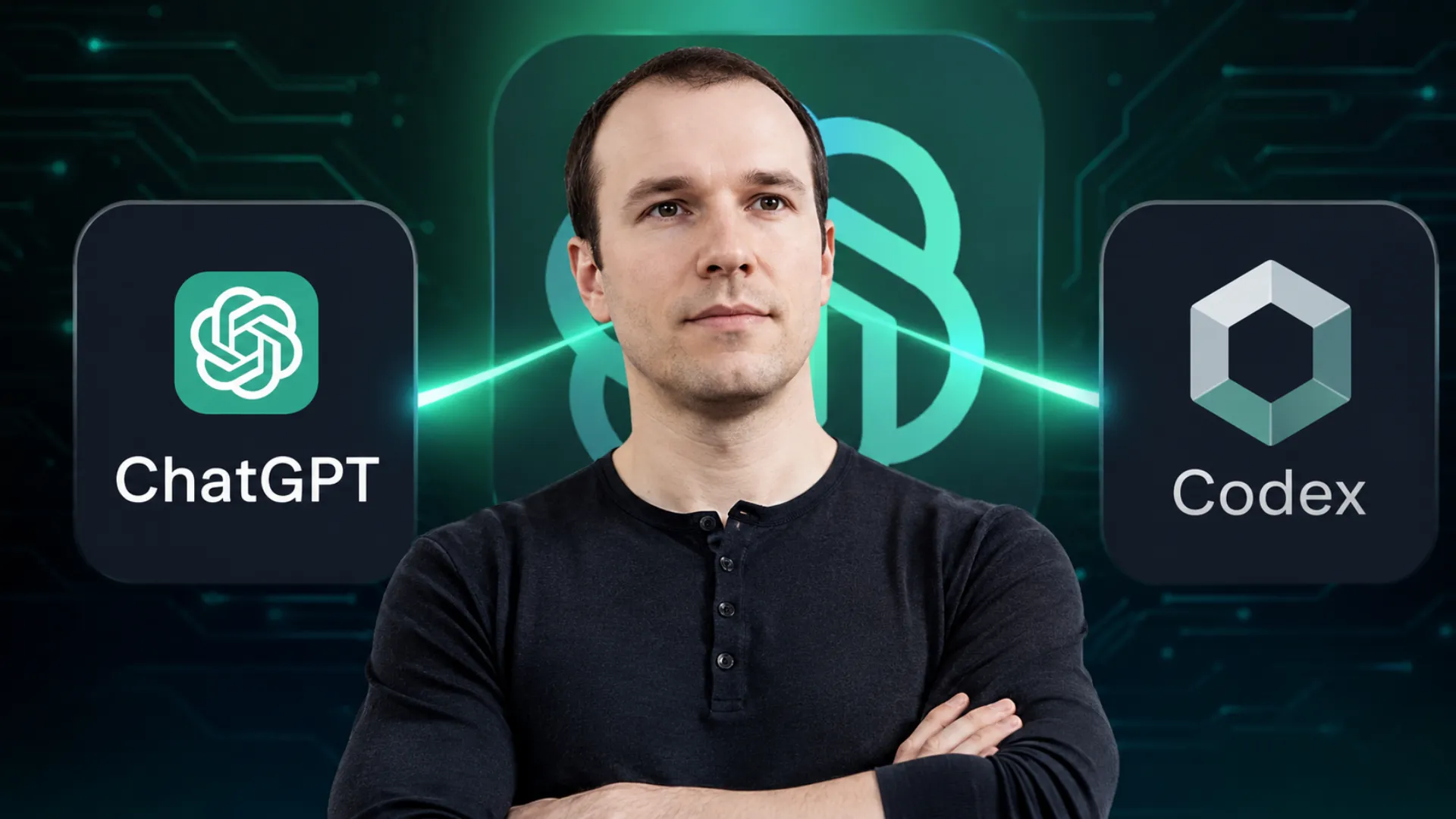
OpenAI, the San Francisco based artificial intelligence company behind ChatGPT, is undergoing one of its most significant internal restructurings in recent memory. On Friday, May 16, 2026, the company officially confirmed that Greg Brockman, its co-founder and president, has been permanently placed at the helm of its product strategy. The announcement, which came through an internal memo reviewed by Wired, marks a decisive shift in how the world's most closely watched AI company plans to operate, compete, and grow as the race toward artificial general intelligence intensifies on a global scale.
The confirmation formalises what had already been an informal arrangement. Brockman had been overseeing OpenAI's product operations on an interim basis following the unexpected medical leave of absence taken by Fidji Simo, the company's CEO of AGI Deployment. Simo, who had been a central figure in OpenAI's strategy to commercialise its most powerful AI systems, stepped back from her responsibilities just weeks ago. Despite her absence, she is reported to have worked closely with Brockman to finalise the outlines of the new structure before stepping away.
Now that the transition has been made permanent, Brockman holds a scope of authority that effectively unifies OpenAI's AI infrastructure oversight with its consumer and enterprise product direction. It is an unusually wide mandate, and one that insiders and industry observers alike believe is designed to cut through the organisational complexity that has built up as OpenAI has rapidly expanded its product portfolio over the past two years.
The Strategic Vision Behind the Consolidation
At the core of this reshuffle is a strategic decision to stop treating OpenAI's major products as separate entities and instead build them into one unified experience. According to Brockman's memo to staff, the company's various tools are "naturally beginning to overlap," and that convergence has created the right conditions to establish a single, focused product team.
The two most prominent products earmarked for this merger are ChatGPT, the conversational AI assistant that has become a cultural phenomenon with approximately 900 million weekly active users, and Codex, the company's AI coding agent. By bringing these two systems together alongside OpenAI's developer API, the company hopes to create a seamless ecosystem of AI agents, software capable of performing complex digital tasks on users' behalf with minimal human input.
Brockman articulated the vision directly in the memo, stating that the company is consolidating its product efforts to execute with maximum focus toward the agentic future, with the explicit goal of winning across both consumer and enterprise markets. The language is unambiguous. OpenAI is no longer content to offer a collection of capable tools. It wants to own the next era of AI deployment, and it believes a unified product structure is the operational foundation required to get there.
Key Executives Step Into Expanded Roles
The restructuring is not solely about Brockman's elevation. Several senior leaders are also moving into significantly larger roles as part of the reorganisation.
Thibault Sottiaux, who previously led the Codex project, will now head the core product platform spanning all of OpenAI's consumer and business surfaces. His promotion is a strong signal of how central the coding agent has become to OpenAI's broader vision. Codex is no longer just a developer tool. It is increasingly being positioned as a foundational layer for the agentic applications OpenAI intends to build and scale.
Nick Turley, the executive who is widely credited with driving ChatGPT to its extraordinary user base of 900 million weekly active users, is transitioning into a new role focused on overhauling OpenAI's enterprise product offerings. This appointment reflects a recognition that while consumer growth has been remarkable, the enterprise segment represents the most sustainable and lucrative revenue path forward, particularly as OpenAI prepares for the scrutiny that comes with being a publicly traded company.
A Company Navigating Turbulence from Within
This leadership reshuffle arrives against a backdrop of notable internal turbulence at OpenAI. Over the past several weeks, multiple senior executives have exited the company entirely. The heads of the Sora video generation project, one of OpenAI's most publicly celebrated research initiatives, departed last month. The leader of OpenAI's AI workspace designed specifically for scientific research also left around the same time.
These departures, when viewed alongside Simo's medical leave and now Brockman's formalised appointment, paint a picture of a company in genuine transition. OpenAI has grown at a speed that few organisations in history have managed, and with that growth has come the inevitable challenge of maintaining coherent leadership, cultural alignment, and strategic clarity. The current restructuring appears to be an attempt to reestablish that clarity at the highest levels of the organisation.
It is worth noting that Brockman's return to operational prominence is itself a notable development. He had previously stepped back from day to day responsibilities at OpenAI in late 2024 to take personal time away from the company. His reengagement, first in an interim capacity and now permanently, suggests that OpenAI's leadership views this moment as critical enough to call upon its most foundational figures.
The Competitive Pressure Driving Urgency
The timing of this reorganisation cannot be fully understood without acknowledging the extraordinary competitive pressures OpenAI faces. Anthropic, the AI safety focused company founded by former OpenAI researchers, has been gaining significant ground with its Claude family of models, which have earned strong reviews for their reasoning capabilities, safety profile, and enterprise readiness. Google, meanwhile, continues to invest heavily in its Gemini AI platform, deploying it across its vast ecosystem of consumer and business products in ways that give it structural advantages OpenAI cannot easily replicate.
In this environment, operational efficiency and product coherence are not just desirable qualities. They are competitive necessities. Every month that OpenAI spends navigating internal fragmentation is a month that rivals can use to close the gap or extend their own leads in specific market segments. By unifying its product teams under Brockman's direction, OpenAI is signalling that it understands this urgency and is acting on it.
The IPO Shadow Looming Over Every Decision
Perhaps the most consequential context surrounding this leadership change is OpenAI's reported progress toward an Initial Public Offering. The company is widely believed to be preparing for a public market listing later in 2026, a move that would represent one of the most closely watched IPOs in technology history given OpenAI's valuation trajectory and its central role in the global AI conversation.
A company heading toward an IPO must present investors with a coherent, scalable, and efficiently structured business. Fragmented product lines, leadership instability, and unclear strategic direction are precisely the kinds of stories that make institutional investors nervous. The current restructuring, viewed through this lens, can also be understood as a tidying up exercise, an effort to present OpenAI to potential public market shareholders as an organisation with unified leadership, a clear roadmap, and the operational discipline to execute on it.
Streamlining the product lineup around the concept of AI agents is also strategically shrewd for investor relations purposes. The idea of AI systems that can autonomously complete tasks across the digital world is both technically compelling and commercially intuitive. It is a vision investors can understand, believe in, and assign significant long term value to in a way that a sprawling collection of separate tools might not easily communicate.
What This Means for Users and Developers
For the hundreds of millions of people who use ChatGPT and the growing community of developers building on OpenAI's API, this restructuring may eventually manifest in tangible ways. A merged product experience between ChatGPT and Codex could mean a single interface where users move fluidly between conversation, code generation, and autonomous task execution without switching between applications.
For enterprise clients, the revamped focus under Nick Turley suggests that OpenAI is serious about deepening its business product offerings beyond what ChatGPT Enterprise currently provides. Larger organisations have specific needs around data security, workflow integration, compliance, and customisation that consumer grade AI tools often fall short of delivering. A dedicated enterprise product effort signals that OpenAI wants to compete more aggressively in this space and not cede it to rivals who have been building enterprise specific features more methodically.
The Road Ahead for Greg Brockman and OpenAI
Greg Brockman now carries one of the heaviest mandates in the technology industry. He must simultaneously manage OpenAI's AI infrastructure, unify its product organisation, maintain the trust of a workforce that has watched considerable leadership turnover, and help position the company for a public market debut that will invite a level of external scrutiny that even OpenAI has not previously experienced.
Whether this restructuring ultimately delivers the focused execution Brockman has promised in his memo to staff will depend on many factors, including how well the internal transitions land, how quickly the merged product vision becomes tangible for users, and whether OpenAI can retain the senior talent it still has in a market where competing offers are constant and generous.
What is clear is that OpenAI is making a deliberate bet. The agentic future Brockman describes in his memo is not a distant abstraction. It is the immediate commercial battlefield on which the next phase of the global AI competition will be decided. And for the first time in months, OpenAI is entering that competition with a consolidated command structure, a unified product direction, and one of its founding architects back at the wheel.
Frequently Asked Questions
Who is Greg Brockman and why is his new role at OpenAI significant?
Greg Brockman is the co-founder and president of OpenAI. His permanent appointment as head of product strategy is significant because it consolidates both AI infrastructure oversight and product direction under one leader, giving OpenAI a unified command structure at a critical moment in the global AI race.
Why did OpenAI restructure its leadership in May 2026?
OpenAI restructured to consolidate its product efforts under a single team, simplify its product lineup, and sharpen its focus on the agentic AI future. The change was also triggered by the medical leave of Fidji Simo, CEO of AGI Deployment, which accelerated the need for a permanent leadership arrangement.
What is the planned merger between ChatGPT and Codex?
OpenAI plans to merge ChatGPT, its widely used conversational AI, with Codex, its AI coding agent, into a single unified product experience. The combined platform, alongside the developer API, is designed to power AI agents capable of performing complex digital tasks autonomously on behalf of users.
What happened to Fidji Simo at OpenAI?
Fidji Simo, who served as OpenAI's CEO of AGI Deployment, went on a medical leave of absence weeks before this restructuring was announced. Despite her absence, she reportedly collaborated with Greg Brockman to help finalise the new organisational strategy before stepping back from her responsibilities.
What new roles are Nick Turley and Thibault Sottiaux taking at OpenAI?
Thibault Sottiaux, formerly head of the Codex project, will now lead the core product platform across all consumer and business surfaces. Nick Turley, credited with growing ChatGPT to 900 million weekly active users, is transitioning to a new role focused on rebuilding and expanding OpenAI's enterprise product offerings.
How many weekly active users does ChatGPT currently have?
According to OpenAI, ChatGPT currently has approximately 900 million weekly active users, a milestone largely credited to Nick Turley, who led the product's growth and is now moving into a new enterprise focused role within the company.
What executive departures has OpenAI experienced recently?
In the weeks leading up to this restructuring, OpenAI saw several senior leaders exit the company, including the heads of the Sora video generation project and the AI workspace built for scientific research. These departures, combined with Fidji Simo's medical leave, contributed to the urgency of the current leadership overhaul.
Is OpenAI planning an Initial Public Offering in 2026?
Yes. OpenAI is reportedly preparing for a potential IPO later in 2026. The current product consolidation and leadership restructuring are widely seen as part of the company's effort to present a cleaner, more unified business structure to prospective public market investors.
How does this OpenAI restructuring relate to competition with Anthropic and Google?
OpenAI faces intensifying competition from Anthropic, known for its Claude AI models, and Google, which continues to expand its Gemini platform. The restructuring is aimed at improving operational efficiency and product coherence so OpenAI can compete more effectively across both consumer and enterprise AI markets.
What does the term agentic AI mean in the context of OpenAI's new strategy?
Agentic AI refers to artificial intelligence systems that can autonomously plan and complete complex digital tasks on a user's behalf without constant human input. OpenAI's new unified product strategy is built around developing and scaling these types of AI agents as the next major frontier in AI deployment.
How will the OpenAI restructuring affect everyday ChatGPT users?
In practical terms, users may eventually experience a merged interface where conversation, code generation, and autonomous task execution happen within a single seamless product rather than across separate tools. The consolidation is designed to make AI assistance more fluid and capable for everyday use.
Why is Greg Brockman's return to an operational role at OpenAI notable?
Brockman had previously stepped back from day to day responsibilities at OpenAI in late 2024 to take personal time away. His return first in an interim capacity and now permanently signals that OpenAI's leadership considers this a pivotal enough moment to bring one of its founding figures back into direct operational control.
Edit Profile
Help improve @KR
Was this page helpful to you?
Contact Khogendra Rupini
Are you looking for an experienced developer to bring your website to life, tackle technical challenges, fix bugs, or enhance functionality? Look no further.
I specialize in building professional, high-performing, and user-friendly websites designed to meet your unique needs. Whether it's creating custom JavaScript components, solving complex JS problems, or designing responsive layouts that look stunning on both small screens and desktops, I can collaborate with you.
Create something exceptional with us. Contact us today
Open for Collaboration
If you're looking to collaborate, I'm available for a variety of professional services, including -
- Website Design & Development
- Advertisement & Promotion Setup
- Hosting Configuration & Deployment
- Front-end & Back-end Code Implementation
- Code Testing & Optimization
- Cybersecurity Solutions & Threat Prevention
- Website Scanning & Malware Removal
- Hacked Website Recovery
- PHP & MySQL Development
- Python Programming
- Web Content Writing
- Protection Against Hacking Attempts