
Trump Secures Historic Agricultural Trade Deal With China Worth $17 Billion Annually as Beijing Reopens Market Access for American Beef and Poultry After Years of Trade War Damage
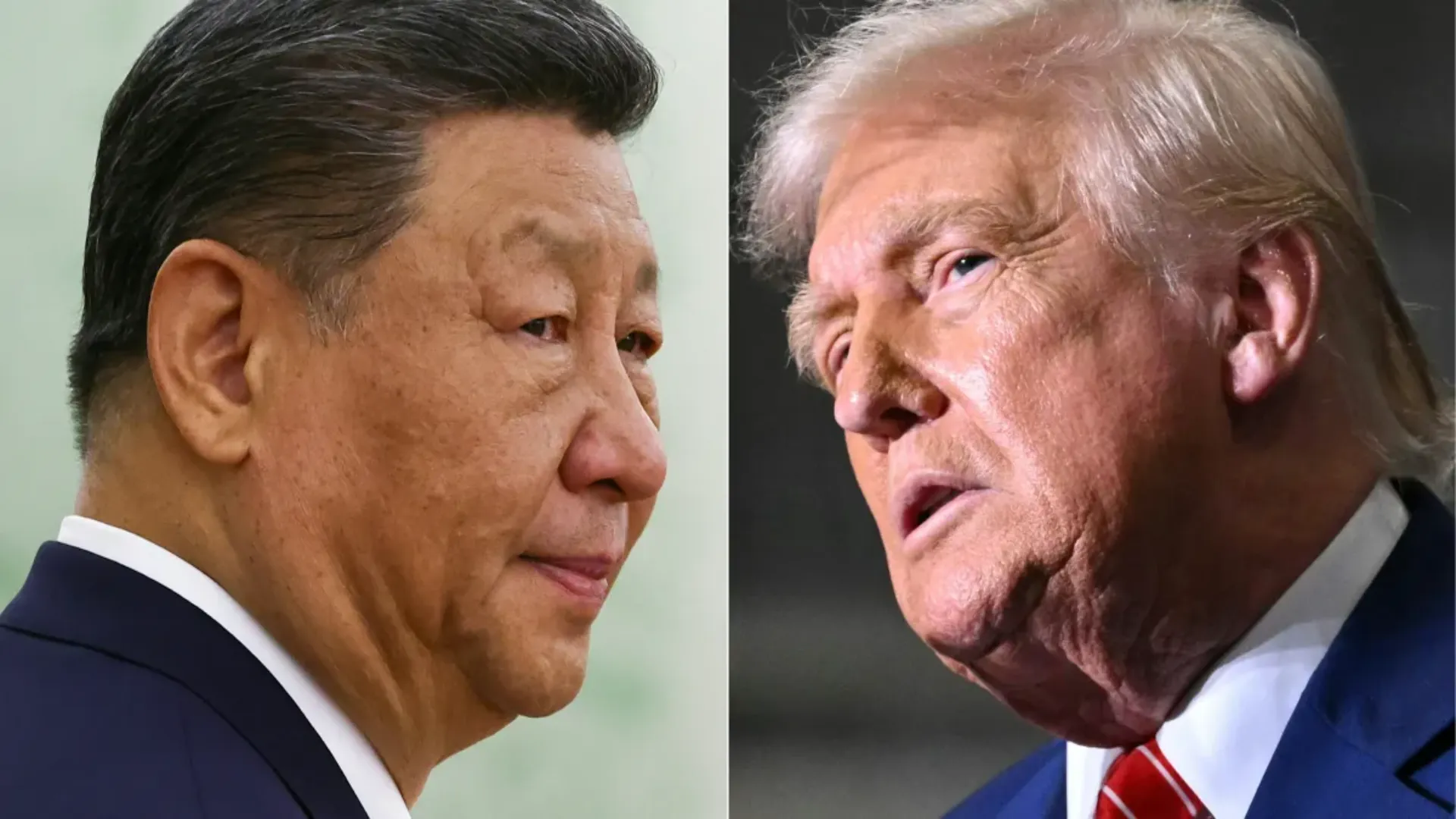
The United States and China have reached a landmark agricultural trade agreement that commits Beijing to purchasing American farm products at an annualised rate of $17 billion per year through 2026, 2027, and 2028, the White House announced on Sunday, marking one of the most significant breakthroughs in bilateral trade relations in recent years. The deal, announced just two days after President Donald Trump returned from a high stakes summit with Chinese President Xi Jinping in Beijing, signals a meaningful thaw in the economic tensions that have punished American farmers since the trade war erupted more than a year ago.
The agreement covers a wide range of agricultural products and restores critical market access that had been systematically dismantled as relations between the world's two largest economies deteriorated sharply. For farmers across the American heartland who watched their most reliable export market vanish almost overnight, the announcement carries both financial relief and cautious optimism about what lies ahead.
China Agrees to Reopen Doors for American Beef After Letting Hundreds of Export Licences Quietly Expire
One of the most substantive components of the new deal involves the restoration of beef export access for hundreds of American processing facilities, including major industry players such as Tyson and Cargill. China had allowed licences for hundreds of US beef plants to expire last year, delivering a severe blow to American cattle producers who had spent years building relationships and supply chains in the Chinese market.
The consequences were stark. According to data from the United States Department of Agriculture, the import value of American beef entering China fell to less than $500 million in 2025. That number is a painful contrast to the peak of $2.14 billion recorded in 2022, representing a collapse of more than 75 percent in just three years. The new agreement will allow these facilities to resume exports, though analysts and industry leaders are watching closely to determine exactly how much beef American producers will ultimately be able to sell into the Chinese market once operations resume.
Brian Sikes, the chief executive of agricultural giant Cargill, was among the US business leaders who travelled to Beijing alongside Trump for the summit last week. His presence alongside Xi Jinping signalled the seriousness with which Washington is treating the restoration of commercial ties, particularly in the agricultural sector where the damage from the trade war has been the most visible and the most personally felt by farming families across the country.
Poultry Exports Set for Revival as USDA Designation of Bird Flu Free States Becomes the Key Condition
Beyond beef, the agreement also charts a path forward for American poultry producers who saw their China business shrink dramatically. The White House confirmed that China will resume imports of poultry from US states that the Department of Agriculture officially designates as free of avian influenza, commonly known as bird flu. This condition introduces a regulatory mechanism that gives both governments a measurable and transparent standard to apply as trade flows resume.
American poultry exports to China totalled $286 million in 2025, down sharply from more than $1 billion recorded in 2022. The recovery pathway, while structured and conditional, gives producers in qualifying states a concrete opportunity to reclaim ground lost during years of restricted access. The inclusion of a provision addressing China's request for recognition of Shandong province as a bird flu free zone also suggests that both sides approached these negotiations with a genuine intent to resolve longstanding technical disputes that have been used as barriers to trade.
China's Ministry of Commerce confirmed on Saturday that the two sides had agreed to resolve or make substantial progress toward resolving certain non tariff barriers and market access issues related to agricultural goods. The ministry said the United States would actively work to address Chinese concerns over the detention of dairy products, restrictions on seafood imports, limits on potted bonsai exports, and the status of Shandong province in relation to avian influenza certifications.
A Devastating Fall from $38 Billion to $8 Billion Captures the Scale of What American Farmers Lost
To fully understand the weight of this new agreement, it is necessary to step back and look at the trajectory of US agricultural exports to China over the past several years. The numbers tell a story of extraordinary disruption. According to USDA figures, China's imports of American agricultural goods peaked in 2022 at $38 billion. By 2025, that figure had collapsed to just $8 billion, a staggering decline that wiped out nearly three decades of painstaking market development in a handful of months.
Soybeans tell the most dramatic part of this story. In 2022, China purchased nearly $18 billion worth of American soybeans, a crop that is used extensively for livestock feed and biofuel production across the country. By 2025, that number had fallen to $3 billion. At the height of the trade war last year, China stopped purchasing American soybeans altogether after Trump raised tariffs sharply on Chinese goods, sending shockwaves through farming communities in states like Iowa, Illinois, Indiana, and across the broader Midwest.
The broader agricultural decline represents not just lost income but lost market position. China, recognising the link between food security and national security as a strategic priority, diversified its supply chains with considerable speed and discipline. Brazilian and Argentine farmers stepped into the vacuum left by American producers, building long term supply relationships with Chinese buyers that will not be easily displaced even as the diplomatic climate improves.
Soybean Farmers Seek Certainty as the New Deal Builds on Last Year's Truce and Historic Purchase Commitments
The latest agreement builds directly on a trade truce that Trump reached with Xi Jinping in October of last year, in which China agreed to resume buying American soybeans. Under that earlier commitment, the White House confirmed that China pledged to purchase 12 million metric tons of soybeans in the current marketing year and 25 million metric tons for each of the following three years.
USDA data as of May 7 shows the United States exported 10.9 million metric tons of soybeans to China so far, putting Beijing on track to meet the current year commitment before the marketing year closes on August 31. However, that figure remains well below the 25 million to 30 million metric tons that China regularly purchased in the years before the trade war began, underscoring how much ground remains to be recovered even in the most optimistic scenario.
The American Soybean Association made its priorities known clearly ahead of Trump's summit trip to Beijing. Scott Metzger, the president of the association, said his organisation wanted to see additional soybean purchases in the current marketing year as well as continued progress toward fulfilling future purchase commitments. He underlined that greater certainty and consistency in the marketplace give farmers the confidence they need to make sound decisions about the year ahead, from what to plant to whether to invest in new equipment or expand their operations.
The current deal does not immediately clarify how much additional soybean purchasing China will commit to beyond the existing framework, leaving soybean farmers with some relief but also with questions that the next few months of trade activity will need to answer.
Trump and Xi Establish New Trade and Investment Boards in Beijing to Manage the Long Road Ahead
The agricultural agreement did not emerge in isolation. It was part of a broader set of understandings reached during the Trump and Xi summit in Beijing last week, where the two leaders focused on enhancing economic cooperation, expanding market access for American businesses in China, and increasing Chinese investment into US industries.
Among the structural outcomes of the summit was the agreement to establish two new bilateral bodies, a Board of Trade and a Board of Investments. The Board of Trade is designed to allow the two governments to manage trade of non sensitive goods and to discuss issues including tariff reductions on specific products. China's Ministry of Commerce stated that in principle the two sides agreed to reduce tariffs on products of respective concern at equivalent scale, a principle of reciprocity that will need to be translated into specific product categories before its real impact can be assessed.
The Board of Investments would provide a dedicated venue for addressing investment related issues between the two nations, though details about the precise scope and operating structure of both bodies remain limited. Observers in both Washington and Beijing have noted that similar mechanisms have been established in the past and the ultimate test of these boards will be whether they produce substantive results or become largely ceremonial forums.
Xi Jinping told US business leaders who attended the summit that China's door of opportunity will open wider, a statement that was received with measured optimism by executives representing industries ranging from agriculture to technology. For farmers, the tangible commitments around beef and poultry carry more weight than diplomatic language, and it is those commitments that will be watched most closely over the coming months.
American Farmers Face a New and Unexpected Pressure as the Iran War Disrupts Global Fertiliser Supply Chains
Even as the China deal offers relief on the export side, American farmers are contending with a new and serious challenge that has nothing to do with trade negotiations. The war that the United States and Israel launched against Iran has resulted in disrupted shipping through the Strait of Hormuz, one of the most vital maritime trade corridors in the world.
The Strait of Hormuz is a critical passage for global energy flows and for the movement of fertiliser supplies, particularly from major producers in the Gulf region. The disruption to shipping through this corridor has restricted global fertiliser supplies and sent prices soaring, adding significant cost pressure to American farming operations at a time when many producers were already under financial strain from years of trade war uncertainty.
This convergence of challenges, the collapse and partial recovery of the Chinese export market, the disruption to fertiliser supply chains, and the broader uncertainty surrounding US trade policy globally, illustrates the complex environment in which American agricultural producers are operating. The China deal provides meaningful relief, but it does not eliminate the structural pressures bearing down on the sector.
What the $17 Billion Annual Commitment Means for American Agriculture and Whether It Can Last
The commitment from China to purchase American agricultural products at an annualised rate of $17 billion per year for 2026, 2027, and 2028 is a significant number, but it must be placed in context. It represents a meaningful increase from the $8 billion recorded in 2025, but it also remains far below the $38 billion peak of 2022, which itself was a product of unusually strong purchasing activity tied to specific market conditions.
These commitments are also separate from China's existing soybean purchase pledges, which means the aggregate picture of what China is promising to buy from American farmers is larger than the $17 billion headline figure alone. However, the challenge of translating purchase commitments into actual shipped volumes has been a persistent feature of trade agreements between the two countries, and agricultural industry groups will be monitoring fulfilment closely throughout the three year period.
There was no immediate confirmation from Beijing of the specific $17 billion figure as announced by the White House, a discrepancy that reflects the frequent gap between how the two governments communicate the details of their agreements domestically and internationally. China's Ministry of Commerce described the outcomes in broader terms, framing them around resolving non tariff barriers and expanding trade through reciprocal tariff reductions across a specific range of products.
For American farmers, the restoration of beef plant licences and the pathway back into the Chinese poultry market represent tangible and immediate improvements. The broader question of whether the two nations can rebuild the deep agricultural trade relationship that existed before the conflict is one that will take years to fully answer. The summit in Beijing and its aftermath have at least re opened the conversation, and for farming families who endured years of disruption, that is a beginning worth acknowledging.
Frequently Asked Questions
What is the US and China agricultural trade deal announced in May 2026?
The United States and China agreed to a major agricultural trade deal in which China committed to purchasing American farm products at an annualised rate of $17 billion per year for 2026, 2027, and 2028. The deal was announced by the White House on Sunday, two days after President Donald Trump returned from his summit with Chinese President Xi Jinping in Beijing.
Which American agricultural products are covered under the new China trade agreement?
The deal covers a broad range of agricultural products including beef, poultry, and soybeans. China agreed to restore market access for US beef, resume poultry imports from USDA certified bird flu free states, and continue previously committed soybean purchases. These commitments are in addition to China's existing soybean purchase pledges made under last year's trade truce.
Why did American agricultural exports to China fall so sharply before this deal?
US agricultural exports to China collapsed as a direct result of the trade war launched by the Trump administration. China responded to American tariff hikes by drastically reducing purchases of US farm goods. Total agricultural imports from the US dropped from a peak of $38 billion in 2022 to just $8 billion in 2025, with soybean purchases falling from nearly $18 billion to $3 billion in the same period.
What happened to American beef exports to China during the trade war?
China allowed licences for hundreds of American beef processing facilities to quietly expire during the trade war, causing the value of US beef imports into China to fall below $500 million in 2025. This was a sharp decline from the peak of $2.14 billion recorded in 2022. The new deal will restore export access for hundreds of US beef plants, including those operated by major companies such as Tyson and Cargill.
What conditions must be met for American poultry exports to resume under the new deal?
China agreed to resume poultry imports from US states that the United States Department of Agriculture officially designates as free of avian influenza, commonly known as bird flu. This condition gives both governments a transparent and measurable standard to determine which states qualify for resumed trade. American poultry exports to China had fallen to $286 million in 2025 from more than $1 billion in 2022.
What did China and the United States agree to regarding soybeans specifically?
Under a trade truce reached in October of last year, China committed to purchasing 12 million metric tons of soybeans in the current marketing year ending August 31, and 25 million metric tons annually for each of the next three years. As of May 7, the US had already exported 10.9 million metric tons to China, keeping Beijing on pace to meet the current year target. However, this still falls well below the 25 to 30 million metric tons China purchased annually before the trade war.
What are the new Board of Trade and Board of Investments agreed upon at the Beijing summit?
During the Trump and Xi summit in Beijing, both leaders agreed to establish two new bilateral bodies. The Board of Trade will allow both governments to manage trade of non sensitive goods and discuss tariff reductions on specific products. The Board of Investments will serve as a dedicated venue for addressing investment related issues between the two countries. Both bodies are intended to provide structured channels for ongoing economic dialogue.
Why are American farmers facing new financial pressure beyond the trade war?
Apart from trade war related losses, American farmers are now dealing with soaring fertiliser costs caused by disruptions to global supply chains. The war launched by the United States and Israel against Iran has disrupted shipping through the Strait of Hormuz, a vital maritime corridor through which significant volumes of global fertiliser supplies pass. This has restricted availability and sent fertiliser prices sharply higher, adding cost pressure on top of already strained farm finances.
How has China diversified its agricultural imports away from the United States?
Recognising the strategic link between food security and national security, China moved quickly during the trade war to diversify its sources of soybeans, beef, and other farm commodities. Brazil and Argentina emerged as major beneficiaries, deepening long term supply relationships with Chinese buyers that will not be easily reversed. This diversification represents one of the lasting structural challenges American agricultural exporters will face even as diplomatic relations improve.
What did the American Soybean Association say about the new trade developments?
Scott Metzger, president of the American Soybean Association, expressed that the group wanted to see additional soybean purchases in the current marketing year and continued progress toward fulfilling future purchase commitments. He emphasised that greater certainty and consistency in the marketplace are essential for giving farmers the confidence they need to make sound decisions about planting and investment for the year ahead.
Did China formally confirm the $17 billion annual purchase commitment announced by the White House?
No immediate confirmation of the specific $17 billion annual figure came from Beijing following the White House announcement. China's Ministry of Commerce described the outcomes in broader terms, focusing on resolving non tariff barriers, expanding trade through reciprocal tariff reductions, and addressing market access issues in agriculture. This gap in how both governments publicly characterise their agreements is a recurring pattern in US and China trade diplomacy.
Why is this US and China agricultural trade deal significant for global food markets?
The deal carries significant weight because China is one of the largest importers of agricultural commodities in the world, and the United States is among the top global producers of soybeans, beef, and poultry. When trade between these two giants is disrupted, it reshapes supply chains, pricing, and market dynamics worldwide. The restoration of trade flows between them has implications not only for American farmers but also for competing exporters in Brazil, Argentina, and other agricultural nations.
Edit Profile
Help improve @KR

Was this page helpful to you?
Contact Khogendra Rupini
Are you looking for an experienced developer to bring your website to life, tackle technical challenges, fix bugs, or enhance functionality? Look no further.
I specialize in building professional, high-performing, and user-friendly websites designed to meet your unique needs. Whether it's creating custom JavaScript components, solving complex JS problems, or designing responsive layouts that look stunning on both small screens and desktops, I can collaborate with you.
Create something exceptional with us. Contact us today
Open for Collaboration
If you're looking to collaborate, I'm available for a variety of professional services, including -
- Website Design & Development
- Advertisement & Promotion Setup
- Hosting Configuration & Deployment
- Front-end & Back-end Code Implementation
- Code Testing & Optimization
- Cybersecurity Solutions & Threat Prevention
- Website Scanning & Malware Removal
- Hacked Website Recovery
- PHP & MySQL Development
- Python Programming
- Web Content Writing
- Protection Against Hacking Attempts