Thousands of Indian Tech Workers on H1B Visas Are Trapped in a 60 Day Countdown After Meta and Amazon Layoffs, and the Clock Is Ticking Fast
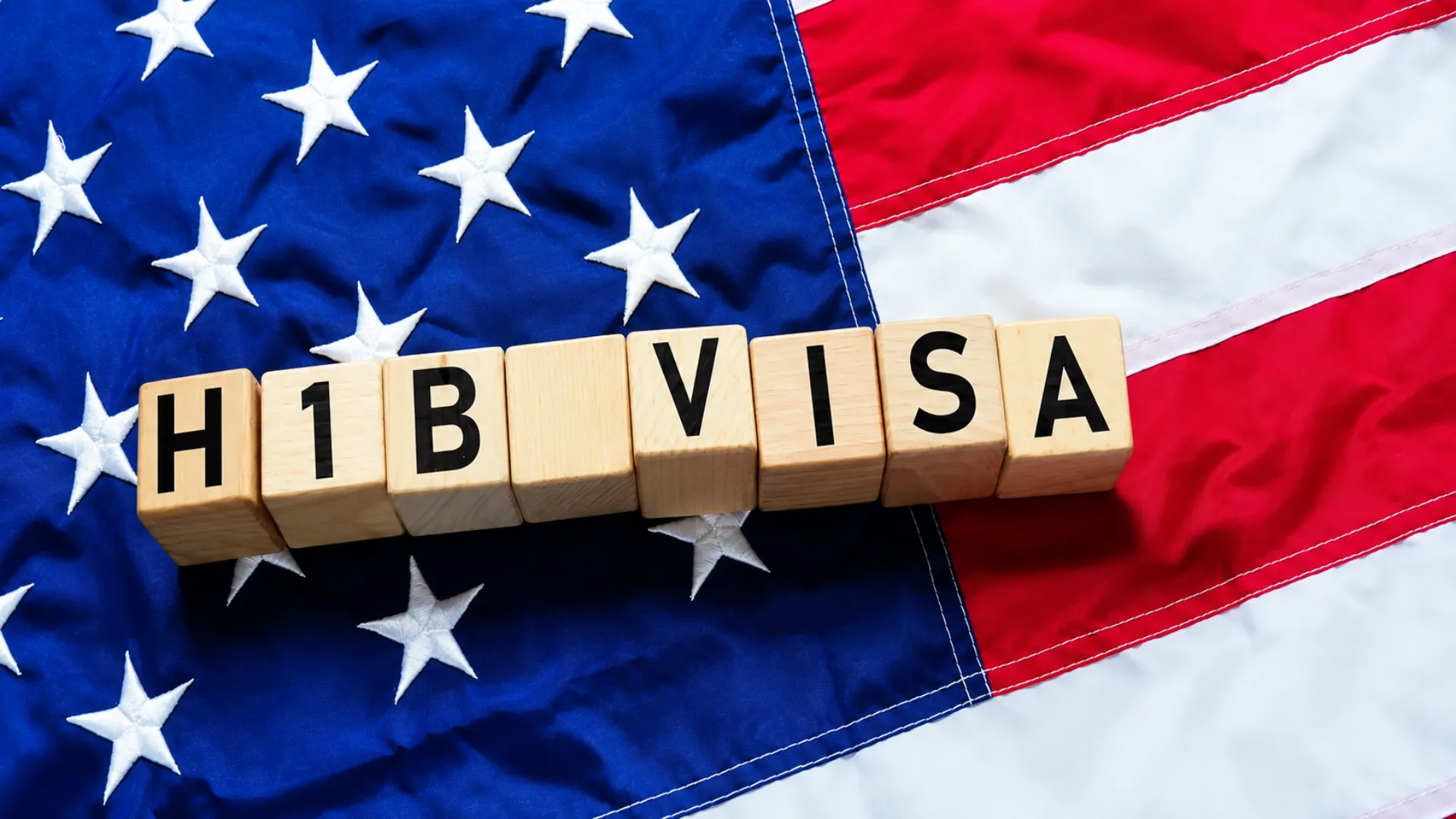
For thousands of Indian technology professionals living and working across the United States, a single email has become the most feared notification of 2026. One layoff notice from a company like Meta or Amazon is no longer just the loss of a job. It is the beginning of a brutal 60 day race that puts at risk everything these workers have spent years, sometimes more than a decade, carefully building. Their homes, their children's schools, their green card timelines, and their legal right to simply remain in the country they now call home are all suddenly hanging by a thread.
The scale of this crisis is significant. According to data tracked by Layoffs.fyi, more than 110,000 employees across 144 technology companies in the United States have lost their jobs in 2026 so far. Immigration experts working closely with affected communities estimate that thousands among those laid off are H1B visa holders, and the overwhelming majority of them are Indian nationals.
The situation has intensified sharply in recent weeks following fresh waves of job cuts at some of the world's largest and most recognisable technology corporations.
What the 60 Day Rule Actually Means for an Indian Worker Losing a Job in America
The H1B visa is a non immigrant work visa that ties a foreign national's legal stay in the United States directly to their employer. The moment an H1B worker loses their job, American immigration law gives them a grace period of exactly 60 days. Within that window, they must either find a new employer willing to sponsor and transfer their visa, transition to a different legal visa status, or leave the country entirely.
For most people reading that rule from the outside, 60 days may sound like a reasonable window. For the Indian professional living inside it, it is anything but. Job searches in senior technology roles routinely take two to four months under normal market conditions. Adding the complexity of visa sponsorship, which many employers are now reluctant to offer given the costs and administrative burden involved, makes the search exponentially harder. Doing all of this while managing an anxious family, an ongoing mortgage, and children enrolled mid semester in American schools creates a level of pressure that immigration attorneys describe as unlike anything they have witnessed before.
For Indian workers specifically, this pressure carries an additional and deeply painful dimension. A significant portion of Indian H1B holders have been waiting in the green card backlog for years, and in some cases for well over a decade. The United States Citizenship and Immigration Services, along with the Department of Homeland Security, released a report in 2026 showing that Indians accounted for 283,772 of the 406,348 approved H1B petitions during fiscal year 2025. That extraordinary volume also reflects extraordinary dependency on a system that has now become a source of profound vulnerability.
The B2 Visitor Visa Lifeline Is Also Beginning to Close
Faced with the impossible pressure of the 60 day clock, many laid off Indian technology workers have turned to an alternative route that immigration attorneys have historically used to buy more time. Switching from H1B status to a B2 visitor visa, which permits a stay of up to six months in the United States, has long been a legal and relatively accessible option for workers who need a longer runway to find new employment or to sort out their affairs before returning to India.
But that route is rapidly narrowing.
Rajiv Khanna, a prominent immigration attorney based in the United States who has worked in this field for decades, told the Economic Times that he is currently seeing a volume and intensity of complications that surpasses anything in his career experience. His firm is handling a significant spike in Requests for Evidence and Notices of Intent to Deny on B1 and B2 change of status applications filed specifically by laid off H1B workers. In plain terms, immigration authorities are now demanding far more documentation than before to approve these transitions, and the rate at which they are being denied outright has increased sharply.
Other immigration attorneys have independently corroborated this pattern. The current immigration environment in the United States, shaped by stricter enforcement policies and heightened scrutiny of foreign worker applications, has made what was once a relatively straightforward administrative process considerably more difficult and uncertain.
The message landing in the community is stark. Even the backup plan now requires a backup plan.
Meta Layoffs Add Fresh Urgency as AI Restructuring Reshapes the Industry
The anxiety gripping the Indian H1B community received a fresh jolt this week when Meta, the parent company of Facebook, Instagram and WhatsApp, launched another significant round of global layoffs. Employees in Singapore began receiving layoff notifications as early as 4 AM local time on Wednesday morning, with workers across the United States and Europe understood to be similarly affected. The precise number of positions being eliminated has not been officially confirmed, and there is currently no public accounting of how many Indian nationals are among those impacted.
In an internal memo reviewed by Bloomberg, Meta's Head of People Janelle Gale stated that the company was pursuing flatter team structures designed to move faster and operate with greater individual ownership. Prior to the layoffs going into effect, employees were reportedly encouraged to work from home while the internal restructuring was processed.
The cuts are understood to fall heavily on engineering and product divisions. This is precisely the domain in which a large proportion of Indian H1B workers are employed, making the impact on that community disproportionately significant.
Meta's rationale for the restructuring is not incidental. The company is executing a deliberate and large scale pivot toward artificial intelligence. Meta has reassigned approximately 7,000 employees to teams focused exclusively on AI products and AI agents. Chief Executive Officer Mark Zuckerberg has publicly positioned AI as the defining priority of the company's future, and Meta is reportedly on track to invest more than 100 billion dollars in AI related infrastructure and development this year. That transformation is displacing human roles, particularly mid level engineering positions, at a pace that is outrunning the job market's ability to absorb affected workers.
A Decade of Building an American Life, Now at Risk of Being Erased
The purely legal and procedural dimensions of this crisis do not fully capture what is actually at stake for the people inside it. Xiao Wang, the Chief Executive Officer of Boundless Immigration, has spoken publicly about the emotional weight being carried by the Indian professional community in the United States right now. He described the experience as workers feeling genuinely abandoned after contributing years of skilled labour and innovation to the American technology sector.
Wang was pointed in identifying why Indian H1B workers are absorbing the hardest blow. Their green card backlogs were already stretching across decades before any layoffs occurred. For many of them, losing a job does not just mean losing income. It means potentially losing their place in a queue they waited years to join, and which they cannot simply rejoin from abroad without starting over.
Many affected workers have children who were born in the United States and are therefore American citizens. They carry mortgages. They have elderly parents who may have relocated to be near them. Their entire social and economic infrastructure is built into American life, and the 60 day countdown does not pause for any of it.
Immigration attorney Kevin Andrews, who is also working with affected clients, noted that many workers are now openly asking themselves a question that would have been unthinkable for most of them five years ago. Whether staying in the United States still makes practical and financial sense given the combination of immigration pressure and the fundamental changes that artificial intelligence is making to the technology hiring landscape.
Canada and Europe Are Now Being Considered as Realistic Alternatives
The scale of disillusionment is visible in where affected workers are now directing their attention. According to Wang, more Indian technology professionals are now seriously exploring relocation to Canada or Europe than at any previous point in the last ten years.
Canada has become a particularly visible option because of specific immigration pathways designed for skilled workers. Programs including Express Entry and the Global Talent Stream are structured to move faster than the American green card system and offer a clearer route to permanent residency without the multi decade backlogs that plague Indian applicants in the United States. Several European countries are also creating structured pathways for senior technology talent, and those are now receiving attention that they rarely did when working in Silicon Valley felt like a secure and permanent arrangement.
Within the United States, workers are also exploring every available visa alternative. These include the O1 visa, which is designated for individuals with extraordinary professional abilities and achievements, F1 student visas that would allow workers to enrol in academic programmes and buy time, and L1 intracompany transfer visas for those with connections to organisations that have offices in both the United States and other countries.
None of these alternatives is simple. None comes without its own uncertainties. But for thousands of Indian professionals navigating what may be the most difficult professional period of their lives, every option is being assessed with urgent seriousness.
What This Moment Reveals About the Fragility Beneath the H1B Dream
The current crisis is exposing something that was always structurally true but rarely discussed openly. The H1B visa, for all the opportunity it has delivered to hundreds of thousands of skilled Indian professionals, is built on an inherently fragile foundation. Employment and legal status are fused into a single dependency. One corporate decision, made in a boardroom thousands of miles away, is sufficient to unravel years of careful, lawful immigration progress.
The scale of Indian participation in the H1B programme has historically been celebrated as a marker of the community's talent and ambition. The 2026 data showing Indians accounting for 283,772 out of approximately 406,000 approved petitions in a single fiscal year tells a story of extraordinary professional achievement. But that same dominance now reflects a community that is deeply and disproportionately exposed when the system experiences stress.
The technology sector is in the middle of a transformation driven by artificial intelligence that is reshaping not just products and business models but the fundamental nature of technical employment. Companies across the industry are reducing headcount in areas where AI tools are replacing or substantially augmenting human output. That structural shift is not a temporary correction. It is a sustained reorientation, and it is falling hardest on the categories of roles where H1B workers are most concentrated.
For Indian professionals currently inside this crisis, the immediate focus is on survival within the 60 day window. For the broader Indian community in American technology, the moment is prompting a deeper and more uncomfortable reckoning about what it means to build a life inside a visa system that was never designed to protect them when the ground shifts.
The race against the clock continues, and for thousands of families, every day that passes without a new job offer or a visa solution brings them one step closer to a departure they never planned and do not want to make.
Frequently Asked Questions
Why are Indian H1B visa holders the most affected by tech layoffs in 2026?
Indians account for 283,772 of the 406,348 approved H1B petitions in fiscal year 2025, making them the largest group in the programme. This heavy dependence means any major wave of tech layoffs disproportionately impacts Indian professionals, who also face decades long green card backlogs with no easy fallback option.
What is the 60 day rule for H1B visa holders who lose their jobs?
Under US immigration law, an H1B visa holder who is laid off has exactly 60 days to either secure a new employer willing to sponsor and transfer their visa, switch to a different legal visa status, or leave the United States. Failing to do any of these within the deadline means the worker is required to depart the country.
How many tech workers have been laid off in the United States in 2026 so far?
According to data from Layoffs.fyi, more than 110,000 employees across 144 technology companies in the United States have lost their jobs in 2026 so far. Immigration experts estimate that thousands among them are H1B visa holders, the majority of whom are Indian nationals.
Why is switching to a B2 visitor visa becoming more difficult for laid off H1B workers?
Immigration authorities in the United States are now issuing significantly more Requests for Evidence and Notices of Intent to Deny on B1 and B2 change of status applications filed by laid off H1B workers. Immigration attorney Rajiv Khanna confirmed that approvals are harder to secure than at any point in his career, reflecting a stricter enforcement environment across US immigration authorities.
Why did Meta carry out layoffs in 2026 and how does it relate to artificial intelligence?
Meta initiated its latest round of layoffs as part of a deliberate restructuring toward artificial intelligence. The company has reassigned approximately 7,000 employees to AI focused teams and is reportedly planning to invest more than 100 billion dollars in AI this year. CEO Mark Zuckerberg has placed AI at the centre of Meta's future strategy, resulting in significant cuts across engineering and product divisions.
What alternative visa options are laid off H1B workers exploring inside the United States?
Affected workers are exploring several legal alternatives within the US immigration system. These include the O1 visa for individuals with extraordinary professional abilities, F1 student visas that allow enrolment in academic programmes, and L1 intracompany transfer visas for those connected to organisations operating in multiple countries. Each option carries its own requirements and uncertainties.
Why are Indian H1B workers now seriously considering Canada and Europe?
According to Boundless Immigration CEO Xiao Wang, more Indian technology professionals are exploring relocation to Canada and Europe than at any point in the last decade. Canada's Express Entry and Global Talent Stream programmes offer faster and clearer routes to permanent residency compared to the multi decade green card backlog faced by Indians in the United States, making it a growing alternative destination.
How does the green card backlog make the current crisis worse for Indian professionals?
Many Indian H1B workers have spent close to a decade or more waiting in the US green card queue before being laid off. Losing a job during this wait can mean losing their position in the backlog entirely. Combined with US born children, active mortgages, and fully settled family lives, a forced departure represents the dismantling of everything they legally and patiently built over many years.
Edit Profile
Help improve @KR
Was this page helpful to you?
Contact Khogendra Rupini
Are you looking for an experienced developer to bring your website to life, tackle technical challenges, fix bugs, or enhance functionality? Look no further.
I specialize in building professional, high-performing, and user-friendly websites designed to meet your unique needs. Whether it's creating custom JavaScript components, solving complex JS problems, or designing responsive layouts that look stunning on both small screens and desktops, I can collaborate with you.
Create something exceptional with us. Contact us today
Open for Collaboration
If you're looking to collaborate, I'm available for a variety of professional services, including -
- Website Design & Development
- Advertisement & Promotion Setup
- Hosting Configuration & Deployment
- Front-end & Back-end Code Implementation
- Code Testing & Optimization
- Cybersecurity Solutions & Threat Prevention
- Website Scanning & Malware Removal
- Hacked Website Recovery
- PHP & MySQL Development
- Python Programming
- Web Content Writing
- Protection Against Hacking Attempts