
Trump Tells Negotiators Not to Rush as Rubio Signals Iran Peace Deal Could Come Any Moment, Republicans Push Back Hard
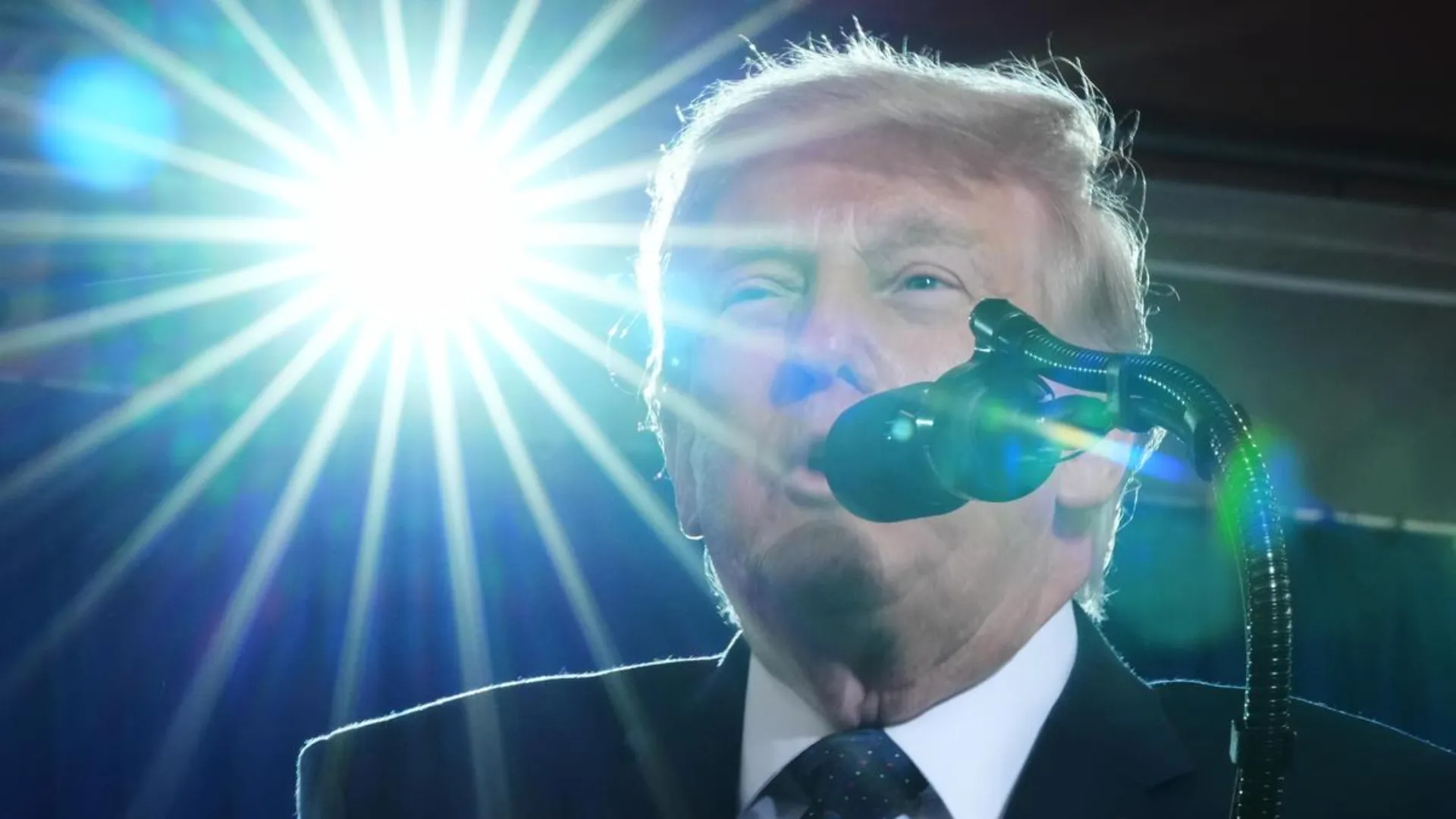
The fragile threads of diplomacy holding together a potential end to the Israel-Iran war were tested sharply over the weekend as United States Secretary of State Marco Rubio declared from New Delhi that a landmark peace agreement with Iran could be announced within hours, even as President Donald Trump publicly urged his own negotiators to slow down and not be pressured into a hasty settlement. What unfolded over Saturday and Sunday, May 24 and 25, 2026, was a striking display of the internal tensions within the American administration, the growing chorus of Republican dissent, and the extraordinarily complex geopolitical architecture that any final deal must hold together.
The world watched closely as signals emerged from multiple capitals simultaneously, each carrying different implications for the future of a region that has been at war since early March 2026.
Rubio Speaks From New Delhi With Cautious Optimism
In what many analysts described as one of the more significant diplomatic statements of the year so far, U.S. Secretary of State Marco Rubio addressed reporters in New Delhi on Sunday and said that a deal to formally end the war with Iran remained firmly on the table and could materialise that very day. His words carried an unusual combination of hope and deliberate caution.
"We thought we might have some news last night, maybe today, I wouldn't read too much into it," Rubio told reporters, carefully managing expectations while acknowledging the genuine possibility of a breakthrough. He added that Washington believed it had a solid framework on the table, specifically centred on Iran's willingness to reopen the Strait of Hormuz, a critical global waterway that Tehran had placed under controls following the outbreak of conflict.
"We have what I think is a pretty solid thing on the table in terms of their ability to open up the straits, get the straits open," Rubio said, underlining that the logistical and economic stakes of the deal extended far beyond the region itself.
The Secretary of State also made a point of stating clearly that Israel retained the right to defend itself against attack, a reassurance directed both at Tel Aviv and at the Republican critics back home who feared Washington was negotiating away Israel's security guarantees in exchange for a diplomatic win.
Rubio's appearance in New Delhi was itself a geopolitical signal, given that India holds enormous strategic and economic interests tied to the stability of the Persian Gulf and the Strait of Hormuz, through which a substantial portion of the world's oil trade moves every single day.
Trump Pumps the Brakes While Acknowledging Progress
Even as his top diplomat projected optimism, President Donald Trump struck a markedly different tone on Sunday when he took to his Truth Social platform to address the state of negotiations with Iran. His message was unmistakably deliberate and carried a clear warning to those expecting a quick announcement.
"The negotiations are proceeding in an orderly and constructive manner, and I have informed my representatives not to rush into a deal in that time is on our side," Trump wrote, signalling that he believed the balance of pressure currently favoured Washington over Tehran.
Despite this measured language, Trump also acknowledged that the proposal under discussion, which included reopening the blockaded Strait of Hormuz to international shipping, was "largely negotiated." This was a significant concession in language, suggesting that the architecture of a deal was essentially in place even if the final signatures remained elusive.
The dual messaging from Trump and Rubio within hours of each other reflected either a carefully choreographed negotiating strategy designed to keep Iran uncertain about American urgency, or genuine internal debate within the administration about the terms and timing of any final agreement. Analysts were divided on which interpretation was more accurate, though both were seen as consistent with Trump's long-standing preference for maintaining maximum leverage until the last possible moment.
A Weekend of Regional Diplomacy at the Highest Level
The scale of diplomatic engagement leading up to this moment was extraordinary. On Saturday, May 23, 2026, President Trump participated in a call that brought together leaders from Saudi Arabia, the United Arab Emirates, Qatar, Egypt, Jordan and Bahrain, alongside representatives from Turkey and Pakistan. The presence of Pakistan and Turkey alongside the traditional Arab Gulf states suggested that the emerging framework was designed to carry regional legitimacy across a broader Islamic world, not just among America's closest Gulf partners.
The involvement of Saudi Arabia and the UAE was particularly notable given their deep economic exposure to any disruption in the Strait of Hormuz, through which their oil exports flow daily to global markets. Qatar, which hosts the largest American military base in the Middle East at Al Udeid, also has an enormous stake in regional de-escalation.
The participation of Jordan and Egypt reflected the broader Sunni Arab consensus that has quietly backed efforts to contain Iranian influence, even as those same nations have pushed for a negotiated settlement rather than an extended military conflict that could destabilise neighbouring populations and trigger refugee movements across already fragile borders.
The call represented one of the most significant multilateral diplomatic engagements around the West Asia conflict since the war began, and its mere occurrence was read by observers as evidence that a deal was genuinely close rather than a distant aspiration.
Republicans Break With Trump Over Iran Framework
The most politically turbulent development of the weekend was the open rebellion within Trump's own Republican Party over the emerging peace framework. A notable group of senior Republican senators publicly voiced deep concerns about the direction of negotiations, arguing that any deal with Iran risked legitimising a regime that had repeatedly demonstrated its unwillingness to honour international commitments.
Senator Roger Wicker of Mississippi, who serves as the chairman of the Senate Armed Services Committee and therefore carries considerable institutional weight on matters of national security, was among the most prominent critics. Wicker and his colleagues argued that the deal, as it appeared to be taking shape, would amount to recognising Tehran as a dominant regional force that required a diplomatic solution rather than continued military and economic pressure until the regime changed its fundamental behaviour.
Senators Thom Tillis, Lindsey Graham and Ted Cruz all echoed versions of this concern, each questioning whether Iran could be trusted to abide by its commitments under any agreement. Graham in particular has long been a hawkish voice on Iran, and his opposition carried symbolic weight given that he has historically been willing to support Trump on most major foreign policy moves.
In a somewhat unexpected turn, Senator Rand Paul, who has frequently clashed with Trump on other issues, counselled patience and urged Republican critics to give the President the space to pursue an America First solution. Paul's libertarian instincts have always leaned toward avoiding military entanglements, and his willingness to defend Trump's diplomatic approach here drew attention.
Democratic senators also joined the criticism, though from a different angle. Several Democratic voices claimed that Trump was being manipulated and that the emerging framework would do nothing more than return the situation to the pre-war status quo without extracting meaningful and verifiable commitments from Iran to change its regional behaviour. The phrase "being played as a fool" reportedly circulated in Democratic statements, reflecting the sharp language being deployed across party lines against the proposed deal.
Trump's response to all of this was characteristically blunt. Addressing the wave of Republican criticism, the President reportedly told critics not to listen to what he called losers, a phrase consistent with his long-established pattern of dismissing intraparty dissent when he believes he holds the stronger negotiating hand.
Lebanon Burns Even as Diplomats Talk Peace
While the diplomatic machinery worked at full speed on a potential Iran deal, the ground reality in Lebanon continued to deteriorate with brutal consistency. Israeli strikes pounded south and east Lebanon throughout Sunday, May 25, 2026, even as a nominal ceasefire remained technically in place.
Lebanon's health ministry updated the overall toll from the war, which formally began on March 2, 2026, to at least 3,123 people killed across the country. On Sunday alone, two people were killed in Israeli raids, including a paramedic affiliated with the Islamic Health Committee, which is linked to Hezbollah.
The contrast between the diplomatic conversations happening at the level of heads of state and the human cost unfolding on the ground in Lebanese villages and towns underscored the urgency of finding a settlement that could actually hold.
Hezbollah's leader Naim Qassem added a volatile element to an already complex situation when he declared that the Lebanese people had the right to take to the streets and bring down the government, a statement that Rubio sharply condemned. The U.S. Secretary of State accused Hezbollah of attempting to plunge Lebanon back into chaos, denouncing what he described as a reckless call to overthrow Lebanon's democratically elected government. Rubio accused the group of being "actively trying to drag Lebanon back into chaos and destruction," framing Hezbollah's domestic political manoeuvring as an obstacle to the broader regional stabilisation that the U.S.-Iran deal was intended to deliver.
Qassem's comments were made in direct response to Israeli strikes and American sanctions on Al-Qard Al-Hassan, a Hezbollah-affiliated financial institution, suggesting that even as Iran edged toward a deal with Washington, the organisation's Lebanese political and military apparatus was escalating its domestic posture in ways that could complicate any lasting settlement.
The Strait of Hormuz at the Centre of Everything
The geographic and economic pivot point of the entire negotiation was the Strait of Hormuz, the narrow waterway between Iran and Oman through which approximately 20 percent of the world's oil supply passes on any given day. Since the outbreak of the conflict, Iran had imposed controls on Gulf shipping through the strait, and the United States had responded by instituting a blockade of Iranian ports.
The economic consequences of this standoff had reverberated globally, contributing to energy price volatility and significant shipping disruption across Asian and European markets. The ceasefire that both the U.S. and Iran had observed since April 8, 2026, had paused the most intense phases of direct military confrontation, but the shipping controls and port blockade had remained in place, keeping economic pressure on both sides.
Reopening the strait formed the cornerstone of what Rubio described as the solid framework currently on the table, suggesting that Iran had signalled its willingness to restore normal shipping access as part of a broader settlement. For the Gulf states that joined Saturday's call with Trump, this single element of the deal was potentially as important as any security guarantee, given that their economic survival is structurally tied to the freedom of maritime commerce through those waters.
What Comes Next and Why It Matters
As of Monday, May 25, 2026, no formal announcement of a deal had been made public. Rubio continued to signal that an agreement remained possible within hours, while Trump maintained the posture of a negotiator who holds the stronger hand and is willing to wait for better terms. Republican resistance in the Senate remained vocal and organised, raising questions about whether any deal could survive the domestic political environment in Washington even if it were successfully negotiated.
The stakes of the outcome extended well beyond the immediate parties to the conflict. A deal that successfully reopened the Strait of Hormuz and established a durable ceasefire framework would have immediate positive consequences for global energy markets, regional stability, and the millions of civilians caught in the crossfire across Lebanon, Israel and the broader theatre of conflict. A deal that collapsed under the weight of domestic opposition, Iranian backsliding or inadequate verification mechanisms could plunge the region into a more intense and potentially more dangerous phase of conflict than what preceded it.
For the world watching closely, the coming hours and days represented a genuine inflection point. Whether the extraordinary diplomatic architecture assembled over a frantic weekend in May 2026 would produce a genuine and lasting peace, or whether the moment would slip away under the pressure of competing interests and political calculation, remained one of the most consequential open questions of the year.
Frequently Asked Questions
What did Marco Rubio say about the US-Iran peace deal on May 25, 2026?
U.S. Secretary of State Marco Rubio stated from New Delhi that a deal to formally end the war with Iran could materialise the same day. He said Washington had a solid framework on the table, primarily focused on reopening the Strait of Hormuz, and added that Israel retained its right to defend itself against any attack.
Why did Trump tell his negotiators not to rush the Iran deal?
President Trump posted on Truth Social that negotiations were proceeding in an orderly and constructive manner but that he had instructed his representatives not to rush, stating that time was on America's side. Analysts believe this reflected Trump's strategy of maintaining maximum negotiating leverage over Iran until the very last moment.
Which countries participated in the regional peace call with Trump on May 23, 2026?
Leaders from Saudi Arabia, the United Arab Emirates, Qatar, Egypt, Jordan and Bahrain joined the call, along with representatives from Turkey and Pakistan. The broad participation was seen as an effort to give any emerging deal wider regional legitimacy across the Islamic world beyond the Gulf states alone.
Why are Republican senators opposing Trump's Iran peace deal?
Senior Republican senators including Roger Wicker, Lindsey Graham, Thom Tillis and Ted Cruz argued that the deal risked legitimising Iran as a dominant regional force and questioned whether Tehran could be trusted to honour its commitments. They feared the framework would reward Iran diplomatically without extracting meaningful changes in its regional behaviour.
What is the current humanitarian situation in Lebanon amid the conflict?
Despite a nominal ceasefire, Israeli strikes continued to pound south and east Lebanon on May 25, 2026. Lebanon's health ministry confirmed that the total death toll since the war began on March 2, 2026 had risen to 3,123 people killed, with two additional deaths recorded on Sunday alone, including a paramedic affiliated with the Islamic Health Committee.
What role does the Strait of Hormuz play in the US-Iran negotiations?
The Strait of Hormuz sits at the absolute centre of the negotiation. Iran had imposed controls on Gulf shipping through the strait after the war began, while the U.S. responded with a blockade of Iranian ports. Reopening the strait forms the cornerstone of the proposed deal, as roughly 20 percent of the world's daily oil supply passes through this narrow waterway.
What has Hezbollah's leader said during the ongoing conflict?
Hezbollah chief Naim Qassem declared that the Lebanese people had the right to take to the streets and bring down the government, citing Israeli strikes and U.S. sanctions on the Hezbollah-linked Al-Qard Al-Hassan financial institution. Secretary Rubio swiftly condemned the statement, accusing Hezbollah of actively trying to drag Lebanon back into chaos and destruction.
When did the US-Iran ceasefire come into effect and what does it cover?
The United States and Iran have observed a ceasefire since April 8, 2026, which paused the most intense phases of direct military confrontation. However, Iran's controls on Gulf shipping and the U.S. blockade of Iranian ports have remained in place throughout the ceasefire period, keeping significant economic pressure on both sides even while active hostilities were reduced.
What did Democratic senators say about the emerging Iran deal?
Democratic senators joined Republican critics in opposing the deal, though from a different position. Several Democrats claimed that Trump was being manipulated by Iran and argued that the emerging framework would do nothing more than restore the pre-war status quo without securing verifiable commitments from Tehran to change its long-term regional behaviour.
How does the West Asia war affect global energy and trade markets?
The conflict has created significant energy price volatility and major shipping disruptions across Asian and European markets. With Iran controlling access to the Strait of Hormuz, through which a fifth of the world's oil supply moves daily, any prolonged closure or restriction directly impacts global supply chains, crude oil prices and shipping insurance costs worldwide.
Edit Profile
Help improve @KR
Was this page helpful to you?
Contact Khogendra Rupini
Are you looking for an experienced developer to bring your website to life, tackle technical challenges, fix bugs, or enhance functionality? Look no further.
I specialize in building professional, high-performing, and user-friendly websites designed to meet your unique needs. Whether it's creating custom JavaScript components, solving complex JS problems, or designing responsive layouts that look stunning on both small screens and desktops, I can collaborate with you.
Create something exceptional with us. Contact us today
Open for Collaboration
If you're looking to collaborate, I'm available for a variety of professional services, including -
- Website Design & Development
- Advertisement & Promotion Setup
- Hosting Configuration & Deployment
- Front-end & Back-end Code Implementation
- Code Testing & Optimization
- Cybersecurity Solutions & Threat Prevention
- Website Scanning & Malware Removal
- Hacked Website Recovery
- PHP & MySQL Development
- Python Programming
- Web Content Writing
- Protection Against Hacking Attempts