
Micron Is Quadrupling DDR4 Output at Its Virginia Plant and Wall Street Is Now Watching Every Move With Nervous Anticipation
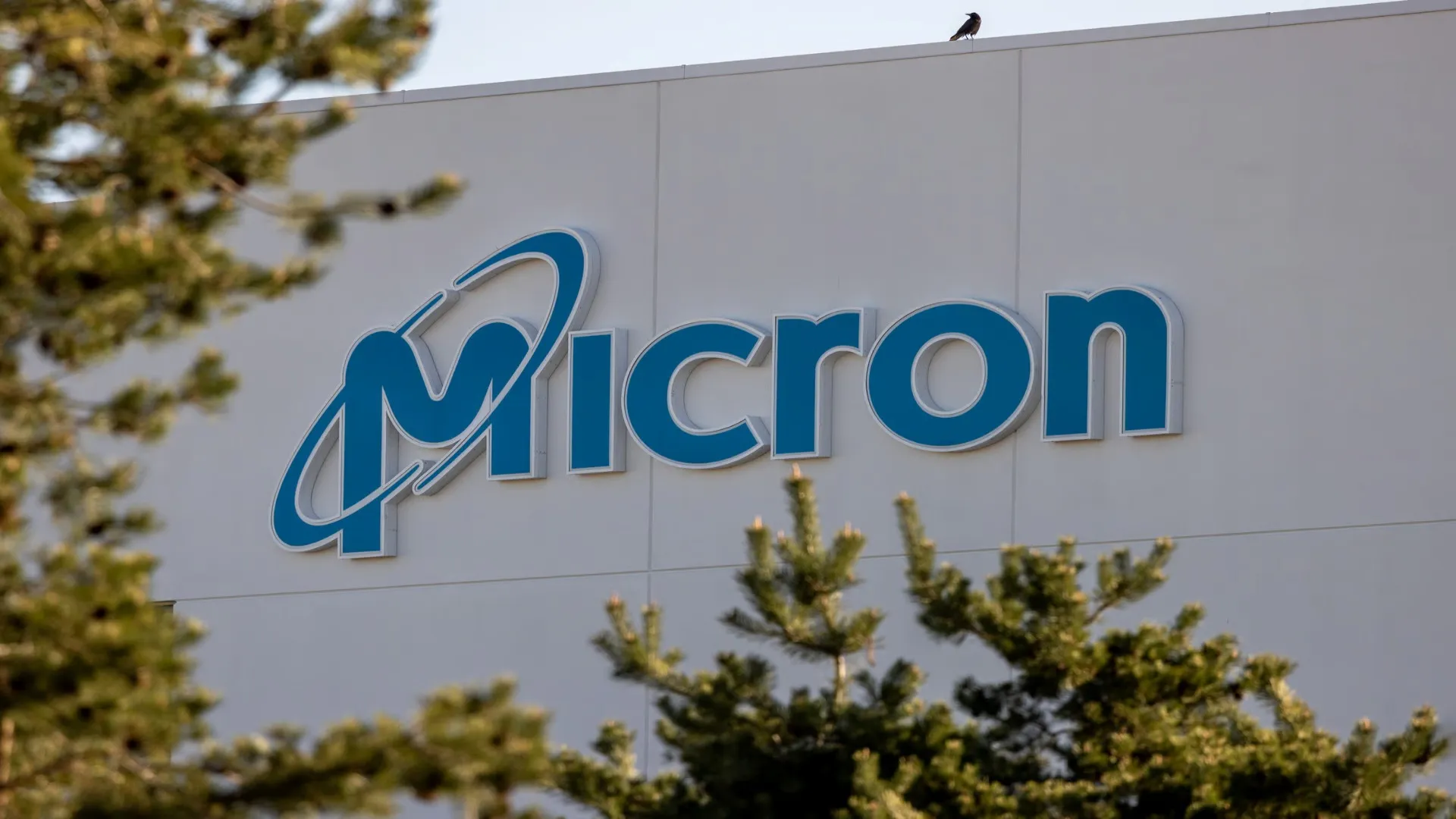
Micron Technology has triggered one of the more unusual storylines in the semiconductor industry this year. A chip that was quietly being retired is now at the center of a billion dollar manufacturing revival on American soil, and investors are genuinely divided on what happens next to one of the most closely tracked stocks in the memory market.
On May 22, 2026, Micron officially commenced 1α DRAM production at its Manassas, Virginia facility, marking the first time the company's most advanced DDR4 compatible manufacturing process has ever run on United States soil. The move is significant not just for its symbolism but for its commercial weight. DDR4 output at the Manassas plant is expected to quadruple once production reaches full capacity, a development that is already prompting investors to ask a pointed question: is a price correction in MU stock coming, or is this expansion simply filling a genuine and urgent supply gap?
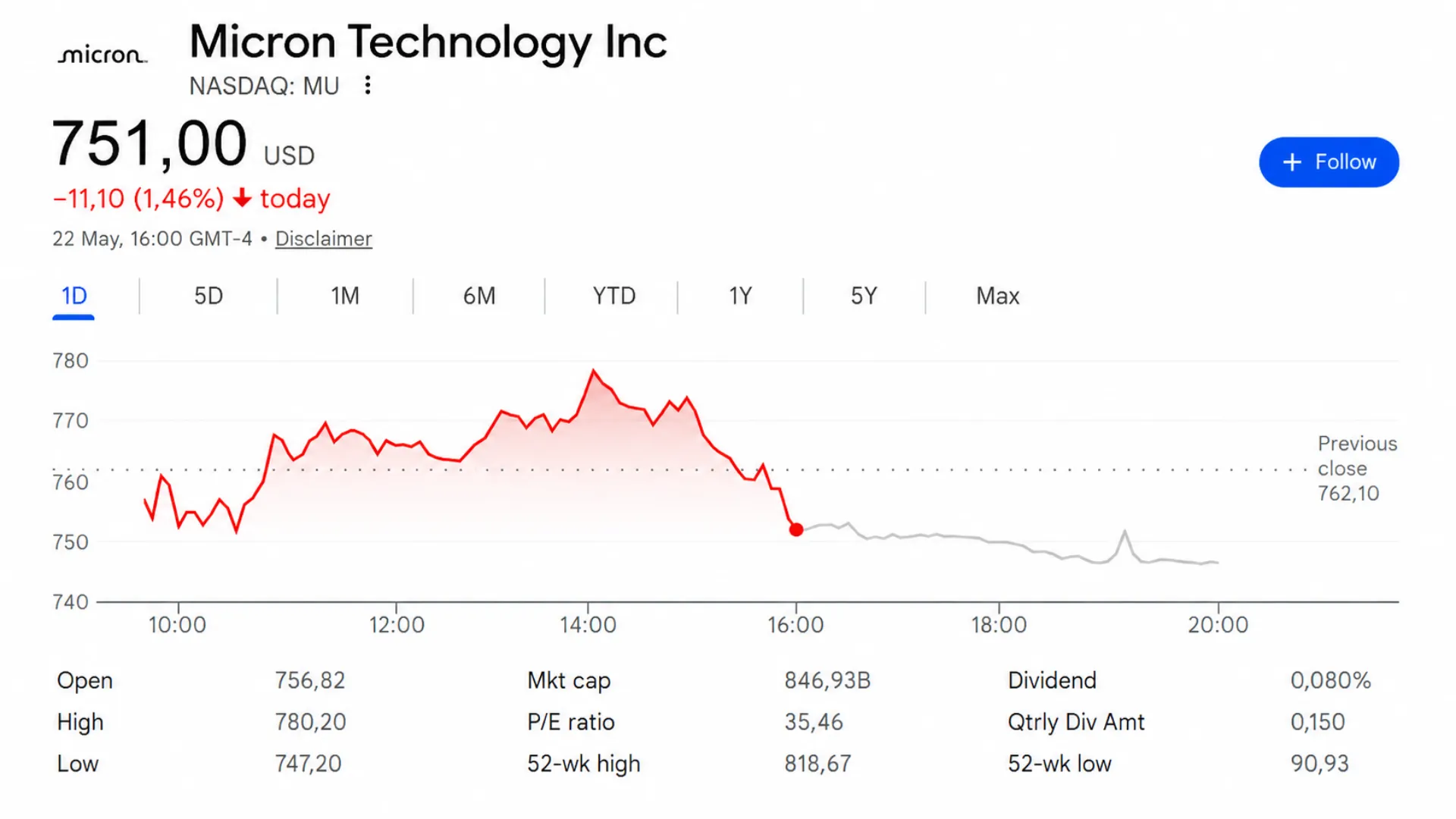
Micron stock was trading at $751.00 on May 22, down 1.46% on the day, with the market absorbing the full weight of the announcement.
The Unexpected Resurrection of a Chip Everyone Thought Was Dying
The timing of this expansion carries a certain irony that has not been lost on industry observers. Micron had previously signaled that DDR4 was approaching end of lifecycle and had been gradually winding down production of the chip. That narrative was reversed when DDR4 became unexpectedly and significantly profitable.
According to data from Nanya Technology, same specification DDR4 die prices are currently running approximately 40% higher than DDR5 equivalents. That price premium, in a business where margins are everything, changed the calculus entirely. A chip that was supposed to fade quietly into history is now commanding a premium that justifies a multibillion dollar manufacturing push.
The DDR4 supply shortage has been particularly severe in what the industry calls long lifecycle specialty markets. These are sectors where a single qualified memory part can remain in active production for a decade or more and where supply disruptions carry serious operational consequences. Automotive manufacturers, defense contractors, aerospace companies, industrial equipment producers, and medical device makers all fall into this category. These customers do not simply swap out memory chips when a newer generation arrives. Qualification processes are expensive and time consuming, and once a part is embedded into a system, continuity of supply becomes critical.
S&P Global Mobility estimated that automotive DRAM contract prices could rise between 70% and 100% in 2026 compared to 2025 levels. Inventory buffers for automotive and industrial DDR4 buyers have also deteriorated sharply, falling from more than 31 weeks of supply to roughly six to eight weeks at the time of writing. That compression in buffer stock is precisely the kind of supply condition that makes additional manufacturing capacity valuable rather than destabilizing.
What Micron Has Actually Built in Virginia
The Manassas expansion represents a serious capital commitment. Micron invested more than two billion dollars to expand and modernize the facility, which also received 275 million dollars in funding under the CHIPS Act. The 1α node is Micron's fourth generation 10nm class manufacturing process. It increases bit output per wafer and reduces per unit production costs, giving Micron a structural cost advantage compared to older process nodes at the same location.
Qualified volume production of DDR4 and LPDDR4 is expected to be achieved by the end of calendar year 2026. The production timeline matters here. New semiconductor capacity does not appear overnight. Qualification for specialty markets such as automotive and defense adds further lead time. The supply impact of this expansion will not be felt in the spot market tomorrow.
Sanjay Mehrotra, Micron's Chairman, President and Chief Executive Officer, placed the Manassas milestone within a much larger national manufacturing ambition. In his statement, he said that by bringing advanced 1α DRAM manufacturing to the United States, the company is strengthening domestic supply for American customers and global markets, describing the milestone as a critical step in Micron's 200 billion dollar investment plan to expand memory manufacturing and research and development capabilities within the United States. Mehrotra also noted that Micron's total U.S. production share is currently around 10% and that the multi facility ramp over the coming decade is designed to bring that figure to approximately 40%.
Why Investors Are Divided on Whether MU Stock Will Fall
The concern circulating among some market participants follows the classic memory cycle logic. Supply shortages drive prices higher. High prices attract new investment in capacity. New capacity eventually floods in. Prices then correct sharply, and margins compress. This cycle has punished memory investors many times before.
Financial commentator Di Xiang, who flagged the Micron DDR4 output expansion on social media, cautioned that following this capacity announcement, investors may shift their focus toward other segments of the artificial intelligence supply chain, with foundry stocks also worth monitoring. The argument, which carries some historical precedent, is that equity markets price in future supply conditions well before actual wafers begin shipping. Pressure on the MU stock price forecast could therefore emerge before a single chip from Manassas reaches a customer.
The counterargument is equally substantive. The Manassas facility is not feeding the Asian commodity DRAM spot market. It is serving long lifecycle specialty customers where demand is structurally persistent and where existing supply is dangerously thin. Furthermore, 28 Wall Street analysts tracked across major institutions are maintaining a bullish consensus on Micron, with 18 active buy ratings and zero sell recommendations. The median price target across that analyst group currently stands at $542.50, though the stock has significantly exceeded that level.
HBM4 and the AI Infrastructure Story Carrying the Real Weight
The DDR4 expansion is significant, but the bigger determinant of Micron's medium term trajectory is its position in High Bandwidth Memory for artificial intelligence infrastructure. Manish Bhatia, Micron's Executive Vice President of Global Operations, stated at the JPMorgan investor conference that Micron's HBM4 ramp up speed is twice as fast as last year's HBM3 12 layer product and that yield improvements are accelerating.
Micron has locked up its entire HBM4 output through 2026 through multi year supply contracts, most prominently tied to its integration into NVIDIA's Vera Rubin platform. That contracted demand effectively insulates the near term MU stock price forecast from any volatility triggered by the DDR4 supply narrative. HBM4 is where the structural AI driven demand story lives, and Micron's forward position in that segment gives it a buffer that commodity DRAM producers simply do not have.
The Manassas expansion reads, for now, more as a supply security story than a supply glut warning. The specialty markets being served are undersupplied, not oversupplied. The capacity timeline extends into late 2026. And the broader financial architecture of Micron, heavily anchored to HBM4 and long term contracted AI demand, provides a degree of earnings insulation that changes the risk profile considerably compared to prior memory cycles. Whether that reasoning holds as more capacity comes online through 2027 is the question the market has not yet answered.
Frequently Asked Questions
Why is Micron quadrupling DDR4 output at its Manassas Virginia facility?
Micron is expanding DDR4 production because the chip has become unexpectedly profitable. DDR4 die prices are currently running approximately 40 percent higher than DDR5 equivalents, and the supply shortage in specialty markets like automotive, defense, and medical has created urgent demand that existing capacity cannot meet.
What is the 1α DRAM process and why does it matter for Micron?
The 1α node is Micron's fourth generation 10nm class manufacturing process. It increases bit output per wafer and lowers production costs compared to older nodes. The Manassas expansion marks the first time this advanced process has run on United States soil, giving Micron a structural cost advantage in domestic specialty memory production.
Could the Micron DDR4 output surge cause MU stock price to crash?
Some investors worry because history shows new memory capacity can eventually flood supply and crash prices. However, the Manassas plant serves long lifecycle specialty markets, not the commodity spot market. Qualified production is not expected until late 2026, and 28 Wall Street analysts currently hold 18 buy ratings with zero sell recommendations on MU stock.
How severe is the current DDR4 supply shortage for automotive and industrial buyers?
The shortage is significant. Inventory buffers for automotive and industrial DDR4 buyers have fallen from more than 31 weeks of supply to roughly six to eight weeks. S&P Global Mobility also estimated that automotive DRAM contract prices could rise between 70 and 100 percent in 2026 compared to 2025 levels.
How much has Micron invested in the Manassas Virginia plant expansion?
Micron invested more than two billion dollars to expand and modernize the Manassas facility. The plant also received 275 million dollars in funding under the United States CHIPS Act, making it one of the more significant domestically supported semiconductor manufacturing investments in recent years.
What is HBM4 and why is it more important than DDR4 for Micron's stock outlook?
HBM4, or High Bandwidth Memory 4, is the next generation memory technology powering advanced artificial intelligence infrastructure. Micron has locked up its entire HBM4 output through 2026 via multi year contracts, including integration into NVIDIA's Vera Rubin platform. Most analysts say HBM4 demand, not DDR4, will be the primary driver of Micron's financial performance.
What did Micron CEO Sanjay Mehrotra say about the company's long term US production goals?
Mehrotra stated that Micron's current US production share stands at approximately 10 percent of total output. Through its 200 billion dollar domestic investment plan spanning multiple fabrication facilities over the next decade, the company aims to raise that figure to approximately 40 percent of total global production.
What is the current Wall Street consensus on MU stock price forecast?
Wall Street remains strongly bullish on Micron. Across 28 tracked analysts, there are 18 active buy ratings and zero sell recommendations. The median analyst price target stands at 542.50 dollars, though MU stock has traded significantly above that level, closing at 751.00 dollars on May 22, 2026.
Edit Profile
Help improve @KR

Was this page helpful to you?
Contact Khogendra Rupini
Are you looking for an experienced developer to bring your website to life, tackle technical challenges, fix bugs, or enhance functionality? Look no further.
I specialize in building professional, high-performing, and user-friendly websites designed to meet your unique needs. Whether it's creating custom JavaScript components, solving complex JS problems, or designing responsive layouts that look stunning on both small screens and desktops, I can collaborate with you.
Create something exceptional with us. Contact us today
Open for Collaboration
If you're looking to collaborate, I'm available for a variety of professional services, including -
- Website Design & Development
- Advertisement & Promotion Setup
- Hosting Configuration & Deployment
- Front-end & Back-end Code Implementation
- Code Testing & Optimization
- Cybersecurity Solutions & Threat Prevention
- Website Scanning & Malware Removal
- Hacked Website Recovery
- PHP & MySQL Development
- Python Programming
- Web Content Writing
- Protection Against Hacking Attempts