
Supreme Court Clears Election Commission's Voter Roll Revision Drive, Rules It Was Legally Sound and Constitutionally Justified
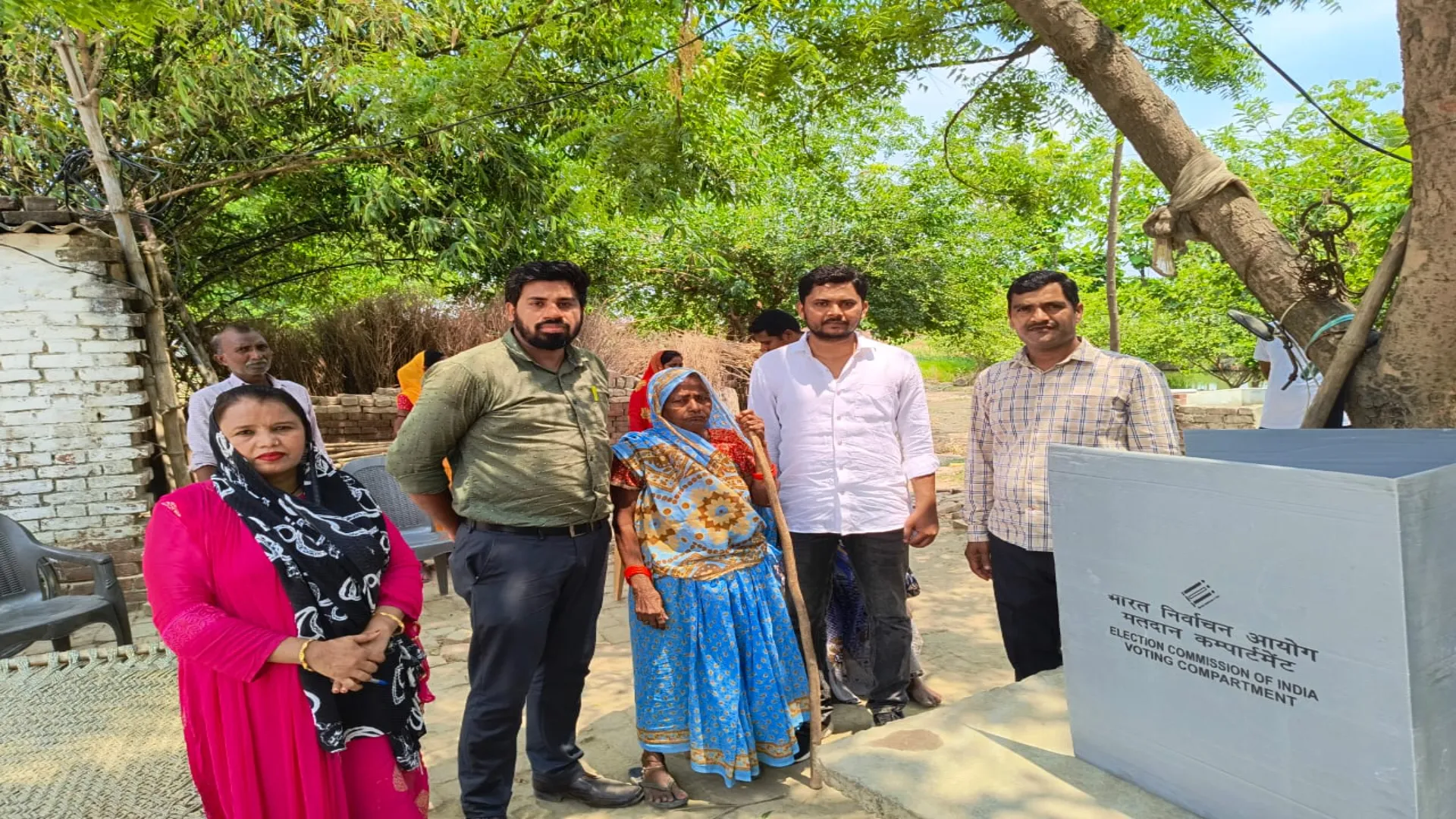
The Supreme Court of India on Wednesday delivered a landmark verdict upholding the Election Commission of India's Special Intensive Revision exercise conducted across Bihar, West Bengal, Kerala, Tamil Nadu and several other states, firmly ruling that the poll body did not overstep its statutory boundaries while carrying out the controversial electoral roll cleanup drive that had triggered fierce legal challenges from multiple quarters.
The judgment, pronounced by a bench led by Chief Justice of India Surya Kant and Justice Joymalya Bagchi, puts to rest months of legal uncertainty that had surrounded one of the most debated electoral exercises in recent years, one that drew sharp criticism from opposition parties, civil society groups and legal experts who feared it could strip millions of genuine voters of their franchise.
What the Supreme Court Actually Ruled
The apex court was categorical in its assessment. It held that the Special Intensive Revision, commonly referred to as the SIR, fulfilled the test of proportionality and was not manifestly excessive in its design or execution. The bench ruled that the exercise was founded on the constitutionally legitimate purpose of restoring accuracy to electoral rolls and that the measures adopted by the Election Commission could not be deemed disproportionate under constitutional scrutiny.
"SIR fulfils proportionality and are not manifestly excessive. It was founded by constitutional purpose of restoration of accuracy of electoral rolls," the court said, as reported by Live Law.
The court further said the ECI did not violate the Representation of the People Act by ordering the Special Intensive Revision of Bihar's electoral rolls, noting that such an exercise ensured the purity of voter lists and supported the conduct of free and fair elections. The bench termed the revision process "legally tenable," giving it a clean constitutional chit after months of deliberation.
The Limits the Court Drew Around Election Commission's Powers
While the Supreme Court upheld the SIR exercise broadly, it drew a sharp and significant line around one key aspect of the poll body's functioning. The court made it explicitly clear that the Election Commission of India does not have the authority to make final determinations on the citizenship of any voter.
This is a crucial distinction. The court ruled that any determination of citizenship made by the election commission for the purpose of inclusion or exclusion from the voter list is not final. Such cases must be examined thoroughly by the Union government itself, and the process must give adequate opportunity to the doubtful voter who is removed from the electoral roll before any final decision is taken.
In a direct and consequential directive, the Supreme Court asked the Election Commission to forward, within four weeks, the names of all persons deleted from voter lists on grounds of doubtful citizenship to the Union Home Ministry. The Home Ministry would then undertake a detailed, independent exercise to properly determine their citizenship status in accordance with law.
This ensures that no citizen is permanently disenfranchised based solely on the Election Commission's assessment, and that the matter receives the scrutiny it deserves under a more authoritative and legally equipped body.
Why the SIR Became So Controversial
The Special Intensive Revision exercise was first initiated by the Election Commission in Bihar, triggering a flood of petitions before the Supreme Court starting in June last year. The exercise was later extended to several other states and union territories including West Bengal, Kerala and Tamil Nadu, widening the legal and political battleground considerably.
At the heart of the controversy was one specific requirement that drew intense criticism. The ECI insisted that voters whose names did not appear in the 2003 electoral rolls, or the 2002 rolls in certain states, would be required to prove ancestral linkage to a person whose name was recorded in those older electoral records.
Petitioners argued before the court that this condition was deeply problematic, particularly for marginalised communities, daily wage workers, migrant labourers and others who frequently relocate and rarely maintain documents tracing their lineage to decades-old voter lists. Critics contended the requirement was socially exclusionary and risked mass disenfranchisement of vulnerable citizens who were, by every legitimate standard, entitled to vote.
The Election Commission, defending the exercise before the apex court, maintained that the revision was necessary to preserve the integrity of electoral rolls, prevent duplication of entries and weed out the inclusion of ineligible voters. It argued the exercise served the larger constitutional goal of maintaining clean and accurate voter lists that reflect only genuine, eligible citizens.
How the Court Shaped the Process Along the Way
Even before delivering its final verdict, the Supreme Court had been actively shaping the SIR process through a series of interim directions intended to reduce hardship for affected voters and bring greater transparency to the exercise.
One of the most significant interim interventions was the court's direction that Aadhaar be accepted as an additional valid document for the SIR verification process. The Election Commission had initially listed eleven documents that could be submitted as proof. The inclusion of Aadhaar gave millions of voters an accessible and commonly held document to establish their identity and eligibility, significantly reducing the risk of wrongful deletions from voter rolls.
The bench had reserved its verdict on January 29 this year after extensive hearings in the matter, and the judgment pronounced on Wednesday brings formal closure to a legal dispute that had kept the electoral administration of multiple states under judicial scrutiny for nearly a year.
The Broader Significance of the Verdict
Wednesday's ruling carries implications well beyond the immediate question of whether the SIR exercise was valid. It defines with greater clarity where the Election Commission's powers begin and end, particularly on the sensitive question of citizenship. By affirming that the ECI can conduct intensive roll revisions for the purpose of accuracy while simultaneously ruling that it cannot make binding citizenship determinations, the court has established a framework that balances administrative efficiency with constitutional protection of individual rights.
The judgment also reinforces the principle that any voter removed from an electoral roll on citizenship grounds must be given a fair and thorough hearing by the appropriate authority before such removal becomes final. In a democracy where the right to vote is foundational, this protection is not a procedural formality. It is a constitutional guarantee.
The West Bengal government had separately raised concerns about the SIR deletions in constituencies where the margin of victory was smaller than the number of names deleted, a matter the court addressed separately by asking the Mamata Banerjee-led state government to file fresh petitions regarding those specific grievances.
As matters now stand, the Election Commission has been given judicial validation for its roll revision methodology, the Union Home Ministry has been tasked with adjudicating citizenship questions, and the voters whose names were removed stand entitled to a fresh and detailed review of their cases at the highest administrative level.
Frequently Asked Questions
What did the Supreme Court of India rule about the Election Commission's Special Intensive Revision exercise?
The Supreme Court upheld the Election Commission of India's Special Intensive Revision exercise, ruling that the poll body did not act outside its statutory powers. The court declared the process legally tenable, proportionate, and constitutionally justified as it served the purpose of restoring accuracy to electoral rolls and ensuring free and fair elections.
What is the Special Intensive Revision and why was it controversial?
The Special Intensive Revision is an electoral roll cleanup exercise initiated by the Election Commission of India, first in Bihar and later extended to West Bengal, Kerala, Tamil Nadu and other states. It became controversial because it required voters whose names did not appear in 2002 or 2003 electoral rolls to prove ancestral linkage to older records, which critics argued could disenfranchise migrants, marginalised communities and others who lacked such documents.
Can the Election Commission of India determine the citizenship of a voter?
No. The Supreme Court clearly ruled that the Election Commission does not have the authority to make final determinations on a voter's citizenship. Any such determination must be examined thoroughly by the Union Home Ministry, and the affected voter must be given adequate opportunity to present their case before any final decision is taken.
What happens to voters who were deleted from electoral rolls due to doubtful citizenship?
The Supreme Court directed the Election Commission to forward the names of all persons deleted from voter lists on grounds of doubtful citizenship to the Union Home Ministry within four weeks. The Home Ministry will then conduct a detailed and independent exercise to properly determine their citizenship status, ensuring no citizen is permanently disenfranchised without due process.
Which judges delivered the Supreme Court verdict on the SIR case?
The verdict was pronounced by a bench led by Chief Justice of India Surya Kant and Justice Joymalya Bagchi. The bench had reserved its judgment on January 29 after extensive hearings, and delivered the final ruling on Wednesday, May 27, 2026.
Was Aadhaar accepted as a valid document during the SIR verification process?
Yes. During the hearings, the Supreme Court issued an interim direction ordering that Aadhaar be accepted as an additional valid document for the SIR verification process. The Election Commission had originally listed eleven documents for verification, and the inclusion of Aadhaar gave millions of voters a widely held and accessible document to establish their eligibility.
Which states were covered under the Special Intensive Revision exercise?
The Special Intensive Revision was first initiated in Bihar before being extended to several other states and union territories including West Bengal, Kerala and Tamil Nadu. The exercise drew legal challenges from multiple petitioners across these regions who feared mass deletions of genuine voter names.
Why did the Supreme Court say the SIR exercise was proportionate and not excessive?
The court found that the SIR exercise was grounded in the constitutionally legitimate purpose of ensuring the accuracy of electoral rolls and safeguarding the integrity of the democratic process. Since the measures adopted by the Election Commission aligned with this constitutional objective and were not found to cause unreasonable harm disproportionate to their purpose, the bench ruled they could not be considered manifestly excessive.
What concern did West Bengal raise specifically regarding the SIR deletions?
The West Bengal government raised a specific concern that in certain constituencies, the number of voter names deleted under the SIR exercise was greater than the margin of victory in those seats. The Supreme Court addressed this separately and asked the Mamata Banerjee-led state government to file fresh petitions regarding those particular grievances.
Why is this Supreme Court verdict significant for Indian democracy?
The verdict is significant because it both validates the Election Commission's authority to conduct intensive roll revisions for accuracy while also setting clear constitutional limits on its powers, particularly on citizenship determination. It reinforces that every voter removed from electoral rolls on citizenship grounds is entitled to a fair hearing before the appropriate authority, protecting the fundamental democratic right to vote for every eligible Indian citizen.
Edit Profile
Help improve @KR

Was this page helpful to you?
Contact Khogendra Rupini
Are you looking for an experienced developer to bring your website to life, tackle technical challenges, fix bugs, or enhance functionality? Look no further.
I specialize in building professional, high-performing, and user-friendly websites designed to meet your unique needs. Whether it's creating custom JavaScript components, solving complex JS problems, or designing responsive layouts that look stunning on both small screens and desktops, I can collaborate with you.
Create something exceptional with us. Contact us today
Open for Collaboration
If you're looking to collaborate, I'm available for a variety of professional services, including -
- Website Design & Development
- Advertisement & Promotion Setup
- Hosting Configuration & Deployment
- Front-end & Back-end Code Implementation
- Code Testing & Optimization
- Cybersecurity Solutions & Threat Prevention
- Website Scanning & Malware Removal
- Hacked Website Recovery
- PHP & MySQL Development
- Python Programming
- Web Content Writing
- Protection Against Hacking Attempts