Trump Warns Oman of Military Consequences as Iran Nuclear Talks Hang by a Thread Over the Strait of Hormuz
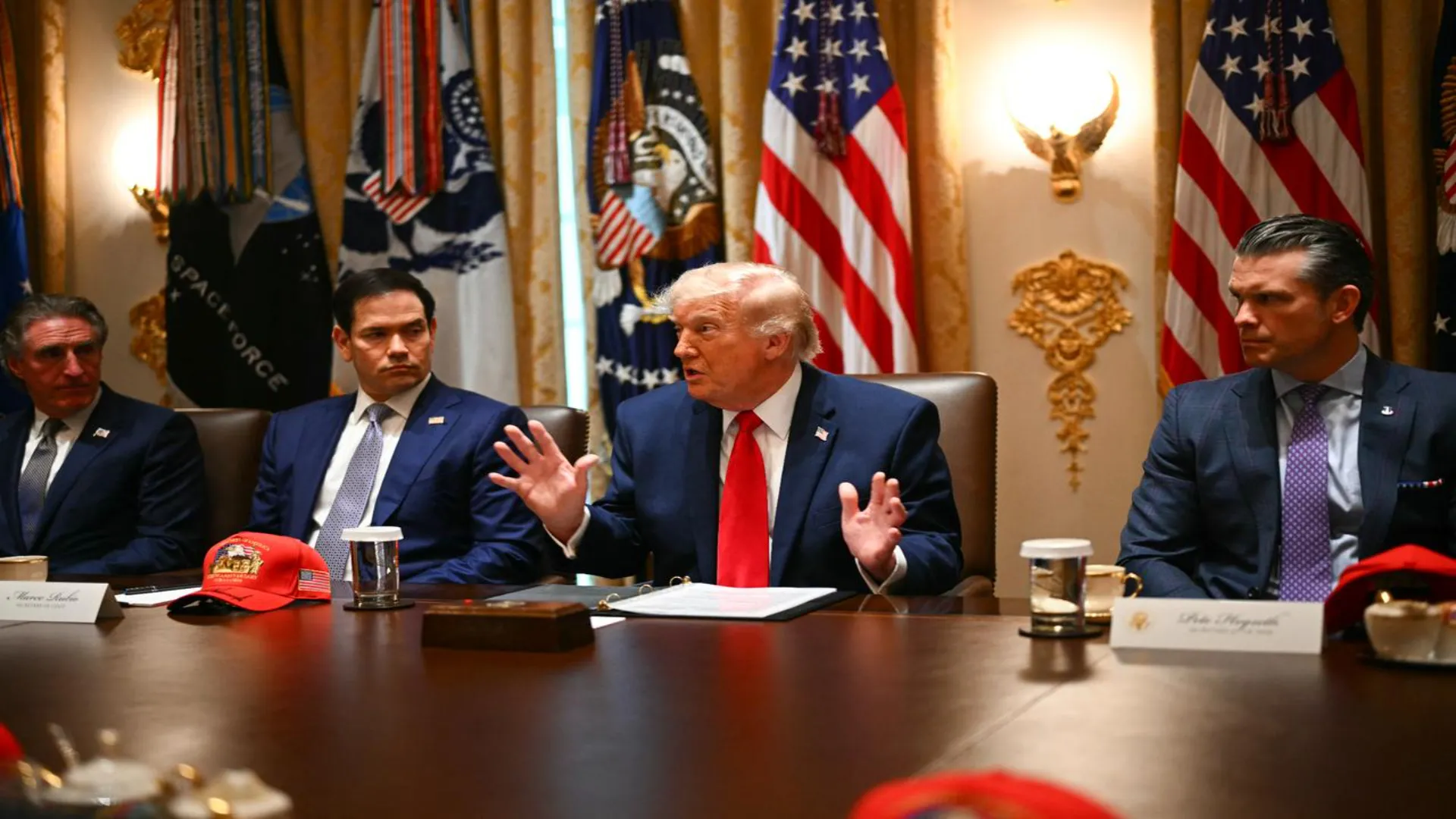
The world's most critical oil shipping lane has become the newest flashpoint in the already fragile diplomatic relationship between the United States and Iran, with President Donald Trump issuing an unusually blunt warning to Oman that sent shockwaves through the international community. Speaking directly from a cabinet meeting at the White House on Wednesday, Trump made clear that Washington would tolerate no arrangement that places control of the Strait of Hormuz in the hands of any regional power, including a longstanding American ally like Oman.
The remarks have drawn global attention not only for their aggressive tone but also for what they reveal about the immense tensions simmering beneath the surface of ongoing Iran and United States nuclear negotiations.
Trump's Direct Warning Shocks Diplomatic Circles
In a moment that immediately dominated international headlines, President Trump flatly rejected the notion of any joint maritime management arrangement involving Iran and Oman over the Strait of Hormuz. When pressed by reporters on whether he would support a temporary deal allowing the two countries to co oversee navigation through the strait, Trump was unequivocal.
"No, the strait's going to be open to everybody," Trump stated firmly. He went on to describe the waterway as an international passage belonging to no single nation, declaring that the United States would actively monitor and protect it.
"It's international waters. Nobody's going to control it. We're going to watch over it. We'll watch over it, but nobody's going to control it. That's part of the negotiation that we have," Trump said.
What followed stunned observers worldwide. In a warning directed squarely at Muscat, Trump added: "Oman will behave just like everybody else or we'll have to blow 'em up." The statement, delivered casually during a routine cabinet gathering, marked a dramatic escalation in rhetoric at a moment when diplomacy between Washington and Tehran is at an extraordinarily delicate stage.
What Triggered the Warning Against Oman
The backdrop to Trump's remarks was a report broadcast by Iranian state television alleging that Tehran had received an unofficial draft framework for a potential agreement between Iran and the United States. The reported document, if accurate, would represent one of the most consequential diplomatic breakthroughs in decades.
According to the Iranian state media report, the proposed framework included provisions to restore commercial shipping through the Strait of Hormuz to pre conflict levels within one month of the deal taking effect. The framework reportedly also outlined a joint maritime oversight mechanism involving both Iran and Oman, a US withdrawal of military forces from areas in close proximity to Iran, and the lifting of the American blockade on Iranian ports.
The United States side immediately and categorically rejected the report, describing it as "a complete fabrication." The denial underscored the profound sensitivity surrounding the negotiations and the risk that leaked or misrepresented details could derail progress entirely.
The Strategic Importance of the Strait of Hormuz
To understand why Trump's words carry such enormous weight, one must appreciate the extraordinary geopolitical and economic significance of the Strait of Hormuz. Positioned between the Musandam Peninsula of Oman and the southern coast of Iran, this narrow body of water is the world's single most important oil chokepoint.
Approximately 20 percent of global petroleum liquids and a significant share of liquefied natural gas pass through the strait on any given day. Any disruption to navigation, whether through military action, political blockade or militant interference, has the potential to trigger an immediate global energy crisis, sending oil prices surging and destabilising economies from Asia to Europe.
The United States has long maintained that freedom of navigation through the Strait of Hormuz is a matter of international law and global economic security, not a privilege to be negotiated or managed by regional actors. Trump's remarks reaffirmed this position in the strongest possible terms.
Oman's Quiet Diplomacy Between Two Rival Powers
Despite the severity of Trump's warning, Oman has historically played a unique and respected role as a trusted intermediary between the United States and Iran. The Gulf sultanate maintains friendly diplomatic relations with both Washington and Tehran, a rare position in a region defined by sharp geopolitical divides.
Just days before Trump's remarks, on May 24, senior Omani officials led by Foreign Minister Sayyid Badr bin Hamad Al Busaidi held formal discussions with an Iranian delegation headed by Deputy Foreign Minister Kazem Gharibabadi. The talks centred specifically on freedom of navigation through the Strait of Hormuz and broader regional security developments.
In a statement released by Oman's Foreign Ministry, both sides discussed the principles governing freedom of navigation in the strategic passage in accordance with international law. The two countries also exchanged perspectives on recent regional developments and examined practical avenues to strengthen maritime security, facilitate trade movement and ensure supply chain stability in the region.
Significantly, during the meeting, Omani Foreign Minister Al Busaidi also received a verbal message from Iranian Foreign Minister Seyed Abbas Araghchi, which reportedly reaffirmed Iran's commitment alongside the United States to restoring safe and sustainable freedom of navigation through the Strait of Hormuz. This messaging suggested that Tehran, despite its public posture, remains actively engaged in diplomatic channels and is aware of the high stakes involved.
A Fragile Peace Process Under Enormous Pressure
The Iran and United States nuclear talks represent one of the most complex diplomatic undertakings of the current decade. Both sides have engaged in multiple rounds of negotiations aimed at reaching a framework that addresses Washington's concerns over Iran's nuclear programme while offering Tehran sufficient economic relief to justify an agreement domestically.
The Strait of Hormuz has now emerged as one of the central pressure points in those negotiations. Iran has previously threatened to close the waterway in response to severe economic sanctions, a move that would constitute an act of war in the eyes of the United States and its allies. The United States, for its part, has maintained a formidable naval presence in the Persian Gulf to deter any such action.
Trump's latest remarks suggest that the US position on the strait is non negotiable regardless of the broader diplomatic context. While Washington appears willing to engage Iran on nuclear matters, it is drawing a hard line on any arrangement that would give Tehran meaningful leverage over one of the world's most vital waterways.
Where the Talks Stand Now
As of late May 2026, the Iran and United States negotiations remain ongoing but deeply uncertain. Both sides have acknowledged the existence of talks while carefully managing what information enters the public domain. The emergence of the reported draft framework via Iranian state television, subsequently dismissed by the United States as fabricated, reflects the combustible nature of the current diplomatic environment.
What remains clear is that the Strait of Hormuz sits at the absolute centre of this standoff, not just as a geographic feature but as a symbol of sovereignty, security and economic power. Trump's warning to Oman, however provocative, signals that the United States intends to shape the outcome of these negotiations from a position of overwhelming military and diplomatic strength.
The coming weeks will be decisive. Whether cooler heads prevail in the negotiating rooms of Vienna, Muscat or Washington, the world will be watching the waters of the Strait of Hormuz very closely.
Frequently Asked Questions
What did Trump say about Oman and the Strait of Hormuz?
During a White House cabinet meeting on Wednesday, President Trump warned Oman against attempting to control the Strait of Hormuz, stating that Oman would behave like every other nation or face military consequences. He described the strait as international waters that no single country would be allowed to dominate.
Why did Trump issue a warning to Oman specifically?
Trump's warning came after reports surfaced that Oman and Iran were in discussions about jointly overseeing maritime traffic through the Strait of Hormuz. Iranian state television also reported an unofficial draft agreement that included an Oman and Iran co-management framework, which the United States rejected as a complete fabrication.
What is the Strait of Hormuz and why does it matter globally?
The Strait of Hormuz is a narrow waterway located between Oman and Iran, serving as the world's single most critical oil chokepoint. Approximately 20 percent of global petroleum liquids and a significant share of liquefied natural gas pass through it daily. Any disruption to navigation can trigger immediate global energy price shocks and economic instability.
What was the reported Iran and US draft framework about?
Iranian state television reported that Tehran received an unofficial draft agreement proposing the restoration of commercial shipping through the Strait of Hormuz to pre-conflict levels within one month, a joint Iran and Oman maritime oversight role, US military withdrawal from areas near Iran, and the lifting of the American blockade on Iranian ports. The United States dismissed this report entirely as fabricated.
What role is Oman playing in the Iran and US negotiations?
Oman is acting as a trusted diplomatic intermediary between the United States and Iran. On May 24, 2026, Omani Foreign Minister Sayyid Badr bin Hamad Al Busaidi met with Iranian Deputy Foreign Minister Kazem Gharibabadi to discuss freedom of navigation through the Strait of Hormuz and regional security. Oman maintains friendly relations with both Washington and Tehran, making it uniquely positioned to facilitate dialogue.
What message did Iran's Foreign Minister send through Oman?
Iranian Foreign Minister Seyed Abbas Araghchi sent a verbal message through Omani Foreign Minister Al Busaidi reaffirming Iran's commitment alongside the United States to restoring safe and sustainable freedom of navigation through the Strait of Hormuz, signaling that Tehran remains actively engaged in diplomatic channels despite public tensions.
Where do the Iran and US nuclear talks currently stand?
As of late May 2026, negotiations between Iran and the United States remain ongoing but deeply uncertain. Both sides have acknowledged the talks while carefully controlling information entering the public domain. The emergence of leaked draft details through Iranian state media, later denied by Washington, reflects the highly volatile and sensitive nature of the current diplomatic process.
Has Iran ever threatened to close the Strait of Hormuz before?
Yes. Iran has on multiple occasions threatened to close the Strait of Hormuz in response to heavy economic sanctions imposed by the United States and Western nations. The United States has consistently maintained a strong naval presence in the Persian Gulf to deter any such action, which Washington and its allies would consider an act of war under international law.
What is the US position on who controls the Strait of Hormuz?
The United States firmly holds that the Strait of Hormuz is international waters and that no single nation, including regional powers like Iran or Oman, has the right to control or restrict navigation through it. Trump made clear that the US would actively oversee the waterway and that this position is a non-negotiable part of its broader Iran negotiations.
How could the Hormuz standoff impact ordinary people worldwide?
If navigation through the Strait of Hormuz is disrupted, the consequences for everyday people globally could include sharp rises in fuel and energy prices, increased costs for imported goods, supply chain disruptions, and broader inflationary pressure. Since roughly one fifth of the world's oil supply passes through the strait, even short term tensions can have immediate economic ripple effects across multiple countries.
Edit Profile
Help improve @KR

Was this page helpful to you?
Contact Khogendra Rupini
Are you looking for an experienced developer to bring your website to life, tackle technical challenges, fix bugs, or enhance functionality? Look no further.
I specialize in building professional, high-performing, and user-friendly websites designed to meet your unique needs. Whether it's creating custom JavaScript components, solving complex JS problems, or designing responsive layouts that look stunning on both small screens and desktops, I can collaborate with you.
Create something exceptional with us. Contact us today
Open for Collaboration
If you're looking to collaborate, I'm available for a variety of professional services, including -
- Website Design & Development
- Advertisement & Promotion Setup
- Hosting Configuration & Deployment
- Front-end & Back-end Code Implementation
- Code Testing & Optimization
- Cybersecurity Solutions & Threat Prevention
- Website Scanning & Malware Removal
- Hacked Website Recovery
- PHP & MySQL Development
- Python Programming
- Web Content Writing
- Protection Against Hacking Attempts