
India Steps Forward as a Global Health Ally, Sends Critical Emergency Medical Supplies to Combat Deadly Ebola Outbreak Ravaging Congo
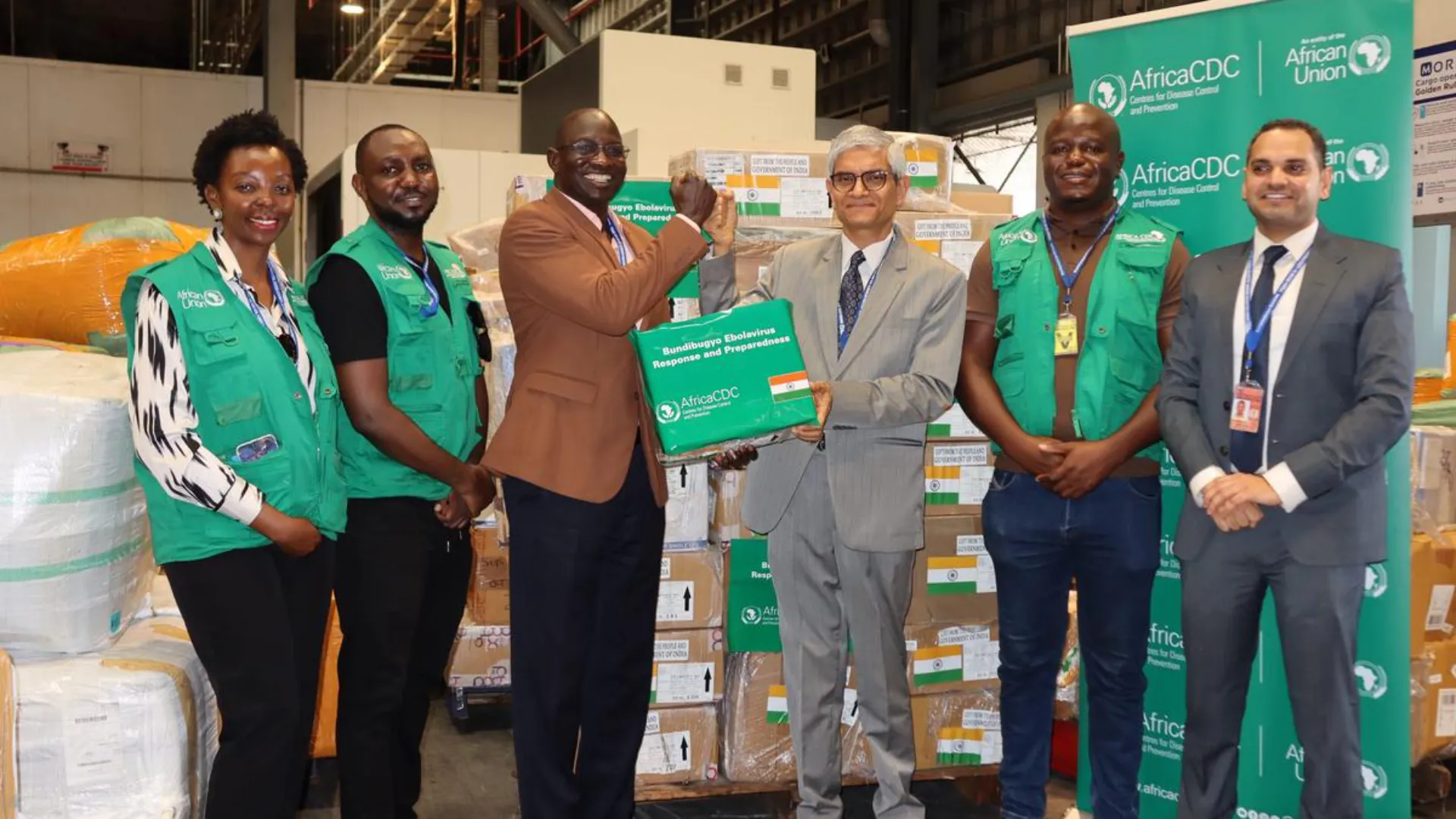
In a powerful demonstration of solidarity and humanitarian commitment, India has dispatched a significant consignment of emergency pharmaceutical and medical supplies to support the ongoing battle against the deadly Ebola outbreak currently devastating parts of the Democratic Republic of Congo. The supplies, generously donated by the Government of India, were formally received in Uganda by the Africa Centres for Disease Control and Prevention's Eastern Africa Regional Coordinating Centre, marking a meaningful and timely contribution to one of the most serious public health crises the African continent has faced in recent years.
The Africa CDC, headquartered in Addis Ababa, Ethiopia, confirmed the arrival of the consignment through an official social media announcement, expressing deep gratitude toward India for its generosity and swift response. The continental public health agency noted that the supplies would be directly deployed to affected communities in eastern DR Congo, where the outbreak has been escalating at a pace that has alarmed global health authorities.
What India's Emergency Medical Package Contains and Why It Matters
The consignment dispatched by India is not merely symbolic. It carries substance, urgency, and the potential to save lives in some of the most hard-to-reach and conflict-affected regions of central Africa. The package includes essential diagnostic tools, therapeutics, infection prevention and control materials, and case management support resources. Each of these components addresses a specific and critical gap in the current outbreak response infrastructure on the ground.
Diagnostics are essential in an Ebola outbreak because rapid identification of infected individuals is the first step toward containing the spread of the virus. Therapeutics, even if not fully approved for the specific Bundibugyo strain currently causing the outbreak, can support symptomatic management and improve survival rates when administered under proper medical supervision. Infection prevention and control materials, including personal protective equipment, help healthcare workers protect themselves while treating patients, reducing the risk of further transmission within clinical settings. Case management support ensures that patients are given structured, evidence-based care that improves their chances of survival and reduces community transmission.
Africa CDC welcomed the supplies with a formal statement that read, "Africa CDC welcomes the arrival of emergency pharmaceutical supplies generously donated by the Government and people of India to support the ongoing response to the Bundibugyo Ebola outbreak in the DRC." The agency also expressed appreciation for India's "continued support and commitment to protecting lives and advancing health security across the continent."
Understanding the Bundibugyo Ebola Strain at the Heart of This Crisis
To fully appreciate the severity of the situation unfolding in the DR Congo, it is important to understand the nature of the virus driving it. The current outbreak is caused by the Bundibugyo ebolavirus, one of six known species of the Ebola virus family. Unlike some of its counterparts, the Bundibugyo strain has a particularly challenging medical profile because, as the World Health Organisation has confirmed, there are currently no approved drugs or vaccines specifically designed to combat it.
The Bundibugyo strain was first identified in Uganda in 2007 and has since caused periodic outbreaks across parts of central and eastern Africa. Its reemergence in the current context of ongoing conflict and humanitarian vulnerability in eastern DR Congo has created what health officials describe as a near catastrophic collision of disease and instability.
Ebola itself is a severe, often fatal illness that spreads through direct contact with infected bodily fluids, contaminated materials, or infected animals. The virus commonly enters human populations when people come into close contact with the blood, organs, secretions, or bodily fluids of infected animals such as fruit bats, chimpanzees, gorillas, monkeys, forest antelope, or porcupines found ill or dead in the rainforest. Once it crosses into the human population, person-to-person transmission becomes the primary driver of the outbreak.
Symptoms of Ebola infection include high fever, severe vomiting, diarrhoea, and in the most critical cases, internal and external bleeding, which is a clinical manifestation that signals the advanced and often fatal stage of the disease.
The Scale of the Outbreak and the Race Against Time
The numbers emerging from the DR Congo are both alarming and sobering. As of May 26, 2026, more than 1,000 suspected infections had been recorded, and at least 220 fatalities had been confirmed. The outbreak has also spread beyond Congo's borders, with seven confirmed cases reported in neighboring Uganda, raising fears of broader regional transmission.
What makes these figures even more concerning is the acknowledgment by the World Health Organisation and various international aid agencies that the actual scale of the outbreak is likely significantly higher than what official numbers reflect. Conflict, displacement, limited access to healthcare, and community distrust of health systems in eastern DR Congo have all contributed to significant underreporting and delayed case detection.
The seriousness of the situation was formally recognized on May 17, 2026, when the WHO declared the Ebola outbreak in Congo and Uganda a Public Health Emergency of International Concern, the highest level of alarm the global health body can raise. This declaration triggers accelerated international response mechanisms, unlocks emergency funding, and calls upon member states to coordinate their resources toward containment. Despite these efforts, the WHO chief has stated that the epidemic appears to be outpacing current response capacity, underscoring the urgent need for exactly the kind of support India has now provided.
India's Growing Role as a Healthcare Partner for Africa
India's contribution to the Congo Ebola response is not an isolated gesture. It reflects a deepening and evolving partnership between India and the African continent that has been building steadily over the past several years. India has long held the reputation of being the pharmacy of the world, producing high-quality generic medicines and vaccines at scale and at costs that make them accessible to developing nations that cannot afford expensive branded pharmaceuticals from Western markets.
During the COVID-19 pandemic, India's role as a global vaccine supplier was on full display. The Serum Institute of India, the world's largest vaccine manufacturer by volume, supplied hundreds of millions of doses of the AstraZeneca vaccine to Africa and other developing regions through the COVAX facility, at a time when global vaccine inequity was a deeply contentious political and humanitarian issue. India's supply of affordable COVID-19 vaccines to African nations helped prevent potentially catastrophic waves of infections in health systems that were already severely stretched.
Beyond vaccines, India has built bilateral health cooperation agreements with multiple African nations, supported the development of local pharmaceutical manufacturing capacity on the continent, and provided technical assistance, training, and medical supplies across a range of disease programs. The Emergency Medical Supplies now delivered to Uganda for deployment in eastern Congo represent the continuation of this established pattern of engagement and goodwill.
Why This Act of Solidarity Carries Strategic and Moral Weight
India's decision to send emergency supplies to the Congo Ebola response carries significance that extends beyond the immediate humanitarian benefit. It signals that India views its relationship with Africa as one built on genuine partnership, mutual respect, and shared responsibility for global health security rather than merely transactional or geopolitical calculation.
In a world where health crises have increasingly become flashpoints for geopolitical competition, India's quiet, practical contribution stands out for its focus on impact over optics. The supplies sent are not symbolic tokens. They are functional, operational tools of response that will directly influence how effectively health workers on the ground can diagnose cases, treat patients, and protect themselves and their communities from further spread.
For the communities in eastern DR Congo who are facing the dual burden of conflict and disease, these supplies represent hope in concrete form. For Africa's health institutions, including Africa CDC, which is working tirelessly to build the continent's capacity for autonomous, self-driven public health responses, India's partnership offers both practical support and a vote of confidence.
What the World Must Do Now to Contain This Outbreak
The Ebola outbreak in eastern DR Congo is a test not just for the affected countries but for the global health architecture as a whole. The declaration of a Public Health Emergency of International Concern must translate into coordinated, well-resourced, and sustained action. The absence of approved vaccines and therapeutics for the Bundibugyo strain is a gap that the global research community must urgently work to address. Accelerated clinical trials, emergency use authorization pathways, and enhanced investment in outbreak preparedness for rare Ebola strains must all be prioritized.
Community engagement must also be central to the response. In regions where trust in health authorities has been eroded by years of conflict and historical mismanagement, health workers and community leaders need culturally sensitive, locally grounded strategies to encourage communities to seek care, report suspected cases, and support contact tracing efforts. Without community cooperation, even the most well-resourced response will struggle to break the chains of transmission.
India's contribution is a welcome step. But it is one step among many that will be needed to bring this outbreak under control and protect not just the people of eastern Congo and Uganda but the global population from what remains one of the most dangerous infectious diseases known to medicine.
Frequently Asked Questions
What emergency supplies did India send for the Ebola outbreak in Congo?
India donated a consignment of essential diagnostics, therapeutics, infection prevention and control materials, and case management support resources to assist the ongoing Ebola outbreak response in eastern DR Congo.
Where were India's emergency medical supplies received and who accepted them?
The supplies were received in Uganda by the Africa Centres for Disease Control and Prevention's Eastern Africa Regional Coordinating Centre, which will deploy them to affected communities in eastern DR Congo.
What is the Bundibugyo Ebola strain and why is it so dangerous?
Bundibugyo ebolavirus is one of six known species of the Ebola virus family. It was first identified in Uganda in 2007 and is considered particularly dangerous because the World Health Organisation has confirmed there are currently no approved drugs or vaccines specifically designed to treat or prevent it.
How serious is the current Ebola outbreak in DR Congo?
As of May 26, 2026, more than 1,000 suspected infections and at least 220 fatalities had been recorded. Seven confirmed cases were also reported in neighboring Uganda. Health authorities believe the actual scale is significantly higher due to underreporting caused by conflict and limited healthcare access.
Has the WHO declared the Congo Ebola outbreak a global health emergency?
Yes. The World Health Organisation declared the Ebola outbreak in Congo and Uganda a Public Health Emergency of International Concern on May 17, 2026, which is the highest level of health alert the WHO can issue.
How does Ebola spread from animals to humans?
The virus enters human populations through close contact with blood, organs, secretions, or bodily fluids of infected animals such as fruit bats, chimpanzees, gorillas, monkeys, forest antelope, or porcupines found ill or dead in the rainforest. Once in the human population, person-to-person transmission through infected bodily fluids becomes the primary driver.
What are the main symptoms of Ebola infection?
Ebola symptoms include high fever, severe vomiting, diarrhoea, and in critical advanced cases, internal and external bleeding. It is a severe and often fatal illness that requires immediate medical isolation and supportive care.
Why did India send medical supplies to Africa for the Ebola response?
India has been steadily building a strong health and development partnership with African nations, supplying medicines, vaccines, and medical assistance during public health emergencies. This contribution to the Congo Ebola response reflects India's continuing commitment to global health security and humanitarian solidarity with the African continent.
What role did India play during the COVID-19 pandemic in Africa?
During the COVID-19 pandemic, India supplied hundreds of millions of vaccine doses to African nations through the COVAX facility, primarily through the Serum Institute of India. India also provided bilateral medical assistance, technical support, and affordable generic medicines to multiple African countries.
What did Africa CDC say about India's contribution to the Ebola response?
Africa CDC formally welcomed India's donation and thanked the Government and people of India for their continued support and commitment to protecting lives and advancing health security across the African continent.
Why is the eastern DR Congo particularly vulnerable to the Ebola outbreak?
Eastern DR Congo faces a combination of ongoing armed conflict, large-scale population displacement, limited healthcare infrastructure, and deep-rooted community distrust of health authorities. These factors together have created conditions where disease surveillance, case detection, and response operations are severely hampered.
Is there a vaccine available for the Bundibugyo strain of Ebola?
No. According to the World Health Organisation, there are currently no approved vaccines or specific therapeutic drugs for the Bundibugyo ebolavirus strain responsible for the current outbreak in DR Congo, making containment efforts significantly more challenging.
Has the Ebola outbreak spread beyond DR Congo?
Yes. Seven confirmed Ebola cases have been reported in Uganda, which shares a border with eastern DR Congo. This cross-border spread has raised serious concerns among regional and global health authorities about wider transmission beyond the initial outbreak zone.
Why is India considered the pharmacy of the world in global health emergencies?
India is the world's largest producer of generic medicines and vaccines by volume. It supplies high-quality pharmaceutical products at significantly lower costs than Western manufacturers, making critical medicines and vaccines accessible to developing nations during health crises.
What does a WHO Public Health Emergency of International Concern declaration mean?
A Public Health Emergency of International Concern is the highest level of global health alert the WHO can issue. It triggers accelerated international response coordination, unlocks emergency funding mechanisms, and formally calls upon member states to contribute resources toward containment of the declared outbreak.
What is needed globally to bring the Congo Ebola outbreak under control?
Experts say effective containment requires sustained international funding, accelerated research into vaccines and treatments for the Bundibugyo strain, strong community engagement strategies, improved access to healthcare in conflict zones, and coordinated cross-border surveillance between DR Congo and neighboring countries including Uganda.
Edit Profile
Help improve @KR

Was this page helpful to you?
Contact Khogendra Rupini
Are you looking for an experienced developer to bring your website to life, tackle technical challenges, fix bugs, or enhance functionality? Look no further.
I specialize in building professional, high-performing, and user-friendly websites designed to meet your unique needs. Whether it's creating custom JavaScript components, solving complex JS problems, or designing responsive layouts that look stunning on both small screens and desktops, I can collaborate with you.
Create something exceptional with us. Contact us today
Open for Collaboration
If you're looking to collaborate, I'm available for a variety of professional services, including -
- Website Design & Development
- Advertisement & Promotion Setup
- Hosting Configuration & Deployment
- Front-end & Back-end Code Implementation
- Code Testing & Optimization
- Cybersecurity Solutions & Threat Prevention
- Website Scanning & Malware Removal
- Hacked Website Recovery
- PHP & MySQL Development
- Python Programming
- Web Content Writing
- Protection Against Hacking Attempts