
Apple iPhone 18 Pro and Pro Max Set to Revolutionise Satellite Communication With Automatic Background Connectivity That Goes Far Beyond Emergency Use
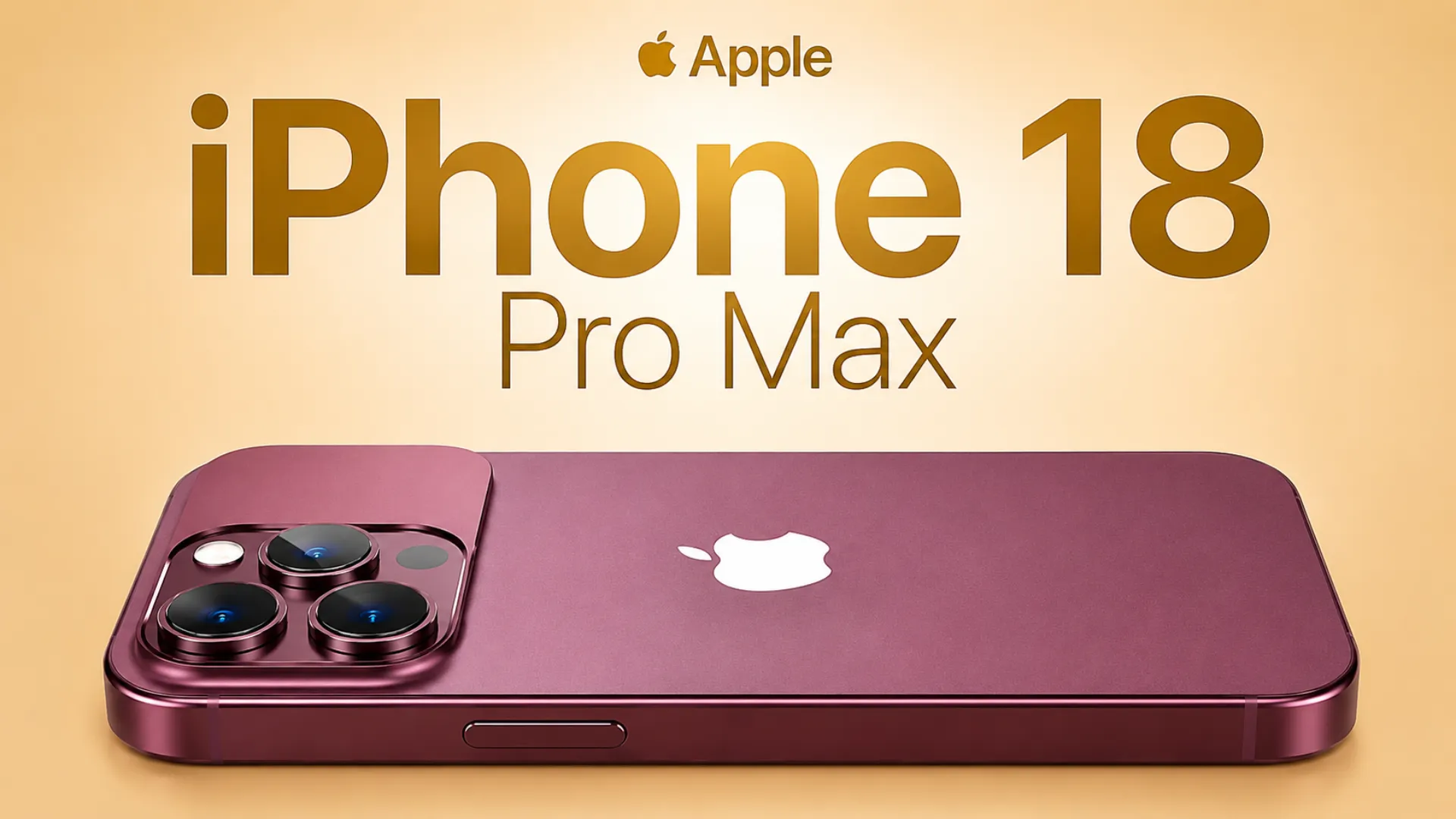
Apple's upcoming iPhone 18 Pro and iPhone 18 Pro Max are generating enormous excitement across the global technology community, and this time the buzz is not just about camera upgrades or design changes. Leaked information circulating widely ahead of the expected September 2026 launch reveals that Apple is preparing to fundamentally transform how smartphones connect to satellite networks. For the first time in iPhone history, satellite connectivity is expected to move beyond a niche emergency feature and evolve into an automatic, always-available background service that handles everyday calls, messages, and mobile data whenever traditional cellular networks are unavailable.
This is a significant shift in how Apple approaches connectivity, and the implications for users in remote areas, disaster-prone regions, and places with unreliable cellular infrastructure are profound. The iPhone 18 Pro may well be the device that makes satellite communication feel as natural and effortless as switching between Wi-Fi and cellular data.
The Technology Powering This Leap Forward
At the heart of this transformation is Apple's proprietary C2 modem, which is expected to debut in the iPhone 18 Pro lineup. This modem is engineered to support 5G NR-NTN, which stands for Non-Terrestrial Networks, a next-generation communication standard designed specifically to bridge the gap between ground-based cellular infrastructure and orbiting satellites.
The move to an in-house modem is a strategic masterstroke for Apple. By designing the C2 modem internally rather than relying on Qualcomm hardware as it has in previous generations, Apple gains complete control over how satellite and cellular technologies are integrated at the chip level. This tighter integration allows the iPhone 18 Pro to intelligently and automatically switch between 5G networks and satellite connections in the background, without requiring users to take any manual action.
Unlike the satellite features introduced in earlier iPhone models, which required users to physically point their device toward the sky and find an open area free from obstructions, the iPhone 18 Pro is designed to make this entire process invisible to the user. The phone is expected to detect when cellular signal drops below a usable threshold and seamlessly hand off communication to a satellite network without interrupting the ongoing activity. This level of automation represents a genuinely new chapter in mobile connectivity.
What Satellite Features Are Expected to Be Available
According to the leaked information, the satellite capabilities on iPhone 18 Pro will extend well beyond what Apple has previously offered. The scope of what this technology could enable is both impressive and practically meaningful for a wide range of users.
Regular text messaging through standard messaging applications is expected to work over satellite connectivity, which means users will no longer need to be in a cellular coverage zone to stay in contact with family, friends, or colleagues. This alone could be transformative for people living in rural communities, frequent travellers to remote destinations, or anyone whose work takes them into areas where traditional towers simply do not reach.
Limited internet access is also expected to function over the satellite connection, opening the door to basic web browsing and app functionality even in the most isolated locations. While full-speed broadband over satellite on a smartphone remains a future ambition, having functional internet access in places with no cellular coverage is a practical and meaningful advancement.
Navigation support through Apple Maps is another feature expected to benefit from satellite connectivity. For hikers, off-road explorers, and people travelling through areas with poor signal, the ability to access real-time mapping and navigation without relying on cellular towers could be genuinely lifesaving in certain situations.
Voice calls are also rumoured to be supported over satellite, though details on the quality and reliability of such calls remain limited at this stage. If Apple can deliver acceptable call quality over satellite, it would be one of the most ambitious real-world applications of Non-Terrestrial Network technology on a consumer device.
How This Differs From What Current iPhones Can Do
To fully appreciate how significant the iPhone 18 Pro's satellite features are expected to be, it is worth understanding what Apple's existing satellite capabilities look like. Current iPhones running iOS 18 already offer satellite-based tools, but they are purposefully limited in scope.
Emergency SOS via Satellite allows users to contact emergency services in locations where there is no cellular or Wi-Fi signal. This feature has already proven its value in real-world situations, with reports of users being rescued after activating the service in remote outdoor environments. Roadside Assistance via Satellite is another existing feature that allows stranded motorists in areas without network coverage to connect with roadside support providers.
Both of these features are fundamentally reactive and emergency-focused. They require users to actively initiate a satellite session, position themselves correctly for the best signal, and wait through a guided process before communication is established. They are not designed for everyday use.
The iPhone 18 Pro changes the entire philosophy behind satellite connectivity. Rather than treating satellite as a last resort that users must consciously activate, Apple is reportedly building it into the normal communication layer of the device. The satellite network becomes a silent, automatic fallback that activates whenever it is needed, without any user intervention.
Apple's Modem Strategy and Its Long-Term Significance
Apple's decision to develop the C2 modem in-house is not simply about reducing costs or cutting ties with a supplier. It reflects a deeper strategic vision for the future of iPhone connectivity. By owning the modem technology entirely, Apple can design hardware and software together in a way that external chip suppliers cannot match.
The C2 modem reportedly brings significant improvements in power efficiency alongside its satellite capabilities, which matters enormously in a device that users expect to last through a full day of heavy use. Integrating complex satellite communication technology into a modem that also handles 5G without draining battery life is an engineering challenge that Apple has apparently addressed with this new silicon.
This in-house approach also gives Apple the flexibility to iterate quickly. Future improvements to satellite protocols, new frequency bands, and emerging Non-Terrestrial Network standards can be incorporated into future modem generations without waiting for a third party to update their designs. For a company that plans product roadmaps many years in advance, this control is invaluable.
Launch Timeline and What to Expect From the iPhone 18 Series
Apple is widely expected to follow its traditional September launch calendar for the premium tier of the iPhone 18 family. The iPhone 18 Pro, iPhone 18 Pro Max, and the highly anticipated iPhone Ultra, which is expected to be Apple's first foldable iPhone, are all projected to be announced and made available in September 2026.
The broader iPhone 18 lineup, including the standard iPhone 18, the more affordable iPhone 18e, and the iPhone Air 2, is expected to follow in early 2027. This staggered release approach allows Apple to manage manufacturing capacity and create distinct waves of consumer excitement across different market segments.
The foldable iPhone Ultra, if it launches alongside the Pro models as anticipated, would represent another historic moment for Apple. The company has long resisted the foldable form factor while competitors have experimented with various designs, and its entry into this category would almost certainly set a new benchmark for the entire segment.
Why This Matters for Users Around the World
The satellite connectivity revolution that Apple appears to be engineering into the iPhone 18 Pro carries genuine significance for people far beyond the typical early adopter audience. In countries and regions where cellular infrastructure remains patchy or unreliable, the ability to fall back automatically to satellite communication could mean the difference between staying connected and being completely cut off.
For users in areas prone to natural disasters, where cellular towers are often among the first pieces of infrastructure to fail, always-on satellite fallback could provide a critical communication lifeline. For outdoor enthusiasts, field researchers, maritime travellers, and rural communities, a phone that seamlessly bridges terrestrial and non-terrestrial networks without any manual configuration is a genuinely useful tool rather than a novelty.
Apple has historically been successful at taking complex technologies and making them feel simple and intuitive to ordinary users. If the iPhone 18 Pro delivers on the leaked promises, automatic satellite connectivity may be remembered as one of those watershed moments in smartphone history, similar to the introduction of always-on internet connectivity or the shift to face recognition, where something that once seemed extraordinary quietly became the new normal.
The world is watching September 2026 very closely.
Frequently Asked Questions
What is the biggest satellite communication upgrade expected in the iPhone 18 Pro series?
The iPhone 18 Pro and Pro Max are expected to introduce automatic background satellite connectivity that works seamlessly whenever traditional cellular networks become unavailable.
How will satellite connectivity on the iPhone 18 Pro differ from current iPhones?
Current iPhones mainly use satellite features for emergencies and require manual activation. The iPhone 18 Pro is expected to switch automatically between cellular and satellite networks without user intervention.
What technology is expected to power the new satellite features on iPhone 18 Pro?
Apple is reportedly introducing its new in-house C2 modem with support for 5G NR-NTN, a communication standard designed for satellite and non-terrestrial network connectivity.
Will the iPhone 18 Pro support regular messaging over satellite?
Yes. Leaks suggest users may be able to send and receive standard text messages over satellite connections even in areas without cellular coverage.
Can the iPhone 18 Pro access the internet through satellites?
The device is expected to offer limited internet access through satellite connectivity, enabling basic browsing and app functionality in remote locations.
Is Apple Maps expected to work through satellite connectivity on iPhone 18 Pro?
Yes. Satellite-supported navigation through Apple Maps is expected to help users access mapping and navigation tools in areas with poor or no mobile network coverage.
Will voice calls work over satellite on the iPhone 18 Pro?
According to leaks, Apple is exploring satellite voice calling support, although detailed information about call quality and reliability has not yet been confirmed.
Why is Apple's new C2 modem important for the future of iPhones?
The C2 modem gives Apple greater control over hardware and software integration, improves power efficiency, and allows faster development of future satellite and 5G technologies.
Who could benefit the most from the iPhone 18 Pro satellite connectivity features?
People living in rural regions, outdoor travellers, disaster-prone communities, field workers, and users in areas with unreliable cellular networks could benefit significantly.
When is Apple expected to launch the iPhone 18 Pro and Pro Max?
Apple is widely expected to announce the iPhone 18 Pro lineup, including the Pro Max and possible iPhone Ultra, during its traditional September 2026 launch event.
Edit Profile
Help improve @KR

Was this page helpful to you?
Contact Khogendra Rupini
Are you looking for an experienced developer to bring your website to life, tackle technical challenges, fix bugs, or enhance functionality? Look no further.
I specialize in building professional, high-performing, and user-friendly websites designed to meet your unique needs. Whether it's creating custom JavaScript components, solving complex JS problems, or designing responsive layouts that look stunning on both small screens and desktops, I can collaborate with you.
Create something exceptional with us. Contact us today
Open for Collaboration
If you're looking to collaborate, I'm available for a variety of professional services, including -
- Website Design & Development
- Advertisement & Promotion Setup
- Hosting Configuration & Deployment
- Front-end & Back-end Code Implementation
- Code Testing & Optimization
- Cybersecurity Solutions & Threat Prevention
- Website Scanning & Malware Removal
- Hacked Website Recovery
- PHP & MySQL Development
- Python Programming
- Web Content Writing
- Protection Against Hacking Attempts