
Madhya Pradesh High Court Cancels Bail of Retired Judge Giribala Singh in Daughter-in-Law Twisha Sharma Death Case, Cites Non-Cooperation and Heinous Nature of the Offence
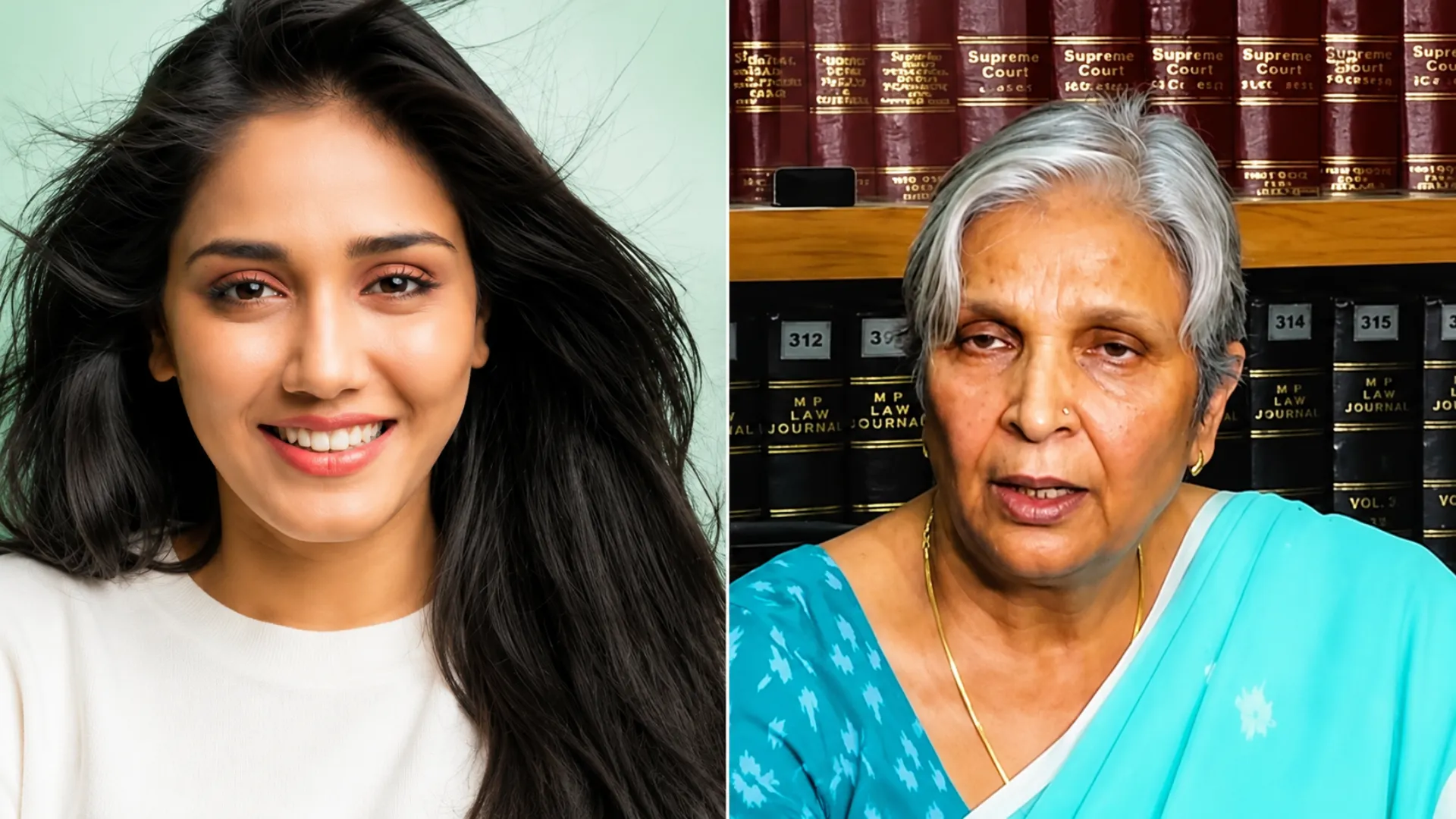
The Madhya Pradesh High Court delivered a significant legal blow late Wednesday night when Justice Devanarayan Mishra of the single bench quashed the anticipatory bail granted to Giribala Singh, a retired judge accused in connection with the death of her daughter-in-law Twisha Sharma. The order, passed in an extraordinary late-night hearing, came after the high court found serious grounds including consistent allegations against the accused, deliberate non-cooperation with the Central Bureau of Investigation, the heinous nature of the offence, and a fundamental failure by the trial court to properly appreciate the evidence placed before it.
The case has sent shockwaves across Madhya Pradesh, not merely because of its tragic circumstances, but because a woman from within the judicial fraternity herself stands accused in what investigators are treating as far more than a simple case of suspected suicide.
The Death That Sparked a National Outcry
Twisha Sharma, a woman in her early thirties, was found dead on May 12, 2026, at her marital home in Bhopal. Her death was initially treated as a suspected suicide, but the circumstances surrounding it quickly attracted scrutiny. Her family alleged that Twisha had been subjected to sustained harassment and repeated dowry demands at the hands of her husband Samarth Singh and his mother Giribala Singh, a retired judge from the Madhya Pradesh judiciary.
A First Information Report was registered on May 15, 2026, and the CBI was brought in to investigate the case given its sensitivity and the professional background of the accused. Within hours of the FIR being registered, the 10th Additional Sessions Judge in Bhopal granted Giribala Singh interim anticipatory bail, a decision that drew immediate outrage from Twisha's family and legal circles alike. Samarth Singh, who had gone missing for nearly ten days before surrendering, remained in CBI custody.
Why the High Court Intervened
The Madhya Pradesh government and Twisha's father moved the high court challenging the trial court's order. The CBI filed an intervention application opposing bail. The arguments that followed painted a damning picture of a woman who, despite receiving judicial protection, allegedly used that protection to obstruct rather than cooperate with the investigation.
Advocate General Prashant Singh, appearing for the state government, told the court that Giribala Singh had violated bail conditions from the very beginning. She failed to appear on multiple dates when notices were issued for recording her statement. According to the state's submissions, investigators issued five separate notices to the accused, none of which she complied with. Ultimately, authorities had to resort to serving notices through WhatsApp. The advocate general described her conduct bluntly as a game of hide and seek with the law.
The high court, in its order, was unequivocal. It noted that after receiving anticipatory bail, the accused was not cooperating with the investigation despite repeated notices. Justice Devanarayan Mishra further observed that the trial court had failed to consider several pieces of key evidence before granting bail. Among those was WhatsApp communication that, according to the court, suggested that the allegations were not limited to Samarth Singh alone, but extended meaningfully to Giribala Singh as well.
Injury Marks, Pregnancy and Disturbing Details
The high court's order brought into sharp focus details that had previously not received enough public attention. The postmortem report established that Twisha's death was caused by antemortem hanging by ligature. However, the same report also documented six additional injuries on her body. Four of these were on the left arm, one on the ring finger, and one on the head, all of which were antemortem in nature. Critically, the court noted that a separate query report confirmed these injuries were not caused during the removal of the body from the ligature or during transport to the hospital. These findings raised serious questions about what had transpired in the hours before Twisha's death.
The hearing also brought up a deeply painful and intimate detail. Twisha had become pregnant during her marriage, which had been solemnized on December 9, 2025. The pregnancy was terminated within approximately two months. The CBI's counsel highlighted allegations that Twisha's husband and mother-in-law had questioned her character upon learning of the pregnancy and had compelled her to undergo an abortion. Giribala Singh, on the other hand, maintained before the court that the deceased herself had wanted to terminate the pregnancy. The high court acknowledged this as a contested fact that the trial court had not sufficiently examined.
On the question of financial transactions, the court noted that money transfers into Twisha's account were made between October 2025 and February 2026, but no amount was transferred closer to the time of her death. The court did not accept the argument that these transactions proved the absence of dowry demands and noted that the overall allegations against Giribala Singh could not be dismissed on this basis.
Tampering Allegations and Character Assassination Claims
One of the most serious allegations raised before the high court came from the counsel representing Twisha's family. Senior advocate Siddharth Luthra argued that Giribala Singh, owing to her professional background as a former judge with a deep understanding of crime scenes and forensic procedures, was uniquely positioned to interfere with evidence. This was not treated as a hypothetical concern.
The family's legal team told the court that police had seized CCTV footage from Giribala Singh's residence during the investigation on May 13, the day after Twisha's death. However, the accused allegedly possessed footage of the incident independently and selectively leaked a short clip on social media with the alleged intention of tampering with evidence and shaping public perception before investigators could complete their work.
The allegation of character assassination added another disturbing dimension to an already complex case. Family lawyer Ankur Pandey told the court and media that after receiving bail, Giribala Singh had attempted to malign Twisha Sharma's reputation. His argument was that a woman who had just lost her life could not defend herself, yet attempts were being made to defame her posthumously. This conduct, he argued, was itself indicative of intent.
Giribala Singh's own public remarks in the days following Twisha's death did little to silence the criticism. In a statement given to a national news agency on May 19, one week after her daughter-in-law's death, the retired judge lamented that Twisha had not watered her houseplants despite claiming a fondness for them before marriage. The remark, widely circulated, was seen by many observers as tone-deaf at best and deeply callous at worst, coming as it did in the immediate aftermath of a young woman's violent and contested death.
Trial Court's Reasoning Rejected
The trial court, when granting anticipatory bail, had cited Giribala Singh's age of 63 years as a primary factor, reasoning that she posed no flight risk as a long-term resident of Bhopal. The high court firmly rejected this reasoning. Justice Mishra held that old age alone cannot justify bail when the offence is heinous, the accused has been non-cooperative, and the trial court has failed to weigh the evidence presented before it. The high court noted that the gravity of the charges under Sections 80(2), 85, and 3(5) of the Bharatiya Nyaya Sanhita 2023, along with Sections 3 and 4 of the Dowry Prohibition Act 1961, demanded a far more rigorous examination than the trial court had applied.
With the anticipatory bail quashed, Giribala Singh now faces the prospect of arrest by the CBI, which has been overseeing the investigation from the start given the sensitive nature of the case and the professional identity of the accused. The investigation continues to probe the full sequence of events that led to Twisha Sharma's death on May 12, the nature of her injuries, the circumstances of the pregnancy termination, and the alleged pattern of harassment and dowry demands that her family insists defined the final months of her young life.
The case has reignited a broader national conversation about the intersection of judicial privilege, institutional accountability, and the deeply entrenched social menace of dowry-related violence in India, one that claims thousands of lives every year and continues to devastate families across every class and profession.
Frequently Asked Questions
Who is Giribala Singh and why was her bail cancelled by the Madhya Pradesh High Court?
Giribala Singh is a retired judge from Madhya Pradesh who is accused in the death case of her daughter-in-law Twisha Sharma. The Madhya Pradesh High Court cancelled her anticipatory bail because she repeatedly failed to cooperate with the CBI investigation, violated bail conditions, did not appear despite five notices, and the trial court had failed to properly consider key evidence including WhatsApp chats and postmortem findings.
How did Twisha Sharma die and what are the allegations in the case?
Twisha Sharma, a woman in her early thirties, was found dead on May 12, 2026, at her marital home in Bhopal. Her death was initially suspected to be a suicide. However, her family has alleged that she was subjected to continuous harassment and repeated dowry demands by her husband Samarth Singh and mother-in-law Giribala Singh. The CBI is currently investigating the case.
What injuries were found on Twisha Sharma's body as per the postmortem report?
The postmortem report confirmed that Twisha's death was caused by antemortem hanging by ligature. However, six additional injuries were also found on her body, including four on her left arm, one on her ring finger, and one on her head, all of which were antemortem in nature. A separate query report confirmed these injuries were not caused during removal of the body or transport to the hospital.
Why was the trial court's anticipatory bail order quashed by the high court?
The Madhya Pradesh High Court quashed the trial court's bail order because it found several serious lapses. The trial court had relied primarily on Giribala Singh's age of 63 years to justify bail while ignoring WhatsApp evidence, the postmortem findings, allegations of tampering with CCTV footage, and the accused's consistent non-cooperation with CBI investigators.
What role did the pregnancy allegation play in the high court hearing?
The CBI and the family's counsel alleged that when Twisha became pregnant during the marriage, her husband and mother-in-law questioned her character and compelled her to terminate the pregnancy within two months of the marriage in December 2025. Giribala Singh denied this, claiming Twisha had wanted the abortion herself. The high court noted the trial court had not adequately examined this contested issue.
Did Giribala Singh attempt to tamper with evidence after receiving bail?
According to allegations made before the high court, yes. The family's legal counsel argued that Giribala Singh, using her professional knowledge as a retired judge with understanding of forensic procedures and crime scenes, allegedly accessed CCTV footage of the incident from her own house and selectively leaked a short clip on social media to potentially shape public perception and interfere with the ongoing investigation.
Why is the CBI investigating this case instead of the local police?
The CBI was brought into the investigation due to the sensitive and high-profile nature of the case. Giribala Singh's identity as a retired judge from the Madhya Pradesh judiciary made it necessary to hand over the investigation to a central agency to ensure impartiality, credibility, and proper handling of what the high court itself described as an offence of a heinous nature.
What charges have been filed against Giribala Singh and Samarth Singh?
An FIR was registered on May 15, 2026, with charges under Sections 80(2), 85, and 3(5) of the Bharatiya Nyaya Sanhita 2023, along with Sections 3 and 4 of the Dowry Prohibition Act 1961. Samarth Singh surrendered after being missing for approximately ten days and remains in CBI custody, while his mother Giribala Singh had received anticipatory bail that has now been quashed.
What was controversial about Giribala Singh's public statements after Twisha's death?
One week after Twisha's death, Giribala Singh made a widely criticised public remark to a national news agency in which she complained that her daughter-in-law had not watered the houseplants despite claiming before marriage that she loved plants. The remark was seen as deeply insensitive and callous by the public, Twisha's family, and media observers, and was also cited as part of broader allegations of character assassination against the deceased.
What is the broader significance of this case for India?
This case has reignited a national debate about dowry-related violence, institutional accountability, and the misuse of professional privilege. The fact that the accused is a retired judge has raised serious questions about whether insiders in the legal system can exploit their knowledge of judicial and forensic procedures to obstruct justice. It also highlights the urgent need to protect victims of domestic harassment and ensure equal application of law regardless of the accused person's professional background.
Edit Profile
Help improve @KR

Was this page helpful to you?
Contact Khogendra Rupini
Are you looking for an experienced developer to bring your website to life, tackle technical challenges, fix bugs, or enhance functionality? Look no further.
I specialize in building professional, high-performing, and user-friendly websites designed to meet your unique needs. Whether it's creating custom JavaScript components, solving complex JS problems, or designing responsive layouts that look stunning on both small screens and desktops, I can collaborate with you.
Create something exceptional with us. Contact us today
Open for Collaboration
If you're looking to collaborate, I'm available for a variety of professional services, including -
- Website Design & Development
- Advertisement & Promotion Setup
- Hosting Configuration & Deployment
- Front-end & Back-end Code Implementation
- Code Testing & Optimization
- Cybersecurity Solutions & Threat Prevention
- Website Scanning & Malware Removal
- Hacked Website Recovery
- PHP & MySQL Development
- Python Programming
- Web Content Writing
- Protection Against Hacking Attempts