
Israel Hezbollah Ceasefire Crumbles Within Hours As Fresh Strikes Kill Dozens In South Lebanon, US Iran Talks Thrown Into Disarray
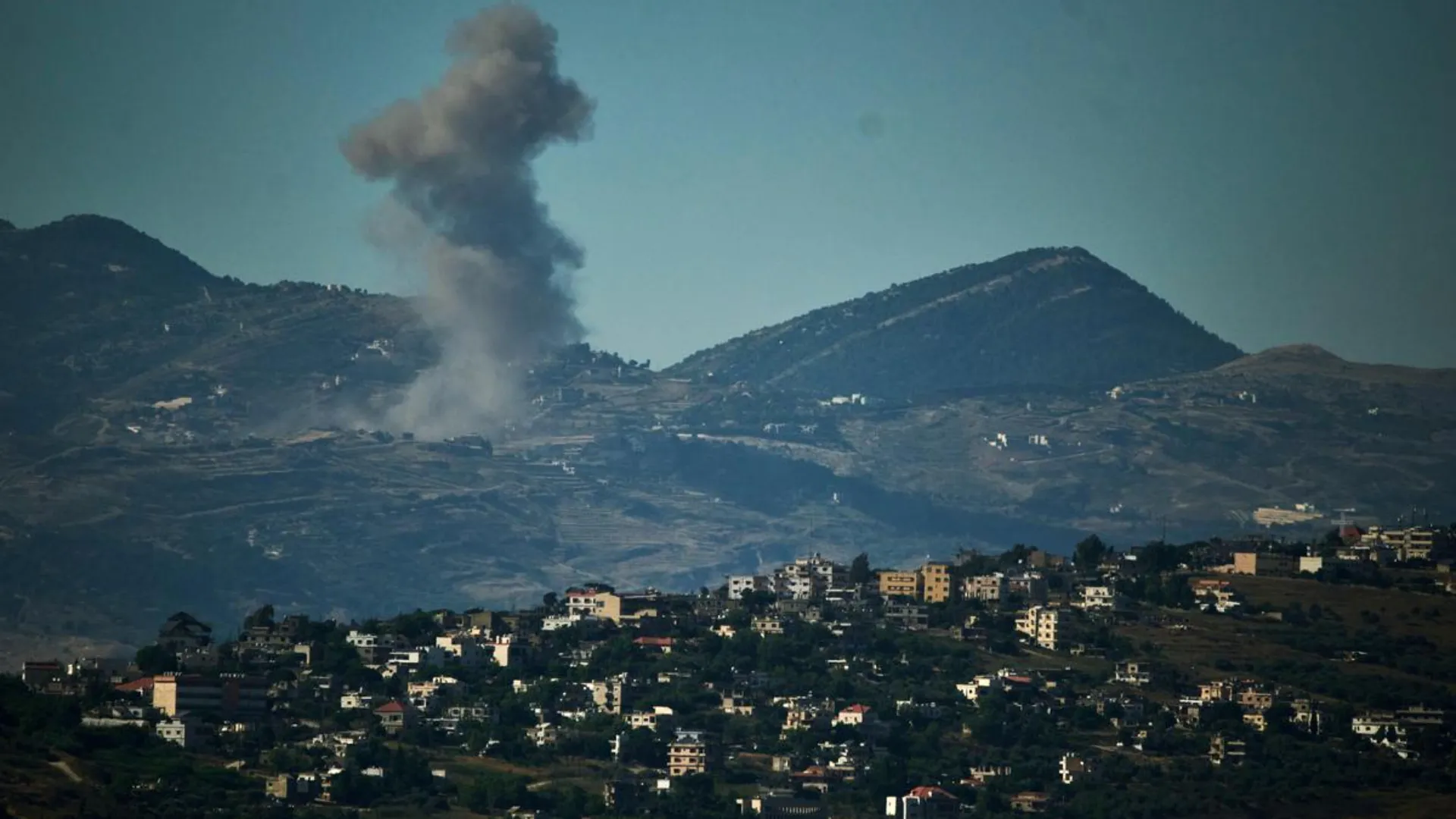
A ceasefire announced between Israel and Hezbollah on Friday has already come under severe strain, with Israeli strikes continuing across southern Lebanon into Saturday and killing several more people, even as a separate set of US-Iran negotiations meant to cement a broader regional truce was abruptly postponed. The back-to-back developments have cast fresh doubt over whether the fragile peace architecture built around West Asia in recent weeks can hold.
Friday turned out to be the deadliest day in the region since Washington and Tehran had signed an initial understanding to end the wider war, with Lebanese authorities putting the death toll from Israeli airstrikes at 47 and Israel confirming that four of its own soldiers had been killed in the same period. That combined toll, officials said, was the highest recorded since the US-Iran agreement was signed, underlining how quickly the situation on the ground unravelled despite diplomatic efforts to stabilise it.
Ceasefire Announced Friday Fails To Stop Fighting
A US official confirmed on Friday that Israel and Hezbollah had reached a ceasefire, brokered with the involvement of American and Qatari mediators following separate rounds of engagement with Israeli and Iranian representatives. The announcement came at a moment when the broader six week old understanding between the United States and Iran, intended to wind down hostilities across the region, appeared to be buckling under the weight of the violence in Lebanon.
Yet the truce barely held. Lebanon's state run National News Agency reported a fresh Israeli strike on the Jezzine area in the south soon after the ceasefire was announced, while journalists in the area also reported drone activity over Tyre and the sound of artillery shelling in the southern town of Nabatieh. The pattern continued into Saturday, when Lebanese state media reported that five more people had been killed in renewed Israeli strikes on more than a dozen locations across south Lebanon. Three of those deaths were reported in the town of Arab Salim, one in Deir Zahrani, and another after a drone strike hit a motorbike near the town of Dweir.
The Lebanese army added to the toll on Saturday, saying that one of its soldiers had been killed by an Israeli strike on the Kfar Rumman to Nabatieh road. The army accused Israel of using continued attacks to deliberately undermine any move toward restoring stability in the country.
Israel, for its part, said its renewed strikes on Saturday were a response to a barrage of more than fifty projectiles fired by Hezbollah at Israeli forces stationed in southern Lebanon overnight. The Israeli military said it had subsequently targeted Hezbollah positions in the south in retaliation for those launches, effectively confirming that both sides were trading fire well after the ceasefire had supposedly taken hold.
Hezbollah Says It Retains The Right To Hit Back
Hezbollah lawmaker Hassan Fadlallah addressed the situation publicly on Saturday, asserting that the group's priority was for Israel to observe the ceasefire fully and refrain from attacking Lebanese villages or attempting to seize new ground. He maintained that Hezbollah considered itself entitled to respond whenever Israel struck first, framing Israel as the aggressor and occupier in the conflict. His remarks suggest that despite the ceasefire announcement, Hezbollah has not ruled out further retaliatory action if Israeli strikes persist.
The exchange of accusations between the two sides illustrates how thin the current truce remains. Each side blames the other for violations, and the pattern of strikes and counter strikes recorded through Friday night and into Saturday suggests neither has fully stood down.
US Iran Talks Called Off, Throwing Wider Deal Into Question
Compounding the uncertainty, talks between the United States and Iran scheduled to take place in Switzerland on Friday were called off after the intense fighting broke out between Israel and Hezbollah in southern Lebanon. Switzerland confirmed that the planned negotiations would not go ahead as scheduled, and US Vice President JD Vance dropped his own plans to travel there, a sign of how seriously Washington was treating the breakdown in Lebanon.
The postponement raised pointed questions about the durability of the broader understanding reached earlier between the US and Iran to end the West Asia war. That memorandum had been cautiously welcomed internationally, but the renewed violence in Lebanon, a theatre that the deal was also meant to pacify, exposed how easily the wider arrangement could be derailed by developments on a single front.
By Saturday, however, there were signs of an attempt to get the process back on track. American media reported that US envoy Steve Witkoff was travelling to Switzerland, alongside Jared Kushner, with Iranian Foreign Minister Abbas Araqchi also said to be heading there separately. The renewed movement suggested that the Lebanon ceasefire, however shaky, had revived hopes of converting the interim Iran war pact into a more durable regional settlement. Reports also indicated that Washington and Tehran were working to get the deeper technical negotiations that were meant to follow the original deal back on schedule.
Pakistan Steps In As Tehran Seeks Diplomatic Backing
Adding another layer to the unfolding diplomacy, Pakistan's Interior Minister Mohsin Naqvi travelled to Tehran on Saturday, landing in the northeastern city of Mashhad, according to Iranian state media. Iran's foreign ministry said Naqvi was expected to hold talks with Foreign Minister Abbas Araqchi during the visit, with a ministry spokesperson describing the trip as part of Islamabad's continuing engagement with the negotiations between Iran and the United States. Iranian state news agency IRNA reported separately that Naqvi would use the visit to discuss the progress of the talks with senior Iranian officials, though no further details were disclosed.
The timing of the visit, arriving just as the Switzerland talks were postponed, points to Pakistan positioning itself as an interested regional party watching closely how the negotiations between Tehran and Washington evolve.
Revolutionary Guards Positioned To Gain From Any Sanctions Relief
Beneath the diplomatic manoeuvring lies a more complicated economic picture. As the broader contours of a settlement between Washington and Tehran take shape, one striking irony has emerged: the very incentives designed to bring Iran into compliance, namely the prospect of sanctions relief, could end up strengthening the Islamic Revolutionary Guard Corps, an organisation that the United States and several of its Western allies regard as a terrorist entity.
Over the years of sanctions, the Revolutionary Guards built up an extensive commercial network spanning oil, construction, shipping, telecommunications and port operations. With Tehran and Washington now preparing for talks that could unlock billions of dollars in frozen or restricted Iranian assets and reopen the country to global investment, the Guards' sprawling business interests are positioned to be among the principal beneficiaries of any deal, a dynamic that is likely to complicate how the agreement is received by critics in Washington and allied capitals.
India Recalibrates Its LPG Supply Chain
The ripple effects of the conflict have also reached India's energy security calculations. During the course of the West Asia conflict, India significantly diversified the sources of its liquefied petroleum gas imports, turning to the United States, Iran and a range of other countries to cut its reliance on Gulf suppliers, while state owned fuel retailers absorbed much of the resulting spike in international prices to protect domestic consumers from a sharp rise in costs.
Before the conflict began, close to ninety percent of India's LPG imports originated from West Asian suppliers, a concentration that left the country exposed to any disruption in the region. By April 2026, the United States had grown to account for nearly a third of India's LPG imports, a sharp jump from just eight percent in February, according to data cited in a Crisil report. That shift was underpinned by a long term supply agreement signed with the United States in late 2025 covering 2.2 million tonnes of LPG annually, equivalent to roughly a tenth of India's total yearly import requirement.
Iran also returned to India's import basket during this period, supplying around six percent of India's LPG imports in April, while additional volumes were sourced from countries including Argentina, Chile, France and the Netherlands. The diversification illustrates how Indian policymakers and oil marketing companies moved swiftly to insulate the domestic market from the volatility triggered by the conflict, even as they continued to absorb a portion of the cost themselves rather than passing it fully on to households.
Political Reactions Surface In India
The conflict has also become a point of domestic political contention in India. On Saturday, the Congress party criticised Prime Minister Narendra Modi over what it described as an excessive alignment with Israel, arguing that this was working against India's broader interests. Congress general secretary in charge of communications, Jairam Ramesh, pointed to the global concern generated by the memorandum of understanding between the US and Iran, suggesting that Israel's posture represented one of the more serious threats to that emerging settlement. He specifically referenced widespread condemnation of comments made by an Israeli minister calling for hardline action against Lebanon, and contrasted that international reaction with what he characterised as silence from the Indian government on the issue.
Where Things Stand
Taken together, the events of the past two days underline just how precarious the situation in West Asia remains. A ceasefire intended to calm one of the most volatile fronts in the conflict has been tested almost immediately, with strikes, drone activity and shelling reported on both sides of the Israel Lebanon border well after the truce was announced. At the same time, the postponement and subsequent rescheduling of US-Iran talks in Switzerland shows how closely intertwined the various strands of this conflict have become, with developments in Lebanon directly affecting the prospects for a wider regional settlement.
For now, renewed travel by senior American and Iranian officials toward Switzerland offers a tentative sign that diplomacy has not collapsed entirely. But with casualties continuing to mount in southern Lebanon and both Israel and Hezbollah accusing each other of violations, the durability of the ceasefire, and by extension the broader peace process it is meant to support, remains very much in question.
Frequently Asked Questions
Did the Israel-Hezbollah ceasefire actually stop the fighting?
No. Despite the ceasefire announced on Friday, Israeli strikes continued across south Lebanon into Saturday, killing several more people and prompting Hezbollah projectile launches at Israeli forces overnight.
How many people have been killed in the latest violence?
Lebanese authorities reported 47 people killed in Israeli airstrikes on Friday, with Israel confirming four soldiers killed the same day. Saturday's renewed strikes killed five more civilians and one Lebanese soldier.
Why were the US-Iran talks in Switzerland postponed?
The talks were called off after intense fighting broke out between Israel and Hezbollah in southern Lebanon, raising doubts about the broader US-Iran agreement meant to end the West Asia war.
Are the US-Iran negotiations completely over?
No. Reports indicate US envoy Steve Witkoff and Jared Kushner were travelling to Switzerland, with Iranian Foreign Minister Abbas Araqchi also heading there, suggesting efforts to revive the technical talks.
What does Hezbollah say about the ceasefire violations?
Hezbollah lawmaker Hassan Fadlallah said the group expects Israel to fully respect the ceasefire, but maintains it has the right to respond if Israel continues attacking Lebanese territory.
Why is Pakistan involved in the Iran talks?
Pakistan's Interior Minister Mohsin Naqvi visited Tehran to meet Iranian officials, with Iran describing the visit as part of Islamabad's ongoing engagement with the US-Iran negotiation process.
How could sanctions relief affect Iran's Revolutionary Guards?
Any sanctions relief from a US-Iran deal could strengthen the Revolutionary Guards' extensive business empire spanning oil, shipping, construction and ports, despite the group being designated a terrorist organisation by the US.
How has the West Asia conflict affected India's fuel supply?
India diversified its LPG imports during the conflict, increasing purchases from the US, Iran and other countries to reduce dependence on Gulf suppliers, while state fuel retailers absorbed much of the price impact.
What has been the political reaction in India to the conflict?
The Congress party criticised Prime Minister Narendra Modi's government for staying silent on Israel's conduct in Lebanon, calling it a sign of excessive alignment with Israel that hurts India's interests.
Why does this conflict matter for global stability?
The fighting touches diplomacy, energy security and regional alliances, with ripple effects on oil supply chains, sanctions policy and international relations extending well beyond Israel and Lebanon.
Edit Profile
Help improve @KR

Was this page helpful to you?
Contact Khogendra Rupini
Are you looking for an experienced developer to bring your website to life, tackle technical challenges, fix bugs, or enhance functionality? Look no further.
I specialize in building professional, high-performing, and user-friendly websites designed to meet your unique needs. Whether it's creating custom JavaScript components, solving complex JS problems, or designing responsive layouts that look stunning on both small screens and desktops, I can collaborate with you.
Create something exceptional with us. Contact us today
Open for Collaboration
If you're looking to collaborate, I'm available for a variety of professional services, including -
- Website Design & Development
- Advertisement & Promotion Setup
- Hosting Configuration & Deployment
- Front-end & Back-end Code Implementation
- Code Testing & Optimization
- Cybersecurity Solutions & Threat Prevention
- Website Scanning & Malware Removal
- Hacked Website Recovery
- PHP & MySQL Development
- Python Programming
- Web Content Writing
- Protection Against Hacking Attempts