
Iran Refuses to Enter Final Nuclear Deal Talks With Washington as Lebanon War Rages On, High Stakes Diplomacy Shifts to Switzerland
Iran Refuses to Enter Final Nuclear Deal Talks With Washington as Lebanon War Rages On, High Stakes Diplomacy Shifts to Switzerland
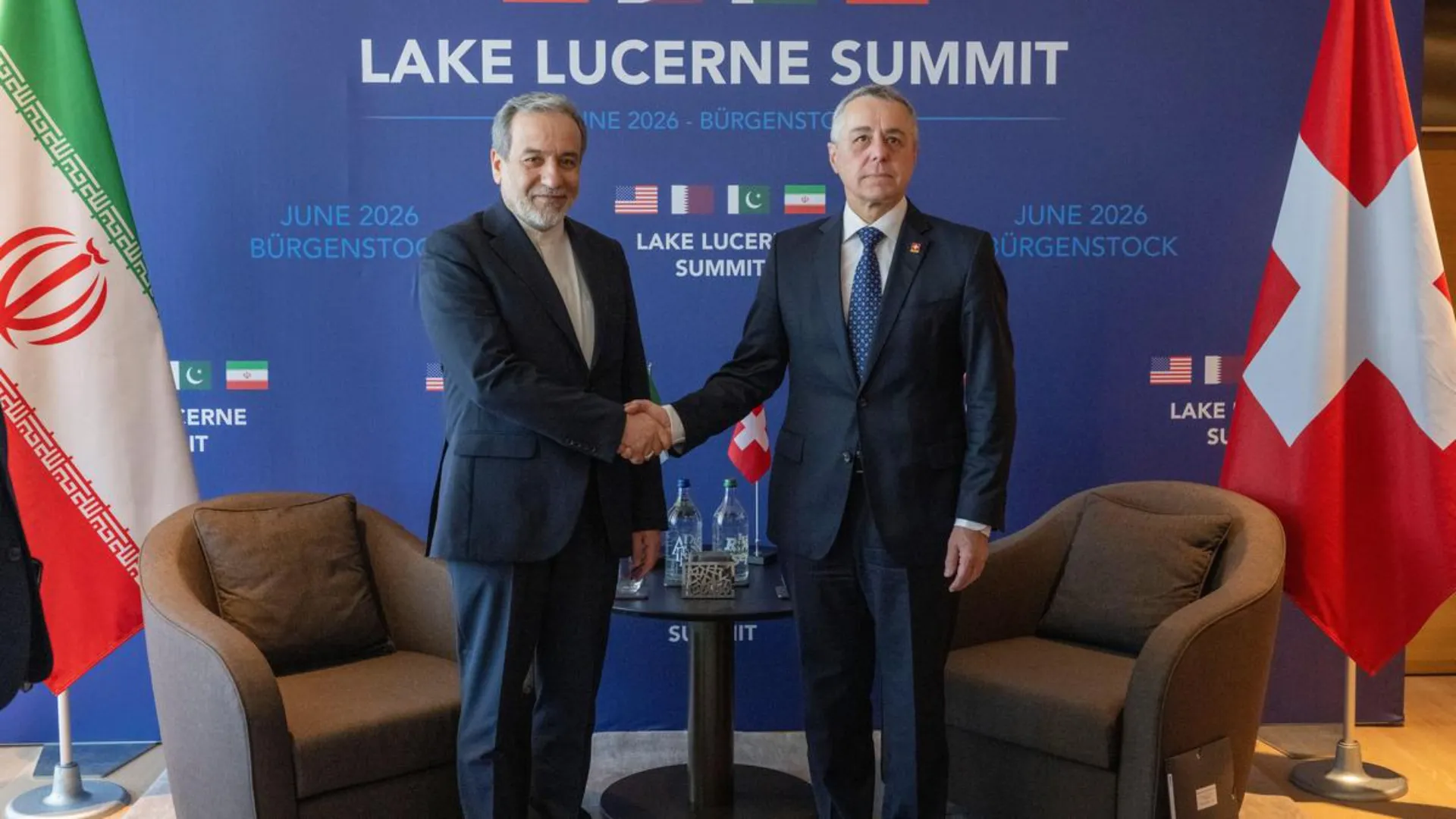
A high voltage diplomatic confrontation is unfolding at one of Europe's most exclusive resort venues as the United States and Iran sit across from each other in Switzerland, racing against time to convert a fragile preliminary ceasefire into a permanent agreement that could reshape the geopolitical landscape of West Asia for decades to come. But the path forward has grown dramatically more complicated, with Tehran drawing a hard line on Sunday, June 21, 2026, declaring that it will not move forward into the next phase of final negotiations unless Israel halts its ongoing military offensive in Lebanon.
The declaration from Iranian Foreign Ministry spokesman Esmaeil Baqaei was unambiguous and direct. Writing on the social media platform X, Baqaei stated that without the implementation of provisions outlined in the preliminary agreement, particularly the termination of the war on all fronts including Lebanon, entry into the negotiation phase for the final agreement is simply not possible. That single statement sent a sharp ripple through the already tense diplomatic corridors at Burgenstock, the luxury Swiss resort perched high above Lake Lucerne that is now host to some of the most consequential peace talks of the decade.
The Weight of What Is Being Negotiated in the Swiss Alps
What is being discussed in Switzerland is not a minor border dispute or a bilateral trade disagreement. The talks at Burgenstock represent an attempt to resolve one of the most entrenched and dangerous geopolitical conflicts of the modern era. The United States and Iran, after 40 days of active war and more than 60 days of intense negotiations, arrived at a Memorandum of Understanding on June 15, 2026, to halt hostilities and begin substantive discussions on the deeper issues that have driven a wedge between Washington and Tehran for decades.
Those deeper issues are enormous in scope. They include Iran's nuclear programme, which the international community has long feared could edge toward weapons capability, as well as crippling economic sanctions that have strangled the Iranian economy and created enormous domestic pressure on Tehran's leadership. Then there are the frozen Iranian assets held abroad, access to global oil markets, and the question of regional military presence and influence. The 60 day window set by the initial MoU is meant to resolve all of this, a timeline that many seasoned diplomats would call breathtakingly ambitious.
The agreement also calls for toll free travel through the Strait of Hormuz for 60 days, one of the world's most critical maritime chokepoints through which an enormous share of global oil supply flows. However, the status of that waterway is itself now contested.
Iran Closes the Strait Again as Tensions With Israel Escalate
Iran announced that it had again closed the Strait of Hormuz, citing continued Israeli military attacks in Lebanon as justification. The closure of the strait, even temporarily, sends shockwaves through global energy markets and underscores just how precarious the current situation remains. Iran has deployed its leverage over global oil supply as a bargaining chip before, but doing so in the middle of live peace negotiations signals deep frustration in Tehran over what it views as Israeli violations of the ceasefire framework.
U.S. President Donald Trump responded with characteristic forcefulness. In a move that escalated the rhetorical stakes considerably, Trump threatened to impose American tolls on maritime traffic in the Strait of Hormuz if a final deal with Iran is not concluded within 60 days. Trump framed this as compensation for, in his words, services rendered as the Guardian Angel to the countries of the Middle East. Whether that threat is a negotiating tactic or a genuine policy intention remains to be seen, but it added another layer of complexity to an already volatile situation.
U.S. Vice President JD Vance, for his part, struck a more measured tone in an interview with Fox News before departing for Switzerland. Vance expressed confidence that the ceasefire would hold, and stated that he had seen no evidence that the Strait of Hormuz was actually closed. Vance arrived at Emmen Air Base in Switzerland at 5:59 in the morning on Sunday, June 21, 2026. He was joined at the negotiating venue by U.S. envoy Steve Witkoff and presidential adviser Jared Kushner, who had already been at the resort working through preliminary details.
A Gathering of World Leaders at Burgenstock
The diplomatic weight of the moment is reflected in the seniority of the delegations that have assembled at Burgenstock. On the Iranian side, the delegation is being led by Parliament Speaker Mohammad Bagher Ghalibaf, a prominent hardliner and former military commander whose presence signals that Tehran is taking these negotiations with the utmost seriousness. Upon arriving in Switzerland, Ghalibaf posted a deeply personal and emotionally charged message on X, writing that he considers the innocent children of Minab and all the martyrs of Iran to be watching over his every action and behavior. The Minab school strike, in which Israeli attacks killed children, remains a raw and devastating wound in the Iranian national consciousness, and Ghalibaf's words made clear that the negotiations are not merely political for those at the table but deeply human and moral in their weight.
Pakistan, which served as the crucial back channel mediator that helped broker the initial Memorandum of Understanding now known as the Islamabad MoU, is represented at the highest possible level. Prime Minister Shehbaz Sharif and Field Marshal Syed Asim Munir, head of Pakistan's military, arrived in Switzerland on Sunday. The Pakistan Ministry of Foreign Affairs reaffirmed the country's commitment to supporting the implementation of the understanding between Iran and the United States. Pakistan's role in this crisis has cemented its standing as a serious diplomatic player in the region and globally.
Qatar, the other key mediating nation with deep ties to both Iranian and American interlocutors, formally confirmed on Sunday that talks had officially commenced. Qatari officials described the launch of negotiations as a positive step, while remaining carefully neutral on the substantive questions at hand.
Lebanon, Hezbollah and the Israeli Factor That Could Derail Everything
The most immediate and urgent threat to the Switzerland talks is not a disagreement over nuclear centrifuges or sanctions timelines. It is Lebanon. Iran's foreign ministry spokesperson made clear on Sunday that the ongoing conflict between Israel and Hezbollah in Lebanon is the main topic of discussion in the day's talks. The issue of frozen Iranian assets and the licensing of Iranian oil sales are also on the agenda, but Lebanon is the flashpoint that could determine whether the broader peace process survives at all.
The original preliminary agreement between the U.S. and Iran included a provision calling for the termination of war on all fronts, specifically including Lebanon. Israel, which is not a party to the U.S.-Iran MoU and has been vocally and firmly opposed to the deal from the moment it was signed, has continued its military operations in Lebanon regardless. That continuing conflict is, from Tehran's perspective, a direct violation of what was agreed.
The political atmosphere within Israel is itself extraordinarily tense. Far right National Security Minister Itamar Ben Gvir, reacting to the announcement that four Israeli soldiers had been killed in Lebanon on June 19, made the inflammatory declaration that all of Lebanon must burn. Those are the words of a minister within the Israeli government, and they land with enormous weight in the context of a peace negotiation that is explicitly premised on ending the violence on all fronts. The rift that the U.S.-Iran deal has created between Washington and Tel Aviv is, by any historical measure, an unusual and significant rupture in one of the most durable alliances in modern geopolitical history.
A Tripartite Meeting Underway and What It Means for the World
Iranian state television, through the state broadcaster IRIB, confirmed on Sunday afternoon that a tripartite meeting involving Iran, the United States, and Qatar was actively underway at the negotiation venue in Switzerland. The specific focus of that meeting was reported to be a comprehensive ceasefire in Lebanon and the question of Iran's frozen and restricted financial assets. The participation of Qatar as a third voice in that room reflects the mediating role Doha has played throughout this crisis, and its continued involvement suggests that all parties see value in keeping the channels of communication open even as tensions spike.
The economic consequences of this conflict have already spread far beyond the Middle East. Australia, grappling with higher fuel costs driven directly by the disruption to West Asian oil flows, announced on Sunday that it would extend fuel excise relief for an additional month. Australian Prime Minister Anthony Albanese confirmed that petrol and diesel prices would remain 16 cents per litre cheaper than normal throughout July, providing households relief from pump prices that have been inflated by the war. The move is a visible reminder of how deeply the West Asia conflict has penetrated everyday life in countries thousands of kilometres away.
The Historical Significance of This Moment Cannot Be Overstated
What is happening at Burgenstock in June 2026 is, in the most genuine sense, a hinge point in modern history. The relationship between the United States and Iran has been defined by hostility, mistrust, and periodic crises since 1979. The sanctions regime, the nuclear standoff, the proxy conflicts across the region, all of these have been building for nearly five decades. The Islamabad Memorandum of Understanding represents the first formal framework in that entire period to address the underlying causes of the conflict rather than simply managing its symptoms.
Whether it succeeds will depend on whether Israel's operations in Lebanon can be brought to a halt, whether Tehran's negotiators are given enough politically to justify the agreement to a domestic audience that includes hardliners who view any engagement with Washington as a betrayal, and whether the Trump administration has the diplomatic bandwidth and political will to pressure Israel while simultaneously pressing Iran.
JD Vance told reporters before boarding his flight that negotiators would likely have a couple of days of talks. Those may be among the most consequential days in the diplomacy of the 21st century.
Frequently Asked Questions
Why did Iran refuse to enter final deal talks with the United States in Switzerland?
Iran stated that it cannot move into the final agreement negotiation phase unless the war in Lebanon is completely stopped. Iranian Foreign Ministry spokesman Esmaeil Baqaei made clear that the termination of war on all fronts, specifically including Lebanon, is a precondition outlined in the preliminary MoU that must be fulfilled before deeper talks can begin.
What is the Islamabad Memorandum of Understanding and why does it matter?
The Islamabad Memorandum of Understanding is the preliminary peace agreement signed between the United States and Iran on June 15, 2026, after 40 days of active war and over 60 days of intense negotiations. It established a 60-day framework to resolve deeper issues including Iran's nuclear programme, economic sanctions, frozen assets, and oil market access. It is historically significant as the first formal framework to address the root causes of decades-long U.S.-Iran hostility.
Why did Iran close the Strait of Hormuz again and what impact does that have?
Iran closed the Strait of Hormuz citing continued Israeli military attacks in Lebanon, which it views as a direct violation of the ceasefire framework. The closure is highly consequential because the strait is one of the world's most critical maritime chokepoints, through which a major share of global oil supply is transported. Even a temporary closure sends shockwaves through international energy markets and drives up fuel prices worldwide.
Who are the key leaders participating in the Switzerland peace talks?
The Switzerland talks at the Burgenstock resort brought together U.S. Vice President JD Vance, U.S. envoy Steve Witkoff, and adviser Jared Kushner on the American side. Iran's delegation is led by Parliament Speaker Mohammad Bagher Ghalibaf. Pakistan is represented by Prime Minister Shehbaz Sharif and military chief Field Marshal Asim Munir. Qatar is also participating as a key mediating nation alongside Pakistan.
What role did Pakistan play in the U.S.-Iran peace process?
Pakistan served as the crucial back-channel mediator that helped broker the initial Memorandum of Understanding between the United States and Iran, which is formally referred to as the Islamabad MoU. Pakistan's Prime Minister Shehbaz Sharif and military chief Field Marshal Asim Munir travelled to Switzerland to support the implementation of the agreement, further cementing Pakistan's growing role as a serious diplomatic force in regional and global affairs.
What threat did U.S. President Donald Trump issue regarding the Strait of Hormuz?
President Trump threatened to impose American tolls on all maritime traffic passing through the Strait of Hormuz if a final deal with Iran is not concluded within the 60-day window established by the preliminary agreement. Trump described this potential measure as compensation for what he called services rendered as the Guardian Angel to the countries of the Middle East. The current agreement calls for toll-free travel through the strait for 60 days.
How is Israel's military action in Lebanon threatening the peace talks?
The preliminary U.S.-Iran agreement includes a provision calling for the termination of war on all fronts, explicitly including Lebanon. Israel, which is not a party to the MoU and has strongly opposed it, has continued military operations in Lebanon regardless. Iran views this as a direct violation of what was agreed and has made a halt to Lebanese hostilities a firm precondition for advancing to final negotiations, creating a major obstacle that neither Washington nor Tehran can easily resolve alone.
What issues are being discussed in the tripartite meeting between Iran, the U.S., and Qatar in Switzerland?
Iranian state broadcaster IRIB confirmed that the tripartite meeting involving Iran, the United States, and Qatar is focused on two primary issues: achieving a comprehensive ceasefire in Lebanon and resolving the question of Iran's frozen and restricted financial assets held abroad. The participation of Qatar as a mediating voice reflects its established diplomatic relationships with both Tehran and Washington throughout this crisis.
What did Iranian Parliament Speaker Ghalibaf say upon arriving in Switzerland?
Upon arriving in Switzerland, Iran's chief negotiator Mohammad Bagher Ghalibaf posted a deeply personal message stating that he considers the innocent children of Minab and all the martyrs of Iran to be watching over his every action and behavior. The reference to the Minab school strike, in which Israeli attacks killed children, underscored the profound human and moral weight that Iranian negotiators are carrying into the diplomatic discussions.
How has the West Asia war affected everyday citizens in countries far from the conflict?
The economic impact of the West Asia conflict has spread globally. Australia is a clear example, where higher fuel costs driven by disruptions to West Asian oil supply prompted the government to extend fuel excise relief for an additional month. Australian Prime Minister Anthony Albanese confirmed petrol and diesel prices would remain 16 cents per litre cheaper than normal throughout July to ease household cost pressures, demonstrating how a distant regional war translates into direct financial burden for families thousands of kilometres away.
What are the deeper long-term issues that the 60-day negotiation window aims to resolve?
The 60-day framework established by the Islamabad MoU is intended to tackle some of the most entrenched issues in U.S.-Iran relations spanning nearly five decades. These include Iran's nuclear programme and international concerns about its potential weapons capability, the crippling sanctions regime that has severely damaged the Iranian economy, frozen Iranian financial assets held abroad, access to global oil markets for Iranian exports, and broader questions of regional military presence and geopolitical influence.
What is the significance of holding these talks at Burgenstock in Switzerland?
Burgenstock is a luxury resort perched high above Lake Lucerne that previously hosted other high-profile international negotiations. Switzerland's longstanding tradition of diplomatic neutrality makes it an internationally accepted venue for sensitive geopolitical discussions. The choice of Burgenstock reflects the seriousness and high-profile nature of the talks, bringing together top-level delegations from the United States, Iran, Pakistan, and Qatar in a secure and diplomatically neutral setting.
Why is the U.S.-Iran deal creating a rift between Washington and Tel Aviv?
Israel has been vocally and firmly opposed to the U.S.-Iran Memorandum of Understanding from the moment it was signed. Israel is not a party to the agreement and views any diplomatic accommodation with Iran as a strategic threat, particularly given Iran's long-standing support for Hezbollah and other groups operating against Israeli interests. Israel's continued military operations in Lebanon, despite the ceasefire framework embedded in the MoU, have placed it in direct conflict with the terms of an agreement its closest ally the United States has signed and is actively working to implement.
What is the overall historical significance of the U.S.-Iran peace process underway in 2026?
The current diplomatic process is widely regarded as a genuine historical turning point. U.S.-Iran relations have been defined by hostility, mistrust, nuclear standoffs, proxy conflicts, and sanctions for nearly five decades since 1979. The Islamabad MoU represents the first formal framework in that entire period to address the underlying structural causes of the conflict rather than simply containing its immediate symptoms. Whether the Switzerland talks succeed or fail will have lasting consequences for West Asian security, global energy markets, and the broader international order.
What did JD Vance say about the state of negotiations before flying to Switzerland?
U.S. Vice President JD Vance expressed measured confidence before departing for Switzerland. He told Fox News he was confident the ceasefire would hold and stated he had seen no evidence that the Strait of Hormuz was actually closed, offering a more optimistic assessment than Iranian statements suggested. Speaking to reporters at Joint Base Andrews in Maryland, Vance indicated that negotiators would likely require a couple of days of talks, and that based on his conversations with Steve Witkoff and Jared Kushner, things were going well.
What does Iran's demand regarding Lebanon reveal about its negotiating position?
Iran's insistence that Lebanon must be included in any ceasefire before final talks can proceed reveals that Tehran views its support for Hezbollah and resistance movements in Lebanon not merely as a tactical card but as a core strategic and political commitment. Abandoning Lebanon to Israeli military pressure while simultaneously negotiating with Washington would be politically untenable for the Iranian government domestically, particularly with hardliners watching closely. It also signals that Iran wants the MoU's provisions enforced comprehensively, not selectively, and is prepared to use the pace of negotiations as leverage to achieve that.
Edit Profile
Help improve @KR
Was this page helpful to you?
Contact Khogendra Rupini
Are you looking for an experienced developer to bring your website to life, tackle technical challenges, fix bugs, or enhance functionality? Look no further.
I specialize in building professional, high-performing, and user-friendly websites designed to meet your unique needs. Whether it's creating custom JavaScript components, solving complex JS problems, or designing responsive layouts that look stunning on both small screens and desktops, I can collaborate with you.
Create something exceptional with us. Contact us today
Open for Collaboration
If you're looking to collaborate, I'm available for a variety of professional services, including -
- Website Design & Development
- Advertisement & Promotion Setup
- Hosting Configuration & Deployment
- Front-end & Back-end Code Implementation
- Code Testing & Optimization
- Cybersecurity Solutions & Threat Prevention
- Website Scanning & Malware Removal
- Hacked Website Recovery
- PHP & MySQL Development
- Python Programming
- Web Content Writing
- Protection Against Hacking Attempts