
Iran President Pezeshkian Declares Missile Programme Is Completely Off the Table in Any Agreement With the United States
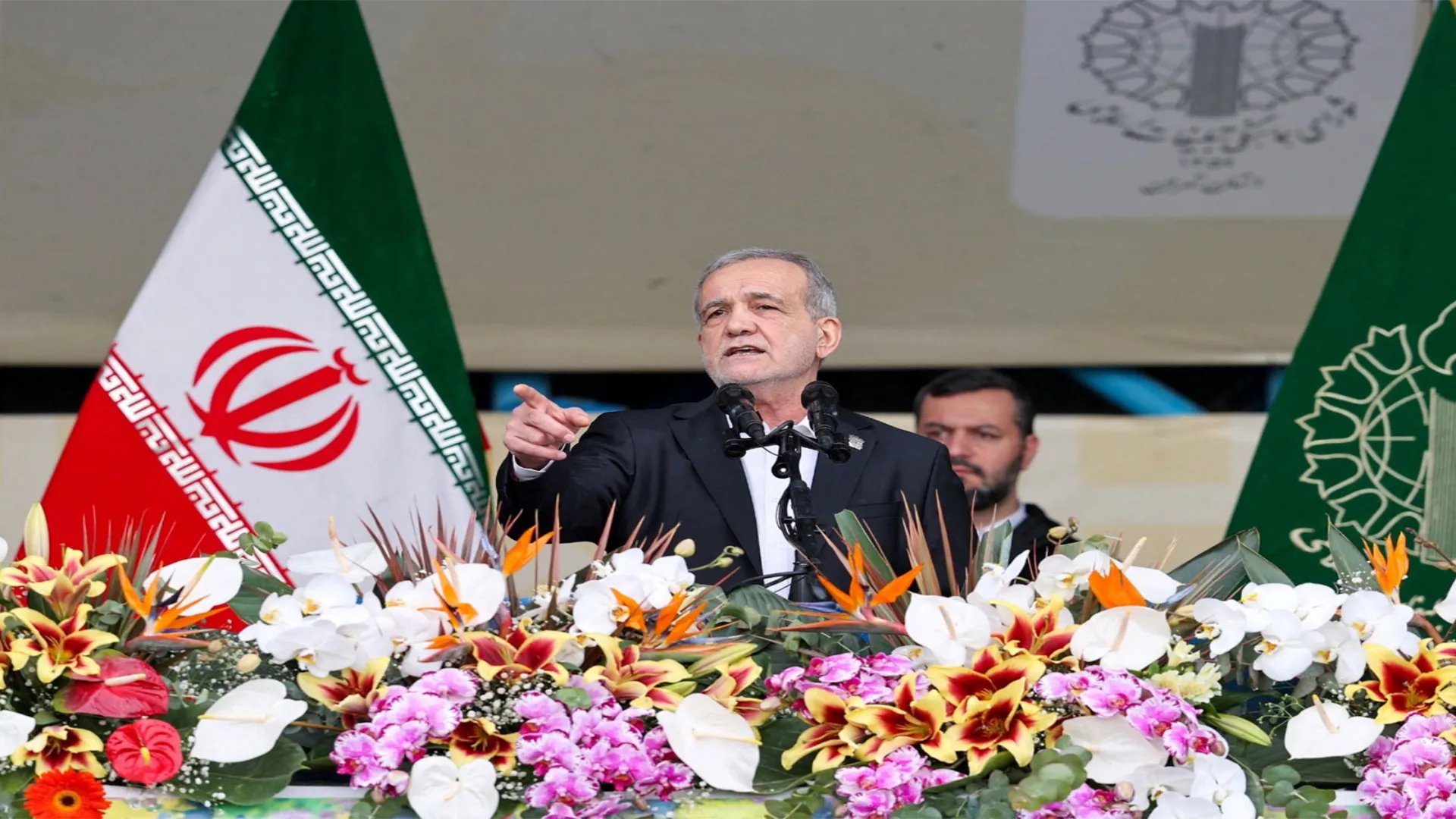
Iranian President Masoud Pezeshkian has issued one of his most emphatic foreign policy statements to date, categorically declaring that the Islamic Republic's missile programme is not a part of the 14-point memorandum of understanding reached with the United States and that it will remain outside the scope of any future diplomatic arrangement as well. The declaration, made during a press conference in Islamabad, Pakistan, during an official state visit, signals a firm and deliberate red line drawn by Tehran even as the two nations navigate a complex and fragile diplomatic track following years of hostility.
The remarks came at a moment of acute geopolitical sensitivity. Weeks after the United States and Iran concluded preliminary technical discussions in Switzerland — discussions that formed the backbone of the 14-point MoU — questions had been swirling among analysts, regional governments, and international observers about how far the agreement extended in scope. The answer, according to Pezeshkian himself, is clear: Iran's missiles are not on the negotiating table, and they never will be.
What the Iranian President Said and Why It Carries Such Weight
Speaking at a news conference in Pakistan's capital Islamabad on Tuesday, President Masoud Pezeshkian was unequivocal. According to footage shared by the Iranian state broadcaster, the Islamic Republic of Iran Broadcasting, the president stated that the discussion over Iran's missile capabilities does not feature anywhere in the current MoU and affirmed it never would.
He did not stop at a procedural clarification. Pezeshkian went further by offering a frank strategic justification for why Iran will never surrender its missile capabilities under any diplomatic framework. In his words, if Iran did not possess the missiles it uses for its defence, Israel and the United States would have devastated the country. It was a candid admission of Iran's threat perception and a direct articulation of the doctrinal logic that underlies the country's military posture. The missile programme, in Iran's view, is not a bargaining chip. It is an existential shield.
This statement from Pezeshkian arrives with the weight of executive authority behind it. He is not a hardline ideologue but a moderate reformist-leaning president who came to power promising engagement with the outside world. That someone of his political profile would speak with such conviction on the missile issue underlines just how deeply embedded this position is across Iran's entire political spectrum. From conservatives to reformists, the defence of the missile programme represents a national consensus in Tehran.
The 14-Point Memorandum of Understanding and What It Actually Contains
To understand what Pezeshkian was reacting to, it is essential to understand what the MoU between Iran and the United States actually says — and what it conspicuously does not say.
Last week, the United States officially released the text of the document to the public. A senior US administration official read out the 14-point agreement, which, according to reporting by CNN, covers several significant but carefully defined areas. The provisions reportedly include measures related to reopening the Strait of Hormuz, easing certain financial restrictions on Iran, and outlining expectations for future rounds of technical negotiations concerning Iran's nuclear programme.
Crucially, when analysts and journalists examined the published text closely, one major absence stood out: the document contains no language whatsoever restricting Iran's missile programme or its broader conventional defence capabilities. The only weapons-related provision explicitly mentioned in the MoU is Iran's commitment not to procure or develop nuclear weapons. That single clause captures the outer limit of what the agreement attempts to address in the military domain.
Everything else — the ballistic missiles, the advanced drones, the precision-guided munitions that Iran has been developing and deploying for over two decades — falls entirely outside the written scope of the agreement.
A Strategic Visit to Pakistan That Amplifies a Diplomatic Signal
The timing and location of Pezeshkian's remarks are not coincidental. Pakistan and Iran share a historically complex but strategically important relationship, bound by geography, faith, cultural ties, and at times, deep friction. Pezeshkian's visit to Islamabad was focused on strengthening bilateral relations and discussing regional security developments at a critical juncture for the broader Middle East.
By making these comments from Pakistani soil, Pezeshkian was not only addressing a domestic Iranian audience but also signalling to the wider Muslim world and to regional governments that Iran's strategic posture has not softened in exchange for diplomatic engagement with Washington. The message was calibrated: Iran is willing to talk, willing to manage tensions, willing to allow the Strait of Hormuz to remain open, but it will not disarm, dismantle, or diminish its missile capabilities under any circumstances.
For Pakistan, a nuclear-armed state that maintains its own calculations around regional deterrence, the message resonated in a context both countries understand implicitly. Defence sovereignty, in the language of both nations, is non-negotiable.
Donald Trump's Shifting Position on Iran's Missiles
One of the more remarkable dimensions of this story is how the US position on Iran's missile programme has evolved, and how sharply it contrasts with where it began.
When the Trump administration first signalled its military posture toward Iran earlier this year, the missile programme was presented as one of the central justifications for any potential military action. Curbing Iran's ability to develop and deploy ballistic missiles was framed as a core strategic objective, not merely a negotiating point. Iran's missiles were described as a threat to US allies, US forces in the region, and regional stability more broadly.
Yet by the time of the G7 summit in France last week, the American position had undergone a striking transformation. President Donald Trump, speaking publicly at the summit, remarked that missiles are not the problem. That phrase, simple and declarative, represented a dramatic walk-back from the earlier hardline framing.
This shift has significant implications. It suggests that the US, in the course of diplomatic back-and-forth, conceded the missile issue in exchange for progress on other fronts — most likely the nuclear question and the security of key maritime passages. Whether this concession was strategic pragmatism or a more fundamental recalibration of US priorities in the Middle East remains a subject of active debate in foreign policy circles.
Why Iran's Missile Programme Is So Central to Its Security Doctrine
Iran's missile capabilities have been decades in the making. Beginning in the aftermath of the devastating eight-year war with Iraq, during which Iranian cities were struck by Scud missiles while the international community largely looked away, Tehran drew a singular and lasting conclusion: Iran could not depend on the world for its security. It had to build that security itself.
What followed was a methodical investment in indigenous missile technology. Today, Iran possesses one of the most diverse and capable missile arsenals in the Middle East, encompassing short-range, medium-range, and long-range ballistic missiles, cruise missiles, and precision-guided projectile systems. These assets have been used operationally, not merely as deterrents on paper. Iran launched direct missile strikes against Israeli territory in 2024, a moment that demonstrated both the capability and the willingness to deploy it.
The programme also provides Iran with a force multiplication effect beyond its conventional military limitations. Facing a technological gap with the United States and a qualitative gap with Israel in terms of air power, Iran has compensated by investing in ground-launched strike capabilities that are difficult to intercept entirely and can impose real costs on adversaries.
Pezeshkian's statement, therefore, is not just political posturing. It reflects a security doctrine that has been built over four decades, hardened by real conflict experience, and embedded in the institutional memory of the Islamic Republic's military and strategic establishment.
The Nuclear Agreement and the Boundaries of Diplomacy
The MoU between Washington and Tehran, while not a final or comprehensive nuclear deal, represents the most concrete progress in Iran-US relations since the 2015 Joint Comprehensive Plan of Action, which collapsed after the United States withdrew from it in 2018 under Trump's first term.
The current agreement's focus on Iran's nuclear programme — specifically the commitment not to develop or procure nuclear weapons — keeps the central concern of non-proliferation at the heart of diplomatic engagement. The Strait of Hormuz provisions address the immediate economic concern of global oil markets, which are acutely sensitive to any disruption in that critical waterway through which roughly 20 percent of the world's oil supply passes.
The financial restrictions element suggests that Iran may gain some relief from the suffocating sanctions architecture that has battered its economy for years, though the specifics of any easing remain subject to further technical negotiations.
What the agreement does not do is attempt to resolve every contested dimension of Iran's military posture in one document. That, diplomats would argue, is both realistic and pragmatic. Attempting to include the missile question would almost certainly have collapsed the talks entirely, given the categorical position that Iranian officials — from the president downward — have expressed.
Regional Reactions and the Geopolitical Stakes
The region is watching this diplomatic moment with a mixture of cautious interest and deep anxiety. For Gulf Arab states, particularly Saudi Arabia and the United Arab Emirates, Iran's missile capability has long been a source of existential concern. Any agreement that leaves that capability intact — and that includes language effectively legitimising it by omitting any restrictions — is viewed with considerable unease in Riyadh and Abu Dhabi.
For Israel, the situation is even more fraught. Israeli officials have consistently argued that any deal with Iran that does not address its missile programme is fundamentally insufficient. The Israeli position holds that missiles are the delivery mechanism that makes every other Iranian capability — including the nuclear dimension — more threatening. From Jerusalem's vantage point, leaving the missile question out of any agreement is not a minor compromise. It is a strategic failure.
Yet from Tehran's perspective, and arguably from the perspective of diplomatic realism, the question is whether a less-than-comprehensive deal is better than no deal at all. Pezeshkian's government, inheriting an economy under extreme pressure, appears to have calculated that engaging on the nuclear question while firmly protecting the missile programme is the most achievable and sustainable diplomatic outcome available.
What Comes Next in Iran-US Relations
The conclusion of the 14-point MoU is explicitly described as a framework for further technical talks, not as an end point. Future rounds of negotiation are expected to delve more deeply into the specifics of Iran's nuclear enrichment activities, its relationship with the International Atomic Energy Agency, and the conditions under which financial restrictions might be progressively eased.
What is already apparent from Pezeshkian's statement in Islamabad is that the missile question will not enter those negotiations. Iran has drawn that line firmly and publicly. Any future US administration or diplomatic team that attempts to reintroduce the missile file as a negotiating item will face the same categorical rejection — perhaps even more forcefully articulated.
The path forward, if there is one, runs through the nuclear file. And in a diplomatic landscape defined by decades of mistrust, contested interpretations, and broken agreements, even progress on that narrower front represents something that neither side has managed to sustain for very long.
For now, the 14-point MoU stands as a tentative but real step away from the edge of armed conflict. Whether it can be built upon, whether the technical talks will yield durable agreements, and whether both sides can manage their respective domestic political pressures long enough to make progress — these are the questions that will define the next chapter of one of the most consequential diplomatic relationships in global affairs.
President Pezeshkian has made one thing unmistakably clear: in that next chapter, Iran's missiles will not be characters in the story. They are, and will remain, off the page entirely.
Frequently Asked Questions
What did Iranian President Pezeshkian say about Iran's missile programme and the US agreement?
President Masoud Pezeshkian clearly stated that Iran's missile programme is not included in the 14-point memorandum of understanding signed with the United States and will never be part of any such arrangement in the future.
What is the 14-point MoU between Iran and the United States?
The 14-point MoU is a memorandum of understanding reached between Iran and the United States following technical talks held in Switzerland. It covers areas including the reopening of the Strait of Hormuz, easing of certain financial restrictions on Iran, and outlines expectations for future negotiations on Iran's nuclear programme.
Does the Iran-US MoU include any restrictions on Iran's missile capabilities?
No. The published text of the 14-point MoU contains no language restricting Iran's missile programme or its broader conventional defence capabilities. The only weapons-related provision mentioned is Iran's commitment not to procure or develop nuclear weapons.
Why does Iran consider its missile programme non-negotiable?
Iran views its missile programme as a critical element of national defence and strategic deterrence. President Pezeshkian stated that without its missiles, Iran would have been devastated by Israel and the United States, reflecting a doctrine rooted in decades of conflict experience and perceived external threats.
Where did President Pezeshkian make these remarks about Iran's missiles?
Pezeshkian made the remarks at a press conference in Islamabad, Pakistan, during an official state visit focused on strengthening bilateral relations and discussing regional developments between the two countries.
How has Donald Trump's position on Iran's missile programme changed?
Trump had earlier cited Iran's missile programme as a key justification for military operations. However, his position shifted significantly, and at the G7 summit in France last week he publicly stated that missiles are not the problem, marking a dramatic departure from his earlier hardline stance.
What was the role of Switzerland in the Iran-US diplomatic process?
Switzerland hosted the technical talks between Iran and the United States that formed the foundation of the 14-point MoU. These talks were part of the broader diplomatic effort aimed at reducing hostilities and establishing a framework for future negotiations.
What is the significance of the Strait of Hormuz in the Iran-US MoU?
The Strait of Hormuz is one of the world's most critical oil shipping routes, through which roughly 20 percent of global oil supply passes. The MoU includes provisions related to its reopening, making it a central economic and strategic element of the agreement.
How do regional countries like Israel and Gulf Arab states view the Iran-US agreement?
Israel and Gulf Arab states like Saudi Arabia and the UAE view the agreement with deep concern. Israel argues that any deal excluding missile restrictions is fundamentally insufficient, while Gulf nations remain uneasy about Iran's retained military capabilities despite the diplomatic progress.
What is the broader significance of Pezeshkian's visit to Pakistan in this context?
By making these remarks from Pakistani soil, Pezeshkian signalled to regional governments and the wider Muslim world that Iran's strategic posture has not softened in exchange for diplomatic engagement with Washington. The visit reinforced that Iran's defence sovereignty remains non-negotiable regardless of diplomatic progress.
What does the Iran-US MoU mean for Iran's nuclear programme going forward?
The MoU serves as a framework for future technical negotiations on Iran's nuclear programme rather than a final deal. Iran has committed not to develop or procure nuclear weapons, and further talks are expected to address enrichment activities and Iran's relationship with the International Atomic Energy Agency.
How does Iran's missile programme history explain its current firm stance?
Iran began developing its missile programme after the devastating eight-year war with Iraq, during which Iranian cities were struck while the international community largely ignored the attacks. This experience led Tehran to conclude it must build its own security, resulting in four decades of investment in indigenous missile technology that is now embedded in national defence doctrine.
Edit Profile
Help improve @KR
Was this page helpful to you?
Contact Khogendra Rupini
Are you looking for an experienced developer to bring your website to life, tackle technical challenges, fix bugs, or enhance functionality? Look no further.
I specialize in building professional, high-performing, and user-friendly websites designed to meet your unique needs. Whether it's creating custom JavaScript components, solving complex JS problems, or designing responsive layouts that look stunning on both small screens and desktops, I can collaborate with you.
Create something exceptional with us. Contact us today
Open for Collaboration
If you're looking to collaborate, I'm available for a variety of professional services, including -
- Website Design & Development
- Advertisement & Promotion Setup
- Hosting Configuration & Deployment
- Front-end & Back-end Code Implementation
- Code Testing & Optimization
- Cybersecurity Solutions & Threat Prevention
- Website Scanning & Malware Removal
- Hacked Website Recovery
- PHP & MySQL Development
- Python Programming
- Web Content Writing
- Protection Against Hacking Attempts