
India Launches Air Suvidha 2.0 Portal for Ebola Health Screening as WHO Declares Global Emergency Over Congo and Uganda Outbreak
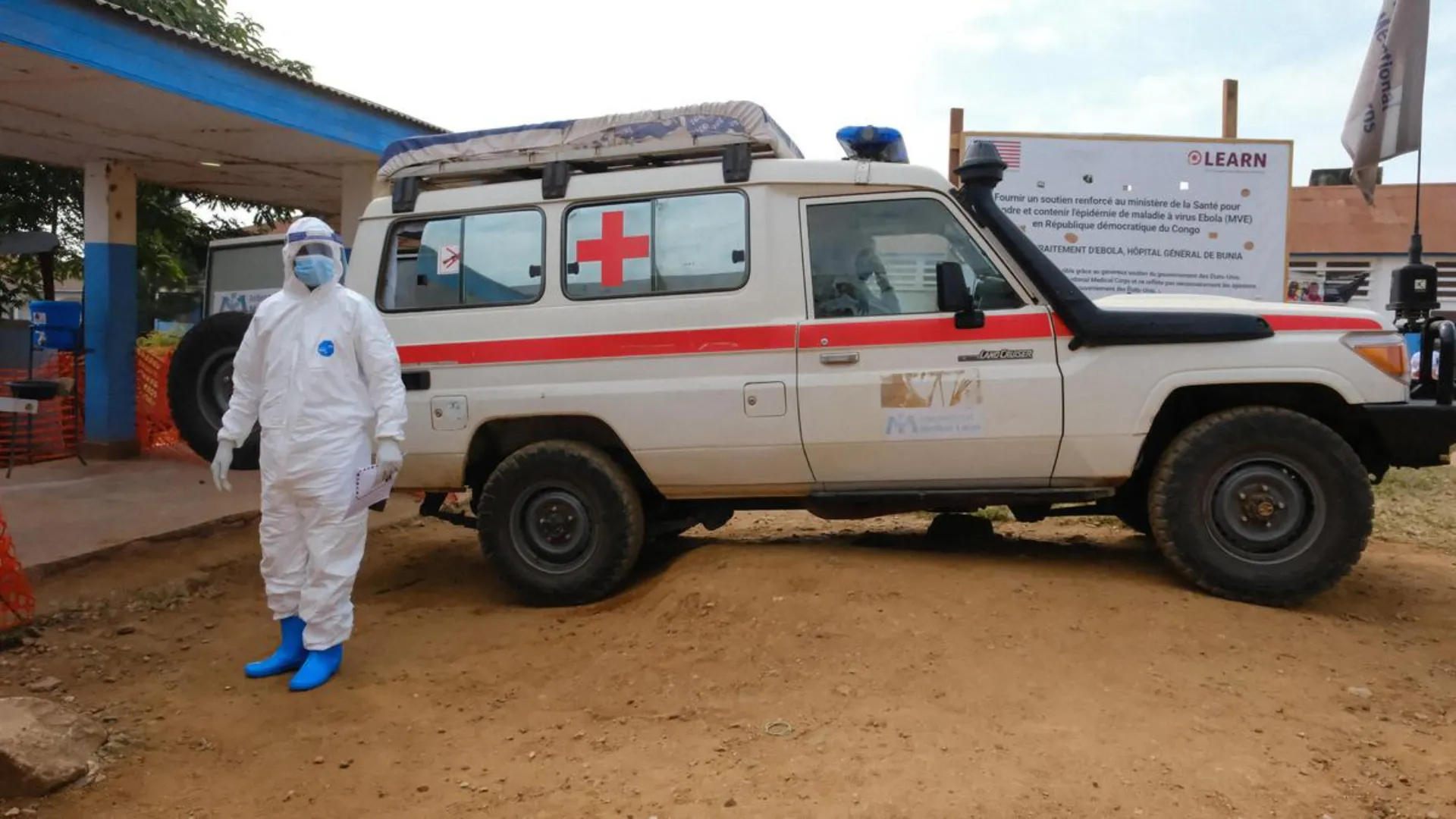
In a swift and decisive public health response, India's Ministry of Civil Aviation and Delhi International Airport Limited jointly launched Air Suvidha 2.0 on Thursday, June 25, 2026, a modernised and fully contactless passenger health self-declaration portal designed to strengthen disease surveillance at the country's international points of entry. The move comes amid growing global concern over the ongoing Ebola disease outbreak spreading through the Democratic Republic of the Congo and Uganda, which the World Health Organisation formally declared a Public Health Emergency of International Concern last month under the International Health Regulations 2005.
The launch marks a significant escalation in India's public health preparedness framework, combining digital infrastructure with real-time data systems to intercept at-risk travellers before they pass through immigration, all without the friction of paper-based health forms or physical contact at health desks.
Why the World Is Watching the Ebola Outbreak in Central Africa With Alarm
The current outbreak has been identified not as the more commonly known Zaire strain of Ebola but as Bundibugyo virus disease, a distinct and deadly variant under the broader Ebola virus disease umbrella. The Democratic Republic of the Congo and Uganda are the epicentres of the outbreak, and the World Health Organisation formally elevated the situation to the level of a Public Health Emergency of International Concern on May 17, 2026, under the framework of the International Health Regulations 2005.
The Bundibugyo strain was first identified during an outbreak in Uganda in 2007 and carries a high fatality rate. What makes the current outbreak particularly alarming to global health authorities is the speed at which cases accumulated in the first month, with the WHO itself noting it registered the highest first-month case count of any African Ebola outbreak on record. The situation has prompted countries across the world, including India, to activate heightened border health surveillance protocols.
Beyond the two primary countries, nations sharing land borders with the DRC and Uganda, including South Sudan, have been formally assessed as high-risk for onward transmission. The WHO has regularly updated this risk classification as the outbreak has evolved, and India's health and aviation ministries have incorporated these assessments into the operational design of the Air Suvidha 2.0 system.
How Air Suvidha 2.0 Works and What Makes It Different From Earlier Health Screening Systems
Air Suvidha 2.0 has been developed in close collaboration with the Directorate General of Health Services under the Ministry of Health and Family Welfare, and it builds on the original Air Suvidha portal that was introduced during the COVID-19 pandemic to manage mass international arrivals during a time of global health crisis.
The core function of the portal is to enable all international arriving passengers to submit a mandatory online health self-declaration before they reach immigration clearance. This declaration covers three essential categories of information. First, passengers must provide a complete 21-day travel history, allowing health officers to determine whether they have recently visited any Ebola-affected or high-risk countries. Second, the form collects exposure history, meaning whether the traveller has come into contact with anyone who has been diagnosed with or is suspected of carrying the Bundibugyo virus. Third, passengers must disclose any symptoms consistent with Ebola or Bundibugyo virus disease.
What distinguishes Air Suvidha 2.0 from conventional health screening is its architecture of real-time data sharing. The moment a passenger completes the form, their declaration is instantly shared with the Airport Health Officer stationed at the point of entry, the Bureau of Immigration, and the relevant State Surveillance Officer in whichever Indian state the international airport is located. This triangulation of information allows health and immigration authorities to flag at-risk travellers within seconds and initiate immediate referral protocols without causing bottlenecks at the arrival gates.
Passengers No Longer Need to Fill Any Physical Form on Arrival at Indian Airports
One of the most practically significant features of the new system is that it is entirely contactless. Under the previous system, arriving international passengers often had to fill physical health declaration cards either on the aircraft or at designated counters after landing, creating both delays and unnecessary physical touchpoints that carry their own infection risk during an active disease outbreak.
Under Air Suvidha 2.0, the Self-Declaration Form can be completed up to 24 hours before the passenger's scheduled arrival in India. Passengers are actively encouraged to fill the form at the time of web check-in, making it a seamless part of the pre-boarding process rather than an additional burden at the airport. Once the form is submitted, the passenger only needs to show their downloaded Self-Declaration Form at the International Travel Health Desk or the immigration counter on arrival. No paper. No contact. No delay beyond what is strictly necessary for health officers to review the declaration.
The government has emphasised that all international travellers must complete their declaration accurately, with particular attention paid to travel history and any contact with individuals from the DRC, Uganda, South Sudan, or other currently flagged zones. The Union government's release on the launch stated clearly that completing the self-declaration accurately and in advance is in the direct interest of both passenger safety and broader public health.
India's Preparedness Architecture in the Face of an International Health Emergency
India has one of the world's largest volumes of international air passenger traffic, and its airports serve as critical nodes in the global aviation network. Delhi's Indira Gandhi International Airport, managed by DIAL, is among the busiest in Asia and handles a substantial number of passengers arriving from Africa, including routes that connect through hubs serving East and Central African destinations.
The collaboration between the Ministry of Civil Aviation and DIAL in launching Air Suvidha 2.0 reflects an understanding that public health emergencies today require aviation infrastructure to act as the first line of defence. Digital tools like the self-declaration portal do not replace clinical screening or thermal scanning but they create a critical layer of prior intelligence. By the time a passenger with a 21-day travel history that includes Kampala or Kinshasa steps up to the immigration counter, health officers can already have their declaration reviewed and a response plan ready if the declaration reveals any red flags.
The Directorate General of Health Services' active involvement in the portal's design also ensures that the questions, categories, and screening thresholds are calibrated to current epidemiological guidance rather than generic health templates. This is a medically informed digital system, not simply a data collection exercise.
What Travellers Heading to India Must Know Right Now
International passengers flying into India from anywhere in the world, and especially those who have recently visited or transited through Central or East African countries, must register and complete the Air Suvidha Self-Declaration Form before boarding their flight to India. The form is accessible online and takes only a few minutes to fill if travel history information is kept ready.
Failure to provide accurate information or to complete the form could result in additional screening and potential delay at the health desk on arrival. Passengers who exhibit symptoms consistent with Bundibugyo virus disease or who report high-risk exposure in their declaration will be referred to medical officers stationed at the airport for evaluation. The system is designed to be swift and non-disruptive for the vast majority of travellers who present no risk indicators, while enabling rapid clinical response for those who do.
The government has not announced mandatory quarantine or testing requirements for arrivals from non-affected countries as of the launch date, but health authorities have indicated that the situation is being monitored continuously and protocols may be updated as the WHO's guidance on the outbreak evolves.
A System Built for the Realities of a More Connected and More Vulnerable World
The launch of Air Suvidha 2.0 is not only a technical upgrade. It is a statement about how India intends to manage the intersection of global mobility and global health risk in the years ahead. The COVID-19 pandemic exposed the limitations of paper-based, reactive health screening at borders. The Ebola outbreak now unfolding in Central Africa, with its record-breaking initial case load and cross-border transmission risk, presents a different but equally serious challenge.
India's response, combining real-time digital declarations, multi-agency data sharing between health and immigration bodies, and a contactless passenger experience, reflects a more sophisticated model of border health management than what most countries deployed during the early days of the pandemic.
As the WHO continues to monitor the Bundibugyo virus disease outbreak across the DRC, Uganda, and neighbouring countries, India's airports are now equipped with a system that can respond in hours to changes in the outbreak's geography. Whether Air Suvidha 2.0 will need to be expanded in scope or mandatory for specific nationalities will depend on how the outbreak evolves over the coming weeks, but as of June 25, 2026, the system is live, operational, and represents one of the more robust national responses to an emerging global health emergency seen in the region.
Frequently Asked Questions
What is Air Suvidha 2.0 and why was it launched?
Air Suvidha 2.0 is an upgraded contactless passenger health self-declaration portal launched by India's Ministry of Civil Aviation and Delhi International Airport Limited on June 25, 2026. It was launched to strengthen public health surveillance at Indian airports in response to the ongoing Ebola and Bundibugyo virus disease outbreak in the Democratic Republic of the Congo and Uganda.
What is the Bundibugyo virus disease and how is it different from Ebola?
Bundibugyo virus disease is a distinct but related strain under the broader Ebola virus disease family. It was first identified in Uganda in 2007 and carries a high fatality rate. The current outbreak in the DRC and Uganda involves this specific strain rather than the more commonly known Zaire Ebola strain.
Why did the WHO declare the Congo and Uganda Ebola outbreak a Public Health Emergency of International Concern?
The World Health Organisation declared the Ebola and Bundibugyo virus disease outbreak a Public Health Emergency of International Concern on May 17, 2026, under the International Health Regulations 2005, because the outbreak recorded the highest first-month case count of any African Ebola outbreak in history and posed a significant risk of cross-border transmission to neighbouring countries.
Which countries are currently considered high risk for Ebola transmission?
The Democratic Republic of the Congo and Uganda are the primary outbreak countries. Nations sharing land borders with them, including South Sudan, have been assessed as high-risk for onward transmission according to updated WHO risk classifications.
What information do passengers need to submit on the Air Suvidha 2.0 self-declaration form?
Passengers must submit three categories of information: a complete 21-day travel history to determine recent visits to affected or high-risk countries, exposure history indicating any contact with confirmed or suspected Bundibugyo virus cases, and disclosure of any symptoms consistent with Ebola or Bundibugyo virus disease.
How early can passengers fill the Air Suvidha 2.0 Self-Declaration Form before arriving in India?
Passengers can complete the Air Suvidha Self-Declaration Form up to 24 hours before their scheduled arrival in India. They are encouraged to fill the form during web check-in so that health and immigration authorities can review their declaration before they land.
Is the Air Suvidha 2.0 health declaration mandatory for all international travellers arriving in India?
Yes, the online health self-declaration is mandatory for all international arriving passengers and must be completed prior to immigration clearance. Passengers are required to show their downloaded Self-Declaration Form at the International Travel Health Desk or immigration counter on arrival.
How does Air Suvidha 2.0 share passenger health data with Indian authorities?
The portal enables real-time data sharing with the Airport Health Officer, the Bureau of Immigration, and the State Surveillance Officer of the relevant state. This allows health and immigration officials to instantly identify and refer at-risk travellers for further medical evaluation without causing disruption to the overall arrival process.
Which government bodies collaborated to develop Air Suvidha 2.0?
Air Suvidha 2.0 was developed through collaboration between the Ministry of Civil Aviation, Delhi International Airport Limited, and the Directorate General of Health Services under the Ministry of Health and Family Welfare. This multi-agency partnership ensures the portal meets both aviation operational requirements and current epidemiological health guidelines.
What happens if a passenger's declaration reveals travel to a high-risk Ebola zone or symptoms?
Passengers whose declarations flag high-risk travel history, confirmed exposure to Bundibugyo virus cases, or symptoms consistent with Ebola disease will be referred to medical officers stationed at the airport for clinical evaluation. The system is designed to enable rapid response without disrupting the arrival experience of low-risk travellers.
Does Air Suvidha 2.0 require passengers to fill any physical forms at the airport on arrival?
No. Air Suvidha 2.0 is entirely contactless and eliminates the need for any physical paper forms at the airport. Passengers complete the self-declaration online before boarding their flight and only need to present the downloaded form digitally at the health desk or immigration counter on arrival.
Is India imposing mandatory quarantine or testing for international travellers arriving from non-affected countries?
As of the portal launch on June 25, 2026, India has not announced mandatory quarantine or testing requirements for arrivals from countries not directly affected by the Ebola outbreak. However, health authorities are continuously monitoring the WHO's evolving guidance and protocols may be updated as the outbreak situation changes.
Why is Delhi International Airport central to India's Ebola health response?
Delhi's Indira Gandhi International Airport, managed by DIAL, is one of Asia's busiest airports and handles significant passenger volumes from African routes, including connections through East and Central African hubs. Its position as a major international gateway makes it a critical node in India's border health surveillance network during the current outbreak.
How is Air Suvidha 2.0 different from the original Air Suvidha portal used during COVID-19?
While the original Air Suvidha portal was introduced during the COVID-19 pandemic to manage mass international arrivals, Air Suvidha 2.0 is an upgraded version with enhanced real-time data sharing across multiple government agencies simultaneously, a contactless design optimised for disease-specific health declarations, and a 24-hour advance submission feature integrated with the airline web check-in process.
What should international passengers do right now to comply with India's Ebola screening requirements?
All international passengers flying into India, especially those who have recently visited or transited through Central or East African countries, must complete the Air Suvidha Self-Declaration Form online at least 24 hours before arrival. They should keep their 21-day travel history ready, answer all questions accurately, and carry their downloaded Self-Declaration Form to present at the airport health desk or immigration counter on landing.
Why is India's Air Suvidha 2.0 considered a significant step in modern border health management?
Air Suvidha 2.0 represents a shift from reactive paper-based health screening to a proactive digital surveillance model. By combining mandatory pre-arrival declarations, real-time multi-agency data sharing, and a fully contactless passenger experience, India has built a responsive border health system capable of rapidly adapting to changing outbreak geography as the WHO updates its international risk assessments.
Edit Profile
Help improve @KR

Was this page helpful to you?
Contact Khogendra Rupini
Are you looking for an experienced developer to bring your website to life, tackle technical challenges, fix bugs, or enhance functionality? Look no further.
I specialize in building professional, high-performing, and user-friendly websites designed to meet your unique needs. Whether it's creating custom JavaScript components, solving complex JS problems, or designing responsive layouts that look stunning on both small screens and desktops, I can collaborate with you.
Create something exceptional with us. Contact us today
Open for Collaboration
If you're looking to collaborate, I'm available for a variety of professional services, including -
- Website Design & Development
- Advertisement & Promotion Setup
- Hosting Configuration & Deployment
- Front-end & Back-end Code Implementation
- Code Testing & Optimization
- Cybersecurity Solutions & Threat Prevention
- Website Scanning & Malware Removal
- Hacked Website Recovery
- PHP & MySQL Development
- Python Programming
- Web Content Writing
- Protection Against Hacking Attempts