OpenAI gives ChatGPT a wallet, tightens child safety, and Altman weighs in on Huang
OpenAI has taught ChatGPT to pay for things. A new wallet feature lets its agents, which the company calls dots, help you decide what to buy and then check out for you. The same announcement included a set of tools against child sexual abuse material, and on Monday Sam Altman said the AI industry will be fine without Jensen Huang running Nvidia.
The wallet first. It’s a small rollout: US ChatGPT Pro subscribers who are 18 or older and have a US-issued Visa, Mastercard or American Express card. You add the card once, then ask your dot for help with a purchase. Before anything goes through you see the items, the total and the card, and you approve it with Face ID or a fingerprint. That approval doubles as a record of the transaction.
Your card number stays private. Payments run on a token, so neither the agent nor the merchant sees the real details, though the dot does pass along your shipping and contact info. Card rewards still apply, and you can dispute a charge like any other.
OpenAI says it’s keeping the rollout small so it can test and fix things. Later it wants to add spending limits and controls by purchase category and time period, so you could pre-approve certain buys and let the agent run with less supervision. That’s the part I’d watch. Approving every order with a fingerprint is one thing. Handing over a pre-approved budget is another.
Retailers are the other open question. OpenAI wants more of them on board, but some, Amazon included, block AI agents outright. It has published a Commerce Partner Playbook to coax the rest along. Demand is unclear too. DoorDash and Uber say agents place very few orders on their platforms, while Meta says shopping has become a top activity on Muse, its agent, which has more than 10 million users. Instinct and other personal agents can buy things as well.
The child safety work is the heavier news. With the National Center for Missing and Exploited Children, OpenAI built an image classifier that spots abusive images, including AI-generated ones, and scores each so human reviewers know where to look first. Select companies can use it free through the API, and OpenAI is sharing it through Tech Coalition and ROOST. In early tests it flagged 48% fewer images while finding the same number of abusive ones, and what it flagged was twice as likely to be abusive. For the people who have to review this material, that’s a real difference.
ChatGPT itself is changing too. Users who try to reach material that sexualises children will see a warning screen and be pointed to specialised support. Their accounts are suspended for 24 hours, and repeat attempts can end in a permanent ban. OpenAI wrote the messaging with Protect Children, the Lucy Faithfull Foundation and Joel Scanlan of the University of Tasmania, who independently evaluated a trial of deterrent messages. It has also published guidelines for developers on preventing, detecting and reporting CSAM, and is giving law enforcement AI investigative tools, training and a field guide.
None of this happens in a vacuum. Lawsuits blame OpenAI’s technology for harming users, children especially, and Common Sense Media has rated it an unacceptable risk for teens. In the past year the company has released a safety blueprint, tightened its content guidelines, retuned its models and launched a teen version of ChatGPT.
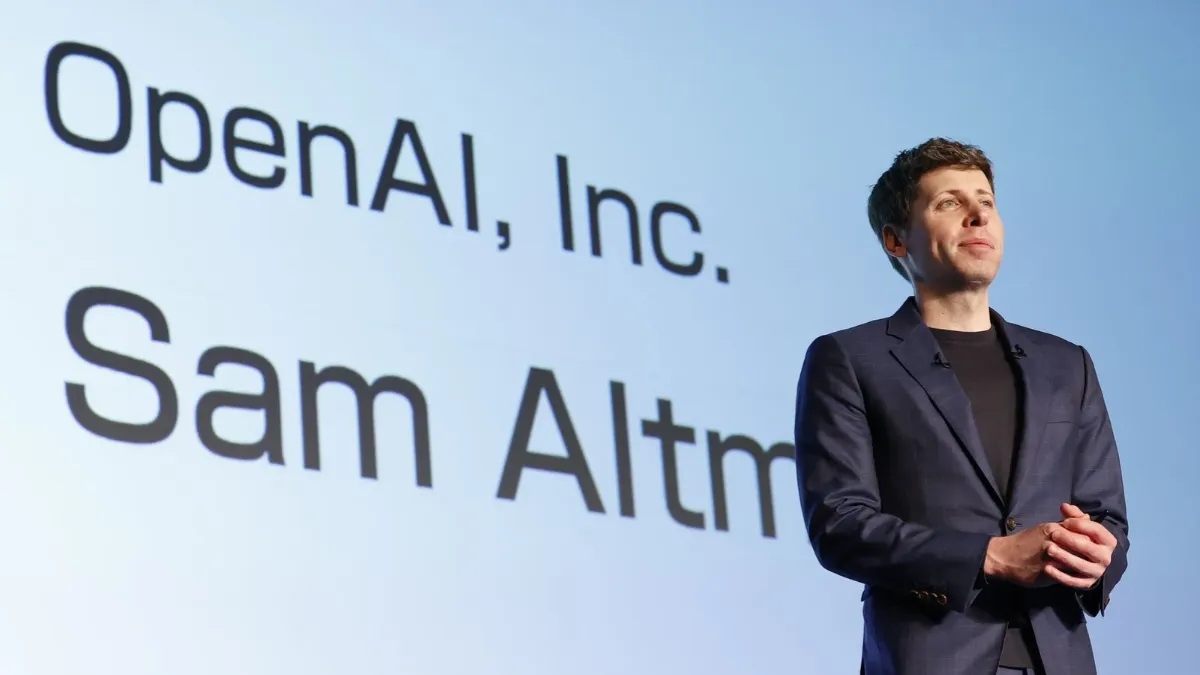
Then there’s Altman, speaking at Semafor’s Silicon Valley & The World event. It was his first public comment on Huang’s resignation from Nvidia, which followed Huang’s admission of an affair with an alleged Chinese spy. Altman said he doesn’t know enough to say whether Huang should return. He did bring up his own removal from OpenAI in 2023 and said he feels for him. It’s hard, he said, to imagine the AI revolution without Huang and the company he built. A hero, in his words, with flaws.
Money was the other topic. Altman isn’t worried Nvidia’s financing will dry up, since people still trust its guarantees. Nvidia recently agreed to guarantee up to $105 billion for OpenAI’s Ohio data centre project, one of many deals where Nvidia’s money ends up buying Nvidia chips. Demand and revenue are growing fast enough, he said, that the industry will be fine.
Huang has backers. Elon Musk and Tim Sweeney have backed a public letter calling for his reinstatement, and Huang is reportedly gathering Silicon Valley executives to lobby for his return.
Edit Profile
Help improve @KR
Was this page helpful to you?
Contact Khogendra Rupini
Are you looking for an experienced developer to bring your website to life, tackle technical challenges, fix bugs, or enhance functionality? Look no further.
I specialize in building professional, high-performing, and user-friendly websites designed to meet your unique needs. Whether it's creating custom JavaScript components, solving complex JS problems, or designing responsive layouts that look stunning on both small screens and desktops, I can collaborate with you.
Create something exceptional with us. Contact us today
Open for Collaboration
If you're looking to collaborate, I'm available for a variety of professional services, including -
- Website Design & Development
- Advertisement & Promotion Setup
- Hosting Configuration & Deployment
- Front-end & Back-end Code Implementation
- Code Testing & Optimization
- Cybersecurity Solutions & Threat Prevention
- Website Scanning & Malware Removal
- Hacked Website Recovery
- PHP & MySQL Development
- Python Programming
- Web Content Writing
- Protection Against Hacking Attempts