Stranger Things Final Season Chooses Familiar Comfort Over Creative Risk
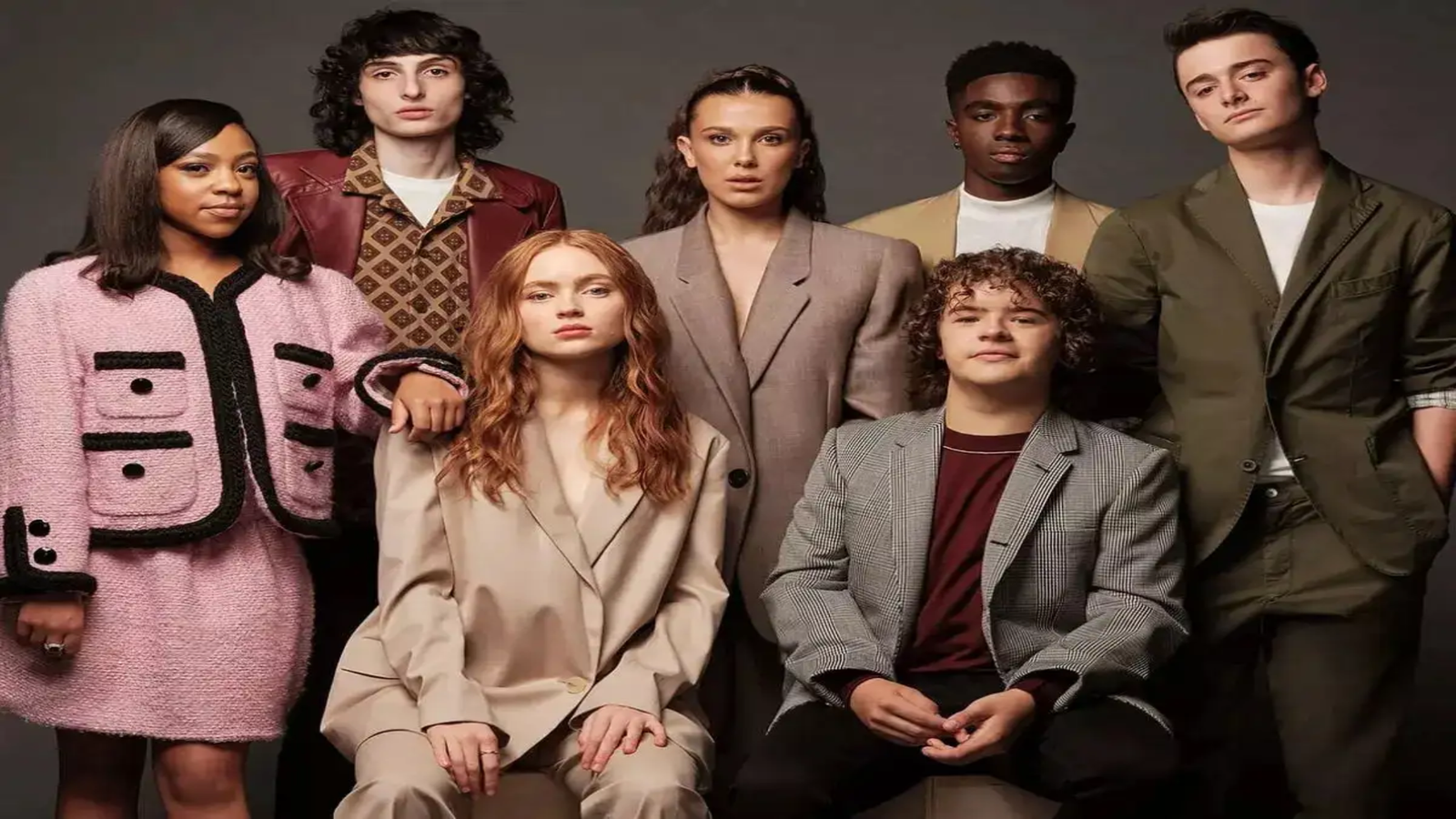
When Stranger Things first arrived in 2016, it felt like a rare kind of television event. It blended nostalgia with unease, childhood wonder with genuine terror, and spectacle with emotional sincerity.
Across its early seasons, the series evolved alongside its young characters, testing new ideas while holding on to its emotional core. Now, as the fifth and final season reaches its closing chapters, the show remains watchable and polished, but it no longer feels adventurous.
Instead of pushing forward, it looks inward, repeating its own language and settling into safety.
A familiar fight with diminished urgency
The final season finds the Hawkins group once again racing to stop Vecna and prevent the Upside Down from consuming their world. The stakes, at least on paper, are apocalyptic.
Yet the storytelling rarely feels urgent in the way it once did. Rather than deepening its themes or challenging its audience, the season focuses almost entirely on moving a dense and complicated plot toward a predetermined conclusion.
The result is a series that still commands attention but no longer surprises.
A show that once embraced growth
Earlier seasons of Stranger Things were defined by their willingness to experiment. The first season succeeded because it trusted atmosphere and character as much as plot.
The second season leaned into darker material and emotional risk, including a controversial but ambitious exploration of Eleven’s past.
Season three used bright consumer culture and mall aesthetics to reflect the characters’ growing awareness of the adult world.
Season four expanded the mythology with Vecna, using horror to explore grief, guilt, and trauma, particularly through Max’s storyline.
Each chapter felt like a deliberate attempt to try something new. The show did not always succeed, but it was rarely stagnant.
It understood that coming of age is messy and uncertain, and it allowed its tone and structure to reflect that truth.
Season five, by contrast, feels cautious. The series no longer seems interested in discovering what it can become. Instead, it focuses on delivering what is already familiar.
Crowded scenes and flattened characters
One of the most noticeable changes in the final season is the sheer number of characters competing for attention.
The cast has expanded so much that many scenes feel crowded, with characters standing shoulder to shoulder while exchanging exposition.
Moments that once allowed for intimacy now feel rushed or diluted.
Several characters are reduced to simplified traits. Relationships that once felt organic are revisited without much evolution.
Old dynamics are replayed rather than reexamined. The return of a love triangle and the repeated use of reconciliation scenes after near death encounters begin to feel mechanical rather than meaningful.
The central conflict involving the search for Holly, the younger sister of Mike and Nancy, mirrors the first season so closely that it borders on self imitation.
What once felt like a gripping mystery now feels like a narrative shortcut, relying on audience nostalgia rather than emotional discovery.
Plot over perspective
Much of season five is driven by explanation. New concepts such as exotic matter require extended dialogue to clarify their function within the story.
Characters frequently express confusion about the rules of the Upside Down, mirroring what many viewers may be feeling.
Instead of using mystery to create tension, the show often pauses to explain itself, slowing momentum and weakening immersion.
This emphasis on mechanics comes at the expense of character perspective.
The emotional lives of the central cast take a back seat to logistics and strategy.
Fear, grief, and uncertainty are acknowledged but rarely explored in depth.
The series seems more concerned with ensuring that every plot thread is accounted for than with asking what these events mean for the people experiencing them.
Emotional moments that feel misplaced
There are still flashes of sincerity. Will remains one of the show’s most sensitive and quietly complex characters.
His coming out scene should have been one of the emotional anchors of the season.
Instead, it feels awkwardly placed between major action beats.
The moment is sincere, but it is framed more as a checklist item than a culmination of long simmering tension.
The scene leans heavily on period references and callbacks, which undercuts its intimacy.
Unlike earlier moments of revelation, such as Robin’s conversation with Steve in a previous season, Will’s confession feels interrupted by the demands of the plot.
What should have been a quiet and transformative exchange becomes another reminder of how tightly the series now clings to its own mythology.
From bold storytelling to brand maintenance
Stranger Things has always drawn from the past. Its visual language and narrative structure owe much to the films and novels of the nineteen eighties.
In its early years, this influence felt affectionate and inventive.
Familiar elements were reworked into something emotionally resonant and modern.
In the final season, that balance tilts too far toward repetition.
References feel more like branding than inspiration.
Callbacks arrive not because the story demands them, but because the audience recognizes them.
The show no longer seems curious about its influences. It simply recycles them.
This shift reflects a broader transformation.
Stranger Things is no longer just a television series.
It is a global franchise with stage productions, merchandise, spin offs, and conventions.
Its cultural footprint is enormous, and its creative decisions increasingly reflect the need to protect that identity.
Still watchable, but no longer daring
None of this makes the final season unwatchable.
On the contrary, it remains highly bingeable.
The pacing is designed to keep viewers clicking through episodes, and the production values are consistently impressive.
For many fans, that may be enough.
But bingeability was never what made Stranger Things special.
Its early success came from its ability to blend comfort and fear, nostalgia and originality.
It understood that growing up is both thrilling and frightening, and it allowed those contradictions to coexist.
By settling for familiarity, the final season sacrifices nuance.
It does not fail in a spectacular way, but it does fall short of its own potential.
The show that once matured alongside its audience now seems content to reassure them instead.
A quiet ending to a loud legacy
Ending a beloved series is never easy.
Expectations are high, and every choice is scrutinized.
Stranger Things avoids the kind of backlash that has followed other genre finales, but it does so by playing it safe.
Rather than challenging its audience one last time, it focuses on delivering closure within the boundaries it has already established.
In doing so, it trades discovery for reassurance.
The Upside Down still looms, the friendships still endure, and the story moves steadily toward its conclusion.
Yet something essential is missing.
The sense of risk, of not knowing what form the show might take next, has faded.
Stranger Things will be remembered as one of the defining television phenomena of the streaming era and a cornerstone of Netflix’s rise.
Its influence on pop culture is undeniable.
But as it reaches the end of its journey, it leaves behind a lingering question.
Was compulsive watchability really the highest ambition it could have reached?
In its final hours, the series no longer invites viewers to feel wonder or dread.
It simply tells them what happens next.
Edit Profile
Help improve @KR
Was this page helpful to you?
Contact Khogendra Rupini
Are you looking for an experienced developer to bring your website to life, tackle technical challenges, fix bugs, or enhance functionality? Look no further.
I specialize in building professional, high-performing, and user-friendly websites designed to meet your unique needs. Whether it’s creating custom JavaScript components, solving complex JS problems, or designing responsive layouts that look stunning on both small screens and desktops, I can collaborate with you.
Create something exceptional with us. Contact us today
Open for Collaboration
If you're looking to collaborate, I’m available for a variety of professional services, including -
- Website Design & Development
- Advertisement & Promotion Setup
- Hosting Configuration & Deployment
- Front-end & Back-end Code Implementation
- Code Testing & Optimization
- Cybersecurity Solutions & Threat Prevention
- Website Scanning & Malware Removal
- Hacked Website Recovery
- PHP & MySQL Development
- Python Programming
- Web Content Writing
- Protection Against Hacking Attempts