China Imposes Sanctions on US Defence Firms Over Taiwan Arms Sales
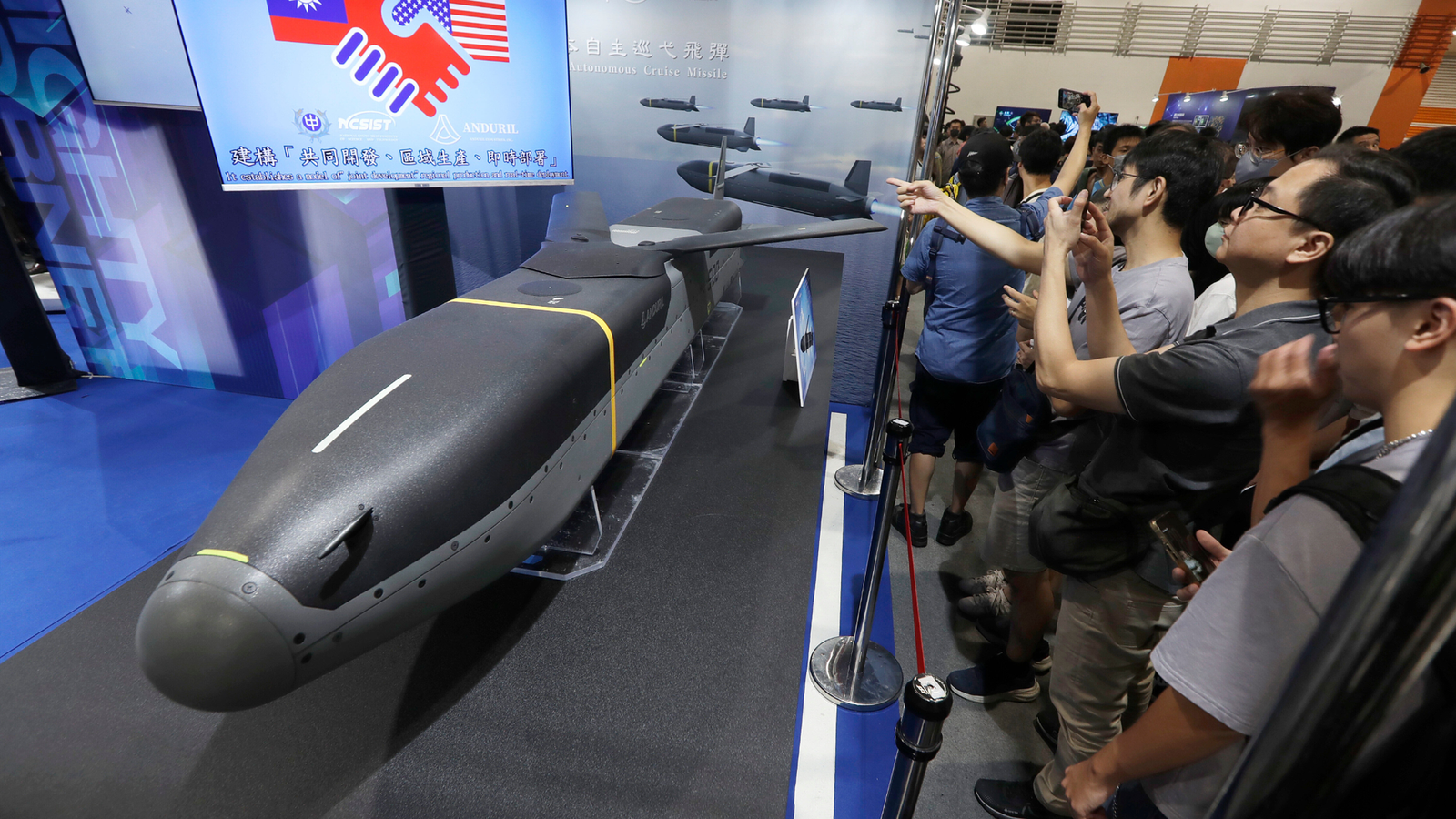
China has announced a fresh round of sanctions against United States defence companies and senior executives in response to Washington’s latest approval of large scale arms sales to Taiwan, sharply escalating diplomatic tensions between the world’s two largest economies.
In a statement released on Friday, the Chinese Foreign Ministry said it would impose sanctions on 20 United States defence related companies and 10 senior executives who have been involved in supplying weapons to Taiwan in recent years. The measures were announced under China’s Anti Foreign Sanctions Law and took effect immediately.
Beijing described the move as a strong countermeasure to what it called repeated and serious violations by the United States of China’s core interests, particularly on the Taiwan issue. The ministry reiterated that Taiwan is an inalienable part of China and warned that any foreign interference would be met with firm and resolute responses.
Companies and executives targeted
According to the Foreign Ministry, the sanctioned entities include some of the most prominent names in the American defence industry. Among them are Northrop Grumman Systems Corporation, L3Harris Maritime Services, Boeing operations in St. Louis, Gibbs and Cox, Advanced Acoustic Concepts, VSE Corporation, Sierra Technical Services, Red Cat Holdings, Teal Drones, ReconCraft, High Point Aerotechnologies, Epirus, Dedrone Holdings, Area I, Blue Force Technologies, Dive Technologies, Vantor, Intelligent Epitaxy Technology, Rhombus Power and Lazarus Enterprises.
The sanctions also extend to 10 senior executives from these firms. Notably, the list includes Palmer Luckey, the founder of Anduril Industries, along with top executives from companies such as L3Harris and VSE Corporation. Chinese authorities said these individuals will face restrictions on assets and activities linked to China.
Under the measures, all movable and immovable assets of the listed companies located within China will be frozen. In addition, Chinese organisations and individuals are prohibited from engaging in business dealings, cooperation or other forms of interaction with the sanctioned entities. The executives named will also see their assets in China restricted and their related activities curtailed.
Beijing reiterates red line on Taiwan
In its statement, the Foreign Ministry said United States arms sales to Taiwan seriously violate the one China principle and the three China United States Joint Communiques. It accused Washington of interfering in China’s internal affairs and undermining China’s sovereignty and territorial integrity.
“The Taiwan question lies at the core of China’s national interests and is the first red line that must not be crossed in China United States relations,” a ministry spokesperson said. The spokesperson added that no country, organisation or individual should underestimate China’s firm determination and strong capability to safeguard its sovereignty and territorial integrity.
China also urged the United States to honour its commitments, stop supplying weapons to Taiwan and avoid actions that could further escalate tensions in the Taiwan Strait. Beijing said it would continue to take resolute and effective measures to protect its national sovereignty and security interests.
Context of rising military tensions
The sanctions come against the backdrop of renewed military and political tensions in the Taiwan Strait. Taiwan has remained one of the most sensitive and contentious issues in relations between Beijing and Washington for decades.
China considers Taiwan a breakaway province and has not ruled out the use of force to achieve reunification. The United States, while acknowledging the one China policy, maintains unofficial relations with Taipei and is bound by domestic legislation to provide Taiwan with defensive weapons.
In recent years, arms sales to Taiwan have become more frequent and more advanced, reflecting growing concern in Washington over China’s expanding military capabilities and increased pressure on the self governed island.
Recent United States arms package
The latest Chinese response follows the approval by the administration of United States President Donald Trump of a major arms package for Taiwan last week. The United States State Department said the proposed sales are valued at more than 10 billion dollars and include a wide range of military equipment.
According to reports, the potential sale consists of eight separate arms packages worth an estimated 11.1 billion dollars. These reportedly include HIMARS rocket systems, anti tank missiles, drones, howitzers and other advanced weaponry. Several of the items are said to be covered under Taiwan’s proposed special defence budget.
Washington has argued that such sales are necessary to help Taiwan maintain a credible self defence capability and deter any unilateral changes to the status quo in the Taiwan Strait.
Strong message to defence industry
By targeting both companies and individual executives, Beijing appears to be sending a clear warning to the global defence industry about the costs of involvement in arms sales to Taiwan.
Chinese officials have repeatedly stressed that companies or individuals who profit from what China views as violations of its sovereignty will face consequences. Friday’s announcement reinforces that stance and signals that Beijing is prepared to use legal and economic tools to respond to perceived challenges to its territorial claims.
While the practical impact of the sanctions may be limited for some firms that have little direct exposure to the Chinese market, analysts say the move carries significant symbolic weight. It underscores China’s willingness to escalate pressure and adds another layer of risk for defence contractors operating in an increasingly divided geopolitical environment.
Implications for China United States relations
The latest sanctions are likely to further strain already tense relations between Beijing and Washington. Trade disputes, technology restrictions, military competition and differing views on global governance have all contributed to a steady deterioration in ties in recent years.
The Taiwan issue, however, remains the most sensitive and potentially volatile flashpoint. Any miscalculation could have far reaching consequences not only for China and the United States but for regional stability across East Asia.
For now, Beijing has made clear that it views continued arms sales to Taiwan as unacceptable and that it will respond forcefully through diplomatic and economic means. Whether the latest measures will influence future United States decisions on Taiwan remains uncertain, but they highlight how central the issue has become in shaping the trajectory of relations between the two powers.
As tensions persist, calls for restraint and dialogue are growing louder among regional observers. Yet with both sides standing firm on their positions, the Taiwan Strait continues to be one of the most closely watched and potentially dangerous fault lines in global politics.
Edit Profile
Help improve @KR
Was this page helpful to you?
Contact Khogendra Rupini
Are you looking for an experienced developer to bring your website to life, tackle technical challenges, fix bugs, or enhance functionality? Look no further.
I specialize in building professional, high-performing, and user-friendly websites designed to meet your unique needs. Whether it’s creating custom JavaScript components, solving complex JS problems, or designing responsive layouts that look stunning on both small screens and desktops, I can collaborate with you.
Create something exceptional with us. Contact us today
Open for Collaboration
If you're looking to collaborate, I’m available for a variety of professional services, including -
- Website Design & Development
- Advertisement & Promotion Setup
- Hosting Configuration & Deployment
- Front-end & Back-end Code Implementation
- Code Testing & Optimization
- Cybersecurity Solutions & Threat Prevention
- Website Scanning & Malware Removal
- Hacked Website Recovery
- PHP & MySQL Development
- Python Programming
- Web Content Writing
- Protection Against Hacking Attempts