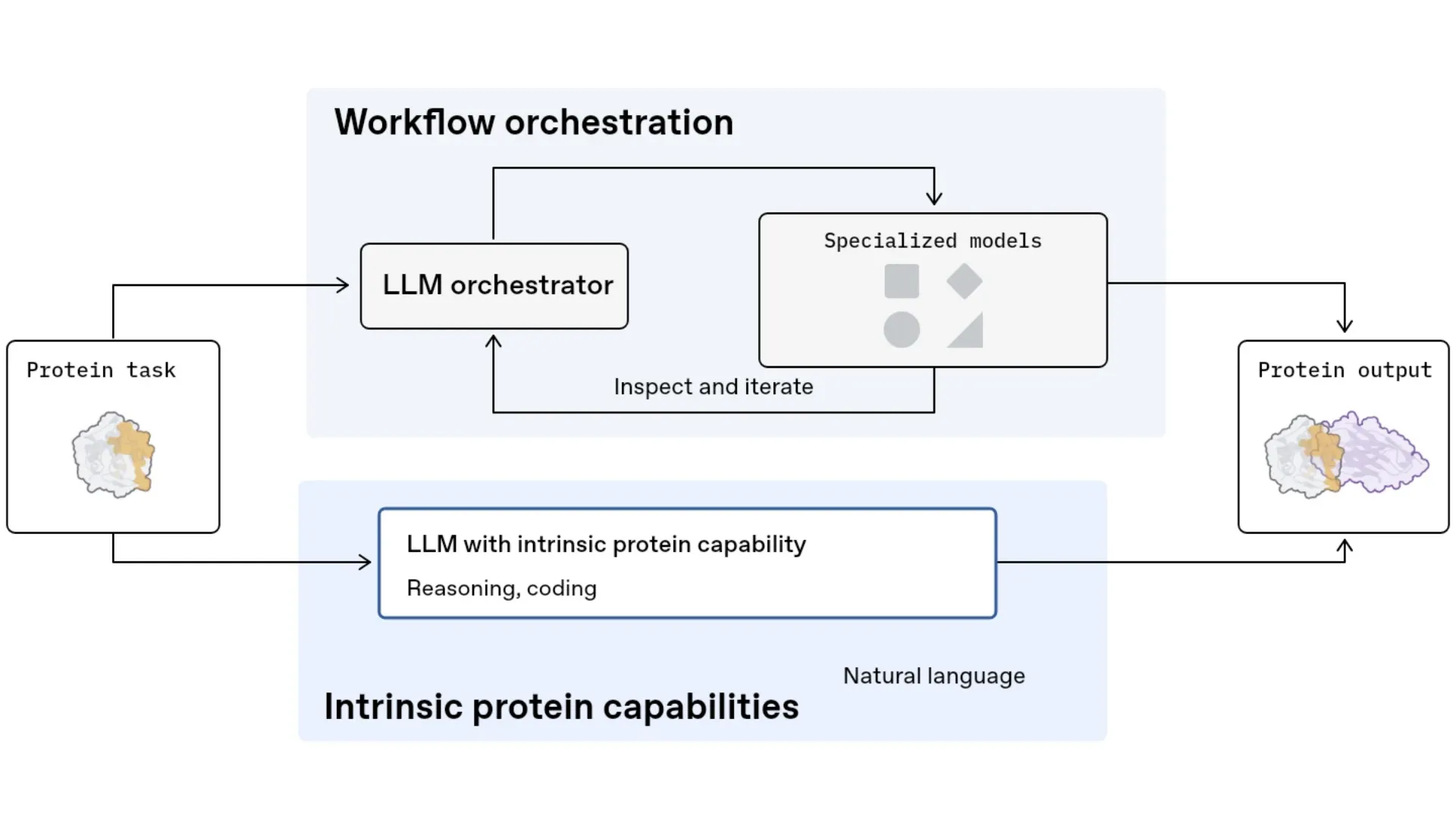
OpenAI’s research partner Onava tested 322 small proteins built from shapes proposed by an early version of GPT-6.2. In all, 35 attached to their intended target. The lab found at least one match for each of the five target proteins, OpenAI reported on November 24.The experiment gave a general-purpose language model a job usually handled by specialist biology software. GPT-6.2 wrote the code for the shapes. Specialist models supplied the amino acid sequences for that first experiment and helped select candidates throughout the lab study. Researchers still need to establish whether the proteins bind selectively, remain stable in the body or produce a useful biological effect.
Why the shape matters
Proteins carry oxygen through the blood, drive chemical reactions and help fight infection. Each begins as a chain of amino acids. The order of those building blocks helps determine how the chain folds and what it can bind. Consider PD-L1, a protein some tumours use to evade the immune system. To design a protein that could block that signal, researchers first need a shape that fits the target and a sequence that folds into that shape.Specialist tools such as RFdiffusion accept particular kinds of input. A new design requirement can mean changing software or retraining a model. In its preprint, “GPT-6 as a Universal Foundation Model for Protein Biology: Beyond Specialized Models,” OpenAI examined whether researchers could change the brief in plain language and let the model adapt its code.
Five targets, 35 hits
For the first lab experiment, researchers marked the intended attachment site on each target structure. GPT-6.2 proposed shapes for small proteins called minibinders. SolubleMPNN supplied candidate sequences. Across the lab experiments, the team used specialist tools including Boltz-2, OpenDDE and ESMFold2 to help decide which designs to make.The overall hit rate was 10.9 percent. Onava recorded 18 hits for IL-17A, 8 for VEGF-A, 5 for PD-L1, 3 for IL-7Rα and 1 for TrkA. The original RFdiffusion study reported higher hit rates. A direct comparison is difficult because the rate depends on which candidates reach the lab and what each team counts as binding.
How much of a sequence can change?
In a second experiment, GPT-6.2 received predicted shapes of minibinders already known to bind, with their original sequences withheld. Results varied sharply by target. In the initial lab screens, 75 of 88 designs bound MDM2, 26 of 42 bound VEGF-A and 8 of 59 bound PD-1. The median share of amino acids that differed from the original sequence was 50 percent for VEGF-A and 43 percent for MDM2.Three unpublished shapes offered a check on whether the model was recalling familiar sequences. GPT-6.2 had designed the shapes in earlier rounds. Given those shapes again, it proposed new sequences, and 14 of the 107 resulting proteins showed binding. Two that bound PD-L1 differed from the original at 52 and 58 of 90 positions. They also differed from each other at 44 positions. OpenAI says this suggests the model could identify changes a structure would tolerate, although memorisation may still explain some high benchmark scores. The authors also caution that computer-generated structures can contain clues to the original sequences.The antibody tests posed a related question. Starting with six small antibodies that bind IL-4Rα, GPT-6.2 redesigned three loops that help each antibody grip its target. Of 182 designs tested, 128, or 70 percent, retained binding. For five therapeutic antibodies targeting PD-1 or PD-L1, researchers asked the model to change roughly half the amino acids in each of three binding loops. Of 272 redesigned fragments, 179, or 66 percent, still bound their original target.
Folding a whole protein remains a weakness
Asked to predict a protein’s entire shape from its sequence alone, GPT-6.2 averaged 0.26 on a measure called the TM-score, where 1.0 is a perfect structural match. OpenAI’s latest internal model reached 0.38. ESMFold2, a specialist tool, averaged 0.93 on the same test.The models fared better when researchers specified features of the shape they wanted. In computer tests, an internal model followed instructions such as favouring helices or including an exact number of strands with near-perfect accuracy. Across 30 MotifBench challenges drawn from enzymes and protein interactions, 43.7 percent of the designs evaluated from the latest internal model passed the computational checks, compared with 27.8 percent for RFdiffusion. Those checks assessed whether a design preserved a specified arrangement of amino acids and its intended overall shape. Establishing whether a protein can perform the intended function still requires a lab test.A separate docking test asked where a small molecule would sit on a protein and which way it would face. GPT-6.2 came close to the experimentally observed position and orientation in 93 percent of scored predictions, compared with 50 percent for DiffDock-L.
What it would take to make a medicine
Drug development takes years, and most early candidates fail along the way. OpenAI hopes to shorten each round of design and testing and reduce the number of rounds needed to find a working protein. If that saves time and money, researchers could pursue more candidates for conditions with few treatments. The study leaves those savings, and the safety and efficacy of any future treatment, unproven.Easier access also raises a biosecurity question. Lowering the expertise needed to design a protein could make the same capabilities easier to misuse. OpenAI says it assesses those risks and tests safeguards under its Preparedness Framework. How well those safeguards work remains a question for independent scrutiny.OpenAI plans to tackle harder binding targets and explore molecules that bind several targets at once, molecules that bind RNA, and PROTACs, which direct a cell to break down a particular protein. A more demanding test will be whether a molecule the model designs can do something useful after it attaches, such as killing a cancer cell.
Khogendra Rupini is a full-stack developer and independent news writer, and the founder and CEO of Levoric Learn. His journalism is grounded in verified information and factual accuracy, with reporting informed by reputable sources and careful analysis rather than live or speculative updates. He covers technology, artificial intelligence, cybersecurity, and global affairs, producing clear, well-contextualized articles that emphasize credibility, precision, and public relevance.
Technology Analysis Editorial and Technology Analysis
Are you looking for an experienced developer to bring your website to
life, tackle technical challenges, fix bugs, or enhance functionality? Look no further.
I specialize in building professional, high-performing, and
user-friendly websites designed to meet your unique needs. Whether it's creating custom JavaScript
components, solving complex JS problems, or designing responsive layouts that look stunning on both small
screens and desktops, I can collaborate with you.