
Web Hosting Explained: How Websites Go Live on the Internet and Why the Right Hosting Choice Matters More Than Ever
info Web hosting is a service that stores website files on internet connected servers, allowing people worldwide to access a site through its domain name. When a user enters a domain, DNS directs the browser to the hosting server, which delivers the website’s files. Hosting types like shared, VPS, dedicated, and cloud offer different levels of performance, control, and scalability depending on website needs.
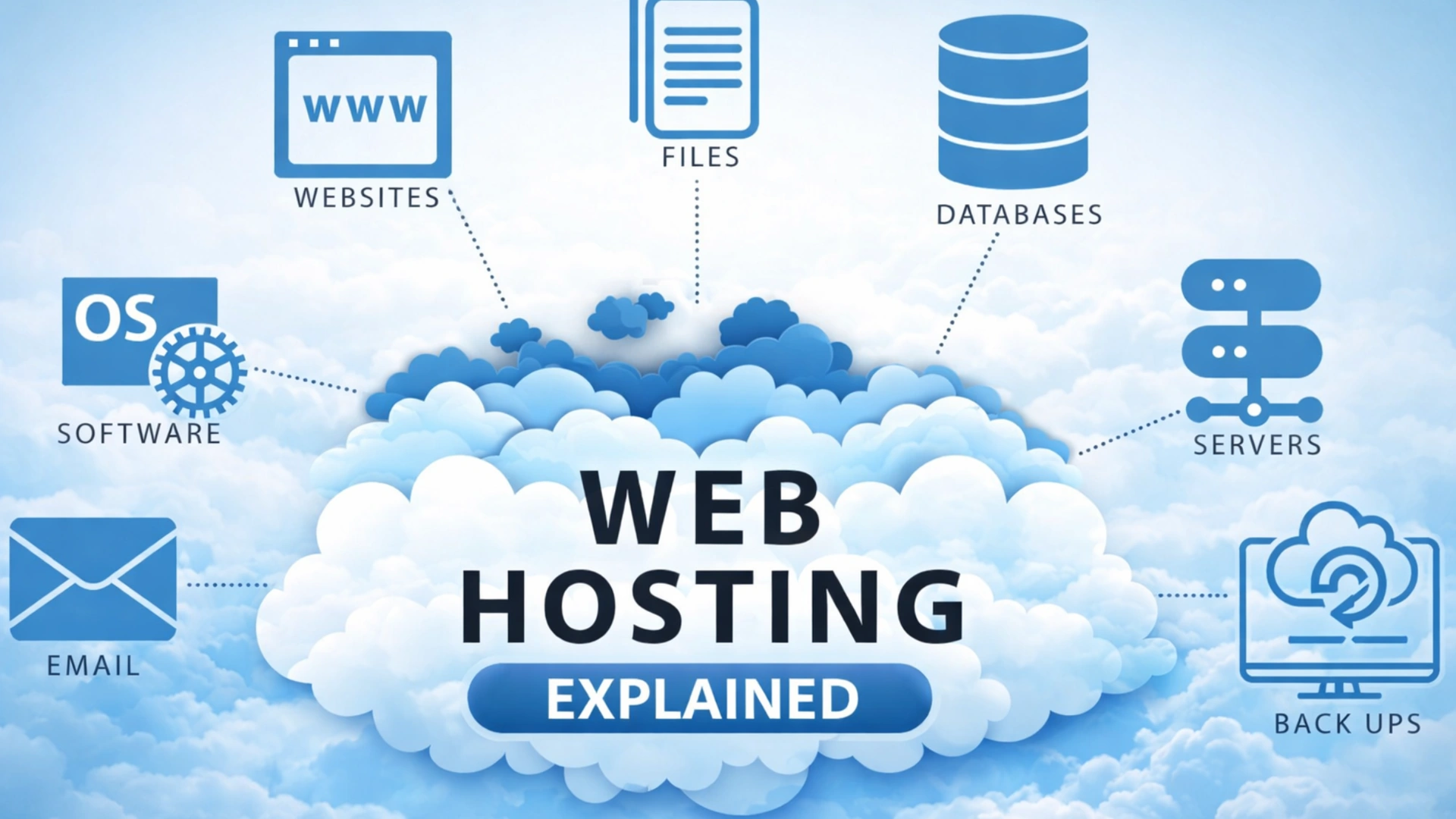
The Invisible Engine Behind Every Website You Visit
Every website you open today—from news platforms to online stores—exists because of a technology most users rarely think about: web hosting. Without it, the internet as we know it would simply not function.
Web hosting is a service that allows individuals and businesses to store their website files on powerful computers known as servers so that those sites can be accessed online by anyone around the world. When someone types a website address into a browser, the hosting server sends the requested data to the user’s device, allowing the page to load instantly.
In simple terms, web hosting works like renting space on the internet. Instead of building a house on land, you build a website and store its files on a server that is permanently connected to the internet. The hosting provider ensures that this server stays online, secure, and capable of delivering your website quickly whenever visitors request it.
For businesses, creators, and entrepreneurs, understanding web hosting has become essential. A website may have stunning design and powerful content, but without reliable hosting infrastructure, it cannot reach its audience.
Why Every Website Needs Hosting to Exist Online
A website is essentially a collection of digital files. These files include HTML code, images, videos, databases, scripts, and other resources that together form the pages people see when they visit a site.
However, storing these files on a personal computer is not enough. Personal devices are not designed to stay online continuously or handle thousands of visitors. That is where hosting providers step in.
When someone purchases a hosting plan, they are renting space on a professional server. This server stores all website files and delivers them to visitors whenever the domain name is entered into a browser.
The hosting provider manages key technical responsibilities such as server maintenance, security protection, performance optimization, and uptime monitoring. Without these services, websites would frequently go offline or load too slowly to serve users effectively.
Reliable hosting is therefore one of the most important foundations of a successful online presence.
From Domain Name to Live Website: How Hosting Works Step by Step
Making a website visible on the internet involves several interconnected steps that operate seamlessly behind the scenes.
The process begins with registering a domain name. This domain becomes the website’s unique address on the internet. It is what users type into their browsers when they want to visit the site.
Next comes selecting a web hosting provider and purchasing a hosting plan. The provider allocates space on a server where the website’s files will be stored.
Once hosting is active, website files are uploaded to the server. These files may include custom coded pages or content managed through a content management system.
When a visitor enters the domain name in a browser, the Domain Name System, often referred to as DNS, acts like the internet’s address book. DNS converts the domain name into a server IP address so the browser can locate the correct server.
The hosting server then sends the requested website files to the visitor’s browser. The browser processes those files and displays the website on the screen.
This entire process happens in seconds, creating the seamless experience users expect when browsing the internet.
The Critical Server Resources That Power Website Performance
Behind every hosting plan are several technical resources that determine how well a website performs.
CPU power is responsible for processing tasks on the server. Higher processing power allows websites to generate pages faster and handle more simultaneous visitors.
RAM manages active data during website operations. More memory ensures smoother performance and prevents slowdowns during busy traffic periods.
Storage determines how much content a website can host. Modern hosting providers increasingly use high speed storage technologies such as SSD or NVMe drives, which allow faster data retrieval and quicker page loading.
Bandwidth controls how much data can be transferred between the server and visitors. Websites with high traffic, video content, or large downloads require higher bandwidth to avoid slow loading speeds or service interruptions.
Understanding these resources helps website owners choose hosting plans that match their traffic levels and performance needs.
Understanding the Main Types of Web Hosting Services
Web hosting services come in several forms, each designed to support different levels of website complexity, traffic, and technical control.
Shared hosting is the most common and affordable option. In this setup, multiple websites share the same server and its resources such as CPU and RAM. Because costs are distributed across many users, shared hosting is ideal for beginners, personal blogs, and small business websites with limited traffic. However, performance may slow down if other sites on the server experience heavy traffic.
Virtual Private Server hosting, commonly known as VPS hosting, provides a middle ground between shared hosting and dedicated servers. Although multiple websites still share the same physical server, each user receives a dedicated virtual partition with guaranteed resources. VPS hosting offers improved performance and more control, including the possibility of root access for advanced configuration.
Dedicated hosting offers the highest level of performance and control. In this model, an entire physical server is rented exclusively for one website or organization. Dedicated servers provide maximum resources, security, and customization, making them suitable for large companies or high traffic websites. However, they also require greater technical expertise and come at a higher cost.
Cloud hosting has become increasingly popular because of its flexibility and reliability. Instead of relying on a single server, cloud hosting uses a network of interconnected servers that distribute resources dynamically. If one server fails, another automatically takes over, ensuring continuous website availability.
Cloud hosting also allows websites to scale resources up or down depending on traffic demand. This makes it particularly valuable for ecommerce platforms, growing applications, and businesses experiencing unpredictable traffic spikes.
Reseller hosting is another specialized model that allows agencies or developers to purchase hosting resources and sell them to their own clients under a custom brand. This approach is often used by web design firms that want to offer hosting as part of their service packages.
Cloud Hosting vs Traditional Hosting: The Key Differences
Traditional hosting environments such as shared, VPS, and dedicated hosting typically rely on a single physical server. If that server encounters a technical issue, the hosted website may go offline until the problem is resolved.
Cloud hosting, in contrast, uses a distributed network of servers that work together. If one server fails, another server within the network immediately takes over the workload.
This architecture significantly improves reliability and uptime. It also allows websites to scale resources quickly during traffic spikes without requiring manual upgrades.
Pricing models also differ. Traditional hosting plans generally charge a fixed monthly or annual fee regardless of actual resource usage. Cloud hosting often operates on a pay as you go model, where users pay only for the computing resources they consume.
Because of these advantages, many modern applications and fast growing startups are increasingly adopting cloud infrastructure.
Choosing the Right Web Hosting Provider Can Make or Break a Website
Selecting a hosting provider is one of the most critical decisions website owners face. Several key factors determine whether a hosting service will support long term growth.
Reliability is often measured through uptime guarantees. Most reputable providers promise at least 99.9 percent uptime, ensuring websites remain accessible almost all the time.
Speed and performance also play a major role. Faster websites improve user experience and search engine rankings, making server performance a crucial factor.
Security features have become increasingly important as cyber threats continue to grow. A strong hosting provider should include firewall protection, malware scanning, secure SSL certificates, and regular security updates.
Customer support is another essential consideration. Technical issues can arise at any time, so providers that offer 24 hour support through chat, phone, or email provide valuable peace of mind.
Scalability is equally important. As a website grows, hosting needs will expand. A good hosting provider makes it easy to upgrade from shared hosting to VPS, cloud, or dedicated environments without significant downtime.
Free Hosting vs Paid Hosting: Understanding the Real Trade Off
Many beginners start with free hosting platforms, but these services often come with significant limitations.
Free hosting typically offers limited storage, restricted bandwidth, and basic security protections. Many free services also display third party advertisements on hosted websites and may only provide subdomains instead of custom domain names.
Paid hosting plans, on the other hand, offer far greater reliability, performance, and security. Features such as automated backups, DDoS protection, advanced storage technologies, and professional support make paid hosting essential for serious websites.
Shared hosting plans can start at relatively low annual costs, making them accessible even for individuals launching their first online projects.
For businesses, investing in reliable hosting is not just a technical decision but a strategic one. A stable hosting environment ensures that websites remain fast, secure, and accessible to users at all times.
The Digital Foundation That Keeps the Internet Running
As the digital economy continues to expand, web hosting remains one of the fundamental technologies powering the internet. Every online store, blog, news platform, and application depends on reliable hosting infrastructure to reach its audience.
From small personal websites to global enterprise platforms, hosting services provide the servers, resources, and security systems that keep the web running smoothly.
Understanding how hosting works and choosing the right hosting model can determine whether a website thrives online or struggles with slow speeds and downtime.
In a world where digital presence increasingly defines success, web hosting is no longer just a technical service. It is the invisible foundation that makes the modern internet possible.

Edit Profile
Help improve @KR

Was this page helpful to you?
Contact Khogendra Rupini
Are you looking for an experienced developer to bring your website to life, tackle technical challenges, fix bugs, or enhance functionality? Look no further.
I specialize in building professional, high-performing, and user-friendly websites designed to meet your unique needs. Whether it’s creating custom JavaScript components, solving complex JS problems, or designing responsive layouts that look stunning on both small screens and desktops, I can collaborate with you.
Create something exceptional with us. Contact us today
Open for Collaboration
If you're looking to collaborate, I’m available for a variety of professional services, including -
- Website Design & Development
- Advertisement & Promotion Setup
- Hosting Configuration & Deployment
- Front-end & Back-end Code Implementation
- Code Testing & Optimization
- Cybersecurity Solutions & Threat Prevention
- Website Scanning & Malware Removal
- Hacked Website Recovery
- PHP & MySQL Development
- Python Programming
- Web Content Writing
- Protection Against Hacking Attempts