
Google gives Sundar Pichai's alma mater IIT Kharagpur $5 million to build AI for Indian languages, farms and classrooms
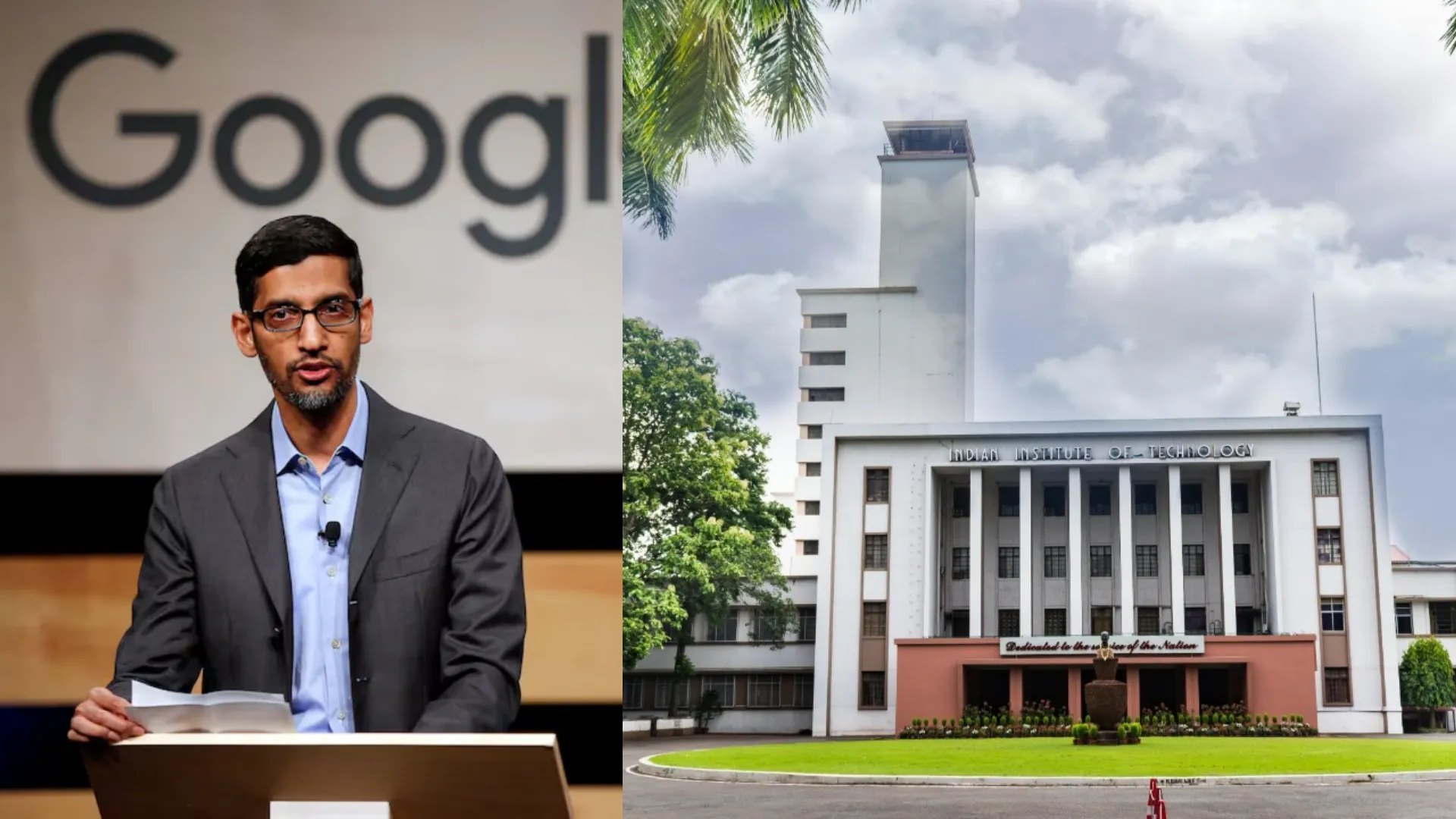
Google has committed $5 million, about Rs 46.34 crore, to the Indian Institute of Technology Kharagpur for artificial intelligence research, training and campus infrastructure. The announcement came on Saturday as the institute marked its 75th anniversary with Platinum Jubilee celebrations, which Prime Minister Narendra Modi attended.
The alumni link gives the news its weight. Sundar Pichai, Google's chief executive, earned his B.Tech in Metallurgical and Materials Engineering at Kharagpur, graduated in 1993 and lived in Nehru Hall. He said he looks forward to the collaboration shaping the next generation of students "just as IIT Kharagpur shaped my own." Institute Director Prof. Suman Chakraborty noted that the support for applied AI research was envisioned by Pichai himself, who praised the institute for "driving groundbreaking work in areas like Indic languages, agriculture, and education."
Where the money goes
Google's blog post divides the funding into three pillars. Advanced research covers AI for Indic languages, materials science, agriculture and educational technology. The education pillar pays for AI training and curriculum development for students, faculty and teachers. Capacity building strengthens the institute's AI frameworks and tools across the campus. Reaching teachers as well as students is a sound choice, since one trained teacher passes AI skills to far more learners than one trained student can. Individual projects and timelines have not been announced.
Beyond translation
For ordinary users, the practical stake is whether the AI tools arriving on their phones understand them, in the language they actually use at home and in the market. Indian language AI fails in specific, well-known places. One is code-mixing, where speakers slide between Bengali, Tamil or Hindi and English inside a single sentence. Another is dialectal drift, the gap between the formal language of textbooks and what people speak in rural districts. The third is speech. For a farmer or a small shopkeeper, a voice-first tool matters more than a text box, yet labelled speech data is scarce for many Indian languages, which makes automatic speech recognition, or ASR, hard to build well.
Kharagpur is not starting from zero. It announced a Centre of Excellence in Artificial Intelligence in 2018, seeded with funding from Capillary Technologies. The national backdrop is Bhashini, the government's mission, run by the Ministry of Electronics and Information Technology, to bridge the language barrier in the digital space through voice and text in more than 22 Indian languages. Open models and datasets from Kharagpur could feed that public-good effort. Results that stay inside a lab could not.
Fields and alloys
On agriculture, the institute has a natural edge. It says it is the only one among the 23 IITs with an Agricultural and Food Engineering department, which began in 1952 as Agricultural Engineering. The real test is not a cloud chatbot. It is a low-bandwidth, multimodal model that combines satellite data, soil sensor readings and local-language voice alerts, and still runs on a budget smartphone in an area with erratic connectivity. The stakes are concrete, because a wrong or late alert costs a farmer part of a crop cycle, not just a moment of irritation.
Materials science is where a modest grant stretches furthest. Graph neural networks and generative models can screen crystal structures, battery electrolytes and alloy compositions on a computer, so that only the most promising candidates go on to expensive wet-lab synthesis. Each candidate ruled out on screen is an experiment nobody has to run, which is why a few million dollars can matter in this field far more than in one that needs heavy hardware. The work also ties Pichai's metallurgical training directly to modern AI compute.
Seed money, not a GPU budget
Set beside Google's $15 billion plan for an AI hub in Visakhapatnam between 2026 and 2030, this grant is roughly one three-thousandth the size. Next to the IndiaAI Mission, approved in March 2024 with an outlay of Rs 10,371.92 crore, or about $1.2 billion, which funds public compute of 10,000 or more GPUs and indigenous foundation models, it is less than half of one percent. Five million dollars will not buy a large GPU cluster.
Its job is different, and that is the point. Corporate university grants work as seed capital for problem discovery and talent pipelines, paying for PhD students and faculty who learn on the sponsor's tools. Graduates of such programmes often arrive at employers already fluent in stacks like Gemma, Vertex AI, TensorFlow and JAX. The announcement does not say which tools Kharagpur will use.
Three tests for the next two years
The grant will be judged by what leaves the campus, and three benchmarks should show it within 12 to 24 months.
First, open or closed. Will Kharagpur release open-weight Indic speech and text models and agricultural datasets that Indian startups can build on, or will the output stay confined to academic papers?
Second, reach across departments. Does the capacity-building pillar give non-CS faculty in agriculture, metallurgy and the humanities shared campus compute and workflows, or does it stay siloed inside computer science?
Third, lab to field. Will the education and farming pilots partner with state extension networks and rural schools, where last-mile adoption usually stalls?
Google has given Kharagpur a modest sum and a pointed brief. If the institute turns it into open tools for Indian languages, farm models that work on cheap phones and AI skills spread across disciplines, five million dollars will have done more than its size suggests. If the work stays on campus, it will be one more well-funded lab in a country that needs deployed AI more.
Edit Profile
Help improve @KR
Was this page helpful to you?
Contact Khogendra Rupini
Are you looking for an experienced developer to bring your website to life, tackle technical challenges, fix bugs, or enhance functionality? Look no further.
I specialize in building professional, high-performing, and user-friendly websites designed to meet your unique needs. Whether it's creating custom JavaScript components, solving complex JS problems, or designing responsive layouts that look stunning on both small screens and desktops, I can collaborate with you.
Create something exceptional with us. Contact us today
Open for Collaboration
If you're looking to collaborate, I'm available for a variety of professional services, including -
- Website Design & Development
- Advertisement & Promotion Setup
- Hosting Configuration & Deployment
- Front-end & Back-end Code Implementation
- Code Testing & Optimization
- Cybersecurity Solutions & Threat Prevention
- Website Scanning & Malware Removal
- Hacked Website Recovery
- PHP & MySQL Development
- Python Programming
- Web Content Writing
- Protection Against Hacking Attempts